I still remember standing in a candle aisle, holding two jars that smelled almost identical. One label said “pure essential oil blend.” The other said “fragrance oil.” The scents seemed close enough, yet the prices told a very different story.
That moment sent me down a rabbit hole of testing both types across candles, diffusers, and skincare for months.
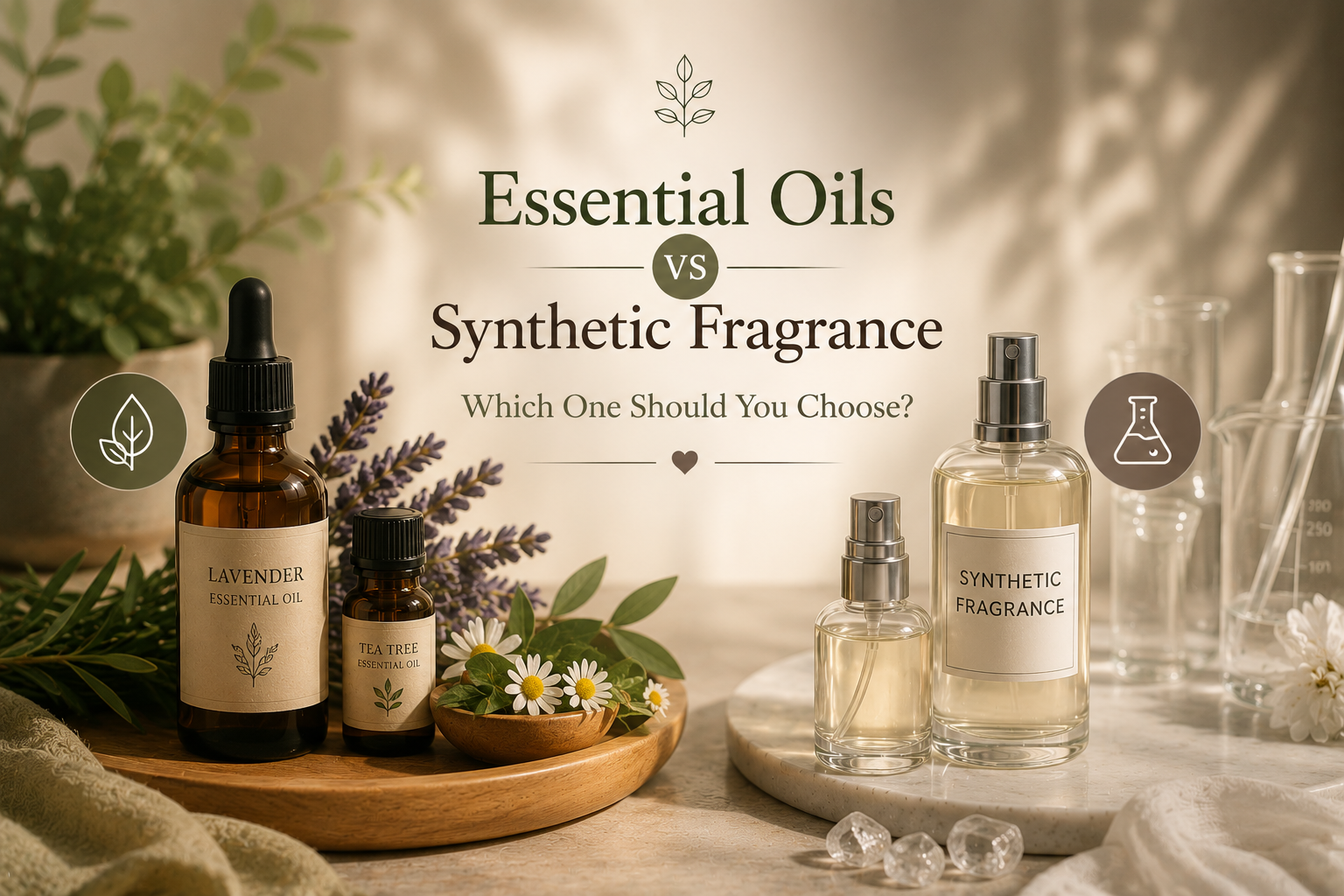
This guide breaks down essential oils vs synthetic fragrance so you can pick the right one without the guesswork.
What Is Essential Oil?
Essential oil comes straight from a plant. Manufacturers extract it through steam distillation or cold pressing, pulling out the aromatic compounds locked inside petals, peels, bark, or leaves. Lavender, eucalyptus, and citrus oils all fall into this category.
Because the oil retains the plant’s natural chemistry, it carries genuine therapeutic properties, not just a pleasant smell. This is why aromatherapy relies almost entirely on essential oils rather than lab-made alternatives. You’ll find them in diffusers, massage blends, and skincare formulas where a natural, plant-based scent matters most.
What Is Synthetic Fragrance?
Synthetic fragrance, often called fragrance oil, is created in a lab. Chemists combine aroma compounds to replicate a scent (sometimes one that doesn’t even exist in nature, like “ocean breeze” or “clean cotton”). Many formulations include phthalates, which help the scent bind and last longer.
Synthetic fragrance dominates commercial candles, air fresheners, and mass-market perfumes because it’s cheaper to produce and easier to standardize at scale. It also opens the door to creative, non-botanical scents that essential oils simply can’t replicate.
Essential Oil vs Synthetic Fragrance: Key Differences
Extraction and Production Process
Essential oils demand patience. Rose oil needs roughly 60 roses to produce a single drop, which is why true rose otto sells at a premium. I learned this after ordering a “rose essential oil” that turned out synthetic, since the real version would have cost triple.
Synthetic fragrance skips the harvest entirely. Chemists blend aroma molecules in a lab, letting brands scale production without depending on weather or plant yield.
Scent Strength and Longevity
I ran a side-by-side test: a lavender essential oil diffuser against a synthetic lavender blend, same room, same hours. The synthetic version held noticeable scent for nearly six hours. My essential oil faded within two.
This tracks with how aromatherapists describe essential oils as more volatile compounds that evaporate quickly, while synthetic fragrance molecules are engineered specifically for scent longevity and stronger throw.
Skin and Health Safety
Dermatologists commonly flag citrus essential oils like bergamot and lemon for photosensitivity, meaning skin exposed to sunlight after topical use can burn more easily. I found this out the hard way after applying undiluted lemon oil before a walk outside. For household scents, see what air fresheners are safe.
Synthetic fragrance has its own documented issue: fragrance mixes are among the top causes of contact allergies reported in dermatology clinics. Neither is inherently safer; both need informed, careful use. If you choose essential oils, learn how to dilute essential oils safely.
Consistency and Quality
A friend who sources lavender oil from two different farms once showed me two bottles from the same brand, harvested a year apart. The scent difference was obvious, one sharper, one softer, both authentic. This is simply how natural extraction works, since soil and climate shift year to year. Synthetic fragrance doesn’t have this problem.
Because it’s built from a fixed chemical formula, every batch smells identical, which is exactly why perfume houses rely on it for signature scents that must never vary.
Cost Comparison
When I priced out ingredients for a DIY candle project, pure essential oil blends ran nearly four times higher per ounce than synthetic fragrance oil for a comparable scent strength.
This gap exists because essential oils require large volumes of raw plant material, while synthetic fragrance production has no such ceiling, which keeps manufacturing costs low even at scale.
Which One Should You Choose?
The right pick depends on what you actually need. If you’re using scent for relaxation, aromatherapy, or skincare, essential oils offer real plant-based benefits worth the extra cost. If you want a candle or diffuser that fills a room fast and holds scent all evening, synthetic fragrance usually delivers better value. For diffusers, compare diffuser oil vs essential oil.
For sensitive skin, always patch test either option first. I now keep both in rotation. Essential oils for my evening wind-down routine, synthetic blends for stronger everyday scent in living spaces.
Final Thoughts
Neither essential oils nor synthetic fragrance is universally better. Each serves a different purpose, and knowing that difference saves you money and disappointment. After months of testing both, I trust essential oils for genuine aromatherapy and reach for synthetic blends when I want a room to smell incredible for hours.
If you’re exploring clean, well-tested home fragrance options, Lume & Wick’s collection reflects exactly this kind of thoughtful, hands-on approach to scent.