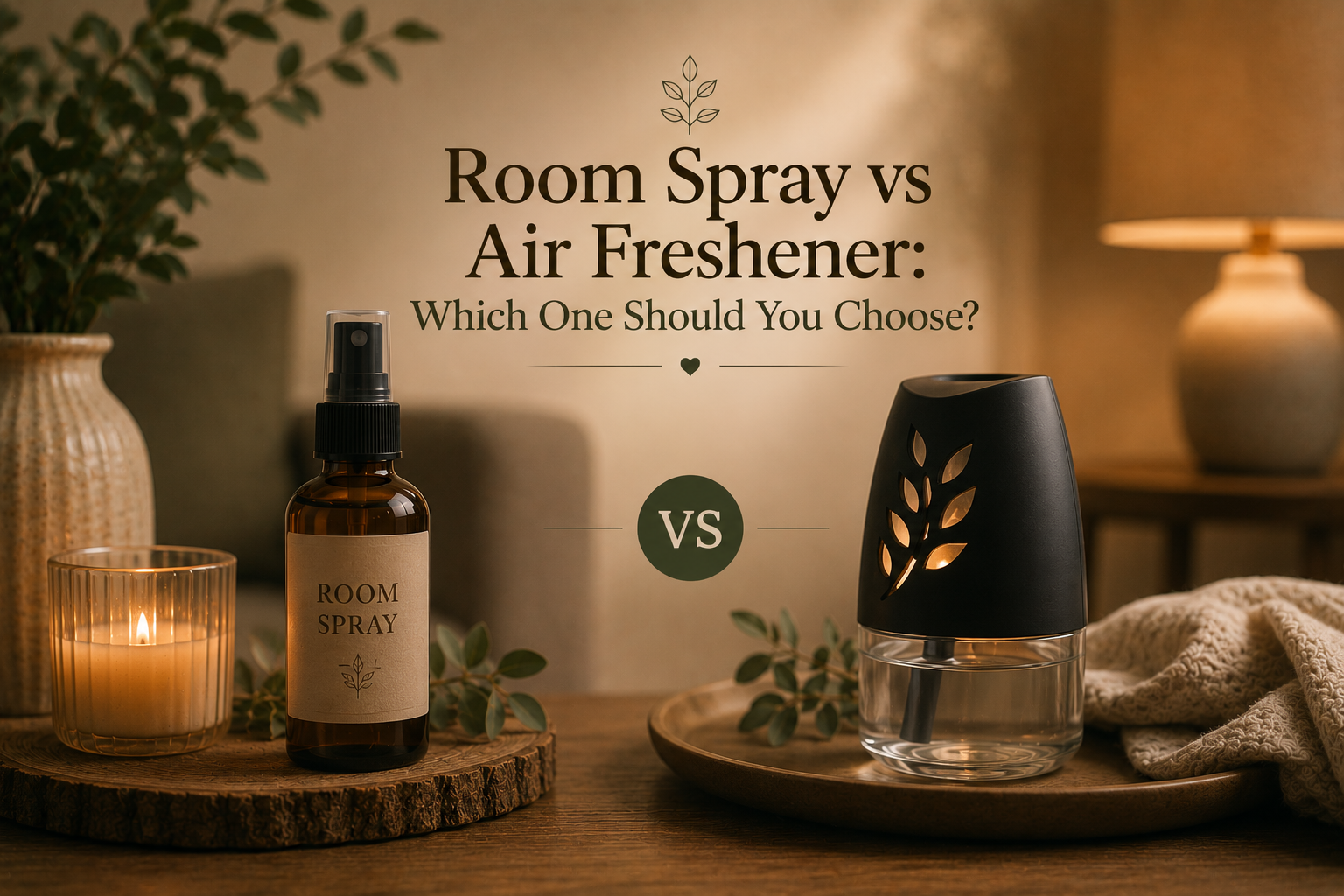
Have you ever sprayed a room fragrance before guests arrived and wondered whether it works better than an air freshener sitting in the corner of your living room? I have tested both over the years in bedrooms, bathrooms, and shared spaces, and I realized they serve different purposes.
While people often use the terms interchangeably, the difference between room spray and air freshener comes down to how they deliver fragrance, manage odors, and fit into your daily routine.
If you are searching for “room spray vs air freshener,” the short answer is this: room sprays provide instant freshness through direct application, while air fresheners often offer continuous fragrance diffusion and long-term indoor odor management. The right choice depends on whether you need immediate odor control or ongoing household freshness enhancement.
What Is a Room Spray?
A room spray is a type of home fragrance product designed for direct application into the air. Most formulations come in a fine mist format that delivers instant fragrance release exactly where you need it. Unlike automatic scent diffuser systems, room sprays require manual operation, giving you complete control over fragrance intensity and targeted scent application.
From personal experience, I often use a non-aerosol room spray in the bedroom before bedtime because I can adjust the amount based on my preference. Some scented room mist products also double as a fabric freshener or linen spray, making them useful for curtains, bedding, and upholstered furniture when the label permits.
Many natural room spray options use essential oils combined with water or plant-based ingredients. Others contain fragrance oils that create luxury-inspired scents. The biggest advantage is convenience. These portable and travel-friendly products work well when you want immediate odor masking without committing to continuous scenting.
What Is an Air Freshener?
An air freshener is a broader category of indoor air freshener products designed to improve the smell of indoor spaces. Unlike a room deodorizer spray, many air fresheners focus on long-term odor management through continuous fragrance diffusion.
This category includes aerosol air freshener sprays, plug-ins, gel fresheners, reed diffusers, and automatic dispensers with scheduled scent release capability. These household freshening products often cover larger areas effectively with minimal user intervention.
I have found that automatic air fresheners work particularly well in high-traffic areas such as bathrooms and entryways where ongoing freshness matters more than instant scent enhancement. Many modern formulas also function as an odor neutralizer or odor eliminator instead of simply masking unpleasant smells.
Both room spray and air freshener contribute to ambient scenting, but their applications differ based on lifestyle needs and fragrance expectations.
Room Spray vs Air Freshener: Key Differences
| Feature | Room Spray | Air Freshener |
|---|---|---|
| Primary Purpose | Instant freshening spray | Continuous ambient scenting |
| Application Method | Manual direct application | Automatic or passive diffusion |
| Fragrance Longevity | Usually a few hours | Several days to weeks |
| Odor Control | Immediate odor masking effect | Better long-term odor management |
| Coverage Area | Targeted scent application | Covers larger spaces effectively |
| User Effort | Requires manual operation | Minimal user intervention |
| Cost Per Day of Usage | Lower upfront cost | May require refills |
| Best For | Quick freshness and flexibility | Ongoing household freshness |
1. Purpose and Everyday Use
When comparing room spray vs air freshener, the biggest distinction lies in their intended purpose. A room fragrance spray focuses on immediate freshness through direct application to the air. It is ideal when you need an instant freshening spray before guests arrive or after cooking strong-smelling foods.
An air freshener, on the other hand, is designed for continuous fragrance diffusion and ongoing freshness. Products such as plug-ins, gels, and automatic dispensers release scent gradually throughout the day. If your goal is maintaining a consistently pleasant fragrance in large living spaces, air fresheners usually perform better.
From my own experience, I prefer a bedroom room spray in spaces where I want complete control over scent intensity. For bathrooms and pet areas, I often rely on automatic home scent solutions that work continuously without requiring attention.
2. Fragrance Longevity and Coverage
Fragrance longevity is one of the most important factors people consider when deciding between room spray or air freshener.
Room sprays provide immediate results but typically offer shorter duration of freshness. Depending on the formulation and room ventilation, the scent may last from one to several hours. Their strength lies in customizable spray amount and targeted scent application rather than extended performance.
Air fresheners generally deliver long-lasting fragrance because they release scent over time. Plug-ins, reed diffusers, and gel systems may provide fragrance for weeks. This extended fragrance duration often translates into better coverage area efficiency, especially in open-plan homes or frequently used rooms.
If long-lasting room fragrance is your priority, air fresheners usually outperform room sprays. If flexibility matters more, room sprays offer greater convenience.
3. Ingredients and Formulation Differences
Another important difference between room spray and air freshener involves ingredient profiles.
Natural room spray products frequently contain essential oil spray blends, plant-derived ingredients, and non-aerosol formulations. Consumers seeking chemical-free air freshener alternatives often gravitate toward these products because of ingredient transparency and lower concerns about chemical exposure levels.
Traditional air fresheners may use synthetic fragrance compounds to achieve performance consistency and stronger scent projection. Aerosol versions rely on propellants for distribution, while plug-ins use fragrance cartridges and warming mechanisms to disperse aroma gradually.
Many households now prioritize eco-friendly options and air purification products with family-friendly formulations. Reading ingredient labels remains important, especially for individuals with allergen concerns or fragrance sensitivities.
4. Odor Elimination Effectiveness
Not all home deodorizer products work in the same way. Some provide odor masking by covering unpleasant smells with a stronger fragrance. Others function as an odor neutralizer by targeting odor-causing molecules.
In my experience, room deodorizing spray products excel at instant odor control after activities such as cooking or exercising. However, persistent issues like pet odor management or smoke odor reduction often require products formulated specifically for odor elimination effectiveness.
Certain air fresheners incorporate odor removal spray technology that neutralizes odors instead of simply disguising them. This makes them more suitable for ongoing indoor odor management in households facing recurring odor challenges.
Convenience and User Experience
Ease of use rating often depends on personal preference.
Room sprays require manual operation, but they offer unmatched flexibility. You decide when, where, and how much fragrance to apply. Their portability also makes them practical for travel or quick touch-ups around the home.
Air fresheners emphasize convenience through automatic operation options. Scheduled scent release capability reduces effort and maintains consistency without frequent adjustments. Many consumers appreciate the minimal user intervention required.
The trade-off is reduced control over fragrance intensity level. Some people enjoy continuous scenting, while others prefer adjusting fragrance according to mood or occasion.
Room Spray vs Air Freshener: Pros and Cons
Room sprays stand out because they deliver immediate freshness, allow targeted application, and often come in sophisticated fragrance categories including floral, citrus, woody, fruity, and fresh scents. Many options also serve as linen sprays or fabric fresheners, adding versatility. The main limitation is that they require repeated use because their effects do not last as long.
Air fresheners excel at maintaining household freshness enhancement over extended periods. Their multiple placement options and continuous performance make them valuable for larger homes. However, they may involve refill costs, offer less flexibility in scent control, and vary in environmental friendliness rating depending on the formulation.
Final Verdict
After trying various room scent products over the years, I have found that both options deserve a place in a well-rounded home fragrance routine. Room sprays excel when you need immediate freshness, customizable scent intensity, and portability. Air fresheners work best when consistent fragrance and extended duration of freshness are the priorities.
If you value natural formulations and enjoy controlling exactly how much fragrance you use, a room spray may be the better choice. If convenience and long-lasting fragrance matter most, an air freshener offers greater practicality.
For those looking to elevate their home scent experience, exploring thoughtfully crafted home fragrance products from Lume & Wick can be worthwhile. Their collection focuses on creating inviting spaces through carefully designed fragrances that complement everyday living without overwhelming your environment.