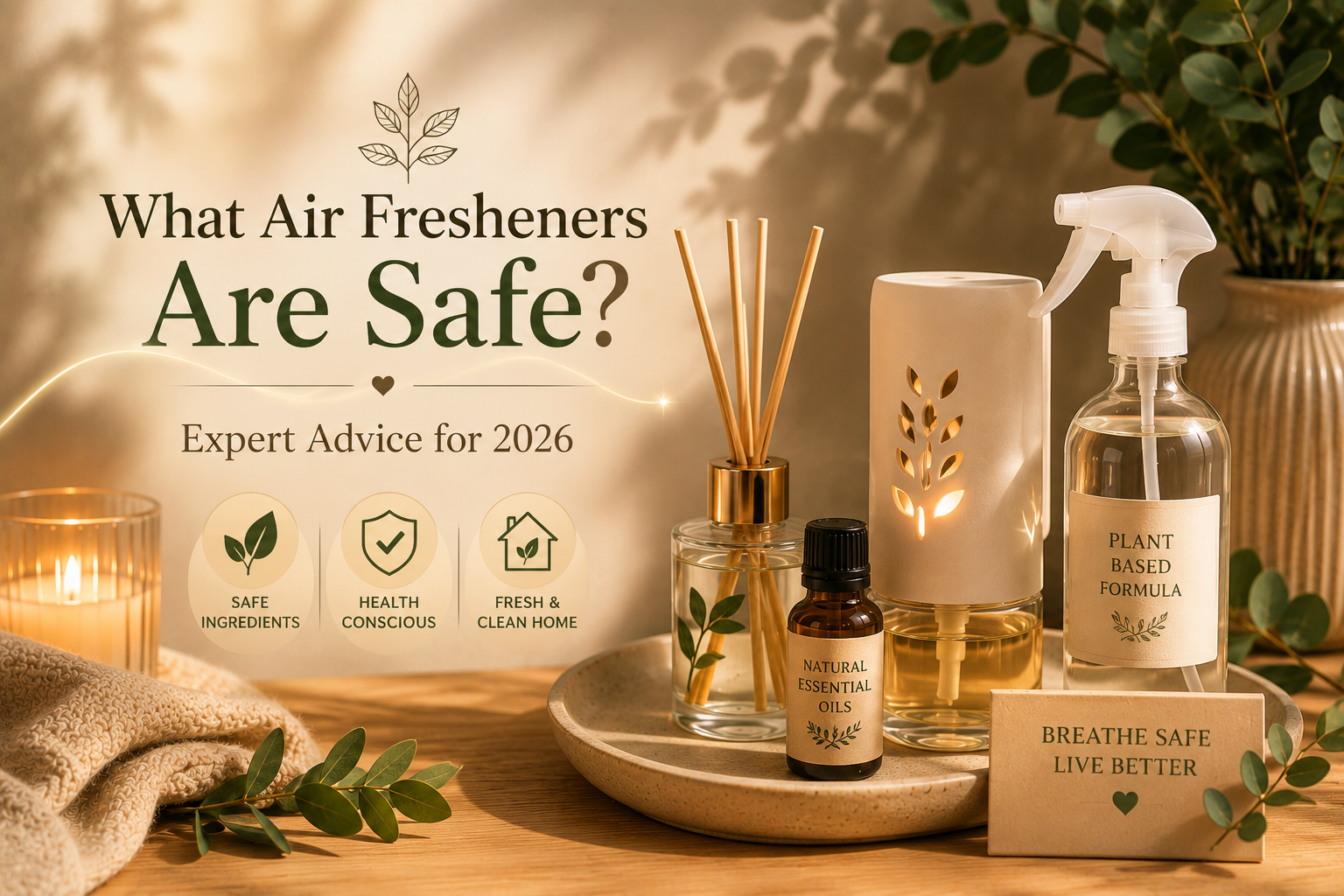
Yes, some air fresheners are considered safer than others, but no air freshener is universally safe for everyone. Products with transparent ingredient lists, low VOC emissions, and formulations free from phthalates and other potentially concerning chemicals are generally regarded as safer choices. Fragrance-free or hypoallergenic options may also be better suited for people with allergies, asthma, pets, or young children.
However, safety depends on the product’s ingredients and individual sensitivities rather than labels such as “natural” or “eco-friendly.” I learned this firsthand after experiencing headaches from heavily scented products and realizing that checking ingredient lists made a bigger difference than relying on marketing claims alone.
In this article, you’ll discover what makes an air freshener safer, which ingredients experts commonly recommend avoiding, the types of air fresheners generally considered lower risk, and practical tips to help you choose the best option for your home and family.
What Makes an Air Freshener Safe?
No air freshener is universally perfect for everyone. However, several characteristics can help identify safer options.
Ingredient transparency is one of the most important factors. Brands that clearly disclose what goes into their products allow consumers to make informed decisions. Products marketed as non-toxic air fresheners often provide detailed ingredient lists rather than using vague terms.
Low VOC air fresheners are another consideration. VOCs are chemicals that can evaporate into indoor air. While many household products release VOCs, choosing options with lower emissions may support better indoor air quality.
Many consumers also prefer phthalate-free air fresheners. Phthalates are compounds sometimes used to extend fragrance longevity. Although research continues to evolve, many people choose products without these ingredients as part of a precautionary approach.
For homes with sensitive individuals, hypoallergenic air fresheners or fragrance-free air fresheners may reduce irritation risks. People with allergies or respiratory sensitivities often benefit from products designed with simpler formulations.
Ingredients to Avoid in Air Fresheners
When evaluating safe air fresheners, I have found that focusing on ingredient labels is more helpful than relying on marketing terms like “natural” or “green.” A few ingredients deserve closer attention because they may affect indoor air quality or trigger sensitivities in some individuals.
Phthalates
Phthalates are chemicals sometimes used to help fragrances last longer. Since manufacturers are not always required to list every fragrance component individually, identifying them can be difficult. I now actively look for products labeled as phthalate-free air fresheners because they offer greater peace of mind, especially in frequently used spaces such as bedrooms and living rooms.
High Levels of Volatile Organic Compounds (VOCs)
Volatile organic compounds, commonly known as VOCs, are substances that can enter the air as gases. Higher VOC emissions may contribute to indoor air pollution. This does not mean every scented product is harmful, but choosing low VOC air fresheners can help maintain healthier indoor air quality. Products with transparent testing information or recognized safety certifications often make this decision easier.
Undisclosed Fragrance Blends
The term “fragrance” can represent multiple ingredients combined into a scent formulation. Over time, I have learned that brands prioritizing ingredient transparency tend to inspire more confidence. Understanding what is inside a product helps consumers select allergy-friendly air fresheners that align with their personal preferences and sensitivities.
What Types of Air Fresheners Are Generally Considered Safer?
The safest option often depends on the formulation rather than the product category itself. Through personal experience, I have discovered that certain types of home fragrance products tend to be preferred by consumers seeking healthier alternatives.
Fragrance-Free Air Fresheners
Fragrance-free odor eliminators focus on neutralizing unwanted smells instead of masking them with strong scents. These products can be particularly helpful for people with asthma, allergies, or heightened fragrance sensitivity. If headaches or irritation occur frequently with scented products, fragrance-free options may be worth considering.
Non-Aerosol Air Fresheners
Many consumers choose non-aerosol air fresheners because they avoid propellants commonly found in traditional sprays. Room sprays with simple ingredient lists and controlled application methods allow users to adjust fragrance intensity according to their comfort level.
Air Fresheners with Natural or Plant-Based Ingredients
Natural air fresheners and plant-based air fresheners have gained popularity among homeowners looking for alternatives to heavily fragranced products. Essential oil air fresheners often fall into this category. I personally enjoy subtle citrus and lavender blends because they provide a fresh atmosphere without overwhelming the room.
However, natural does not automatically mean safer for everyone. Certain essential oils may affect pets or trigger sensitivities in some individuals. Evaluating naturally derived fragrances based on complete ingredient information remains important rather than relying solely on marketing claims.
Ultimately, safer home fragrance choices prioritize clear labeling, reasonable fragrance strength, and consideration for the people and pets sharing the space. A thoughtful approach often leads to better long-term satisfaction than simply choosing the strongest scent available.
How to Choose a Safe Air Freshener?
Finding safe air fresheners becomes much easier when you know what to look for. After trying different products over the years, I now follow a few simple guidelines before bringing any home fragrance product into my home.
Start by reading the ingredient list carefully. Brands that openly share their formulations demonstrate a commitment to ingredient transparency. Look for phthalate-free air fresheners and low VOC air fresheners whenever possible, especially if maintaining good indoor air quality is a priority.
Consider the specific needs of your household. Homes with babies, pets, or individuals with allergies may benefit from pet-safe air fresheners, baby-safe air fresheners, or hypoallergenic air fresheners designed for sensitive environments. If someone in your family has asthma or respiratory concerns, lightly scented or fragrance-free air fresheners may be more suitable.
Testing new products gradually can also help. Using a small amount initially allows you to assess how everyone responds before regular use.
Are Natural Air Fresheners Always Safe?
One common misconception is that natural air fresheners are automatically safer than synthetic alternatives. In reality, safety depends on the complete formulation and individual sensitivities. A simple baking soda air freshener is a low-risk option for small spaces.
Plant-based air fresheners and products containing essential oils appeal to many consumers because they use naturally derived fragrances. I often prefer these options because they typically provide a more subtle scent experience. However, natural ingredients can still trigger allergies or sensitivities in some people. Certain essential oils may also require caution in households with pets.
Rather than focusing solely on whether a product is natural or synthetic, evaluate factors such as ingredient disclosure, fragrance intensity, and how the product fits your household’s needs.
Conclusion
So, what air fresheners are safe? Generally, safer air fresheners are those with ingredient transparency, lower VOC levels, and formulations free from ingredients that some consumers prefer to avoid, such as phthalates. The best choice ultimately depends on your household’s unique needs, including allergies, pets, children, and personal fragrance preferences.
From my own experience, paying attention to labels and choosing thoughtfully formulated products has made a noticeable difference in creating a comfortable home environment. If you are looking for home fragrance products that prioritize quality ingredients and a more mindful approach to scenting your space, exploring collections from Lume & Wick can be a great place to start.