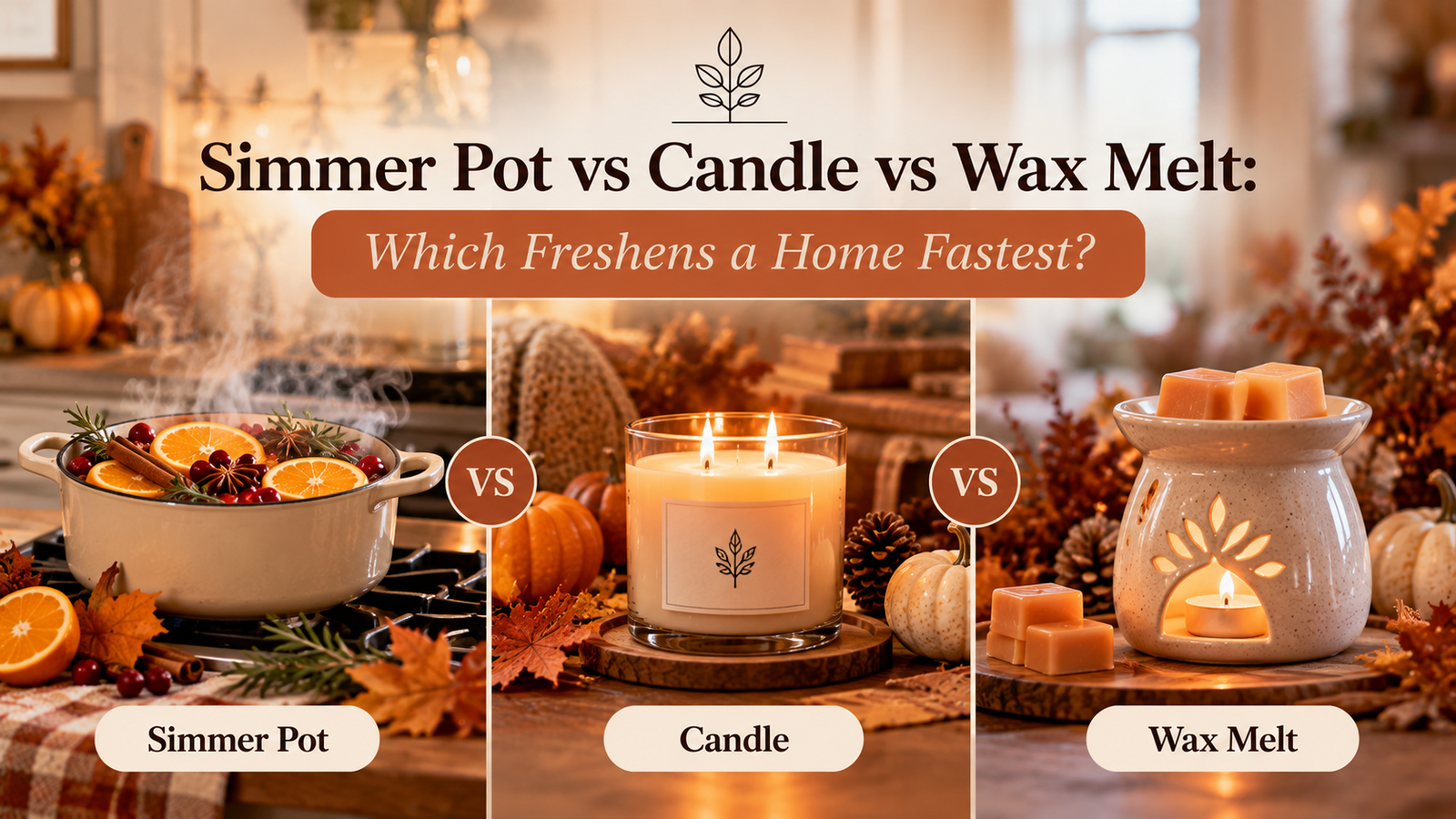
Before a recent dinner party, I tested all three methods in my living room. I wanted one answer: which one freshens a home fastest? The result surprised me. The fastest option was not the one I reach for most often.
Speed depends on room size, airflow, and fragrance strength, so treat my numbers as rough guides. Still, the pattern held across several rooms. Here is how a simmer pot, a candle, and a wax melt compare.
How Each Method Releases Scent
A simmer pot uses heat and steam. Water carries volatile oils from citrus peel, cinnamon, cloves, and herbs into the air. A candle works differently. The flame melts a pool of wax, and that warm pool releases fragrance oil as vapor. The wick and wax design of a candle shapes how the pool forms. A wax melt skips the flame. A warmer heats the wax gently, and fragrance evaporates from the liquid.
Heat drives all three. The hotter and larger the surface, the faster aroma spreads. That simple rule explains most speed differences.
Speed Test Results
In a room of roughly 12 by 14 feet, I noticed this:
- Simmer pot: Aroma appeared within about ten minutes. Steam carried scent into nearby rooms.
- Wax melt: Light fragrance arrived after fifteen to twenty minutes, then built steadily over an hour.
- Candle: Little scent showed up in the first fifteen minutes. A strong throw arrived once the melt pool reached the jar’s edge, usually after thirty to sixty minutes.
So the simmer pot wins for speed. A wax melt takes second place, and a candle needs patience. Candles reward that patience with the richest fragrance, and a quality candle keeps perfuming the room for a while after you snuff it.
Wax quantity changes the outcome too. More wax means stronger scent, though extra cubes do not always speed things up. This guide on how many wax melt cubes to use explains the balance.
Staying Power and Upkeep
A simmer pot gives the quickest burst but the shortest run. Expect two to four hours before the water drops low and the aroma fades. You must top up water and watch the pan.
A wax melt keeps working for hours, and one cube often lasts several sessions. See how long wax melts last in a warmer for realistic timelines.
A candle delivers the longest total fragrance. Burn it in sessions of about three to four hours, and trim the wick each time. The NCA safety tips cover trimming and placement. Ask About Candles adds friendly burning basics.
Room Size and Placement
Placement changes speed as much as method. Set a simmer pot on a back burner, where steam can rise freely. Put a wax warmer on a stable table near the center of a room, away from vents that blow scent out. Place a candle on a heat-safe surface at a safe distance from drafts, since moving air flickers the flame and weakens the pool.
Bigger spaces need more help. Open floor plans may need two sources, one near the kitchen and another near the seating area. In a tiny room, one small melt or a single candle goes a long way. Close doors to keep fragrance from drifting away.
Safety Differences
Every method uses heat, so each needs attention. A simmer pot can boil dry and scorch the pan. Keep the water level up, use low heat, and never leave the kitchen. A candle holds an open flame. Keep it on a stable surface, away from curtains and paper. A wax warmer gets hot too, so place it where pets and children cannot knock it over. The NFPA candle safety page adds helpful rules about unattended flames.
Ventilation helps with all three. The EPA’s indoor air quality resources list fresh air exchange as a core habit for healthy indoor air.
Cost and Control
A simmer pot costs the least. Citrus peels, a cinnamon stick, and a few cloves come from the pantry. Wax melts cost a bit more per use, though a good warmer pays off over time. Candles cost the most upfront, yet they double as decor.
Control matters too. You can turn off a simmer pot instantly and unplug a warmer in seconds. A candle snuffs out easily, though the melt pool stays warm for a while. Compare more options in this deeper look at wax melts versus candles. If you lean toward a warmer, this guide to an electric wax warmer versus a tea light warmer helps you choose.
A Simple Simmer Pot Recipe
Here is my go-to blend for a quick refresh: one orange sliced into rounds, two cinnamon sticks, a teaspoon of whole cloves, a rosemary sprig, and a splash of vanilla. Cover with water, bring it to a low simmer, and keep the lid off. Add water every thirty minutes.
Common Mistakes to Avoid
- Lighting a candle for ten minutes and giving up. Short burns waste fragrance.
- Letting a simmer pot run dry while you chat with guests.
- Stacking several strong scents in one room.
- Placing a warmer in a drafty hallway.
Which Method Should You Pick?
Match the method to your goal. Need a quick refresh before guests knock? Choose a simmer pot. Want steady, background fragrance all afternoon? Pick a wax melt. Prefer flicker, ambiance, and a lasting scent? Light a candle.
Households matter too. Homes with curious pets or toddlers may prefer an electric warmer set high on a shelf, since it has no flame. Always ask guests about scent sensitivities before filling a room with fragrance.
Many people combine them. I run a simmer pot early to clear cooking odors, then light a candle once guests arrive.
Fastest Fresh, Longest Glow
For speed, a simmer pot wins. For lasting comfort, a candle shines. Wax melts sit comfortably in the middle. If you want a candle that fills a room beautifully, browse the candle collection at Lume & Wick and choose a scent that suits your home.