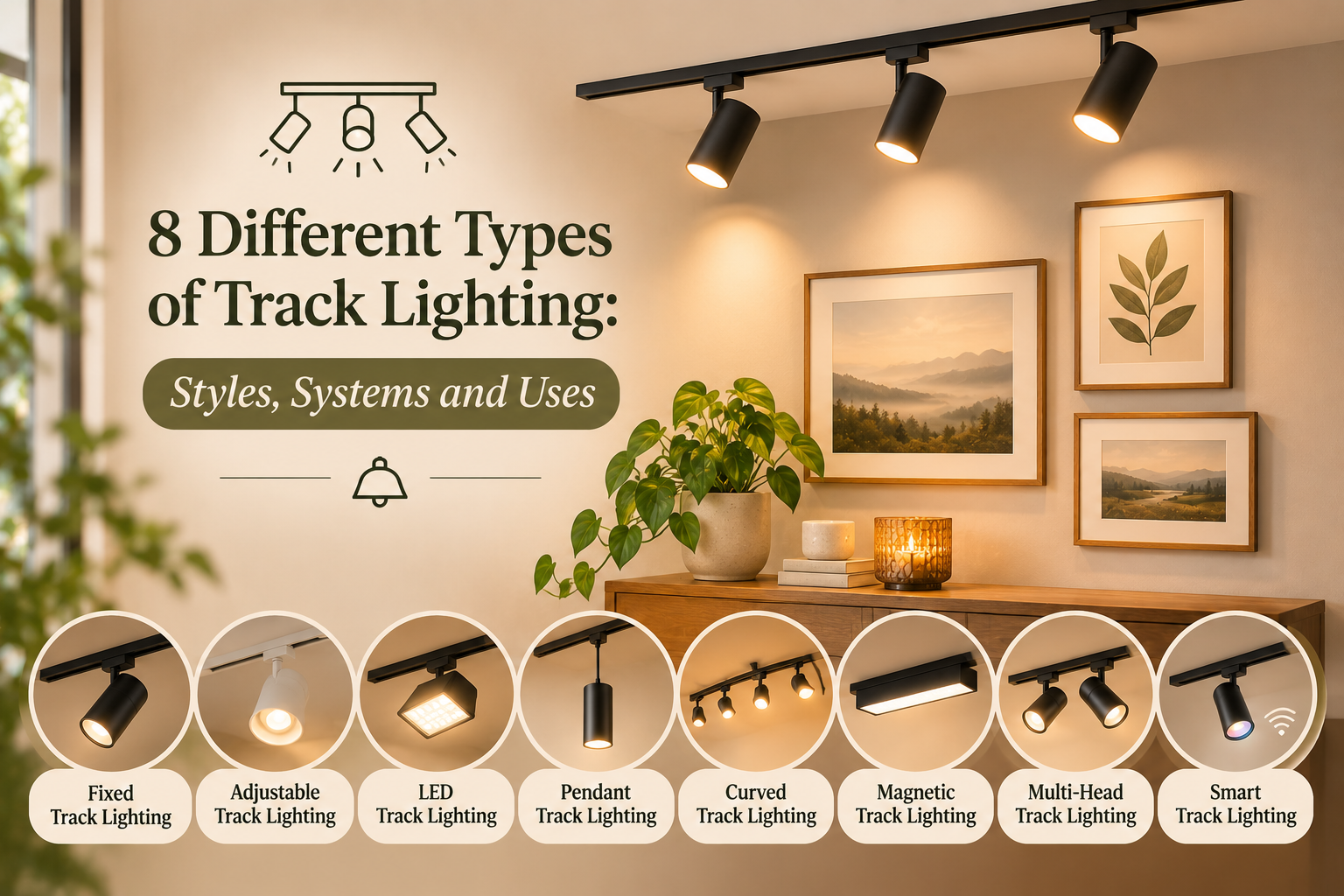
Track lighting offers a flexible way to illuminate different areas without installing separate ceiling fixtures. It consists of individual light heads mounted on an electrically powered rail, allowing users to direct light toward specific objects, workspaces, or architectural features.
However, not all track lighting systems work the same way. Some differ in electrical compatibility, while others feature flexible rails, magnetic connections, or decorative suspended designs. Understanding the different track lighting types makes it easier to choose a system that suits your room, lighting requirements, and interior design.
What Are the Different Types of Track Lighting?
Track lighting comes in several designs based on rail construction, electrical configuration, and fixture compatibility. Common options include linear, H-type, J-type, L-type, monorail, flexible, and magnetic track lighting.
Each system serves different purposes. Some provide straightforward directional illumination, while others offer curved layouts or interchangeable lighting modules. Choosing the right one depends on how much flexibility, brightness, and control you need.
Different Types of Track Lighting Systems
1. Standard or Linear Track Lighting
Standard track lighting uses a straight, rigid metal rail that holds adjustable light heads. Fixtures slide along the track and lock into position, allowing users to direct illumination wherever required.
This configuration works particularly well in kitchens, hallways, offices, and retail spaces. Compatible connectors can also join multiple sections to create L-shaped, T-shaped, or longer lighting layouts.
2. H-Type, J-Type, and L-Type Track Lighting
H-type, J-type, and L-type are three common track lighting standards associated with Halo, Juno, and Lightolier systems. They differ in their electrical contact arrangements and mechanical track profiles.
- H-Type: Commonly associated with Halo systems, this three-contact system offers compatibility with fixtures designed specifically for H-type rails.
- J-Type: Associated with Juno lighting systems, this standard uses a different contact arrangement and requires compatible J-type fixtures.
- L-Type: Associated with Lightolier systems, this configuration has its own track profile and electrical connections.
These systems are not automatically interchangeable. Always check the track manufacturer’s specifications and fixture compatibility before purchasing replacement track heads.
3. Monorail Track Lighting
Monorail lighting features a single decorative rail that can support different fixture styles. Unlike conventional rigid track systems, many monorail designs allow curved and customized configurations.
Depending on the manufacturer, the rail can accommodate adjustable spotlights and pendant fixtures. Its decorative appearance makes it suitable for dining rooms, living spaces, and interiors where lighting forms part of the overall design.
4. Flexible Track Lighting
Flexible track lighting uses bendable rails that can follow curved walls, architectural details, or unusual room layouts. Instead of restricting fixtures to straight lines, this system allows more creative lighting arrangements.
It works well around kitchen islands, curved ceilings, and display areas. Check the manufacturer’s minimum bending radius and compatible fixtures before shaping the track.
5. Magnetic Track Lighting
Magnetic track lighting uses a specially designed rail that holds compatible lighting modules through magnetic connections. Users can reposition or replace modules without conventional mechanical track-head adapters.
Common modules include spotlights, linear lights, and grille lights. Many systems operate at low voltage through a dedicated power supply or driver. Their slim appearance suits modern homes, galleries, and commercial interiors.
6. Fixed and Swing-Arm Track Lighting
Fixed track lighting keeps the rail in a permanent position while allowing compatible heads to rotate or tilt. Swing-arm systems take flexibility further through articulated sections that pivot to change the direction or position of the lighting.
These options work well when illuminating artwork, shelves, kitchen worktops, and display areas that need adjustable light placement.
Different Types of Track Lighting Fixtures and Heads
The track rail determines how fixtures connect to the electrical system, while the track head determines how light reaches the space.
Common fixture styles include:
- Gimbal track heads: Rotate and tilt to direct focused illumination.
- Cylinder track heads: Feature a cylindrical housing for directional spotlighting.
- Pinhole track heads: Produce concentrated illumination through a small aperture.
- Track pendant lights: Hang from the rail to provide decorative or functional lighting.
- Barn door track lights: Use adjustable flaps to control light spill.
- Integrated LED track heads: Contain built-in LED modules for efficient illumination.
Choose fixtures based on beam angle, brightness, and the intended lighting effect.
Track Lighting Types Based on Mounting Options
Track lighting also varies by installation method.
- Surface-mounted: Attaches directly to the ceiling, making it suitable for standard ceiling installations.
- Recessed: Sits within a ceiling cavity or specially designed ceiling channel for a cleaner appearance.
- Suspended: Hangs from rods or cables, making it useful for high ceilings and larger spaces.
- Wall-mounted: Attaches to a wall to highlight artwork, shelving, or architectural details.
Your ceiling construction, available space, and desired appearance will influence the best mounting option.
How to Choose the Right Type of Track Lighting
Start by identifying whether you need accent, task, or ambient lighting. Next, consider the room layout and select a suitable rail configuration.
Check electrical compatibility before purchasing fixtures, particularly when choosing between H-type, J-type, and L-type systems. Also consider lumens for brightness, beam angle for light distribution, and color temperature for the desired atmosphere.
For kitchen worktops, adjustable spotlights provide focused illumination. Magnetic or monorail systems may suit modern interiors where appearance and flexible positioning matter.
Frequently Asked Questions About Track Lighting Types
What are the three main types of track lighting?
H-type, J-type, and L-type are three widely recognized track lighting standards. Each has different electrical connections and fixture compatibility requirements.
Are H-type, J-type, and L-type track lights interchangeable?
No. Each system uses a different track profile and contact arrangement. Use fixtures specifically designed for your existing track standard.
What is the difference between track lighting and monorail lighting?
Traditional track lighting generally uses rigid rails, while monorail systems often support curved, decorative configurations and specialized fixtures.
Is magnetic track lighting better than traditional track lighting?
Magnetic systems offer convenient fixture repositioning and minimalist designs. Traditional systems provide established compatibility options and may suit simpler installations.
Conclusion
Choosing the right track lighting involves understanding rail compatibility, fixture styles, mounting methods, and lighting requirements. Whether you prefer conventional linear rails, flexible configurations, or modern magnetic systems, the right choice can improve both functionality and interior appearance.
If you’re planning to refresh your interiors, explore the Home Lighting collection at Lume & Wick. Discover lighting options that complement your space and help create a comfortable, well-lit home.