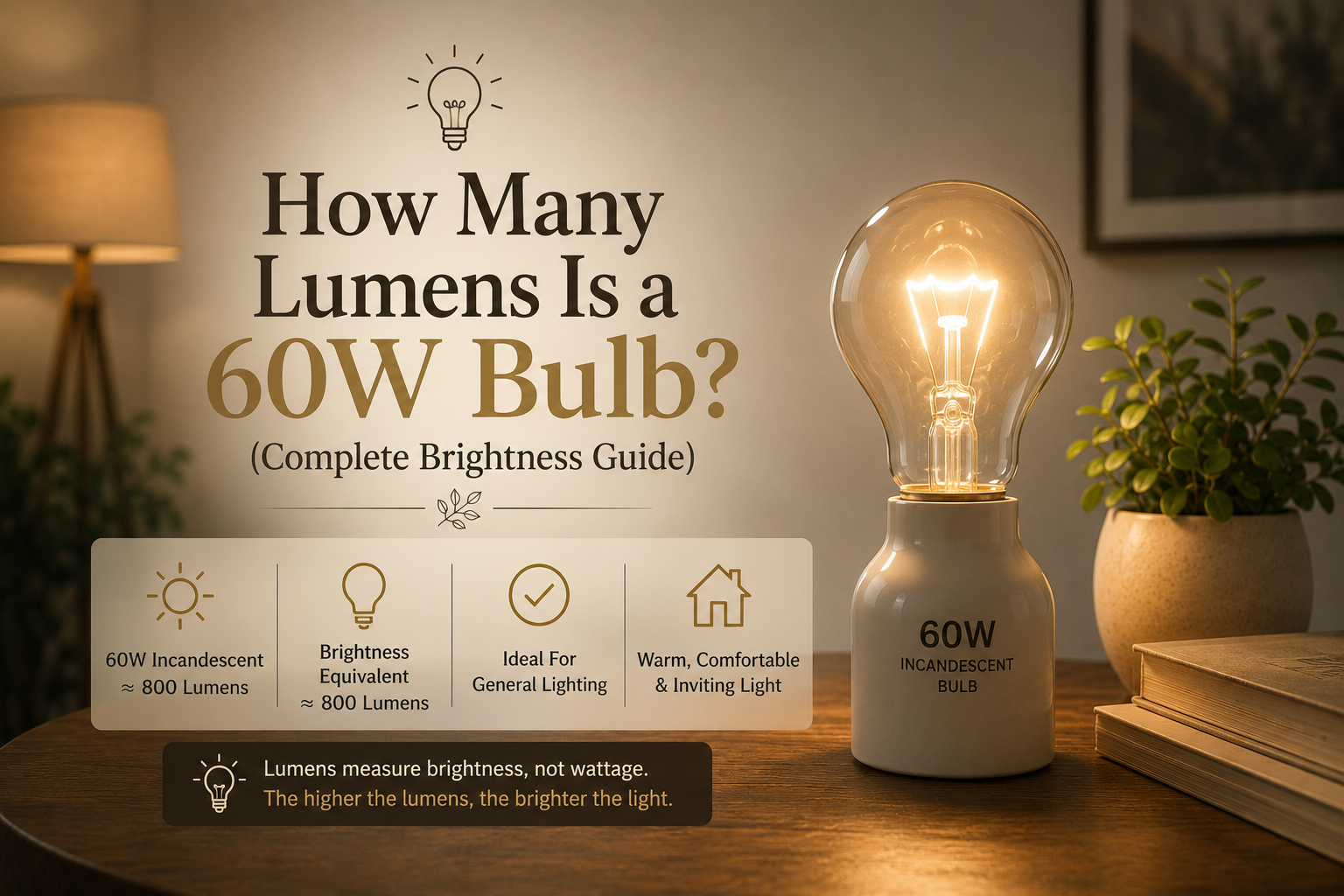
If you’re wondering how many lumens is a 60W bulb, the short answer is simple. A traditional 60 watt bulb produces around 800 lumens, although the exact lumen output usually falls between 750–850 lumens depending on the manufacturer and bulb design. This measurement tells you how much brightness or light output the bulb delivers, while wattage only indicates how much electricity it consumes. Use our lumens calculator to check how bright a space should be.
I learned this lesson the hard way when I replaced several old bulbs during a home lighting update. At first, I bought new bulbs by matching the wattage. Some rooms ended up feeling too dim, while others became brighter than expected. Once I started comparing watts vs lumens, choosing the right bulb became much easier. Today, I always look at the lumen rating first because it reflects the actual illumination a room receives.
How Many Lumens Does a 60W Bulb Produce?
A standard 60 watt light bulb with an incandescent bulb design typically produces 800 lumens. Depending on the brand and manufacturing process, the actual luminous flux can range from 750–850 lumens, but that difference is rarely noticeable in everyday household lighting. Not sure how much light you need? Try our room lighting calculator.
When people ask, “How many lumens are in a 60W bulb?” they usually want to know whether a modern bulb will provide the same light intensity. The answer is yes, provided you match the lumen output instead of the wattage.
Think of lumens as the amount of visible light produced by a light source. A higher lumen value means greater room brightness, while a lower value creates softer illumination. This is why lighting professionals recommend shopping by lumens rather than watts.
Lumens vs Watts: What’s the Difference?
Many homeowners still compare bulbs using wattage because that was the standard for decades. However, modern energy-efficient lighting has changed the way bulbs perform.
Here’s the simple difference:
- Watts measure energy consumption and electricity usage.
- Lumens measure the amount of visible light a bulb produces.
A traditional 60 watts (incandescent) bulb generates about 800 lumens, while a modern LED can produce the same brightness level using far less electricity. This improvement comes from better lighting efficiency and higher lumens per watt.
Instead of asking which bulb has more watts, compare the light bulb brightness. That approach makes every light bulb comparison much more accurate.
Many online lumen calculator tools and a simple lumen chart can also help you choose the correct lumen equivalent when replacing older bulbs.
What LED Bulb Replaces a 60W Incandescent?
If you plan to replace a 60W bulb, don’t look for another 60-watt bulb. Instead, choose a 60 watt equivalent LED that delivers around 800 lumens. This simple shift makes shopping much easier and helps reduce long-term electricity costs. For other bulb types, our watt to lumens calculator does the maths for you.
Modern LEDs achieve the same light output with significantly lower power because of their higher bulb efficiency. A quality LED typically produces 80–100 lumens per watt, making it far more efficient than an older incandescent model.
Here’s a quick bulb replacement guide:
| Bulb Type | Brightness | Power Used |
|---|---|---|
| Incandescent | Around 800 lumens | 60 watts (incandescent) |
| LED | Around 800 lumens | 8–10 watts (LED) |
| CFL | Around 800 lumens | 13–15 watts (CFL) |
| Halogen | Around 800 lumens | 43 watts (halogen) |
This LED conversion shows why LEDs have become the preferred choice for most homes. They offer up to 85% energy savings, produce less heat generation, and last much longer than traditional bulbs. A typical LED has a rated lifespan of 15,000–25,000 hours, while a standard incandescent usually lasts about 1,000 hours.
Many homeowners also prefer a Mercury-free LED, especially when replacing older CFL bulbs that contain small amounts of mercury.
Is 800 Lumens Bright Enough?
For most homes, 800 lumens provides comfortable everyday lighting. I have used this brightness in several rooms, and it works well for general activities without making the space feel harsh. Choosing a ceiling fixture for these bulbs? Compare flush mount vs semi-flush mount.
An 800-lumen bulb is suitable for:
- Living room lighting
- Bedroom lighting
- Kitchen lighting
- Table lamp
- Floor lamp
- Reading light
- Ceiling fixture
- Pendant light
- Wall sconce
The actual light level also depends on fixture design, wall colors, ceiling height, and light distribution. A bulb with a wider beam angle spreads light across a larger area, while a narrower beam concentrates illumination on one spot. Working from home? These home office lighting ideas use the same brightness logic.
Choosing the right color temperature also changes how bright a room feels. For example:
- 2,700K warm white creates a cozy atmosphere for bedrooms and living spaces.
- 3,000K soft white works well in dining rooms and hallways.
- 4,000K cool white suits kitchens, home offices, and workspaces.
- 5,000K daylight offers crisp, natural-looking light for detailed tasks.
Another factor worth checking is the Color Rendering Index (CRI). A bulb rated at 80+ CRI helps colors appear more natural, making furniture, artwork, and décor look closer to how they appear in daylight.
How to Choose the Right Replacement Bulb
Buying a new bulb is easier when you look beyond wattage. I usually check these features before making a purchase, and they have helped me avoid bulbs that looked too dim or overly bright. Bedside lamps are a good place to apply this; see the best table lamps for nightstands.
First, match the Typical lumen output (around 800 lumens) if you’re replacing a 60W incandescent. Next, confirm the bulb type and base type (E26, E27, B22) so it fits your existing fixture. Always verify fixture compatibility, especially with enclosed fittings or older lamps. Dining rooms benefit from warm bulbs too; see how to hang a dining room chandelier at the perfect height.
If you use a dimmer switch, look for dimmable compatibility. Not every LED supports dimming, and using the wrong bulb may cause flickering. Also check voltage compatibility, particularly if your home operates on 220–240V.
For smart homes, smart bulb compatibility can be a useful feature. Many modern LEDs also carry Energy Star certification, which indicates they meet recognized efficiency and performance standards.
Think about where the bulb will be used. Indoor lighting application and outdoor lighting application often require different products, especially in areas exposed to moisture or changing temperatures.
Quick Watts to Lumens Reference Chart
This table makes bulb conversion quick and straightforward.
| Incandescent Wattage | Typical Brightness | LED Equivalent |
|---|---|---|
| 40W | ~450 lumens | 4–6W |
| 60W | ~800 lumens | 8–10W |
| 75W | ~1,100 lumens | 10–12W |
| 100W | ~1,600 lumens |
These values follow common lighting standards, although actual output can vary slightly between manufacturers.
Conclusion
A traditional 60W bulb produces about 800 lumens, making it a reliable benchmark when choosing a replacement. Instead of focusing on wattage, compare lumen output, color temperature, bulb compatibility, and expected lifespan. Those details have made a noticeable difference every time I’ve upgraded the lighting in my own home.
If you’re planning to refresh your home lighting, investing in quality LED bulbs can improve comfort while lowering energy use over time. For thoughtfully selected lighting that balances performance, efficiency, and style, it’s worth exploring the collection at Lume & Wick to find the right fit for every room in your home.