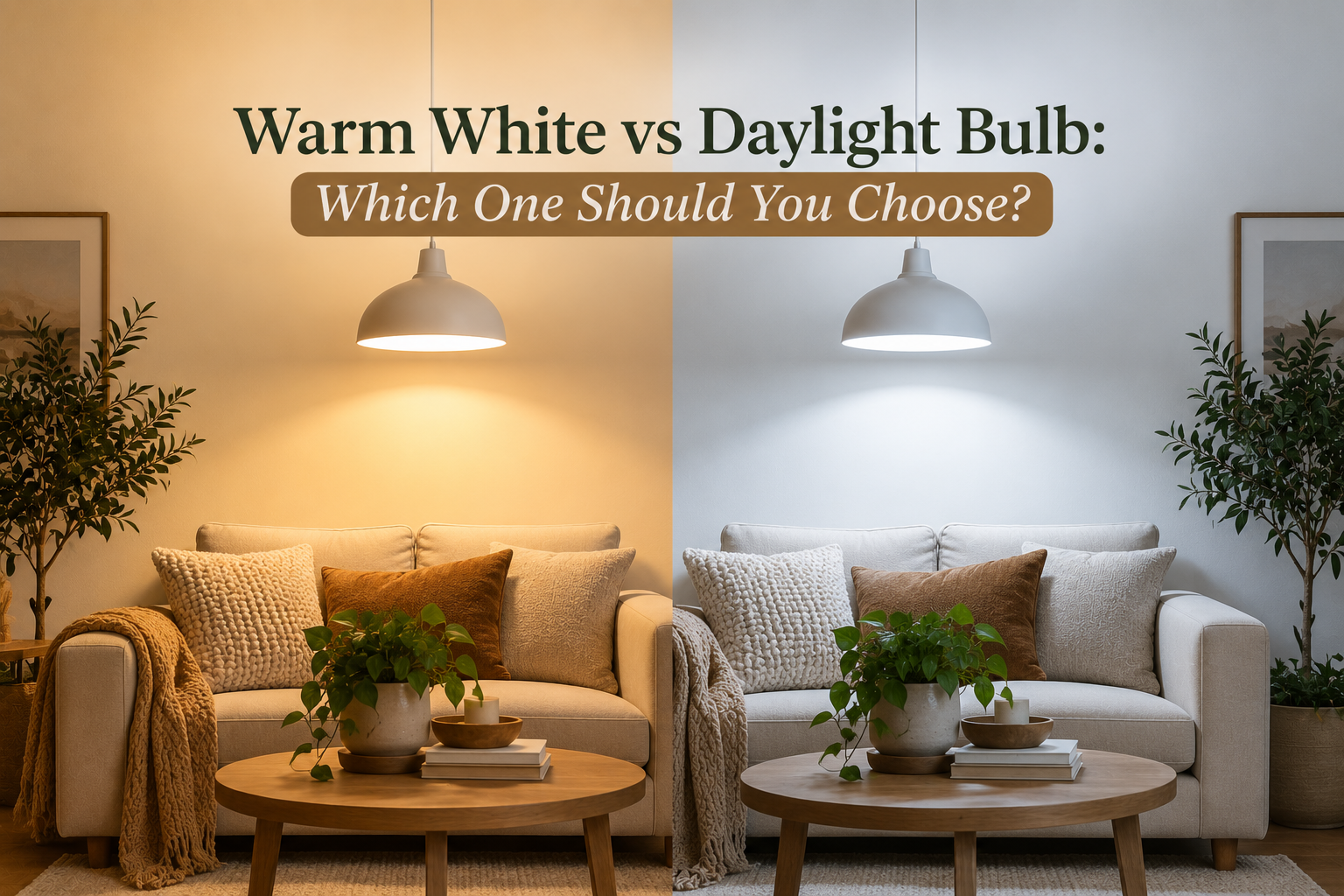
Choosing between a warm white and daylight bulb can change how an entire room looks and feels. I have found that the easiest way to make the right choice is to look beyond the bulb’s name and check its color temperature, measured in Kelvin (K).
Warm white produces a softer, yellowish glow that feels comfortable and relaxing. Daylight creates a cooler, bluish-white appearance that feels crisp and clear. Neither is universally better. The right option depends on the room, activity, and atmosphere you want.
Warm White vs Daylight Bulb: What’s the Difference?
The main difference is color temperature. It describes the appearance of light rather than how much light a bulb produces.
Warm white bulbs generally fall around 2700K to 3000K. Their lower Kelvin rating creates a golden or yellow-white appearance similar to traditional incandescent lighting. This warmer tone works well when comfort and ambiance matter.
Daylight bulbs usually range from about 5000K to 6500K. Their higher color temperature produces a cooler, bluish-white appearance. The result feels cleaner and more energetic, which can help create a focused environment.
One point often causes confusion: a higher Kelvin rating does not mean a brighter bulb. Check lumens to determine light output. A 5000K bulb can have the same lumen output as a 3000K bulb while looking visually cooler and sometimes appearing more vivid.
Warm White Bulbs
Warm white lighting creates a cozy and inviting atmosphere. The golden tone works particularly well with wood, warm-colored walls, upholstered furniture, and other interior finishes with earthy tones.
For this reason, I generally prefer warm white for bedrooms, living rooms, dining areas, and other spaces where people spend time relaxing. It also feels more natural during evening hours when strong, cool illumination can make a room feel overly clinical.
Daylight Bulbs
Daylight lighting has a crisp, cool appearance. The bluish-white tone can make details and surfaces look more defined, making it useful for areas where visual clarity matters. For a garage or workshop, our garage lighting calculator shows how much light the space needs.
I find daylight bulbs more suitable for home offices, workshops, garages, utility areas, and certain kitchen task areas. They can create an alert, functional atmosphere rather than a soft residential ambiance.
Which Is Better: Warm White or Daylight?
There is no single winner. Your choice should match the purpose of the space.
Choose warm white when you want a relaxed, welcoming environment. It suits evening use, social areas, bedrooms, and spaces designed for comfort.
Choose daylight when you need a crisp visual environment for focused activities. It can work well for studying, detailed work, workshops, and utility spaces.
If you want something between these two extremes, neutral white around 3500K to 4000K can provide a more balanced appearance. It offers less warmth than 2700K lighting without the distinctly cool appearance of daylight.
Which Color Temperature Is Best for Each Room?
Bedroom
Warm white around 2700K to 3000K usually works best. The softer illumination supports a calm atmosphere and feels comfortable during nighttime use. Daylight can appear too stark when the goal is relaxation. For bedsides, see our picks for the best table lamps for nightstands.
Living Room
Warm white is a strong choice for general ambient lighting. It complements furniture and warm interior finishes while creating an inviting environment for conversations, reading, or watching television.
Kitchen
The best option depends on the area. Warm white can provide pleasant general illumination, while a cooler color temperature can work well above countertops where detailed food preparation requires clear visibility.
Bathroom
Consider how you use the space. A balanced or cooler light can provide clear illumination around mirrors, while warmer lighting can create a softer overall atmosphere. CRI, or color rendering index, also matters when accurate color appearance is important.
Home Office, Garage and Workspace
Daylight bulbs can suit these areas because their cool appearance creates a crisp, functional environment. They can be useful for tasks that require attention to detail, especially when the space needs strong visual definition.
Warm White vs Daylight for Different Uses
For reading and relaxing, warm white usually provides a more comfortable atmosphere. For studying or focused work, a cooler light can feel more suitable. Outdoors, warm bulbs shine in these patio lighting ideas. Our lumens requirement calculator works out total lumens from room size and use.
When choosing lighting for makeup, grooming, crafts, or photography, do not rely on Kelvin alone. Color rendering matters because CRI indicates how accurately a light source reveals colors.
The same principle applies to task lighting. Consider the activity first, then select the color temperature that supports it.
Does Daylight Mean a Brighter Bulb?
No. Kelvin measures color appearance, while lumens measure light output. Wattage indicates electrical power consumption and should not be treated as a direct measure of brightness for modern LED bulbs. To translate a lux reading into lumens, use our lux to lumens conversion calculator.
A 5000K daylight LED and a 3000K warm white LED can produce similar lumen output. The daylight version may look more intense because its cooler tone creates a crisp visual effect, but that does not mean it produces more light. If you want to check light levels precisely, use our convert foot-candles to lumens and lux.
What Should You Check Before Buying a Warm White or Daylight Bulb?
Check these specifications before choosing a bulb:
- Kelvin (K): identifies the light’s color appearance.
- Lumens: indicates light output.
- CRI: shows how accurately colors appear.
- Dimmability: useful when you want adjustable ambiance.
- Base and fixture compatibility: ensures the bulb fits correctly.
- Existing lighting: matching color temperatures helps create a consistent look.
Conclusion
The choice between a warm white vs daylight bulb comes down to how you want a space to look and function. Warm white creates a softer, warmer atmosphere that suits bedrooms and living areas. Daylight offers a cooler, crisper appearance that works well for focused tasks and utility spaces.
For a comfortable home, I would choose warm white where relaxation matters and daylight where visibility and detailed work take priority. If you are looking to upgrade your home’s overall lighting, explore the Home Lighting collection from Lume & Wick to find options that match your preferred atmosphere and space.