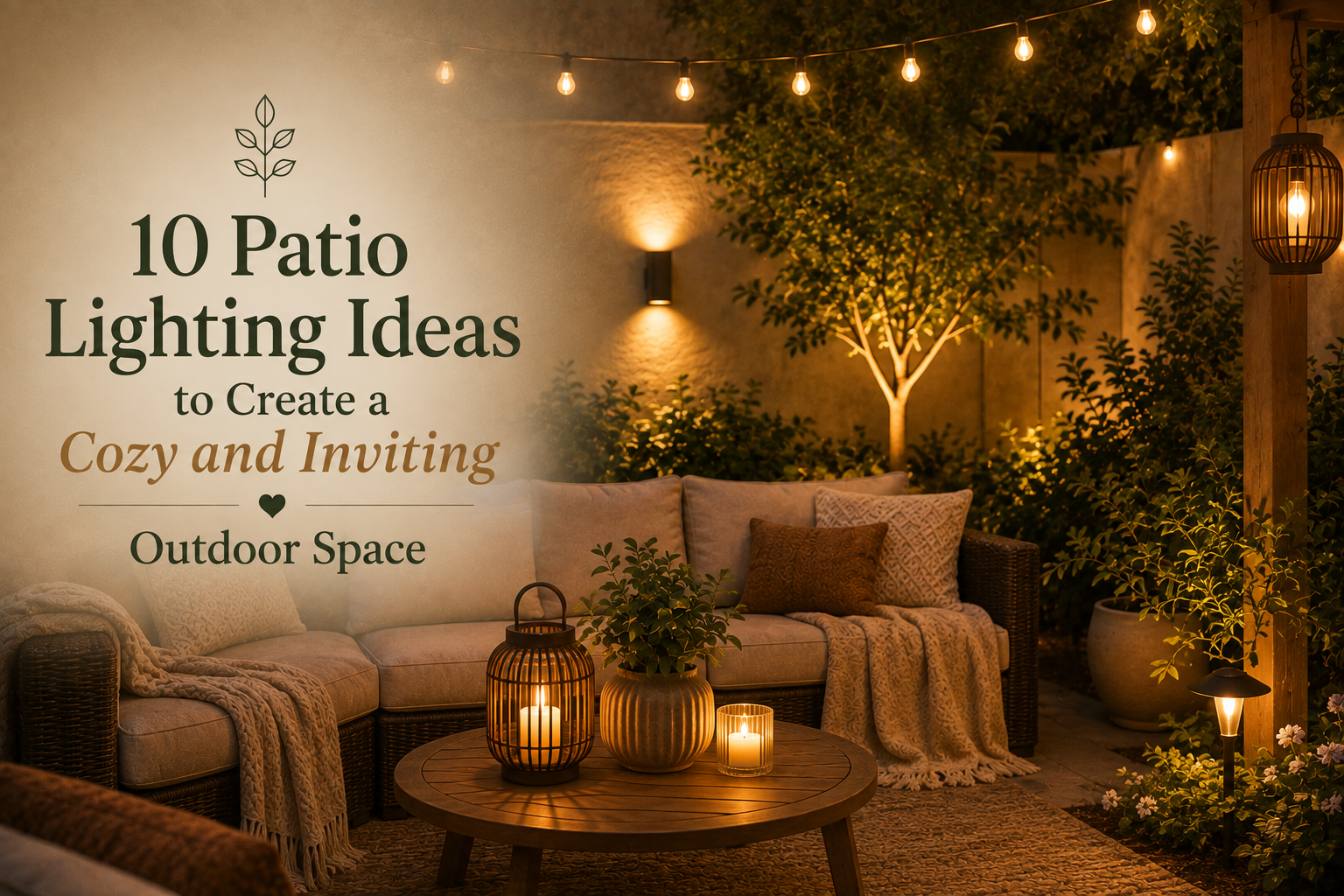
A well-lit patio can feel completely different after sunset. The right outdoor lighting makes seating areas easier to use, highlights architectural details, and creates a comfortable atmosphere for dinner or conversation. The trick is not simply adding brighter lights. Good patio lighting combines ambient, task, and accent lighting so each area has a purpose.
When planning patio lighting, consider the size of the space, existing structures, power sources, and how you use the area at night. These patio lighting ideas can help you create a balanced outdoor living space without making it feel overly bright.
10 Patio Lighting Ideas
1. Hang String Lights for a Warm, Cozy Glow
String lights remain one of the easiest ways to create inviting patio illumination. Hang outdoor string lights across a pergola, between posts, along a railing, or in a simple zigzag pattern above the seating area. For a Halloween porch or patio, LEDs are also a good option for lighting a jack-o’-lantern without an open flame.
Warm white bulbs usually work especially well because they provide a softer glow than cool white light. Choose outdoor-rated, weather-resistant lights designed for exterior use. For entertaining, string lights can provide general ambient lighting while also becoming a decorative feature.
2. Add Lanterns for Soft Decorative Lighting
Lanterns work well when you want smaller pools of light instead of uniform illumination. Place them on a dining table, side table, patio steps, or around a seating area. Traditional homes suit this look especially well; see the best outdoor lighting for a colonial-style home for more ideas.
Hanging lanterns can add height, while floor and tabletop versions make it easy to change the arrangement. Solar and battery-powered lanterns can also work where electrical outlets are limited. I prefer using several low-intensity lanterns rather than one very bright fixture because the result feels more relaxed.
3. Install Outdoor Wall Sconces for Functional Lighting
Wall sconces are practical for patios connected to the house. Install them beside exterior doors, along walls, or near covered seating areas. They provide useful illumination without taking up floor or table space.
Upward, downward, and up-and-down designs create different effects. Downward light can help illuminate entrances and walking areas, while a decorative sconce can add architectural interest. Always select fixtures specifically rated for the outdoor location where they will be installed.
4. Use Pendant Lights Over an Outdoor Dining Area
A pendant light can become the visual centerpiece of a covered patio or outdoor dining area. Position it above a dining table, bar, or outdoor kitchen counter where focused illumination is useful.
Unlike broad ambient lighting, a pendant directs more light toward a particular surface. Choose a fixture that suits the scale of the structure and table. Dimmable LED bulbs can make the same fixture useful for both dinner preparation and relaxed evening meals.
5. Try Recessed LED Lights for a Clean Modern Look
Recessed lights offer a minimalist solution for covered patios. They can be installed into suitable ceilings, soffits, or outdoor structures to provide illumination without adding bulky fixtures. Our lighting requirements calculator turns room size and use into a brightness target.
LED recessed lighting is particularly useful when you want efficient, consistent light. Dimming capability gives you greater control over brightness. Keep the light comfortable rather than excessively bright, especially when the patio is mainly used for relaxing.
6. Outline Steps, Edges, and Pathways With Low-Level Lights
Lighting should also make outdoor movement easier. Pathway lights, step lights, and other low-level fixtures can define changes in elevation and help people navigate the patio after dark. For a softer, more natural effect from above, read about moonlighting in landscape design. To plan fixture count and spacing, try our outdoor lighting calculator.
Place them near steps, walkways, borders, and transitions between different areas. Avoid excessive brightness or poorly aimed fixtures that create glare. A subtle lighting pattern usually provides enough visibility while preserving the relaxed character of the outdoor space.
7. Use Solar Lights Where You Don’t Want Wiring
Solar patio lights are useful when you want outdoor illumination without adding electrical wiring. You can find solar-powered options for pathways, planters, lanterns, and decorative string lighting.
Position solar fixtures where their panels receive adequate direct sunlight during the day. Keep expectations realistic because performance depends on sunlight, battery capacity, weather, and the specific fixture. They work particularly well for patios where permanent electrical installation is inconvenient.
8. Wrap Fairy Lights Around Pergola Posts or Railings
Fairy lights and micro LED lights can add delicate accent lighting to a pergola, railing, column, or architectural feature. Their small points of light create visual interest without dominating the patio.
Use them as decorative illumination rather than your only light source. Combining fairy lights with a stronger ambient fixture creates a more balanced result. This approach works especially well in compact patios where large fixtures may look out of proportion.
9. Highlight Plants and Patio Features With Accent Lighting
Accent lighting can make landscaping and architectural features more noticeable after dark. Small spotlights or uplights can highlight trees, planters, textured walls, sculptures, or other focal points. To convert a candela rating for a directional light, use our candlepower to lumens calculator.
The goal is selective illumination. You do not need to light every plant or surface. Instead, choose two or three features and create contrast between illuminated and darker areas. This adds depth to the patio and connects the lighting design with surrounding garden or landscape elements.
10. Layer Different Patio Lights for the Best Overall Effect
The most effective patio lighting designs rarely depend on one type of fixture. Layering creates a better balance between atmosphere, visibility, and functionality.
Start with ambient lighting, such as string lights, pendants, or recessed fixtures, for general illumination. Add task lighting around dining tables, counters, grills, or food preparation areas. Finish with accent lighting for plants, walls, steps, or decorative features.
For example, string lights can illuminate the main seating area, lanterns can add warmth around the furniture, and pathway lights can define the edges. This combination creates distinct lighting zones without making the entire patio unnecessarily bright.
Conclusion
The best patio lighting ideas are not necessarily the most complicated. A thoughtful combination of warm ambient lighting, practical task lighting, and subtle accents can make a patio comfortable and functional after sunset. Start by identifying the areas you use most, then choose fixtures that suit the patio’s structure, layout, and power availability.
If you are looking for lighting and home ambiance inspiration, explore the lighting collection and guides from Lume & Wick. Choosing the right light is ultimately about creating an outdoor space that feels as good at night as it looks during the day.