I used to grab any air freshener that smelled good without paying attention to the ingredient list. Over time, especially after testing different home fragrance products in my own space, I realized that the ingredients determine much more than the scent itself. They affect fragrance longevity, odor elimination performance, indoor air quality, and even whether a product aligns with personal preferences for natural or synthetic formulations.
Understanding air freshener ingredients helps you make informed choices. Some formulations focus on long-lasting fragrance using synthetic fragrance compounds, while others rely on essential oils and plant-based ingredients for a more natural scent experience. Many products also contain odor-neutralizing agents designed to eliminate unpleasant smells rather than simply masking them.
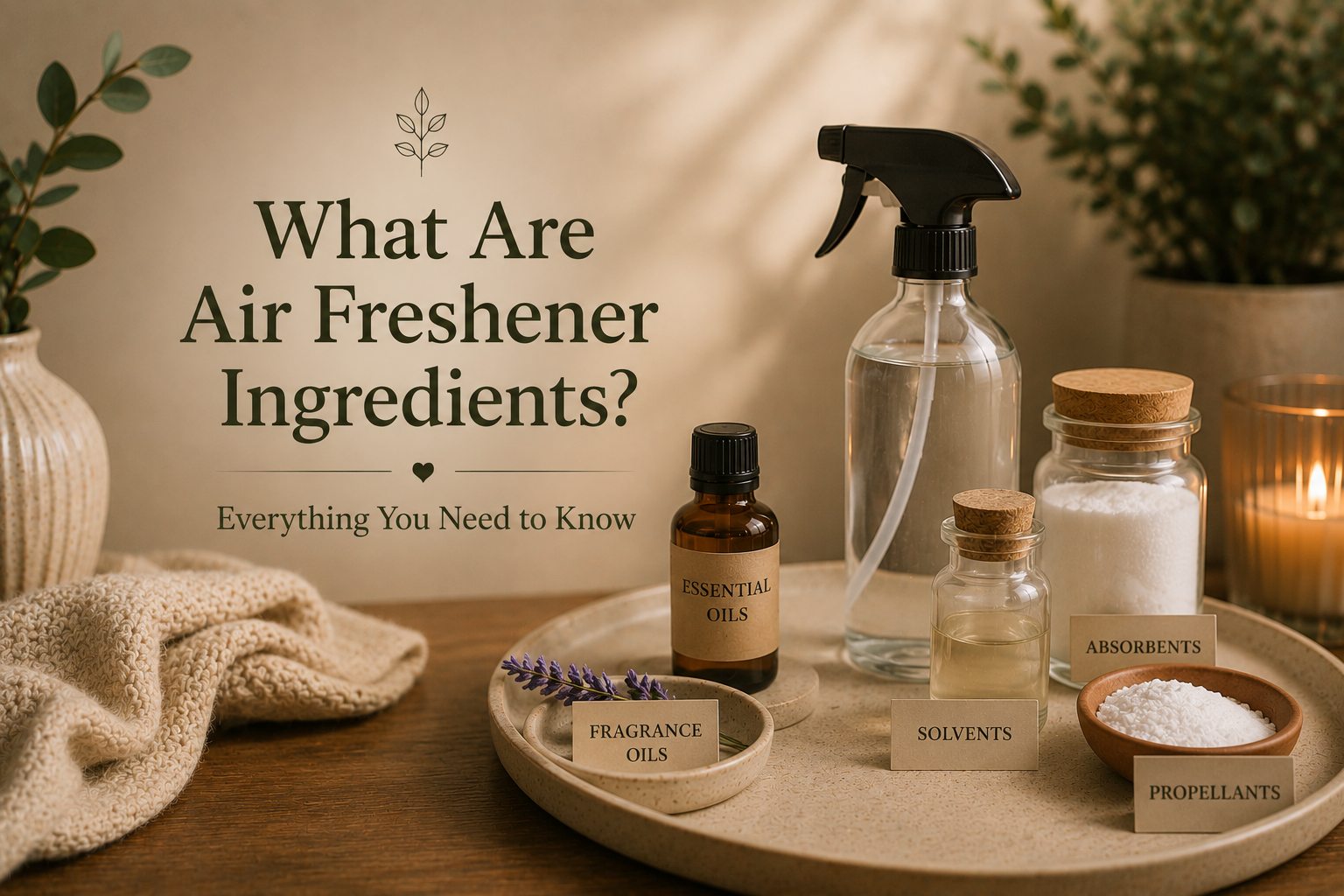
When you read an ingredient label, you will often find fragrance oils, carrier solvents, preservatives, emulsifiers, and deodorizing technology working together to create an effective air care product. Knowing the purpose of each component can help you choose an option that fits your lifestyle and fragrance preferences.
Fragrance Oils
Fragrance oils are the primary scent-producing ingredients found in most air fresheners. They consist of carefully blended fragrance compounds designed to create specific scent profiles such as floral, citrus, woody, fresh linen, or gourmand aromas. These aromatic ingredients often provide stronger scent throw and better fragrance stability compared to many natural alternatives.
Through personal experience testing various room sprays and plug-in diffusers, I noticed that products using high-quality fragrance compositions typically maintain their scent for longer periods. Synthetic fragrance oils also allow manufacturers to recreate complex aromas that may be difficult to obtain from natural extracts alone.
Modern fragrance formulations often balance performance with consumer demand for ingredient transparency. Many brands now offer phthalate-free formulas while maintaining excellent scent diffusion and odor control capabilities.
Essential Oils
Essential oils are concentrated botanical extracts derived from flowers, leaves, peels, bark, and other plant materials. Popular examples include lavender, eucalyptus, lemon, peppermint, and tea tree oil. These natural fragrance ingredients are commonly used in non-toxic air fresheners and aromatherapy-inspired products.
I started experimenting with essential oil-based air fresheners because I wanted a lighter scent experience in smaller rooms. Lavender created a calming atmosphere in the bedroom, while citrus oils worked exceptionally well in the kitchen due to their clean and refreshing aroma.
Although essential oils appeal to consumers seeking plant-based ingredients, they generally behave differently from synthetic fragrance compounds. Natural extracts may evaporate faster, resulting in shorter fragrance longevity. However, many people appreciate their authentic scent character and eco-friendly formulations.
Essential oil air fresheners have become increasingly popular among consumers looking for biodegradable ingredients, naturally derived fragrances, and products that align with wellness-focused lifestyles.
Solvents (Water and Alcohol)
Solvents play an essential role in air freshener formulations because they help dissolve fragrance ingredients and distribute them evenly throughout the product. The most common solvents are water and ethanol. Water-based formulations often appeal to consumers looking for lighter fragrance delivery, while ethanol helps fragrance oils disperse quickly into the air.
After trying both alcohol-based room sprays and water-based alternatives, I found that alcohol-containing products usually provide a stronger initial scent projection. Ethanol evaporates rapidly, carrying aromatic compounds into the surrounding environment and improving scent diffusion. Water-based air fresheners, on the other hand, often offer a gentler fragrance experience suitable for smaller spaces.
These carrier solvents do not simply dilute fragrance oils. They contribute to product performance, consistency, and overall user experience.
Odor-Neutralizing Agents
Many people assume air fresheners only mask unpleasant smells. In reality, modern formulations often include odor-neutralizing agents designed to address odor molecules directly. This deodorizing technology helps improve perceived freshness rather than covering unwanted scents with stronger fragrances.
Cyclodextrins are among the most effective odor elimination ingredients used in air care products. These compounds trap malodor molecules within their structure, reducing their presence in the surrounding air. Baking soda, also known as sodium bicarbonate, remains a popular natural odor absorber because of its ability to neutralize acidic and alkaline odor compounds. Activated charcoal works similarly by absorbing impurities and unwanted odors through its porous surface.
From personal experience, products containing odor-neutralizing compounds performed better in kitchens and pet areas compared to fragrance-only options. Effective malodor control technology creates a cleaner environment without relying solely on intense scent profiles.
Preservatives
Preservatives help maintain product safety and stability by preventing the growth of bacteria, mold, and yeast in liquid formulations. Since many air fresheners contain water, microbial protection becomes necessary to preserve product quality throughout its shelf life.
Ingredients such as phenoxyethanol are commonly used to support formulation preservation. These compounds ensure that the fragrance composition remains effective and safe during storage and regular use.
Initially, I viewed preservatives negatively because they sounded highly synthetic. However, understanding their function changed my perspective. Appropriate preservative systems contribute to product stability and prevent contamination, particularly in water-based air fresheners that may otherwise support microbial growth.
Consumers interested in ingredient transparency should recognize that preservatives serve an important role in maintaining formulation integrity and extending usability.
Emulsifiers and Stabilizers
Fragrance oils naturally separate from water. Emulsifiers and stabilizers solve this challenge by helping oil-based and water-based ingredients form a homogeneous mixture. These formulation aids improve ingredient stability and maintain consistency throughout the product’s lifespan.
Without proper dispersion agents, air fresheners could develop uneven fragrance distribution, affecting both performance and appearance. Stabilizers also support fragrance stability by preventing separation during storage.
I noticed this difference while testing homemade air fresheners without emulsifiers. The essential oils quickly separated from the water layer, requiring constant shaking before use. Commercial products typically avoid this issue because they incorporate ingredients specifically designed to maintain formulation consistency.
Although consumers rarely notice these components on ingredient labels, they significantly influence product quality and user satisfaction.
Aerosol Propellants (Found in Spray Air Fresheners)
Aerosol air fresheners require propellants to release fragrance as a fine mist. Common propellants include butane, propane, and isobutane. These ingredients create the pressure needed for efficient spray delivery systems.
Pressurized formulations allow fragrance compounds to disperse quickly across larger areas, making aerosol products effective for immediate odor control. However, these ingredients are specific to aerosol formats and are not found in gel air fresheners, reed diffusers, or plug-in systems.
When comparing various home fragrance products, I found aerosol air fresheners particularly useful for quickly refreshing living rooms before guests arrived. Their instant scent distribution provides convenience, although many consumers now also seek non-aerosol alternatives due to personal preferences related to indoor air quality and eco-friendly formulations.
Phthalates
Phthalates are fragrance stabilizers sometimes used to help scents last longer in certain air freshener formulations. Their primary function is to support fragrance longevity by slowing the evaporation of aromatic compounds. However, growing consumer awareness has increased demand for phthalate-free formulas and greater ingredient transparency.
When I first started paying attention to air freshener labels, I noticed that many brands proudly highlighted their phthalate-free formulations. This shift reflects a broader preference for informed purchasing decisions rather than suggesting that every product containing phthalates is unsafe. Consumers simply want more control over the ingredients used in their homes.
Today, many manufacturers offer effective home fragrance products without phthalates, allowing users to prioritize both scent performance and personal preferences.
VOCs (Volatile Organic Compounds)
Volatile organic compounds, commonly called VOCs, are chemicals that easily evaporate into the air at room temperature. Some fragrance ingredients and aerosol formulations may contribute to VOC emissions. As awareness of indoor air quality grows, many shoppers actively seek low-VOC products.
During my experience testing different home fragrance options, I found that consumers often associate low-VOC air fresheners with a cleaner indoor environment. While VOCs are present in many everyday household products, understanding their role helps people make choices aligned with their comfort level and lifestyle.
Many brands now focus on developing formulations that balance fragrance performance with improved ingredient transparency. Looking for labels that mention low-VOC formulations can be helpful if indoor air quality is an important consideration for your household.
How to Choose Safer Air Freshener Ingredients
Choosing the right air freshener ingredients does not have to be complicated. Start by reading the ingredient label carefully and identifying the type of fragrance system used. Essential oil-based products may appeal to those who prefer plant-derived ingredients, while synthetic fragrance compounds often provide stronger scent throw and longer-lasting performance.
Look for products that offer clear ingredient disclosure and mention attributes such as phthalate-free formulas, low-VOC composition, or eco-friendly formulations. Odor-neutralizing agents like cyclodextrins can provide effective odor elimination instead of simply masking unpleasant smells.
Through trial and error, I learned that the best air freshener depends on individual needs. A pet owner may prioritize deodorizing technology, while someone sensitive to strong fragrances may prefer water-based formulations with subtle botanical extracts. Understanding ingredient functions allows you to make informed decisions that fit your home and preferences.
Conclusion
After exploring various home fragrance products over the years, I realized that understanding air freshener ingredients transforms the way we shop for scented products. Ingredients such as fragrance oils, essential oils, carrier solvents, odor-neutralizing agents, preservatives, and stabilizers each contribute to fragrance performance, product stability, and overall user experience.
Rather than focusing only on the scent itself, take time to review ingredient labels and choose formulations that align with your priorities, whether that means long-lasting fragrance, plant-based ingredients, low-VOC products, or enhanced odor control. This simple habit helps you create a more enjoyable and informed home fragrance experience.
If you are looking for thoughtfully crafted home fragrance products that emphasize quality and carefully selected ingredients, exploring collections from Lume & Wick can be a great place to discover scents that complement your space and personal preferences.