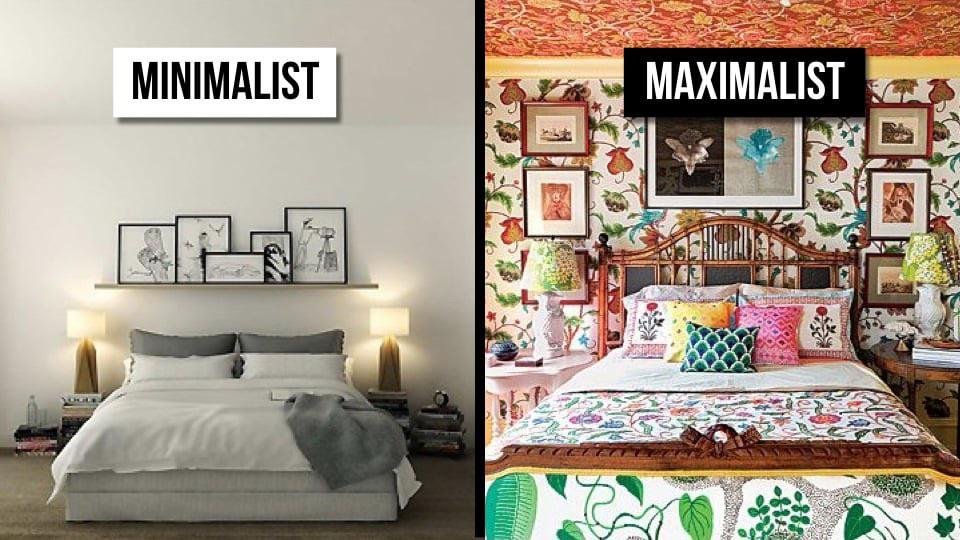
Two mood boards sit open on my laptop. One shows a pale room with clean lines and empty surfaces. The other bursts with jewel tones, layered rugs, and a floor-to-ceiling gallery wall. Anyone comparing minimalist vs maximalist decor meets this exact split. I have styled rooms in both directions and lived with each for months. This guide weighs them on cost, upkeep, room size, and daily life. Neither approach wins outright. One will simply suit your home better.
What Minimalist Decor Really Looks Like
Minimalist decor runs on intentional design, not deprivation. Bauhaus thinking survives in it, where form follows function. Negative space carries as much weight as the furniture, and every object earns its place.
Four markers define the look. Surfaces stay empty by choice. A tonal palette holds two or three shades, usually warm neutrals. Cords and clutter vanish into closed storage. One focal point anchors the room.
Specifics help. On open shelving I keep three to five objects, never fifteen. That rule of three does more work than any other styling formula.
Cold rooms remain a myth. Textural contrast through linen, oak, and wool replaces pattern, warming the space fast.
What Maximalist Decor Really Looks Like
Maximalist decor means controlled abundance. Layering happens deliberately. Nothing accumulates by accident.
Four signals mark the style. Patterns mix across walls, upholstery, and floors. A salon-style gallery wall climbs high. Collections sit on open display, often along a full-wall bookshelf. Bold colours clash with confidence, sometimes through colour drenching that carries paint onto the ceiling.
My working rule: three patterns at different scales, large, medium, and small, linked by one shared shade. Drop that shared shade and visual noise takes over.
Clutter differs entirely, because clutter lacks a repeating colour, theme, or story. Layered rooms hold narrative objects collected over time.
Minimalist vs Maximalist Decor Compared
Taste rarely settles this decision. Practical factors do. The table below comes from rooms I have measured, styled, and cleaned, so the numbers reflect real living rather than photo shoots.
| Factor | Minimalist | Maximalist |
|---|---|---|
| Colours per room | 2 to 3 | 5 or more |
| Patterns per room | 0 to 1 | 3 or more |
| Objects per surface | 1 to 3 | 5 to 10 |
| Wall coverage | Under 30 percent | 60 percent and up |
| Weekly upkeep | Low dusting, high tidying | High dusting, low tidying |
| Cost pattern | Fewer, higher-cost pieces | Many pieces, often secondhand |
| Suits small rooms | Yes | Only with restraint |
| Hides everyday mess | No | Yes |
That final row surprises people. Busy rooms absorb a stray sweater. Bare rooms expose it instantly.
What Both Styles Get Right
Shared principles run beneath both approaches. A clear focal point directs the eye. Balance spreads visual weight so no corner sags. Scale and proportion keep furniture honest against the room. Layered lighting, ambient plus accent, adds depth after dark. Repetition builds rhythm through colour, shape, or material. Symmetry calms a room, while asymmetry energises it, and both styles choose one deliberately.
Editing shows up on both sides. Minimalists edit before a room finishes. Maximalists edit while adding, releasing one piece as another arrives.
Negative space serves each differently. Restraint leaves it open and calm. Abundance uses it to frame busy zones, keeping sightlines clear.
How to Choose the Style That Fits Your Home
Start With Room Size and Light
Small, dim rooms reward a pared-back approach. Saturated colour and heavy layering need square footage and daylight. Below 120 square feet, lean minimal, or contain the drama to one accent wall. High ceilings flip the maths completely, since tall walls swallow statement wallpaper and gain character from it.
Be Honest About Upkeep
Open display invites dust. Bare surfaces expose every stray item within seconds. Match the style to your real cleaning habit, not the aspirational version. Pets and children tip the balance toward layered textiles, which mask wear and soften noise. My own tally: dusting a busy shelf costs roughly twenty minutes weekly.
Match Budget and Timeline
Minimalism costs more per piece because everything stays visible, so flaws show. Maximalism costs less per item yet takes years to assemble properly. Decorating on a budget usually favours the collected route, especially through vintage shops and secondhand marketplaces. Slow decorating also cuts waste, which matters when sustainability guides your choices.
Trust the Room’s Feeling
Ask which space makes you exhale. Cosy or calm. Full or quiet. That instinct predicts long-term satisfaction far better than any rule. It also explains why quiet luxury appeals to some readers while dopamine decor pulls others.
You Can Blend Both
Most real homes land between the extremes. Two hybrids work reliably.
Warm minimalism keeps the low object count, then introduces wood, bouclé, and one unexpected shade. Japandi and Scandinavian design belong here, both borrowing wabi-sabi acceptance of imperfect finishes.
Edited maximalism confines layering to a single zone. Options include a gallery wall, a papered ceiling, or one bold room inside an otherwise calm floor plan. Grandmillennial and bohemian eclectic schemes often follow this logic.
One rule guides the blend. Pick a single loud element per room. Keep everything else quiet. That ratio prevents sensory overload while protecting personal expression.
Final Thoughts
Minimalist vs maximalist decor never produces a clear winner. The right decorating style matches your room, your budget, and the life happening inside it.
Test it first. Style one shelf two ways. Live with the pared version for a week, then the layered version. Your own reaction settles the debate faster than any guide.
Whichever direction wins, small pieces carry the shift. Candles, lighting, and considered accents change a room’s mood without renovation. Browse the collections at Lume & Wick when you feel ready to style that first shelf.