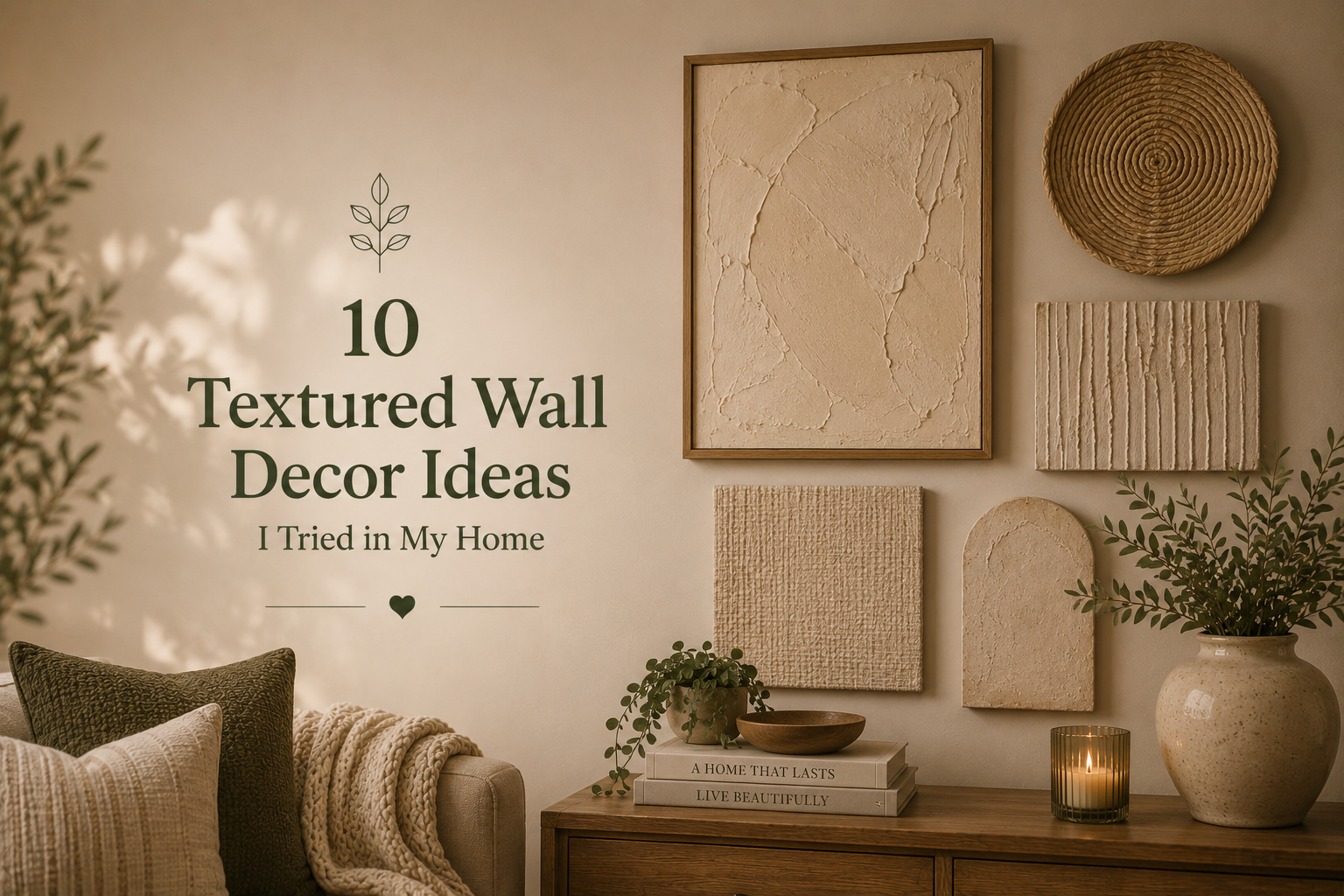
Plain walls make even a well-furnished room feel unfinished. I learned this the hard way after painting my living room a flawless white, only to realize it looked more like a hotel lobby than a home. Texture fixed it. A single wood panel or a plaster finish adds depth, warmth, and shadow that flat paint simply cannot deliver.
Below are ten textured wall decor ideas I have tested myself, ranked by ease, cost, and visual payoff. Pick one that fits your space and skill level.
1. Venetian Plaster Walls
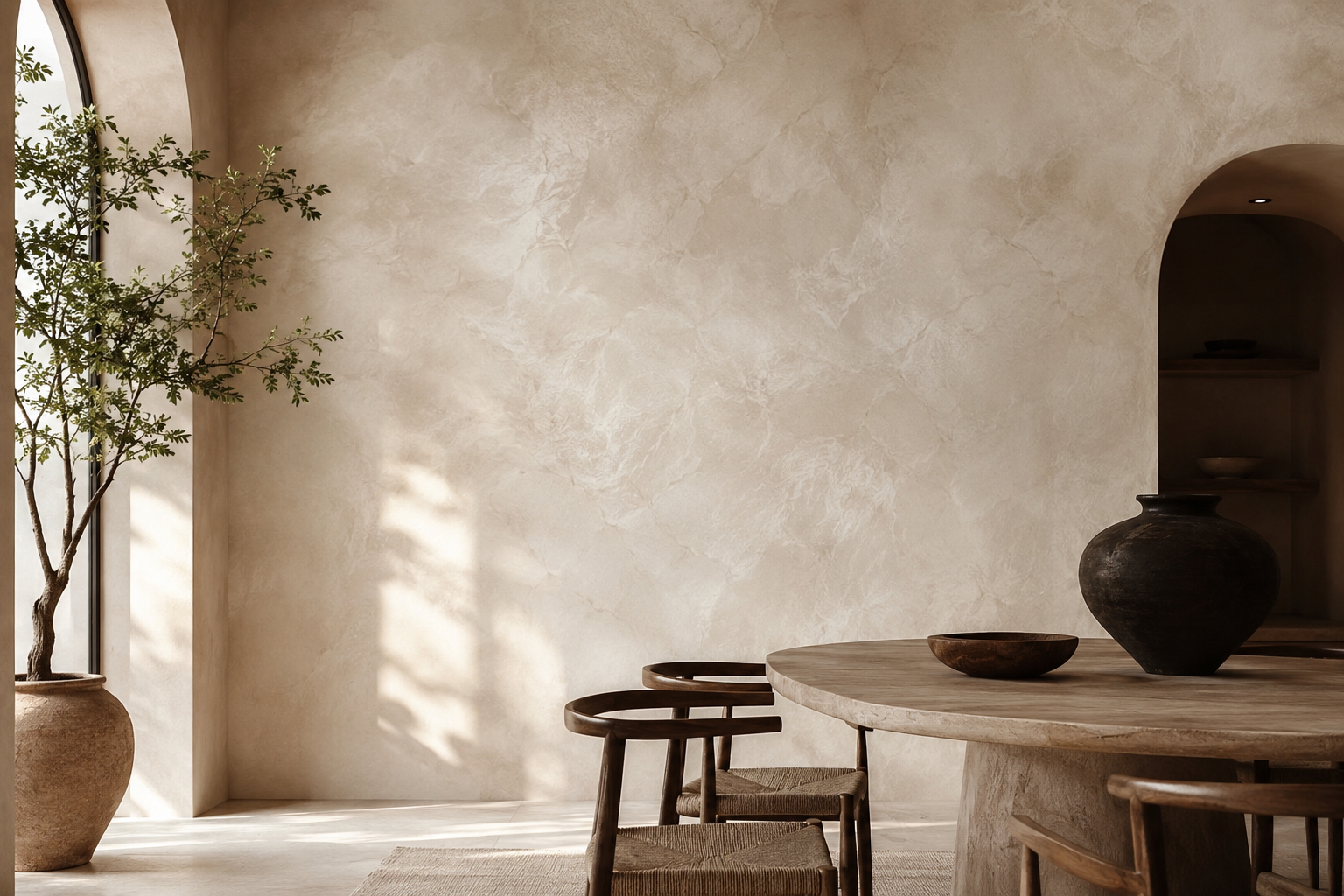
Venetian plaster remains my favorite splurge. Craftsmen apply thin layers of lime-based plaster, then burnish the surface until it glows with a soft, marbled sheen. The finish suits minimalist and Mediterranean interiors equally well, though it works just as nicely in a maximalist room as a quiet backdrop for bolder pieces.
Expect a higher price tag since application demands a trained hand, but the payoff is a wall that looks carved rather than painted. I hired a plasterer for my dining room, and three years later, the texture still catches afternoon light beautifully.
2. Lime Wash Painted Walls
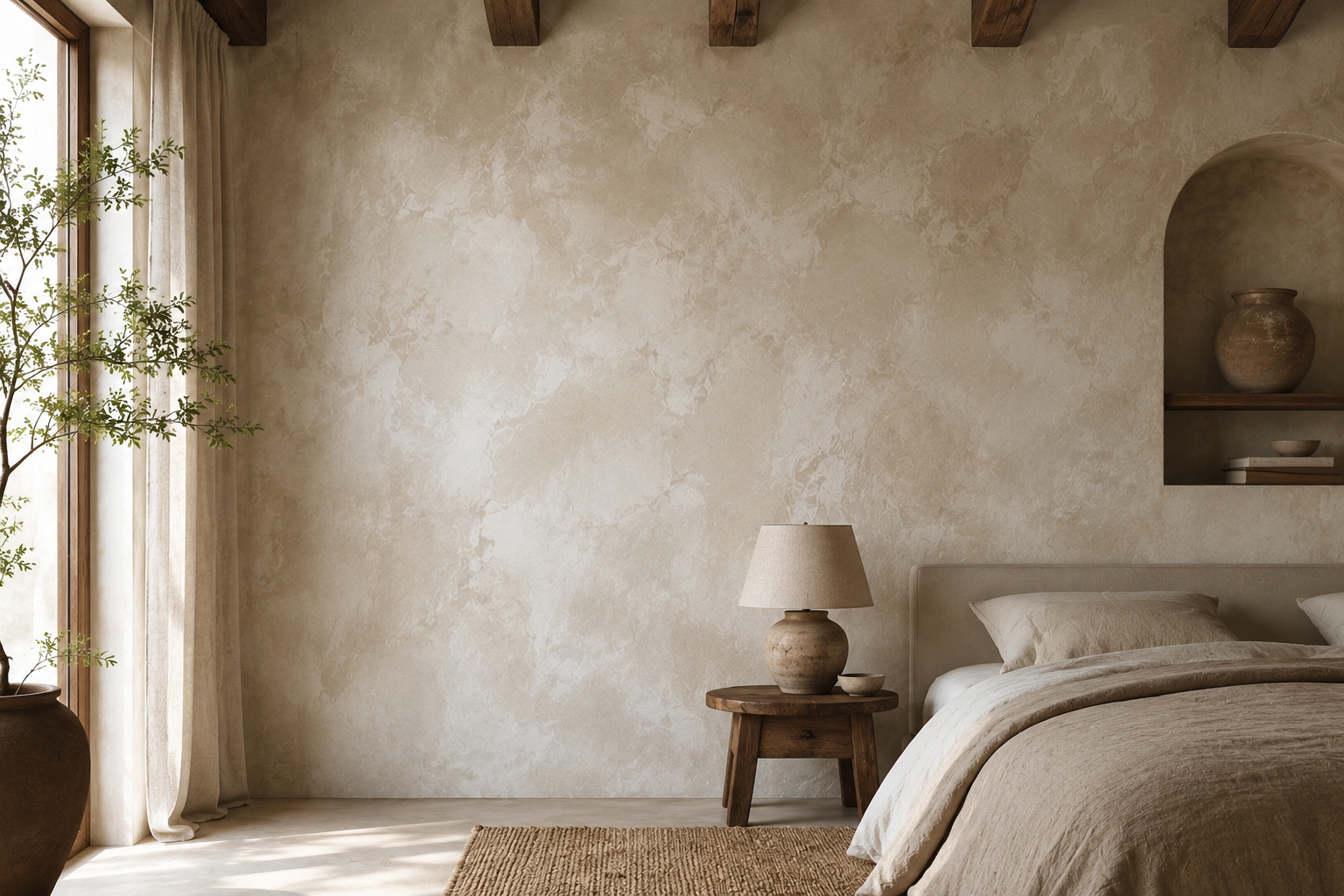
If plaster stretches your budget, lime wash offers a similar cloudy, aged look at a fraction of the cost. This mineral-based paint dries with soft variations in tone, so no two brush strokes look identical. I applied it myself over a weekend using a natural bristle brush, and the imperfect finish gave my bedroom an intentionally weathered charm.
Lime wash pairs well with earthy, wabi-sabi styled rooms where flawless surfaces feel out of place.
3. Wood Accent Wall or Paneling
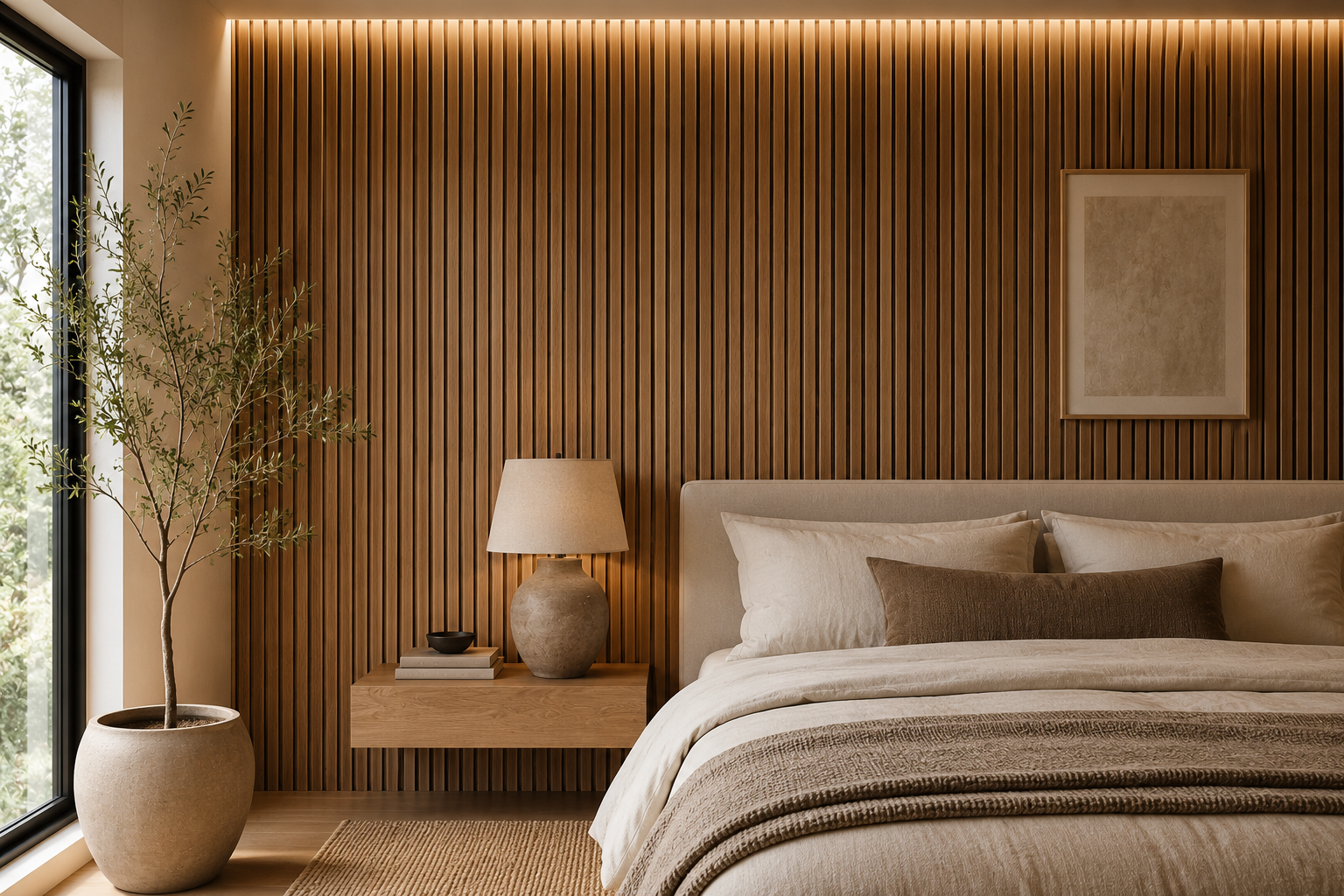
Wood brings warmth that plaster cannot match. Slatted panels, shiplap boards, or reclaimed timber all add grain and shadow lines across a wall. Renters can try peel-and-stick wood panels, while homeowners might prefer solid boards nailed directly into the drywall.
I installed slim oak slats behind my headboard, and the vertical lines made the ceiling feel taller. If you are adding framed art on top of the paneling, our wall art size guide can help you get the proportions right.
4. Stone or Brick Veneer
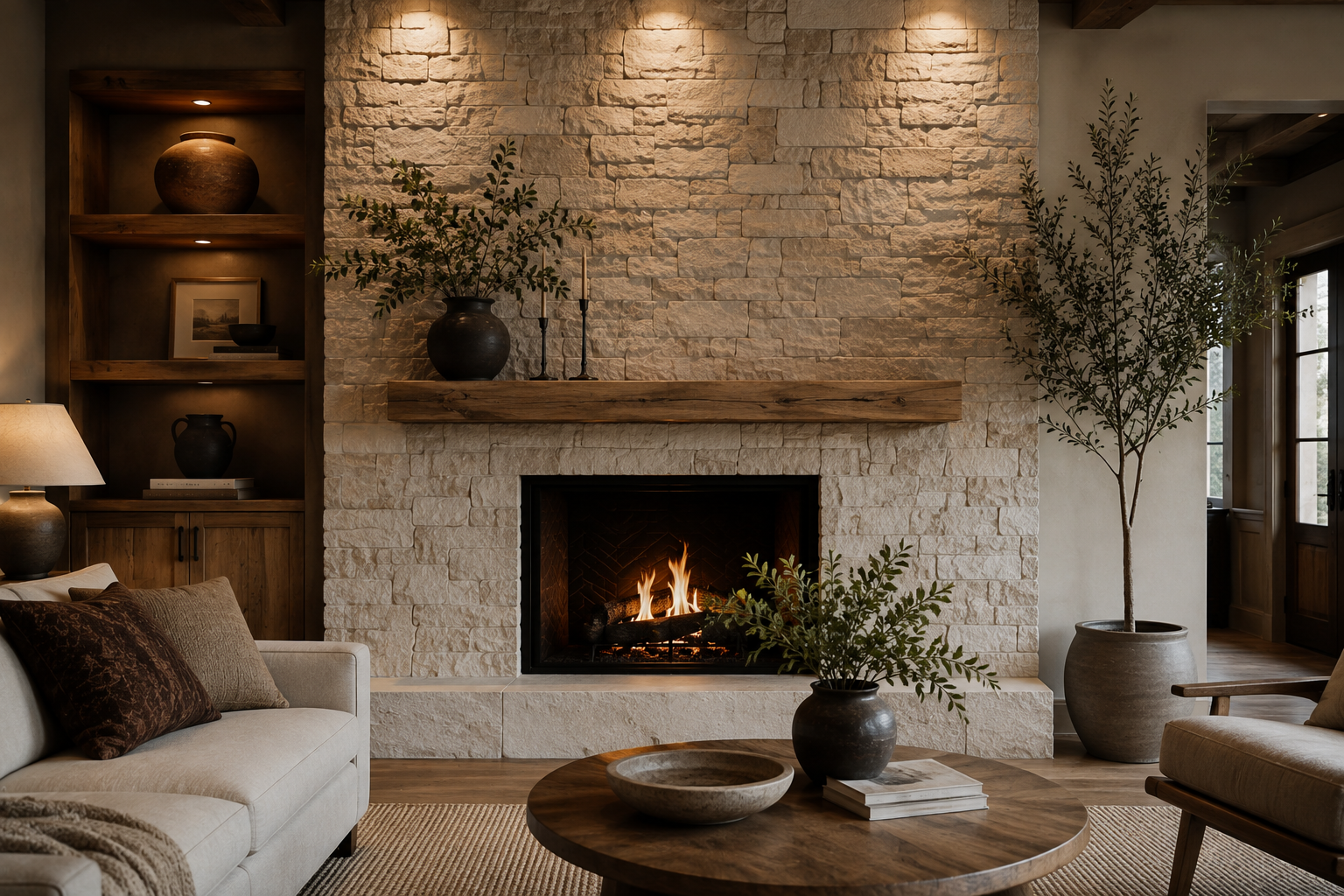
Stone and brick veneer bring a rugged, architectural texture indoors without structural work. Lightweight panels mimic real masonry and install with adhesive or basic fasteners. Fireplace walls and entryways handle this texture especially well, since the rougher surface reads as intentional rather than accidental.
I added faux limestone veneer around my fireplace, and guests still ask whether it is original brick, then usually ask what I did with the mantel, which is where these mantel decor ideas came in handy.
5. 3D Wall Panels
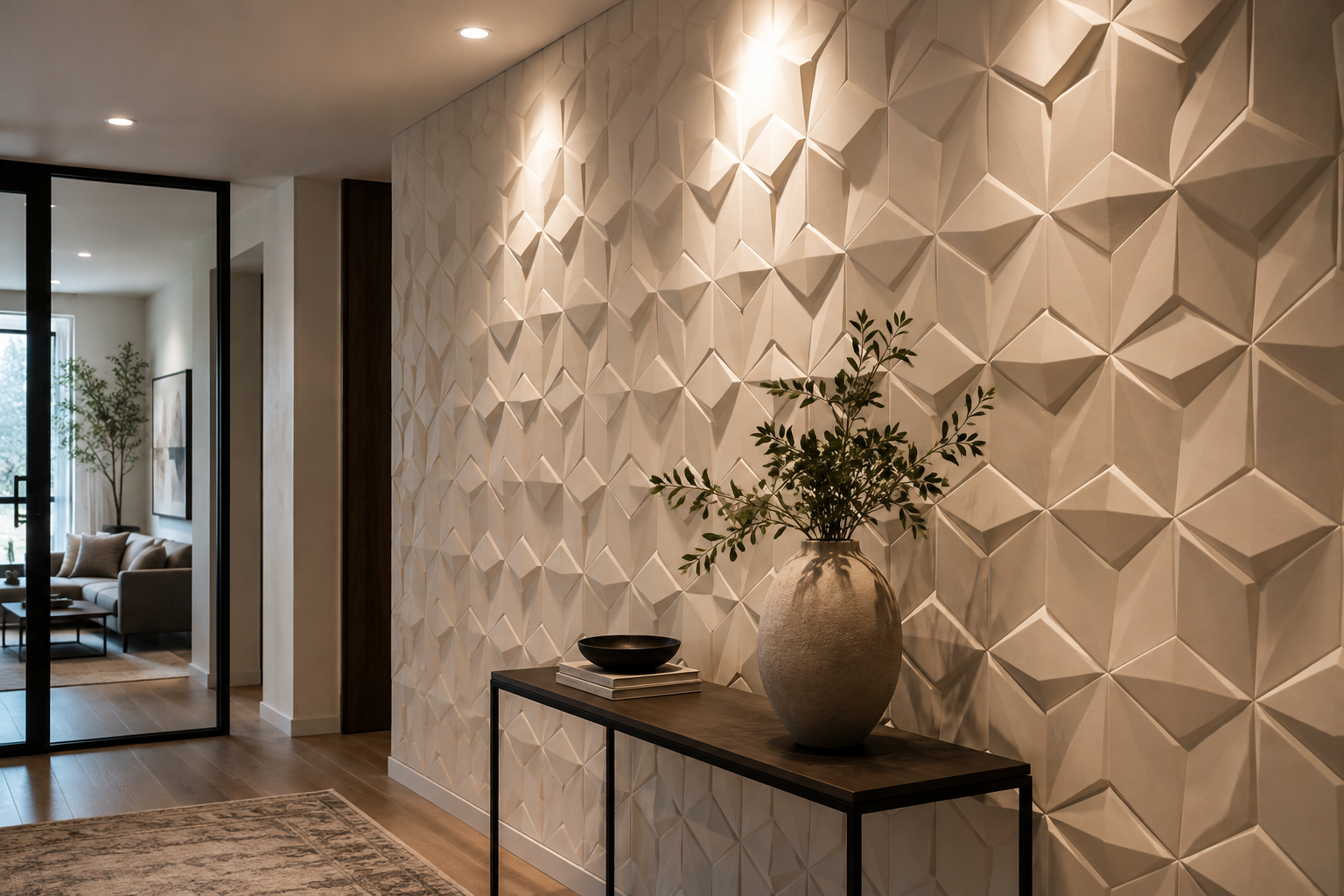
Geometric 3D panels turn a flat wall into a sculptural feature through raised patterns that catch light differently throughout the day. Made from PVC, MDF, or gypsum, these panels suit modern and maximalist spaces alike. I mounted a set of honeycomb panels in my hallway, and the shifting shadows change the mood from morning to evening.
If you want to soften a long run of panels, grouping a few framed pieces nearby the way I describe in how to arrange a gallery wall keeps the eye moving instead of fixating on one giant texture.
6. Macrame Wall Hangings
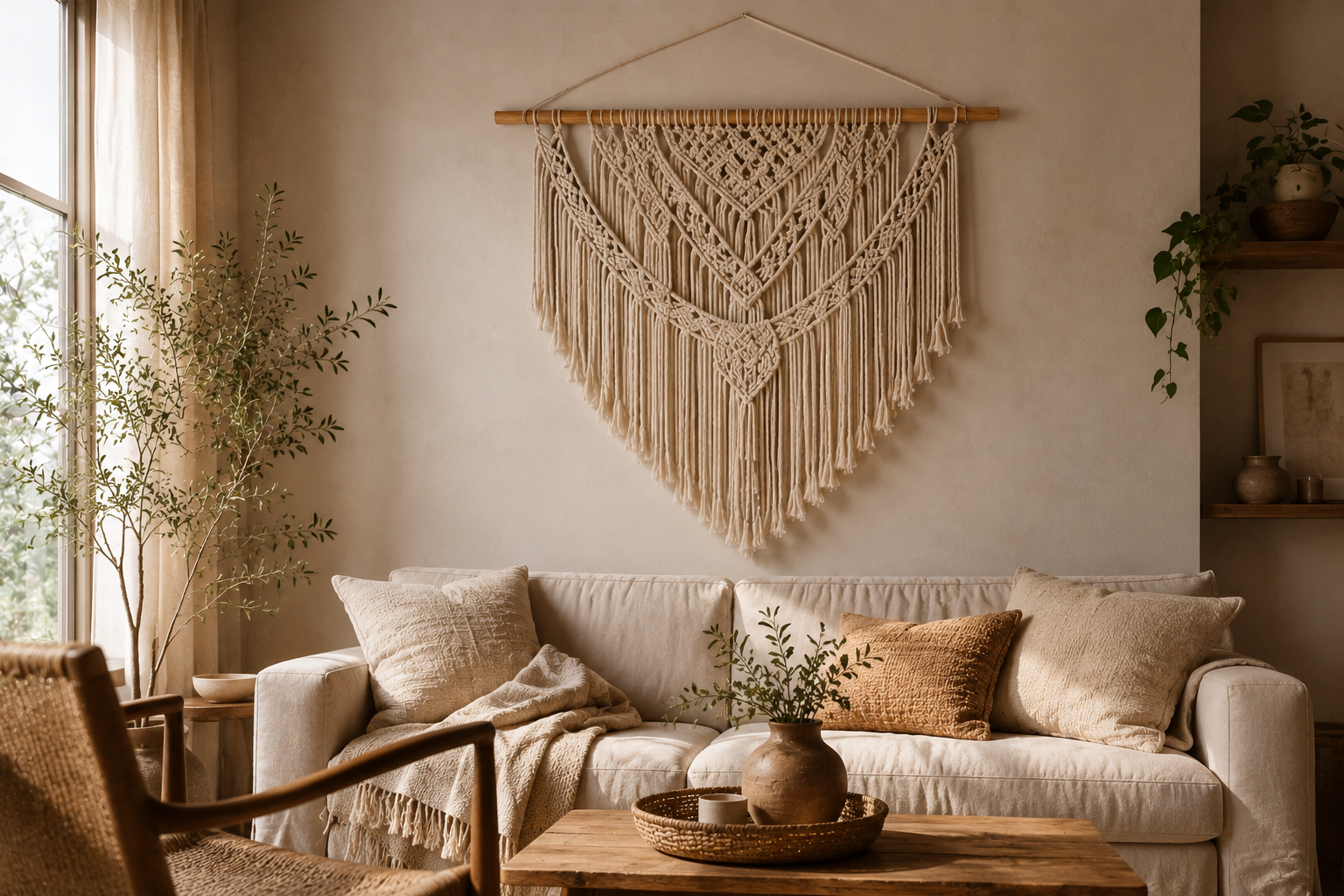
Macrame remains one of the gentlest ways to introduce texture without any tools beyond a hook and nail. Knotted cotton cord creates soft shadows and a relaxed, bohemian feel. An oversized piece above a bed or sofa works as an instant statement, especially when paired with the kind of layered textiles covered in best sofa throws for cozy living spaces.
I bought mine from a local artisan, and it has moved with me through three apartments without losing its shape.
7. Woven Wall Art and Textiles
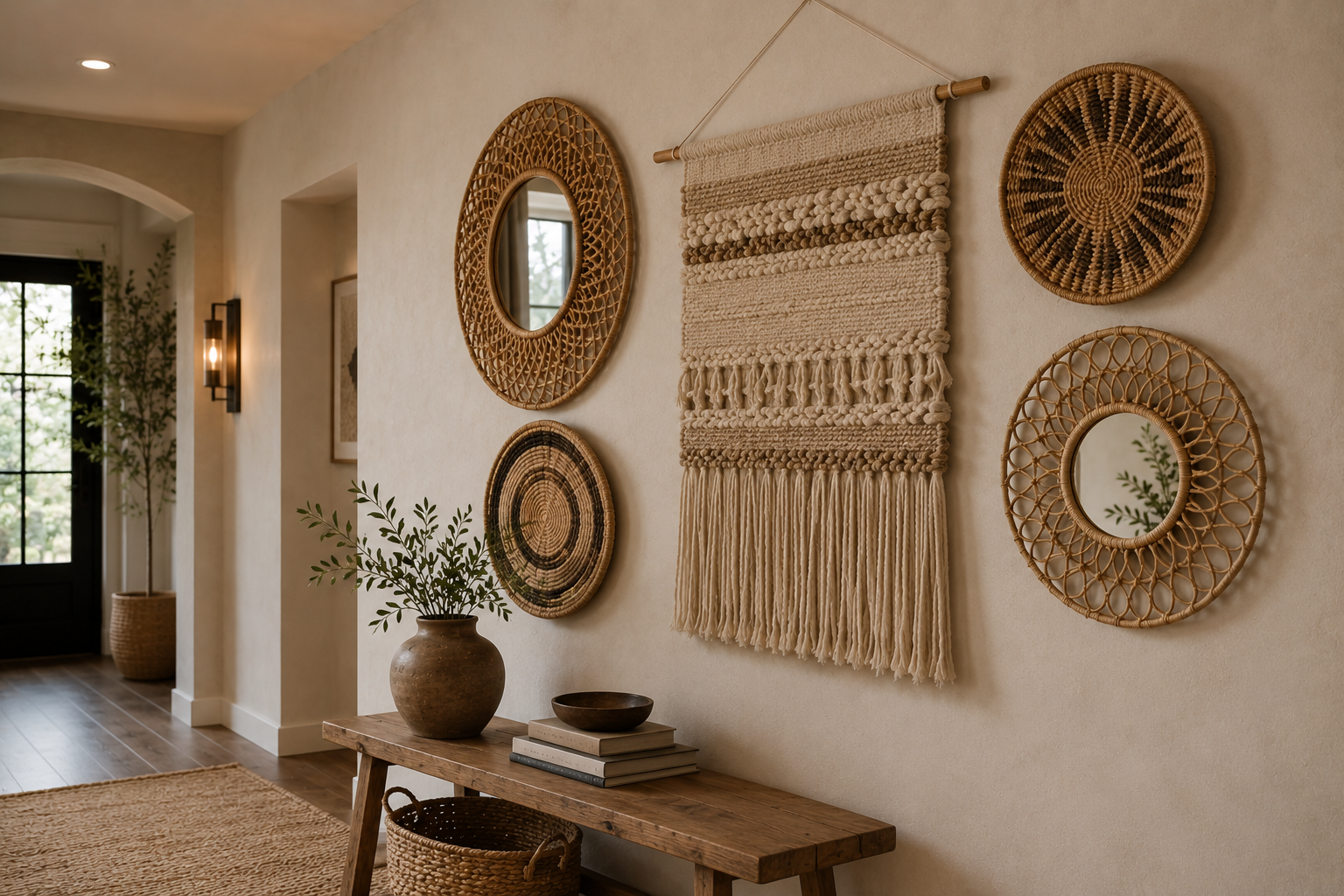
Woven tapestries, rattan discs, and fiber art panels differ from macrame in structure, since they rely on tighter weaves rather than loose knots. Layering several small woven pieces together builds a gallery-style texture wall that feels curated rather than sparse. Pair textured walls with calm, styled open shelving so the room does not feel busy.
I grouped three rattan mirrors with a woven runner, leaning on the same grouping logic from the rule of three in decorating, and the combination softened an otherwise stark hallway. Woven decorative storage baskets echo the same natural texture at floor level.
8. Textured Wallpaper
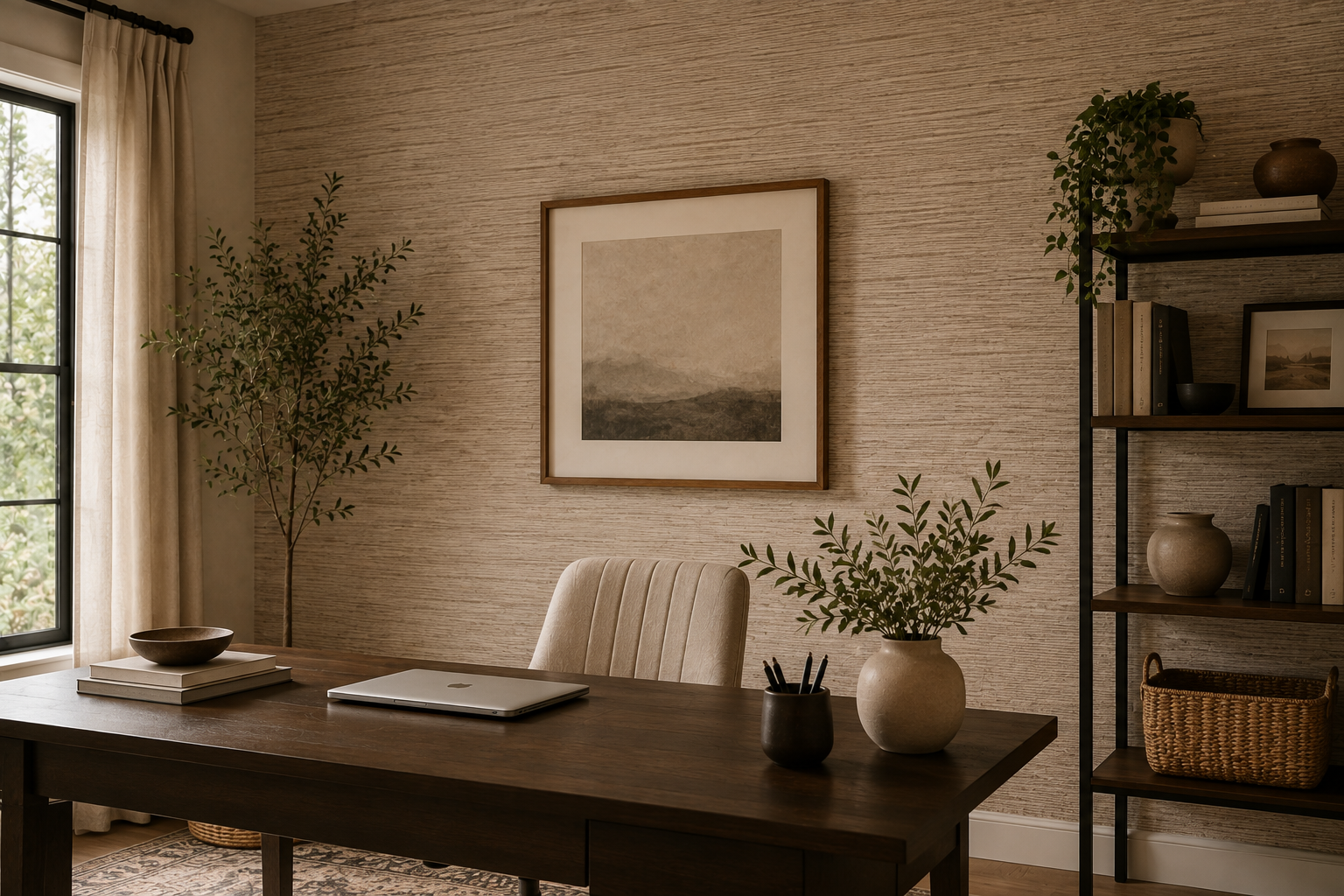
Textured wallpaper solves the problem of adding depth without any structural change. Grasscloth, embossed vinyl, and fabric-backed options each create a distinct tactile surface, and peel-and-stick versions make the process renter-friendly.
I chose a subtle embossed stripe for my home office, and the slight ridges catch light without overwhelming the room. This option delivers the fastest transformation on this entire list.
9. Wall Molding and Trim Details
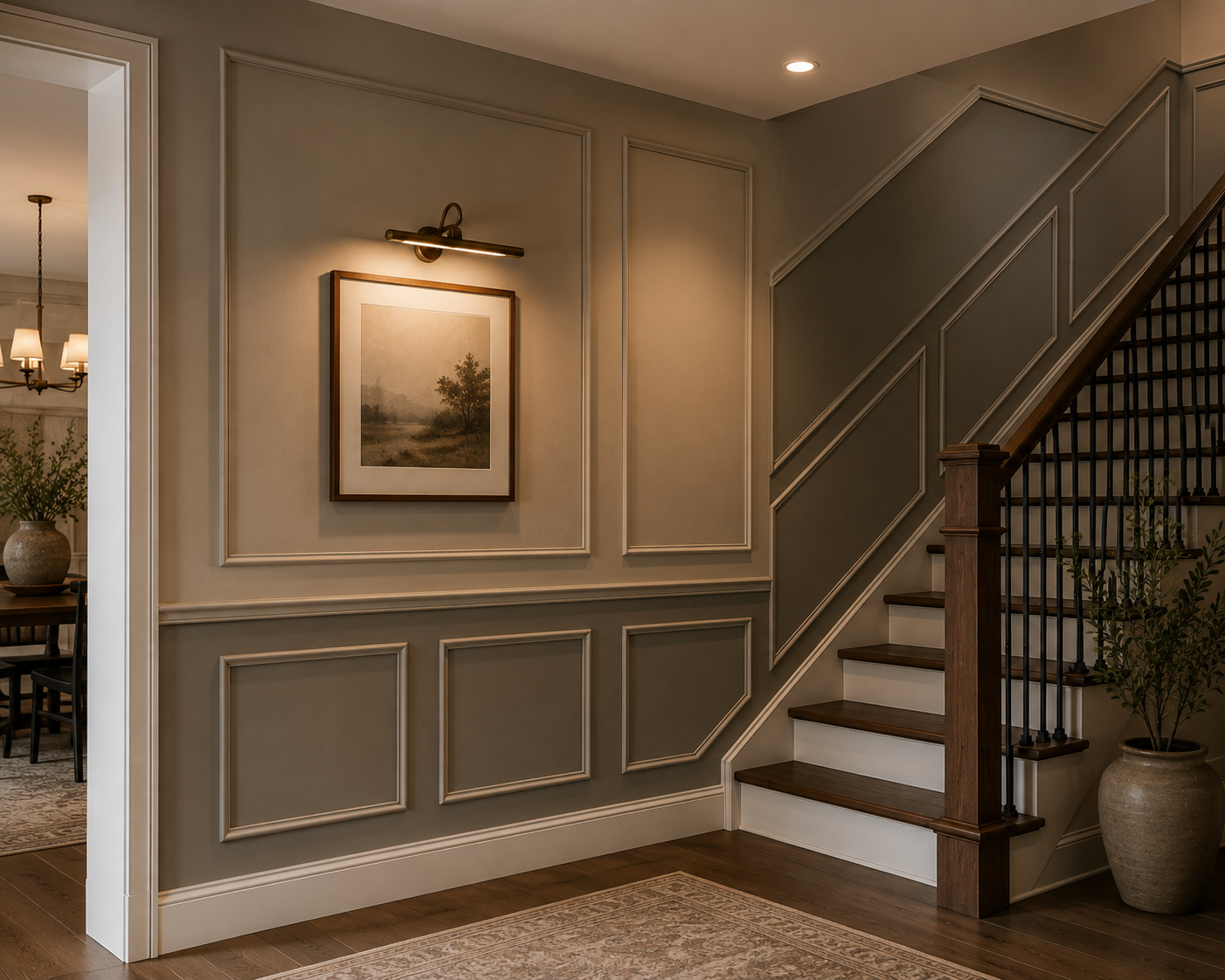
Picture-frame molding, wainscoting, and geometric trim add architectural texture through shadow lines rather than surface material. Painting the molding a shade darker than the wall behind it deepens the contrast and makes the pattern pop.
Traditional and transitional homes benefit most from this approach. I added simple rectangular molding to my staircase wall, and the two-tone paint job made a builder-grade space feel custom.
10. Fabric-Wrapped or Upholstered Wall Panels
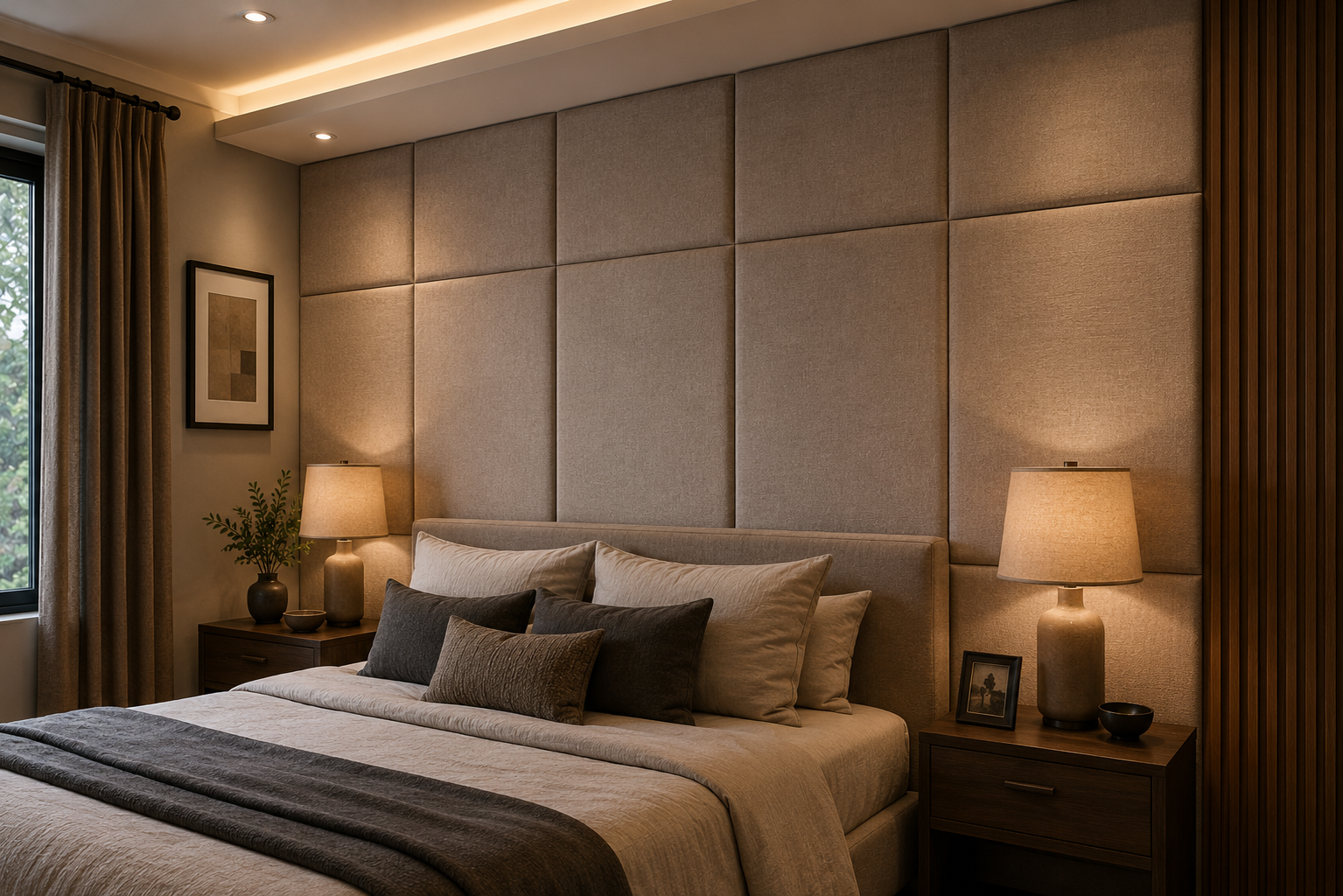
Padded, fabric-covered panels bring a soft, tactile finish that also dampens sound, a practical bonus in media rooms or bedrooms. Foam-backed panels wrapped in linen or velvet install with cleats or adhesive strips, so the process stays fairly beginner-friendly.
Once the wall itself has that softness, I like to echo it on nearby surfaces using ideas from coffee table styling ideas. I upholstered three panels for my home theater, and the room genuinely sounds quieter with the added fabric surface absorbing echo.
Conclusion
Texture, whether bold like stone veneer or subtle like lime wash, remains one of the fastest ways to upgrade a plain wall. Start with your budget and comfort level. Renters might lean toward wallpaper or macrame, while homeowners with a longer timeline could invest in plaster or wood paneling.
If you want curated, ready-made pieces rather than a full DIY project, Lume & Wick carries a range of textured wall decor, from woven wall art to sculptural panels, that make it easy to bring this look home without the guesswork.