The first canvas I ever bought was a 16×20 abstract print for a wall behind an 84-inch sofa. I was so pleased with it in the store. At home, it looked like a stamp on an envelope. That gap between what looks right on a screen and what actually holds a room is the entire reason wall art sizes trip people up, and it took me three more purchases (and one return I still feel bad about) to figure out why.
The Two Rules That Determine Wall Art Size
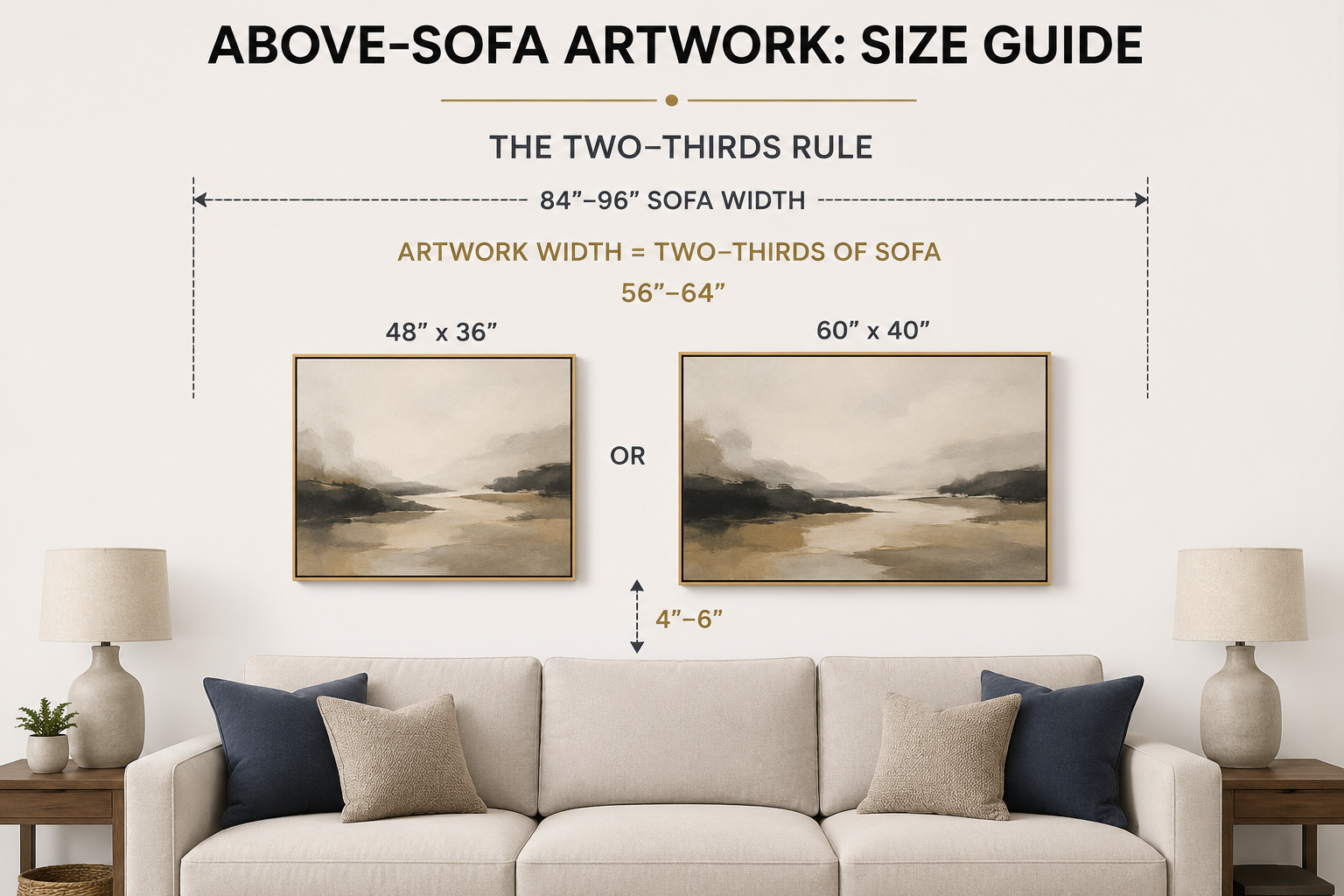
Here’s what nobody told me at the time: furniture-to-art ratio isn’t a suggestion, it’s math. The two-thirds rule says your art should span roughly two-thirds the width of whatever sits below it. My 84-inch sofa needed a piece closer to 56 inches, not 20. Once I sized up, the same print I’d doubted suddenly read as intentional.
The second number is eye-level hanging height, the 57-inch rule galleries use because it matches average sightline placement while standing. I now hold a tape measure to the wall before I hang anything, mark 57 inches to the center point, then work outward. Leave 4 to 6 inches of breathing room above the furniture. Skip this and even a well-sized piece looks like it’s floating too high, which was my second mistake before it became my rule.
Wall Art Sizes by Room
Room proportions rarely match the neat categories blogs list, so I’ve learned to treat these as starting ranges, not fixed answers.
Living Room and Above-Sofa Artwork
For a sofa in the 84 to 96 inch range, I now default to 48×36 or 60×40 as a single statement piece. What surprised me the first time I built a gallery wall layout instead: the combined width still has to hit that same two-thirds mark, or the whole arrangement reads as scattered rather than styled.
Bedroom and Above the Bed
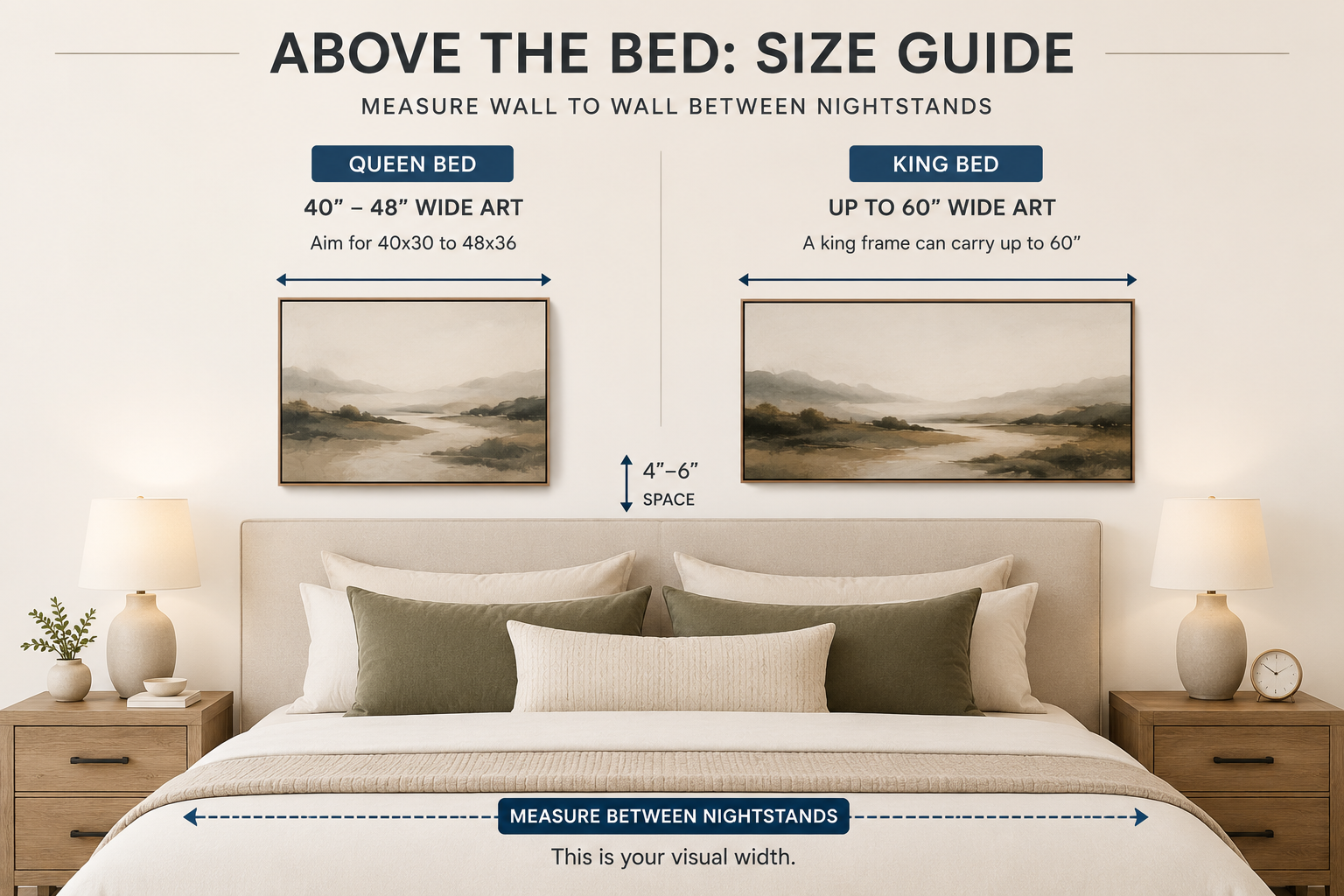
I sized a queen headboard wrong once by forgetting the nightstands widen the visual footprint. Measure wall to wall between the nightstands, not just the headboard, and aim for 40×30 to 48×36. A king frame can carry up to 60 inches without swallowing the room.
Entryway and Hallway
Narrow spaces punish oversized art fast. I keep entryway pieces vertical, around 16×24 or 20×30, because portrait orientation respects the tight sightline you get walking through rather than standing back to admire it.
Dining Room
A 72-inch table earns a 40 to 48 inch piece above the buffet or on the accent wall. One thing most guides skip: check ceiling height considerations here too. A standard 8-foot ceiling caps how tall you can go before the piece competes with crown molding.
Gallery Wall Sizing
I lay every frame out on the floor before a single nail goes in the wall, tracing the outline in painter’s tape if I’m unsure. Combined width still needs to clear the two-thirds threshold, and I keep spacing at a consistent 2 to 3 inches between frames rather than eyeballing it, because uneven gaps are the fastest way to make a gallery wall look unplanned. Mixing aspect ratios, a square print next to two vertical ones, adds rhythm as long as one anchor piece stays larger than the rest. For staircase art, I run the layout along the pitch of the stairs rather than forcing a straight line, which took me two failed attempts to get right.
How to Measure Your Wall Before You Buy
I stopped trusting a wall art size calculator the day one recommended a piece 8 inches too wide for my actual furniture. Now I measure the furniture first, then the wall height and width, then tape paper templates to the wall at the exact proposed dimensions. I leave them up for a full day. Seeing the shape at different times, morning light versus evening lamp light, catches sizing mistakes a spec sheet never will.
Common Wall Art Size Mistakes to Avoid
Undersizing is still the mistake I see most, including in my own early work. A small print on an open wall looks like an afterthought, not a statement piece, no matter how good the art itself is. When in doubt, size up.
The second is buying art before furniture is finalized. I did this with a dining set once and ended up returning a piece that no longer matched the new table’s width. Measure the furniture last, not the art first.
Final Thoughts
Every sizing question I get asked eventually traces back to the same two numbers: the two-thirds rule and the 57-inch eye-level height. I learned both the hard way, through pieces that didn’t fit and a few I had to return. If you’d rather skip that trial and error, Lume & Wick’s wall art and décor collection is sized with these exact proportions in mind, so you can shop with the math already done for you.