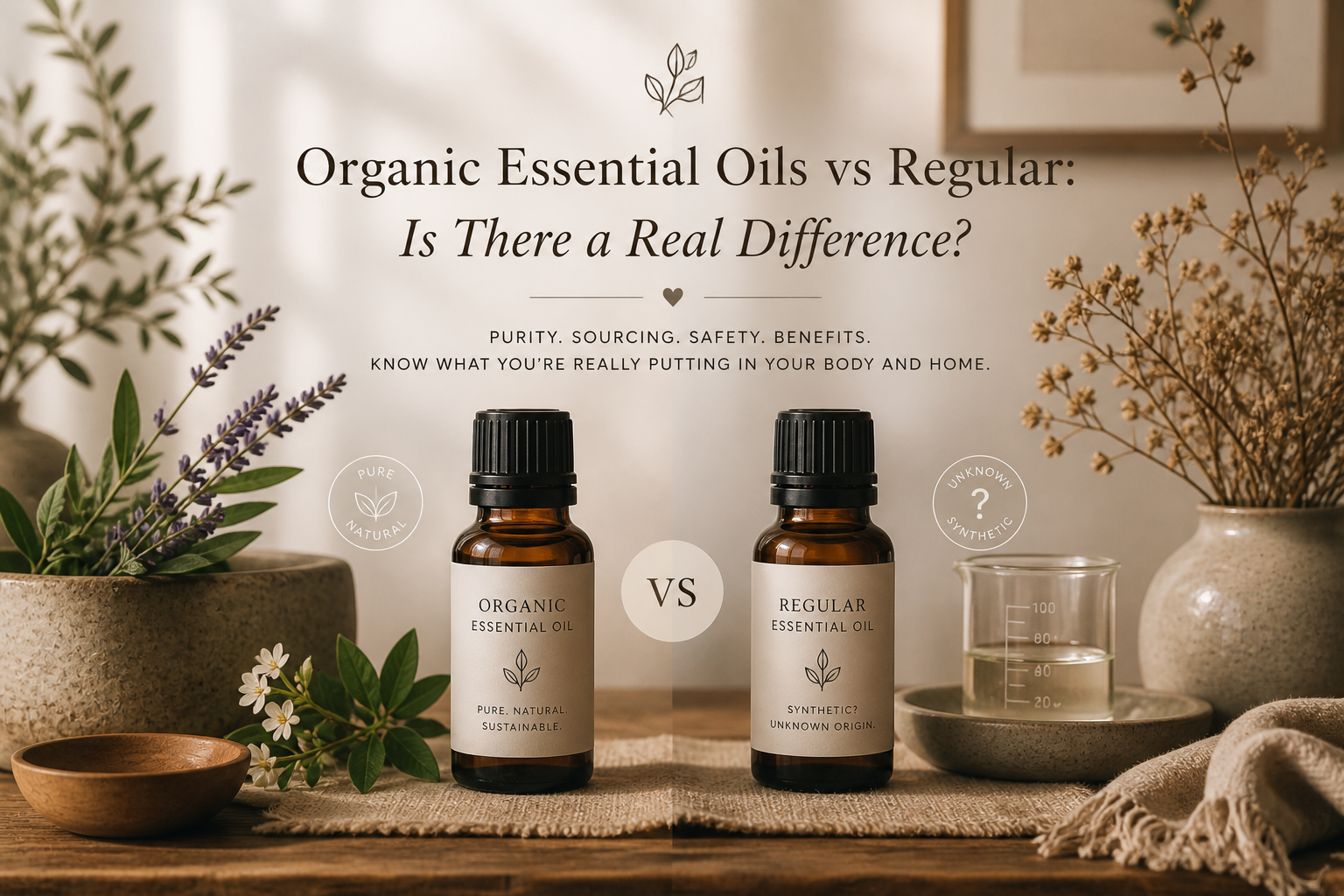
Essential oils have become a cornerstone of holistic wellness routines, from calming aromatherapy sessions to enhancing daily skincare rituals.
Yet, a recurring question arises: is there a meaningful difference between organic and regular essential oils?
As someone who has explored essential oils for years, experimented with blends, and studied their chemical compositions, I can attest that the distinction is far more than a marketing label.
Understanding these differences is crucial for safety, therapeutic efficacy, and sustainable choices.
What Are Essential Oils?
Essential oils are concentrated botanical extracts from leaves, flowers, seeds, or roots. They capture volatile compounds that define a plant’s aroma profile and therapeutic properties.
Unlike synthetic fragrances, authentic oils retain bioactive constituents, supporting relaxation, skin health, and holistic wellness.
Common applications include diffusers, topical massage (diluted), and bath rituals.
The effectiveness of an oil depends on its potency rating, chemical profile strength, and aromatic intensity. High-quality oils deliver consistent results in aromatherapy, skincare, and wellness practices.
Why Organic Certification Matters
Organic certification ensures essential oils meet strict standards for purity, safety, and environmental sustainability.
Certified oils are USDA Organic, GMO-free, and sourced from sustainably farmed plants. They often contain higher antioxidant levels, a richer scent profile, and reliable therapeutic grade potency.
Certification also ensures traceable sourcing, important for users who prioritize ethical, eco-conscious choices.
Without it, oils labeled “organic” may still carry synthetic additives or pesticide residues, impacting shelf life stability and safety for sensitive skin.
Key Differences Between Organic and Regular Essential Oils
Both organic and regular essential oils are plant-derived and share aromatic properties, yet their differences influence therapeutic effectiveness, safety, sustainability, and sensory experience.
Understanding these distinctions allows consumers to make informed choices, whether for aromatherapy, massage, or self-care routines.
Farming Practices & Plant Cultivation
The quality of an essential oil begins at the source. Organic oils are sourced from pesticide-free, GMO-free crops cultivated under strict purity standards.
Soil health, crop rotation, and biodiversity are maintained, enhancing bioactive constituents in plants.
For example, organically grown lavender contains higher levels of linalool and linalyl acetate, compounds responsible for relaxation and sleep benefits.
Conventional oils, sourced from chemically treated farms, may carry trace residues that alter chemical composition, reducing potency.
Organic cultivation not only enhances therapeutic efficacy but also ensures holistic wellness benefits for skin, inhalation, and massage use.
Extraction Methods
Extraction is pivotal in preserving an oil’s integrity. Organic oils rely on steam distillation or cold-pressed techniques that capture volatile compounds without using synthetic solvents.
This maintains bioactivity levels, aromatic intensity, and therapeutic grade potency.
Regular oils, especially in large-scale production, may incorporate chemical aids or shortcuts.
These can dilute active compounds, weaken fragrance complexity, and diminish aromatherapy benefits.
For instance, organic peppermint oil will consistently deliver invigorating menthol properties, while regular versions may have inconsistent potency, impacting circulation and alertness effects.
Chemical Composition & Purity
Organic oils maintain a consistent purity index and reliable chemical profile strength.
Their bioactive constituents remain intact, enabling predictable therapeutic efficacy. These oils are free from adulterants or synthetic additives, making them safe for sensitive skin or inhalation.
Regular oils can vary widely depending on crop conditions, extraction techniques, and potential adulteration.
Pesticide residues or solvents may reduce volatile compounds and compromise holistic wellness outcomes. Using organic oils ensures that the chemical composition remains true to the plant’s original profile.
Aroma Profile & Sensory Experience
The aroma of essential oils is an indicator of chemical integrity and quality. Organic oils provide a richer, more complex scent profile, reflecting the full spectrum of volatile compounds.
This enhances emotional responses, mood-lifting effects, and therapeutic experiences in aromatherapy.
Regular oils may smell flat or unbalanced due to adulteration or lower-quality crops. Users often detect these differences through olfactory evaluation, as organic oils consistently retain the plant’s authentic fragrance.
For example, organic citrus oils have vibrant top notes, while regular counterparts may lack brightness or nuance.
Therapeutic Potency
Therapeutic effectiveness is a major differentiator. Organic oils deliver predictable aromatherapy benefits, from stress relief to improved sleep quality.
Their bioactive constituents are intact, allowing full activation of physiological pathways like relaxation of the nervous system or stimulation of circulation.
Regular oils may fluctuate in efficacy score, producing inconsistent results. In massage therapy or inhalation, this inconsistency can affect outcomes, such as reduced calming effect with lavender or weaker respiratory support from eucalyptus.
Organic oils provide reliable potency for both personal and professional use.
Safety & Irritation Risk
Organic oils are chemical residue-free and formulated to minimize irritation risk, making them suitable for sensitive skin or children.
Regular oils may carry pesticides, synthetic additives, or residual solvents, increasing the toxicity risk.
For instance, undiluted conventional oils applied to the skin can cause redness or allergic reactions, while organic counterparts offer a gentler, non-irritating formulation.
Choosing certified organic oils reduces long-term exposure to potentially harmful compounds, enhancing holistic wellness safely.
Environmental Sustainability
Organic essential oils support environmentally sustainable practices. Plants are grown with minimal chemical use, farms maintain soil fertility, and biodiversity is preserved.
Additionally, eco-friendly production methods reduce waste and carbon footprint.
Regular oils often come from intensive farming, depleting soil nutrients and affecting local ecosystems.
For eco-conscious consumers, organic oils align with sustainability goals, providing therapeutic benefits without harming the environment.
Shelf Life & Stability
Organic oils retain volatile compounds and maintain a stable shelf-life rating when stored properly.
Their chemical integrity allows oils to remain potent and aromatic for longer periods.
Regular oils may oxidize faster due to the presence of impurities or less careful extraction and storage.
Oxidation reduces therapeutic efficacy, aromatic intensity, and can even increase skin irritation risk. Using organic oils ensures longevity and consistent performance.
Traceability & Certification
Organic oils provide traceable sourcing and are often USDA Organic certified. This guarantees authenticity, safety, and environmental compliance.
Consumers can verify plant origin, extraction method, and purity standards.
Regular oils lack standardized certification, making it difficult to confirm authenticity or chemical profile strength.
Certification builds trust and ensures oils meet expectations for therapeutic grade potency and ethical production.
Cost vs. Value
Organic oils are generally priced higher due to rigorous farming, certified extraction, and sustainable practices.
However, their higher potency rating, richer scent profile, and consistent bioactive constituents offer long-term value.
Regular oils may be cheaper, but inconsistent quality, lower therapeutic efficacy, and possible chemical residues reduce overall value.
For users seeking holistic wellness, aromatherapy benefits, and safe topical use, investing in organic oils provides both quality and peace of mind.
Concentration of Active Compounds
The concentration of active bioactive constituents in essential oils directly influences their effectiveness.
Organic oils often contain higher levels of terpenes, esters, and phenols, which are responsible for anti-inflammatory, antimicrobial, and calming effects.
For example, organic rosemary oil retains stronger cineole and camphor content, enhancing circulation and mental alertness when used in diffusers or massage blends.
Regular oils may have diluted active compounds due to chemical treatments, suboptimal crops, or extraction shortcuts, resulting in inconsistent therapeutic efficacy and weaker results in aromatherapy or topical use.
Antioxidant Levels
Organic oils generally have higher antioxidant levels, which protect both the oil and the user.
These antioxidants, such as polyphenols and flavonoids, prevent oxidation, prolong shelf-life stability, and provide additional benefits for skin health when oils are applied topically.
For instance, organic orange oil can help neutralize free radicals, supporting radiant skin and enhancing massage therapy outcomes.
Conventional oils often degrade faster, losing both aromatic intensity and therapeutic potency, which limits their effectiveness in long-term self-care or holistic wellness routines.
Blend Compatibility
Creating effective blends requires oils with consistent chemical profiles. Organic oils offer balanced volatile compound levels, making them easier to combine without losing aromatic intensity or therapeutic value.
For example, blending organic lavender with organic frankincense produces a harmonious aroma while maintaining calming effects.
Regular oils, with variable potency ratings or inconsistent chemical profiles, may clash in scent or dilute the therapeutic grade potency, making them less reliable for personalized aromatherapy or professional massage formulations.
Skin and Respiratory Tolerance
Organic oils are safer for direct skin contact (when diluted) and inhalation because they are chemical residue-free and extracted without synthetic solvents.
This minimizes irritation, allergic reactions, or respiratory sensitivity. For example, organic tea tree oil can be applied in diluted form to minor cuts or blemishes without causing redness, whereas conventional tea tree oil may trigger irritation if residual solvents are present.
Regular oils carry a higher toxicity risk, particularly for children, sensitive skin, or long-term use, making organic oils the safer choice for daily wellness routines.
Consumer Trust and Transparency
Organic essential oils provide traceable sourcing and official certification, such as USDA Organic, ensuring the consumer knows the plant origin, extraction methods, and purity.
This transparency builds trust and confidence in the product’s therapeutic efficacy. Regular oils often lack this level of accountability, leaving users uncertain about the oil’s authenticity, chemical integrity, or ethical sourcing practices.
Certified organic oils give peace of mind for both personal use and professional settings, such as aromatherapy studios, spas, or holistic wellness centers.
Safety Considerations When Using Essential Oils
While essential oils are natural, safety matters. Organic oils are typically non-irritating formulations, free from synthetic additives or pesticide residues, making them safer for sensitive skin and children.
Always dilute oils with carrier oils for topical use and perform a patch test. Regular oils may carry a higher toxicity risk, especially if sourced from chemically treated crops or extracted with synthetic solvents.
Choosing certified organic oils reduces potential skin reactions and ensures safe daily use.
Practical Tips for Using Essential Oils
- Choose the Right Oil for the Purpose
- Organic oils with higher aromatic intensity and therapeutic grade potency are ideal for aromatherapy, massage, and bath rituals, providing consistent bioactive constituent benefits.
- Regular oils can work for casual scent use or ambient fragrance, but their chemical composition may vary, affecting therapeutic efficacy.
- Diffuser Usage
- Add 3–6 drops of high-quality organic oil to a diffuser with water.
- Combine oils with complementary volatile compounds (e.g., lavender and frankincense) to enhance holistic wellness effects such as relaxation and mental clarity.
- Avoid prolonged diffusion of conventional oils if their potency rating is unknown, as inconsistent bioactivity levels can reduce benefits.
- Topical Application
- Always dilute essential oils in carrier oils like jojoba, sweet almond, or coconut oil to maintain safe skin and respiratory tolerance.
- Organic oils, being chemical residue-free, are safer for sensitive skin, while regular oils may carry toxicity risks.
- Use measured ratios (typically 1–2% dilution for adults, 0.5–1% for children) to optimize therapeutic efficacy without irritation.
- Bath Rituals
- Mix 4–6 drops of organic essential oil with a teaspoon of carrier oil before adding to bathwater to avoid direct contact with skin.
- Oils with higher bioactive constituents provide enhanced aromatherapy benefits, promoting relaxation, stress relief, and overall holistic wellness.
- Storage Tips for Maximum Potency
- Store essential oils in dark glass bottles to protect volatile compounds from light degradation.
- Keep bottles in a cool, dry place, away from heat and sunlight, to preserve shelf-life stability and aromatic intensity.
- Ensure lids are tightly sealed to prevent oxidation and loss of therapeutic grade potency.
- Blending for Personalized Effects
- Combine oils with compatible chemical profiles to create custom aromatherapy blends, adjusting ratios based on desired effect (e.g., calming, energizing, or focus-enhancing).
- Organic oils offer traceable sourcing and consistent bioactive constituents, making blending more reliable than conventional oils.
- Usage Frequency
- Diffuse oils for 30–60 minutes at a time, up to 2–3 times per day, to maintain a safe aromatic intensity and maximize holistic wellness benefits.
- For massage or topical application, apply small amounts consistently rather than large quantities sporadically to ensure absorption and efficacy.
Conclusion: Choosing the Right Essential Oil
Deciding between organic and regular essential oils ultimately comes down to quality, safety, and therapeutic effectiveness.
Organic oils offer richer aroma profiles, consistent bioactive constituents, and predictable therapeutic potency, making them ideal for aromatherapy, massage, and holistic wellness routines.
Their chemical residue-free formulation, eco-friendly production, and certified sourcing provide both safety and ethical assurance.
Regular oils, while still plant-derived and aromatic, may vary in purity, potency, and chemical composition, potentially limiting their effectiveness and sensory experience.
Users seeking predictable results, environmental sustainability, and long-term value often find that organic oils better meet their needs.
Having personally tested and blended both types, I’ve noticed a clear difference in aroma intensity, consistency, and overall effectiveness.
Organic oils feel more vibrant, safer on the skin, and deliver therapeutic benefits more reliably.For those looking to incorporate high-quality organic essential oils into daily routines, Lume & Wick provides a carefully curated range of USDA Organic certified oils, each sourced sustainably and extracted using natural methods.