I still remember the first time I used lavender oil directly on my wrist. It smelled calming, but within minutes my skin felt warm and slightly irritated. That moment changed how I approached aromatherapy.
Essential oils are powerful. They are concentrated plant extracts, not gentle skincare serums.
Learning proper essential oil dilution is what makes the difference between safe essential oil use and unwanted skin reactions.
If you are here, you likely want a clear and reliable way to dilute oils for skin. This guide covers everything that actually matters.
You will learn how to dilute essential oils correctly, understand carrier oil blending, and avoid common mistakes that beginners often make.
Essential Oil Dilution Explained
Essential oil dilution means reducing the strength of an essential oil by mixing it with a carrier oil. This process lowers the concentration so it becomes safe for topical use.
Essential oils are volatile compounds extracted from plants. They contain active aromatic molecules that can penetrate the skin quickly. Without dilution, this high potency can overwhelm the skin barrier.
From my experience, even oils that feel gentle, like lavender or chamomile, can trigger skin sensitivity when applied neat.
Dilution for skin application helps control how these compounds interact with your skin.
Why concentration matters
Every essential oil has a specific potency level. Some oils, like peppermint or cinnamon, are considered “hot oils” due to their strong effect on the skin. You may also want to read how to dilute essential oils safely.
Others are milder. Still, all essential oils require proper dilution methods. When you dilute oils for skin, you are not reducing their effectiveness. You may also want to read essential oil safety for pets.
You are improving their absorption rate while maintaining topical application safety. Balanced dilution supports therapeutic use without causing irritation.
What happens if you skip dilution
Applying undiluted essential oils can lead to:
- Skin irritation or redness
- Allergic reactions over time
- Increased sensitivity with repeated use
- Disruption of your skincare routine
I have seen people assume that more drops mean better results. In reality, essential oil potency control is about precision, not quantity. Related reading: how many drops of essential oil to use in a diffuser.
Why Dilution Is Essential for Skin Application
Dilution is not just a recommendation. It is part of aromatherapy safety precautions and essential oil usage guidelines followed by professionals.
Prevents irritation and sensitivity
Dilution creates a protective buffer between essential oils and your skin. This reduces the risk of burns, especially when using strong oils or applying on sensitive areas like the face.
Controls dosage and exposure
Essential oil dilution percentages allow you to measure exactly how much oil you are using. This is important for essential oil toxicity prevention and long-term use.
Improves absorption and performance
Carrier oils slow down evaporation. This gives essential oils more time to absorb into the skin. The result is better distribution and more consistent results.
Supports safe daily use
A proper dilution ratio for essential oils helps you use them regularly without overloading your skin. This is key for routines like massage oils or facial oils.
Carrier Oils: The Base of Every Safe Blend
Carrier oils are natural oils derived from seeds, nuts, or kernels. Unlike essential oils, they are non-volatile and mild.
Their role is to dilute and carry essential oils into the skin.
When I started using aromatherapy regularly, switching carrier oils made a noticeable difference.
Some oils absorb quickly, while others feel heavier. Choosing the right one improves comfort and results.
Best carrier oils for dilution
Here are some commonly used options:
- Coconut oil (light and stable, especially fractionated)
- Jojoba oil (balances skin, mimics natural sebum)
- Sweet almond oil (soft texture, ideal for massage oils)
- Grapeseed oil (fast absorption, suitable for oily skin)
- Olive oil (rich and nourishing, slower absorption)
Each of these works differently based on oil absorption and skin type.
Choosing based on skin type
- Oily skin benefits from lightweight oils like grapeseed
- Dry skin responds well to richer oils like almond or olive
- Sensitive skin works best with gentle oils like jojoba
Skin-type-based dilution is often overlooked, but it directly affects how your blend feels and performs.
Essential Oil Dilution Ratios Made Simple
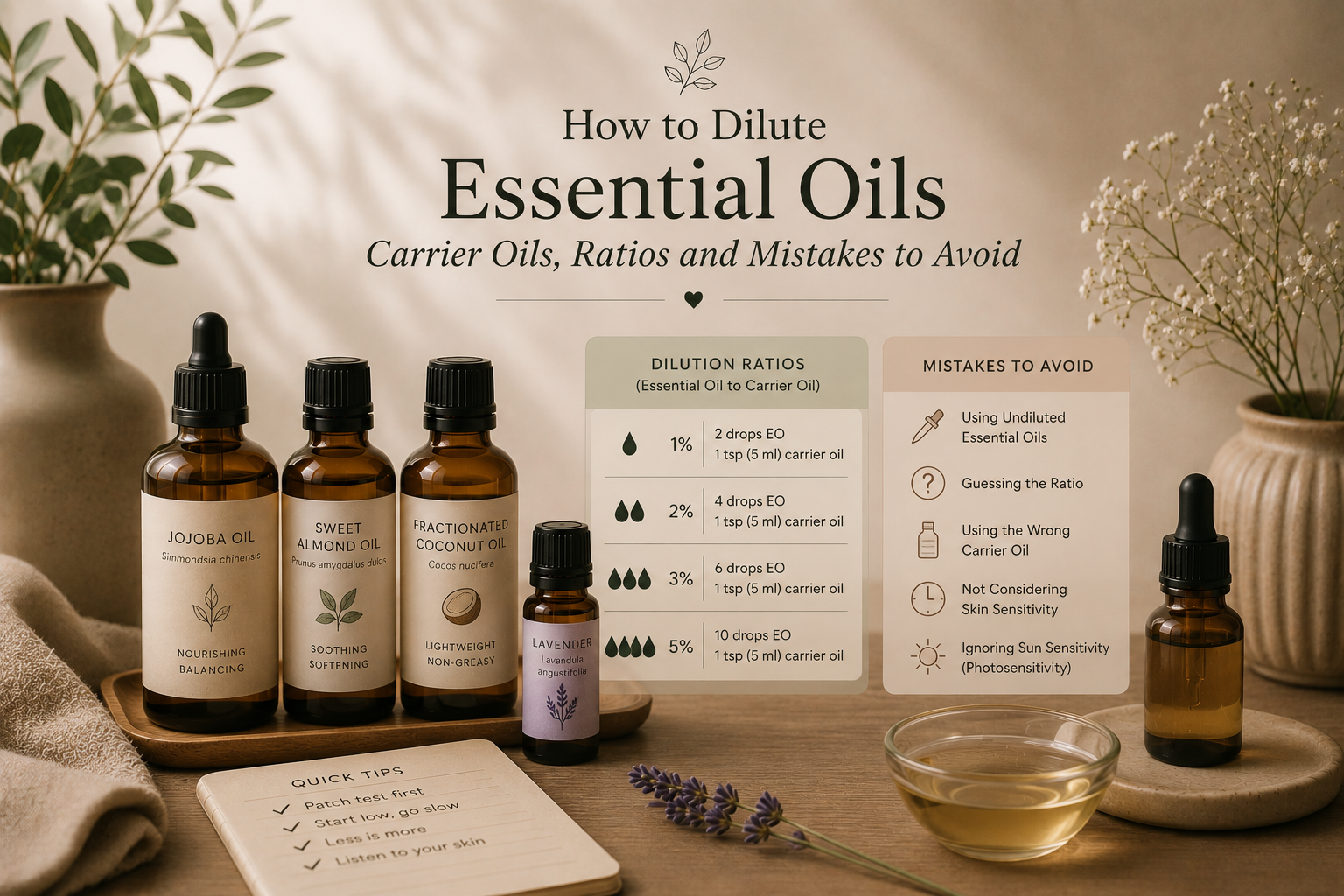
This is where most people get confused. You may have seen an essential oil dilution chart but not understood how to use it. Let’s simplify it.
Dilution percentages represent how much essential oil is mixed with carrier oil. This forms the base of aromatherapy dilution guidelines.
Standard dilution ratios for adults
- 1% dilution ratio: best for daily use and sensitive skin
- 2% dilution ratio: general skincare and body use
- 3% dilution ratio: short-term use for targeted areas
These are safe essential oil ratios used in most essential oil blending ratios.
Drops conversion guide
Understanding drops per teaspoon ratio helps in real use:
- 1 teaspoon (5 ml) = 1% needs about 1 drop
- 1 tablespoon (15 ml) = 1% needs about 3 drops
For a 2% dilution, simply double the drops. This acts like a simple essential oil dilution calculator.
Practical example
If you want to mix essential oils safely for a body oil:
- Take 30 ml carrier oil
- Add 6 drops essential oil for a 1% blend
- Add 12 drops for a 2% blend
This essential oil to carrier oil ratio ensures safe blending practices.
Step-by-Step Guide to Dilute Essential Oils Safely
Now that you understand why dilution is crucial and how to calculate ratios, let’s focus on the actual process. You may also want to read the best essential oils for focus.
Proper dilution ensures essential oil safety standards and supports therapeutic use without risking skin irritation.
Tools You Need
Before mixing, gather simple tools. I always use:
- A dark glass bottle (to protect oils from light and heat)
- A dropper or pipette (for precise drops)
- Measuring spoons or a small scale (optional for larger blends)
These tools help maintain dilution percentage precision and ensure consistent results every time.
How to Mix Essential Oils Safely
Follow these steps:
- Choose your carrier oil: Select based on skin type and purpose (e.g., jojoba for facial oils, almond for massage oils).
- Determine dilution ratio: Decide on 1%, 2%, or 3% depending on use and sensitivity.
- Measure carrier oil: Pour the correct volume into your bottle.
- Add essential oil drops: Use the drops per ml conversion. Avoid guessing; accuracy controls essential oil potency.
- Mix gently: Roll the bottle between your palms. Avoid shaking vigorously as some volatile compounds may evaporate.
- Label your blend: Include oil type, dilution ratio, and date for tracking shelf life of oils.
Consistent essential oil blending ratios improve dermal dilution ratios and overall topical application safety. To get the drop count right for your carrier oil, use our essential oil dilution calculator.
Common Mistakes in Essential Oil Dilution
Even experienced aromatherapists occasionally make mistakes. Awareness prevents skin irritation and ensures safe essential oil use.
Using Essential Oils Neat
Applying oils undiluted is the fastest route to irritation. Remember, concentrated plant extracts can overwhelm the skin barrier.
Ignoring Skin Sensitivity
Skin sensitivity and essential oils vary by individual. Always conduct a patch test before full application, especially for facial oils or sensitive skin blends.
Incorrect Dilution Ratios
Estimating drops instead of using proper dilution formulas leads to inconsistent results. Using an essential oil dilution chart or calculator ensures accuracy.
Selecting the Wrong Carrier Oil
Not every carrier oil suits every skin type. A heavy oil on oily skin may block pores, while a thin oil on dry skin may feel insufficient.
Poor Storage
Essential oils degrade if exposed to heat, light, or air. Store blends in dark glass bottles away from sunlight to maintain essential oil potency control.
Advanced Safety Rules for Aromatherapy
Even with correct dilution, some precautions remain essential. Following aromatherapy safety precautions and essential oil usage guidelines ensures long-term skin health.
Patch Testing Before Use
Always test a small amount on your inner arm. Wait 24 hours to check for reactions. Patch tests are critical for safe blending practices, especially for new oils.
Avoid Sensitive Areas
Do not apply oils near eyes, mucous membranes, or broken skin. This prevents irritation and reduces essential oil toxicity risk.
Pregnancy and Children
Dilution for babies, children, and pregnant individuals requires lower percentages. For infants, a 0.25–0.5% dilution is recommended, while pregnancy-safe dilution ratios usually stay at 1%.
Frequency of Application
Safe daily usage limits depend on the oil type and dilution percentage. For strong oils like clove or cinnamon, limit to 2–3 times weekly even when diluted.
Quick Dilution Cheat Sheet
For easy reference, I keep a mini cheat sheet on my aromatherapy shelf. Here’s a beginner-friendly guide:
| Use Case | Dilution % | Drops per 30 ml Carrier Oil |
| Facial oils | 0.5–1% | 3–6 drops |
| Daily body oil | 1–2% | 6–12 drops |
| Massage oil | 2–5% | 12–30 drops |
| Sensitive skin | 0.5–1% | 3–6 drops |
This table simplifies essential oil mixing instructions and helps maintain dermal limit compliance.
Personal Tips and Best Practices for Essential Oil Dilution
From my own aromatherapy journey, I’ve learned that safe essential oil use is not just about numbers.
It’s about understanding oils, your skin, and how they interact. Here are some personal tips that make dilution effortless and reliable.
Track Oil Potency and Absorption
Different oils absorb at different rates. Light oils like grapeseed absorb quickly, making them ideal for massage oils.
Thicker oils like olive take longer, which works well for leave-on facial or body oils. I always match oil absorption with purpose to maximize benefits.
Maintain a Clean Workspace
Contamination can alter oil performance. Using clean droppers, glass bottles, and measuring spoons keeps blends pure.
Proper hygiene supports essential oil safety standards and prevents unexpected reactions.
Start Small, Adjust Slowly
Begin with a lower dilution percentage. Even for daily use, I start with 1% and only increase if needed.
Dilution for sensitive skin or new users should never exceed 1–2%. This approach minimizes risk and builds confidence in your blends.
Mistakes I’ve Seen Beginners Make
Even aromatherapy enthusiasts overlook these simple points, which can affect results and safety:
- Skipping patch tests: Even gentle oils can cause reactions. A patch test ensures topical application safety.
- Overconcentration: Using more drops doesn’t mean better results. It increases risk of irritation and essential oil toxicity.
- Ignoring phototoxic oils: Citrus oils like bergamot can cause skin sensitivity in sunlight. Always dilute appropriately.
- Inconsistent measurements: Estimating drops leads to variable results. Follow a consistent essential oil to carrier oil ratio.
- Wrong storage: Oils degrade in heat or sunlight. Dark glass bottles and cool storage preserve potency.
Storage and Shelf Life Tips
Essential oil potency diminishes over time if stored incorrectly. I follow these guidelines:
- Keep oils in dark glass bottles to block light.
- Store in a cool, dry place away from sunlight and heat.
- Label blends with date, oil type, and dilution percentage.
- Shake gently before each use to ensure consistency.
These practices maintain essential oil absorption rate, potency, and safety over time.
Conclusion: Safe Dilution for Confident Aromatherapy
Dilution is the cornerstone of safe essential oil use. Understanding carrier oil blending, following proper dermal dilution ratios, and avoiding common mistakes ensures that your aromatherapy experience is effective, safe, and enjoyable. Always respect skin sensitivity and follow essential oil usage guidelines.If you are starting your aromatherapy journey or looking for high-quality oils, I recommend exploring Lume & Wick’s range. Their carrier oils and essential oil blends are curated for safe dilution practices, making it easy for beginners and enthusiasts to create effective, therapeutic oils confidently.