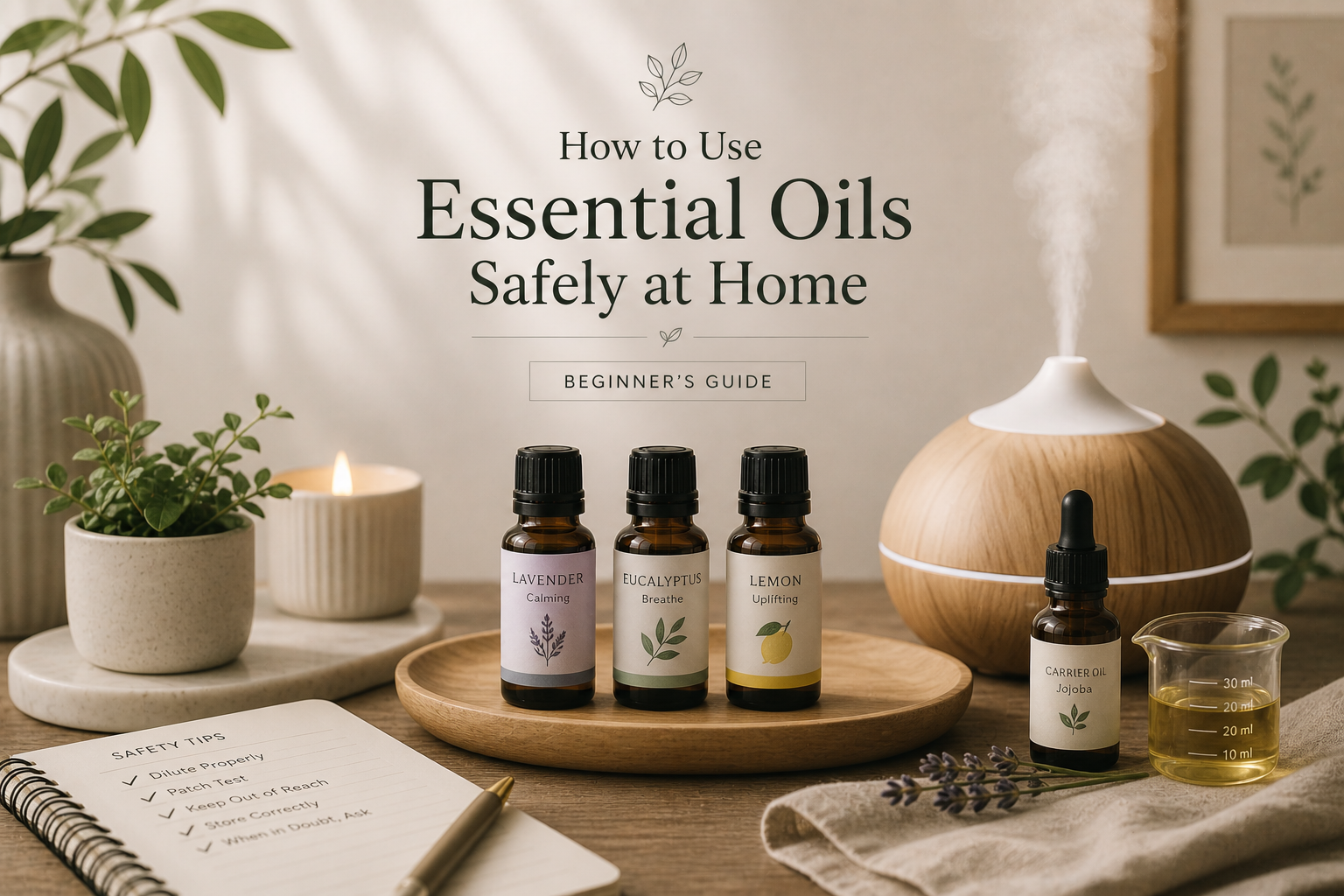
Essential oils have become a popular way to elevate home routines, from calming the mind to refreshing living spaces. Over years of practicing aromatherapy, I have seen beginners approach oils with enthusiasm yet overlook safety, which can lead to skin sensitivity, allergic reactions, or even toxicity.
Using essential oils safely at home requires knowledge, care, and consistent application of precautionary measures. This guide provides step-by-step instructions on home essential oil practices, ensuring beginners enjoy their therapeutic benefits without risk.
By following simple dilution guidelines, understanding topical application methods, and practicing proper storage and shelf life routines, you can integrate essential oils into daily life confidently.
What are Essential Oils?
Essential oils are concentrated plant extracts containing volatile compounds responsible for their aroma and therapeutic effects.
Each oil carries unique properties, from calming lavender to stimulating peppermint. These oils are not only aromatic; they can impact mood, energy, and even minor physical discomforts when used properly.
A beginner must differentiate between essential oils and other scented products. While fragrance oils provide aroma, they lack the therapeutic potency and may cause sensitivity if misused.
What Makes an Oil “Essential”?
An essential oil represents the essence of a plant, concentrated through steam distillation or cold-press extraction.
This process captures the plant’s volatile compound concentration, which defines both aroma and efficacy.
Unlike diluted oils or cosmetic fragrances, essential oils demand attention to safe dosage instructions, proper carrier oils usage, and mindful inhalation techniques. Understanding these distinctions prevents misuse and maximizes therapeutic benefits.
How Essential Oils Work
Essential oils interact with the body in three primary ways: topical application, inhalation, and limited oral use under professional guidance.
Through topical application, oils absorbed via skin deliver calming or stimulating effects. However, skin sensitivity varies, making patch testing techniques essential.
Inhalation through diffusers stimulates the olfactory system, offering stress relief and enhancing mental clarity. For beginners, controlling diffusion duration ensures low-risk exposure while preserving oil potency.
Popular Essential Oils for Beginners
Certain oils are beginner-friendly due to their low risk profile and versatile applications:
- Lavender: Calming, suitable for diffusion, baths, and diluted topical use.
- Peppermint: Refreshing, supports alertness; requires dilution for sensitive skin.
- Tea Tree: Antimicrobial, ideal for DIY blends and minor topical applications.
- Eucalyptus: Supports respiratory comfort, safe in diffuser use.
- Lemon: Uplifting fragrance; note photosensitivity risk when applied topically.
Using these oils safely involves following recommended dilution, observing dermal irritation thresholds, and respecting tolerance thresholds for each individual.
Beginner’s Guide to Use Essential Oils Safely at Home
Essential oils have gained immense popularity for their therapeutic and aromatic properties. From promoting relaxation to improving focus and uplifting mood, these potent plant extracts offer a natural way to enhance daily wellness.
However, essential oils are highly concentrated, and improper use can lead to skin irritation, allergic reactions, or even toxicity. Whether you are a beginner or experienced in aromatherapy, understanding safe home usage is crucial.
1. Understanding Essential Oil Potency
Essential oils are highly concentrated plant extracts obtained from flowers, leaves, seeds, bark, or roots. Unlike herbal teas or tinctures, they contain the essence of the plant in a powerful form, which makes their effects potent but also increases the risk of adverse reactions if used incorrectly.
Key points about potency:
- A few drops can have significant therapeutic effects.
- Chemical composition varies by plant species, region, and extraction method.
- Citrus oils (lemon, orange) are phototoxic and may react with sunlight.
- Some oils, like cinnamon or clove, are strong irritants and require extra caution.
Knowing the potency of the oil you are using is the first step in safe home application. Beginners should start with milder oils like lavender, chamomile, or sweet orange.
2. Dilution: The Foundation of Safety
Proper dilution is the single most important safety measure. Essential oils applied directly to the skin can cause redness, burning, or allergic reactions. Carrier oils act as a buffer, reducing irritation while still allowing the therapeutic benefits to be absorbed. Not sure about the maths? Our essential oil dilution ratio calculator gives you safe ratios in seconds.
Recommended dilution ratios:
- Adults: 1–3% dilution (6–18 drops per 30ml carrier oil)
- Children or sensitive skin: under 1%
- Pregnant or nursing individuals: consult a certified aromatherapist
Common carrier oils:
- Jojoba oil: lightweight, non-comedogenic, easily absorbed
- Coconut oil: moisturizing and ideal for massage
- Sweet almond oil: nourishing for dry skin
Tip: Always adjust dilution based on the oil’s potency and your skin’s sensitivity. A patch test is highly recommended before widespread use.
3. Patch Testing for Skin Safety
Patch testing is a simple method to prevent allergic reactions or irritation.
How to do it:
- Dilute the essential oil according to recommended guidelines.
- Apply a small amount on the inner forearm.
- Wait 24 hours.
- Monitor for redness, itching, or swelling.
If any irritation occurs, avoid using that oil or reduce its concentration. Patch testing is especially important for strong oils like clove, cinnamon, or oregano.
4. Topical Application Techniques
Applying essential oils directly to the skin allows for localized therapeutic benefits, such as easing muscle tension, calming headaches, or nourishing dry skin.
Safe topical practices:
- Avoid sensitive areas: eyes, mucous membranes, broken or inflamed skin.
- Use small amounts and gentle massage techniques.
- Rotate oils to prevent skin sensitization from repeated use of the same oil.
- Track your experiences in a journal to identify effective oils and safe concentrations.
Pro Tip: Combine oils with carrier oils in small blends for targeted benefits, like lavender + chamomile for relaxation or peppermint + rosemary for energy.
5. Diffusion and Inhalation Practices
Diffusing essential oils allows their aromatic compounds to enter the air, promoting relaxation, focus, or mood enhancement.
Safety tips for diffusion:
- Limit diffusion sessions to 15–30 minutes in small rooms.
- Ensure proper ventilation to avoid respiratory irritation.
- Avoid excessive blending; start with one or two oils.
- Use mild oils for long sessions and strong oils (e.g., eucalyptus, cinnamon) sparingly.
Popular diffuser oils:
- Lavender: promotes restful sleep
- Peppermint: boosts alertness and circulation
- Citrus oils: energize and uplift mood
Diffusion can be particularly helpful during work or relaxation periods but always monitor your response, especially if anyone in the household has asthma or allergies.
6. Bath Use and Water-Safe Blending
Adding essential oils to baths is a luxurious way to relax muscles and calm the mind. However, oils are not water-soluble and must be properly dispersed to avoid irritation.
Tips for safe bath use:
- Dilute essential oils in a carrier oil, milk, or honey before adding to water.
- Limit the total drops per bath to 5–10, depending on oil potency.
- Stir water to disperse oils evenly.
- Avoid hot water that can enhance skin absorption and cause irritation.
DIY bath blends for beginners:
- Relaxation: lavender + chamomile
- Energizing: lemon + peppermint
- Immune support: eucalyptus + tea tree
Tracking blends, drops used, and skin reactions is essential for safe experimentation.
7. Storage and Shelf Life
Proper storage is critical for maintaining oil potency and preventing oxidation or spoilage.
Storage tips:
- Keep oils in dark glass bottles to block sunlight.
- Store in a cool, dry place, away from heat and humidity.
- Seal bottles tightly to prevent evaporation.
- Label bottles with purchase date and oil name for easy tracking.
Shelf life by type:
- Citrus oils: 6–12 months
- Floral oils (lavender, rose): 1–2 years
- Resin and base oils (vetiver, patchouli): 2–3 years
Regularly check oils for changes in color, scent, or viscosity, which can indicate degradation.
8. Choosing High-Quality Oils
Quality directly impacts both effectiveness and safety. Look for oils with:
- Therapeutic-grade certifications: ISO, COSMOS, or organic labels
- Clear botanical names and extraction methods
- No synthetic additives or undisclosed ingredients
- Controlled dropper bottles for accurate dosing
High-quality oils are more reliable in aroma, potency, and consistency, reducing the risk of skin reactions and ensuring safe home aromatherapy.
9. Additional Safety Considerations
Even with proper dilution and quality oils, certain precautions are essential:
- Avoid ingestion unless under professional guidance.
- Pregnant or nursing individuals should seek expert advice.
- Keep oils away from children and pets, as some can be toxic if inhaled or ingested.
- Rotate oils and blends to prevent skin sensitization.
- Document reactions for long-term safety and effectiveness.
Remember that individual sensitivity varies. Always respect your body’s response and discontinue use if irritation occurs.
10. Creating a Safe Aromatherapy Routine
A consistent, mindful approach ensures you reap benefits while minimizing risks.
Steps to establish a safe home routine:
- Start small: Begin with one or two mild oils.
- Track usage: Note dilutions, drops, and reactions.
- Rotate oils: Prevent overuse or sensitization.
- Combine safely: Use carrier oils and proper dilution for blends.
- Use diffusers mindfully: Short sessions, ventilated spaces.
- Maintain storage standards: Dark glass bottles, cool environment, proper sealing.
By following these steps, beginners can safely integrate essential oils into daily routines for sleep, relaxation, focus, or mood enhancement. Over time, this careful approach allows you to enjoy the full therapeutic potential of essential oils while maintaining safety at home.
Simple and Safe DIY Essential Oil Uses at Home
Integrating essential oils into daily routines becomes enjoyable when beginners follow precautionary measures and safe dosage instructions. Here are a few easy and low-risk recipes I personally use at home:
1. Calming Room Spray
- Combine 10 drops of lavender oil with 50ml distilled water in a spray bottle.
- Shake gently and spray around your room.
- Ensure even diffusion control and avoid direct contact with eyes or skin.
2. Sleep Aid Diffuser Blend
- Use 3 drops lavender, 2 drops chamomile, and 1 drop cedarwood in a diffuser.
- Diffuse for 20 minutes before bedtime.
- Helps relax the mind while respecting safe exposure duration.
3. Headache Relief Rub
- Mix 2 drops of peppermint oil with 5ml carrier oil.
- Apply to temples and the back of the neck.
- Conduct skin sensitivity testing first to avoid dermal irritation threshold issues.
4. Natural Cleaning Solution
- Add 10 drops lemon or tea tree oil to 100ml water and a teaspoon of vinegar.
- Use on countertops or glass surfaces.
- Citrus oils carry photosensitivity risk, so avoid prolonged skin contact and sunlight exposure after use.
These simple recipes highlight how beginners can safely explore DIY blends and home aromatherapy practices while maintaining child and pet safety.
Common Mistakes to Avoid With Essential Oils
Even with knowledge, beginners often overlook subtle safety details. Avoid these frequent errors:
- Applying undiluted oils directly on skin.
- Using oils around children or pets without research.
- Ignoring shelf life and storing oils in sunlight or near heat.
- Overusing high-potency oils or exceeding maximum drops per application.
- Combining oils without considering synergistic blending effects.
Recognizing these mistakes ensures consistent aromatherapy safety and protects against allergic reactions prevention.
When to Seek Professional Guidance
While essential oils are generally safe at home, certain situations require expert advice:
- Chronic health conditions, including skin or respiratory issues.
- Pregnancy or breastfeeding.
- Persistent or severe reactions from topical application or inhalation.
- Guidance on therapeutic vs cosmetic use for specific health goals.
Consulting a certified aromatherapist or healthcare professional helps beginners use oils safely while maximizing therapeutic benefits.
Conclusion
Using essential oils at home can transform everyday routines into moments of relaxation, clarity, and wellness.
By following dilution guidelines, safe application methods, and proper storage and shelf life practices, beginners can enjoy home essential oil practices with minimal risk.
Remember to monitor skin sensitivity, conduct patch testing techniques, and respect safety tips for children and pets.
For those looking to start or expand their collection, I recommend exploring Lume & Wick’s curated aromatherapy oils.