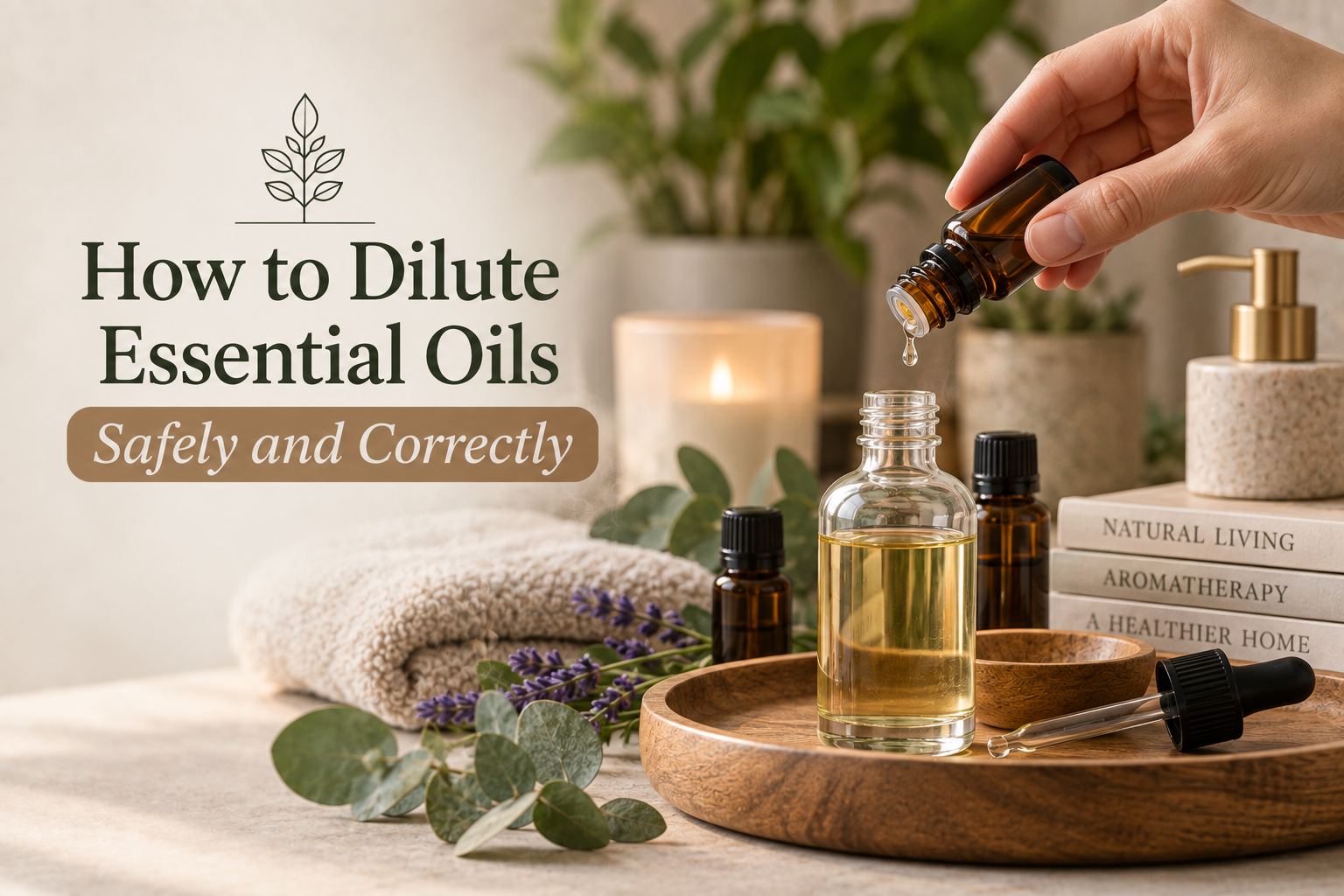
Essential oils are highly concentrated plant extracts. A few drops can contain a surprising amount of aromatic compounds, so using them directly is not always the best approach. Learning how to dilute essential oils helps you control their strength, improve application, and create blends that are easier to use.
I learned this lesson early when making home fragrance blends. Adding more essential oil does not automatically create a better scent. In many cases, a properly diluted blend smells smoother, lasts longer, and feels much more balanced.
The right dilution depends on how you plan to use the oil. A blend intended for a diffuser differs from one designed for a body oil, massage blend, or other topical application.
What Does Essential Oil Dilution Mean?
Essential oil dilution means mixing a concentrated essential oil with a suitable carrier or base. The carrier reduces the concentration of the essential oil while allowing its aromatic properties to remain.
For topical products, common carriers include jojoba oil, sweet almond oil, fractionated coconut oil, grapeseed oil, and apricot kernel oil. These vegetable oils help distribute essential oils across the skin rather than applying the concentrated extract directly.
Dilution is usually expressed as a percentage. For example, a 2% dilution means essential oils make up approximately 2% of the finished mixture.
The important point is simple: more essential oil is not necessarily more effective. Concentration should match the intended application.
Essential Oil Dilution Chart
For practical home blending, these approximate ratios provide a useful starting point:
| Dilution | Essential Oil | Carrier Oil |
|---|---|---|
| 1% | 1 drop | 1 teaspoon |
| 2% | 2 drops | 1 teaspoon |
| 3% | 3 drops | 1 teaspoon |
| 5% | 5 drops | 1 teaspoon |
Drop sizes vary between bottles and oils, so these measurements are approximate rather than laboratory-precise.
For everyday topical use, a 1% to 2% dilution is often a sensible starting point. Stronger concentrations may have specific applications, but they require greater care and should not be treated as automatically better.
How to Dilute Essential Oils With Carrier Oil
Making a diluted essential oil blend at home is straightforward.
1. Choose Your Essential Oil
Start with the aroma you want to create. Lavender, sweet orange, cedarwood, eucalyptus, peppermint, rosemary, and tea tree are common choices, but each oil has different properties and safety considerations.
If you are combining several oils, count the total number of essential oil drops when calculating the final concentration.
2. Select a Carrier
Choose a stable carrier oil that suits your intended application. Jojoba is particularly useful because it has a relatively long shelf life and a light skin feel. Fractionated coconut oil also works well for lightweight blends.
For home fragrance projects, the base may be different. Reed diffusers, room sprays, candles, wax melts, and other fragrance products require formulation-specific bases and ratios. A skin-safe carrier oil should not automatically be substituted into a fragrance recipe.
3. Calculate the Dilution
For a simple 2% blend, use approximately 2 drops of essential oil per teaspoon of carrier oil.
For larger batches, calculate the percentage based on the total finished volume rather than simply multiplying a small recipe without checking the final concentration.
4. Mix and Label
Add the carrier to a clean, suitable container, then add the essential oils. Close the container and gently mix.
Always label the bottle with the ingredients, dilution percentage, and date. This small habit makes it much easier to recreate a successful blend later.
How to Dilute Essential Oils for Different Uses
The appropriate concentration changes according to the application.
For topical body oils: Lower concentrations are generally preferable for routine use. Sensitive skin may require an even more conservative dilution.
For massage oils: A diluted blend can provide fragrance without applying concentrated essential oil directly to the skin.
For facial products: Use extra caution. Facial skin can react differently from body skin, and certain essential oils may be irritating or unsuitable.
For bath products: Do not simply add undiluted essential oil to bathwater. Essential oils do not dissolve properly in water and can remain concentrated on the skin. Use a properly formulated dispersing system designed for bath products.
For diffusers: Follow the diffuser manufacturer’s instructions rather than using a carrier oil. Water-based ultrasonic diffusers typically require only a small number of drops, while nebulizing diffusers use essential oil differently.
Essential Oil Safety Tips
Natural does not automatically mean harmless. Essential oils are concentrated substances and deserve careful handling.
Avoid applying undiluted oils to the skin unless a qualified professional or authoritative safety guidance specifically supports that use. Perform a patch test with an appropriately diluted blend if you are trying a topical product for the first time.
Keep essential oils away from the eyes and mucous membranes. Store bottles tightly closed and away from heat, sunlight, and children.
Some oils can increase photosensitivity, meaning they may make skin more sensitive to ultraviolet light. Certain citrus oils are particularly important to check before topical use.
Pregnancy, breastfeeding, childhood use, allergies, asthma, medications, and existing skin conditions can change what is appropriate. When these factors apply, seek advice from a qualified healthcare professional before using essential oils topically.
Common Dilution Mistakes to Avoid
One common mistake is assuming that a stronger aroma requires a higher concentration. Aroma quality depends on the individual oil, its volatility, the blend, and the application method.
Another mistake involves confusing drops with milliliters. A drop is not a standardized unit because droppers and liquid viscosity vary.
Avoid storing diluted blends in unsuitable plastic containers. Some concentrated aromatic compounds can interact with certain plastics. Amber or cobalt glass bottles are commonly used for essential oil preparations.
Finally, never assume that a recipe for one application works for another. A formula created for a diffuser should not become a skin product simply by changing the container.
Final Thoughts
Knowing how to dilute essential oils gives you much better control over both aroma and application. Start with a conservative concentration, choose the correct carrier or formulation base, measure carefully, and consider the intended use before blending.
I have found that thoughtful dilution produces more consistent results than simply adding extra drops. Whether you are creating a personal aromatic blend or experimenting with home fragrance, understanding concentration makes the entire process more predictable.
If you enjoy creating a welcoming atmosphere at home, explore the Home Fragrance collection from Lume & Wick for complementary scents and fragrance products that can help bring a more polished aromatic experience into your space.