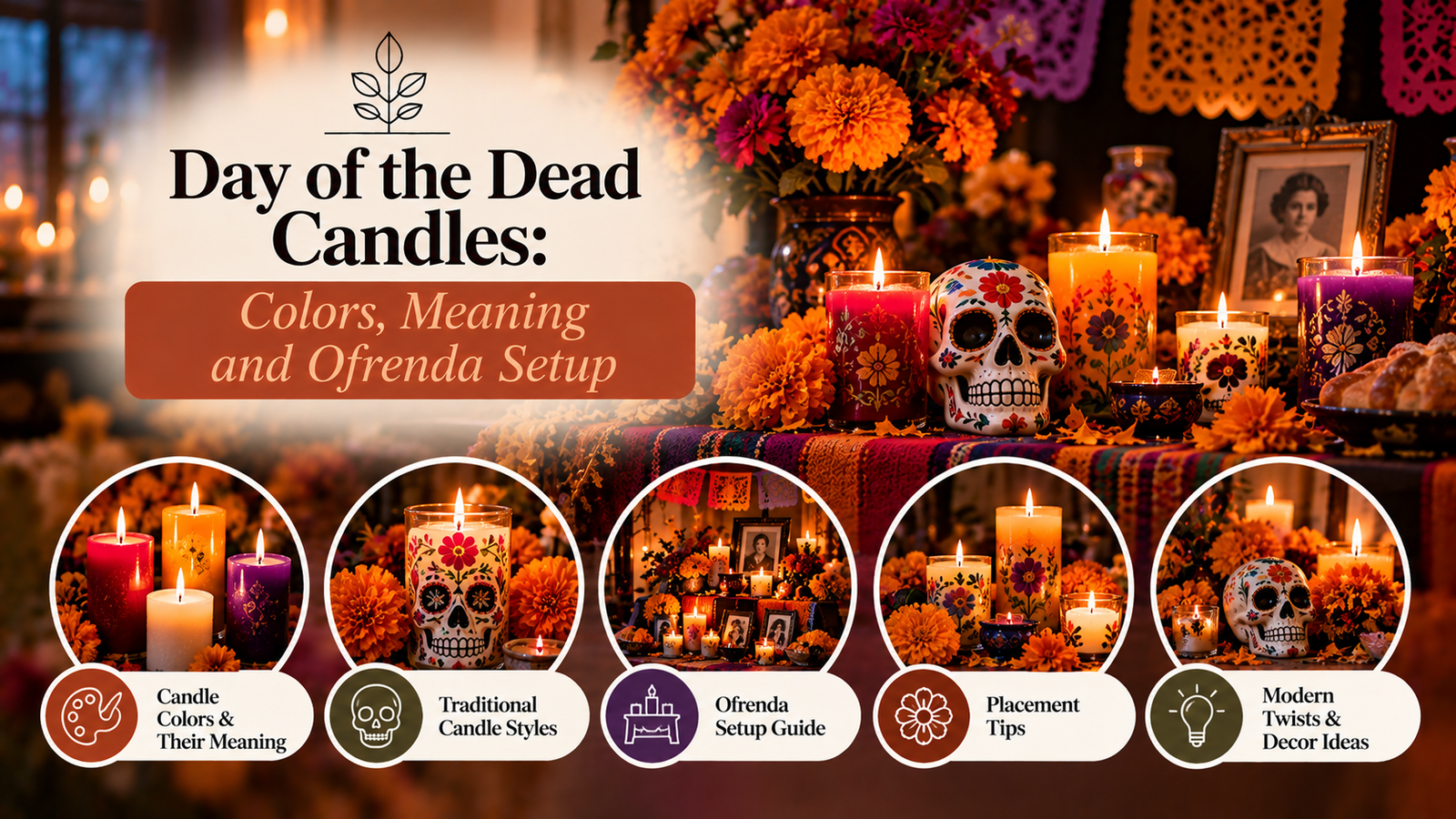
Day of the Dead candles do quiet, important work. Families light them on November 1 and 2 to welcome loved ones home. I spent weeks reading about ofrenda traditions and burning candles on my own table to test how they behave. This guide explains the colors, the symbolism, the setup, and the safety habits that matter. For a different tradition, read about black candles and Samhain.
What Day of the Dead Candles Mean
Día de los Muertos blends Indigenous Mesoamerican customs with Catholic All Saints’ and All Souls’ observances. UNESCO added the tradition to its Representative List of the Intangible Cultural Heritage of Humanity in 2008. Today, families across Mexico, the United States, and Canada keep it alive.
Light sits at the heart of the celebration. Each flame guides souls toward the ofrenda, the home altar built in their honor. Flame also stands for faith, hope, and the warmth of memory. Some families light one candle per departed relative. Others place four at the cardinal points to mark the roads a spirit may travel. Customs shift by region and household, so treat each practice as a tradition, not a rule.
Candle Colors and Their Meanings
Color symbolism varies from village to village. These common interpretations offer a starting point:
- White: purity, hope, and a bright path home for the spirit.
- Purple: mourning, grief, and respect.
- Pink: celebration and joy.
- Yellow and orange: marigold petals and the warmth of the sun.
- Red: life and vitality, used less often.
Ask older relatives about your family’s palette. White and purple suit most altars. For more on color symbolism, see our guide to new moon candle colors and rituals.
Veladoras deserve a mention. These tall glass-encased candles sell in Latin American markets and many grocery stores. The glass shields the flame from drafts, which helps near an open door. Pillars, tapers, and votives work well too.
Arrange Candles on an Ofrenda
A traditional ofrenda climbs in tiers. Photographs of the departed anchor the center. Marigolds, pan de muerto, sugar skulls, water, salt, and favorite foods surround them. Copal incense often rises nearby, and papel picado, the cut paper banners, frames the top.
Place candles along the front edge of each tier. Their glow then lights faces and petals. Odd numbers look balanced. I set five on the top tier and three on each step below, mixing tall veladoras at the back with short votives in front. White wax reflects the most light against dark cloth.
Keep the Altar Safe
An ofrenda combines open flame with paper, petals, and fabric. That pairing needs care. Papel picado ignites in seconds, and dried marigolds burn fast. The National Fire Protection Association advises keeping candles at least 12 inches from anything flammable. I follow that rule on every table I set.
- Stand each candle in a glass holder or on a ceramic saucer.
- Trim wicks to a quarter inch before lighting.
- Keep flames away from curtains, tablecloth edges, and sleeves.
- Check burning candles often, and never leave them alone in an empty room.
Traditional veladoras can burn for days. If you keep one lit overnight, set it on a ceramic tray in a clear spot, or switch to a battery candle before bed. Households with small children or pets can use LED candles on the lowest tier. Our Halloween candle safety guide covers more habits that apply here as well.
Choose the Right Candles
Skip heavy fragrance. Copal, marigold, and cooking aromas already fill the room, and a strong scent competes with them. Unscented soy or beeswax candles burn cleanly and keep the focus on remembrance. Size matters for stability. A wide pillar resists tipping better than a thin taper. Check our candle sizes guide before you buy, and match tapers to holders using this candle holder fit guide.
Make Room in Small Spaces
A shelf, bookcase, or console table works as a compact ofrenda. Use LED candles if your lease or building bans open flame, since many do. A mirror multiplies the glow, and a tray keeps the arrangement tidy while catching drips. Scale the offerings down and keep the intention intact.
Day of the Dead Is Not Halloween
The two celebrations share a calendar week and some imagery, yet their spirit differs. Halloween plays with fear. Día de los Muertos honors the dead with joy. Calaveras, the sugar skulls, are affectionate, not frightening. Treat the altar as a place of love. Leave plastic ghosts and costume props elsewhere. If you are new to the tradition, learn from Mexican and Mexican American voices, and visit public ofrendas at local cultural centers and museums.
A Simple Setup for First-Timers
- Pick a flat, stable table away from drafts and curtains.
- Arrange photographs and offerings in tiers.
- Set candles at the front of each tier, each in its own holder.
- Light them from the back row forward, so you never reach over a flame.
- Snuff each candle with a snuffer instead of blowing it out.
After the Celebration
On November 3, let candles cool completely before moving them. Freeze a wax-filled holder for an hour, and the wax usually pops out cleanly. Wipe soot from glass veladoras with a dry cloth. Store partly burned candles in a cool, dark drawer.
Final Thoughts
Day of the Dead candles turn memory into light. Choose colors that fit your family, place each flame with care, and respect the tradition behind it. A steady glow on a well-set table honors the people you miss. When you want holders, trays, and table accents that frame a remembrance table with care, explore the home decor collection at Lume & Wick.