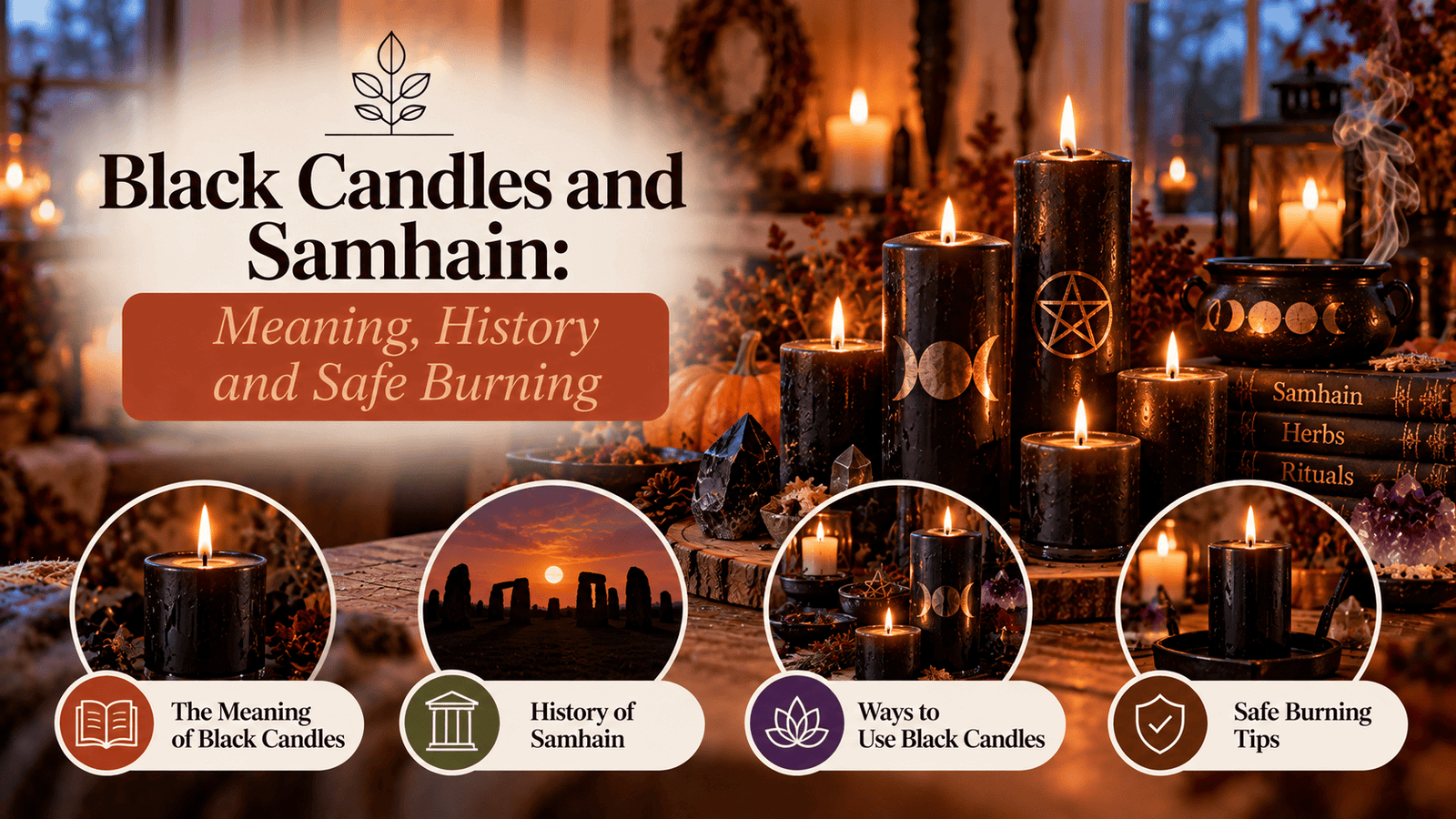
Black candles carry a reputation. Some people tie them to ghost stories. Others see them as tools for protection or reflection. I wanted a straight answer, so I read up on Samhain’s roots and burned a few black tapers on my own table. Here is what I learned.
What Samhain Really Is
Samhain (pronounced SOW-in) is an ancient Gaelic festival that marked the end of the harvest and the start of winter. Communities in Ireland and Scotland observed it from sunset on October 31 through November 1. Families lit bonfires, gathered food stores, and believed the border between the living and the dead grew thin. Many historians trace modern Halloween to Samhain and to the Christian All Hallows’ Eve.
Where Black Candles Fit In
Here is the honest part. Early accounts of Samhain describe bonfires, not black candles. The connection is much newer. Wiccan and neopagan groups revived and reinterpreted Samhain in the twentieth century, and many assign meanings to candle colors. Black often stands for protection, release, and the absorption of heavy energy. Others choose black simply because it matches the dark half of the year.
Candles also have a long history in Christian remembrance. People light them for the dead on All Souls’ Day, November 2. Mexican families place candles on altars for Día de Muertos, a separate tradition with its own meaning.
Candle color symbolism varies by tradition and by person. No single rulebook exists, so treat these meanings as personal choices.
Meanings People Give Black Candles Today
- Protection: Some people place a black candle near the front door to mark a safe threshold.
- Release: Others light one while writing down a habit, worry, or grief they want to let go.
- Remembrance: Many pair a black candle with a white one to honor loved ones.
- Reflection: A single flame gives a quiet focus for journaling or meditation.
How Black Candles Burn
Black wax behaves differently from white. Makers need a lot of dye to reach true black, and heavy dye can clog the wick or slow the burn. Some black candles use an overdipped design, with a thin black shell around a lighter core. That shell burns away to reveal another color inside.
During my test, a cheap black taper sputtered for ten minutes. A better one with a trimmed wick burned steadily. Dye can also stain holders, tablecloths, and fingers, so use a tray.
Follow these habits for a clean burn:
- Trim the wick to about a quarter inch before each lighting.
- Set the candle on a stable, heat-safe holder at least 12 inches from anything flammable.
- Keep burning candles three inches apart.
- Burn for no more than three to four hours at a time.
- Snuff the flame instead of blowing it out to limit smoke.
If the wax burns a narrow well down the middle, read how to fix candle tunneling. When you relight, follow these relighting tips.
Scents That Suit Black Candles
Most black candles come unscented, and that suits a quiet ritual. If you prefer fragrance, choose resinous and woody notes such as frankincense, myrrh, cedar, or patchouli. Resins like frankincense and myrrh also appear in incense, so candles or incense makes a useful read if you want to compare both.
A black pillar on a dark tray with a few cloves and dried leaves looks striking. Keep the display simple.
Final Thoughts
Black candles do not belong to one tradition. They carry history, folklore, and modern meaning, and you decide which one fits you. Choose a well-made candle, trim the wick, and stay close while it burns. If you want soy wax candles for your Samhain evening, explore the collection at Lume & Wick. A good candle makes the ritual feel calmer.