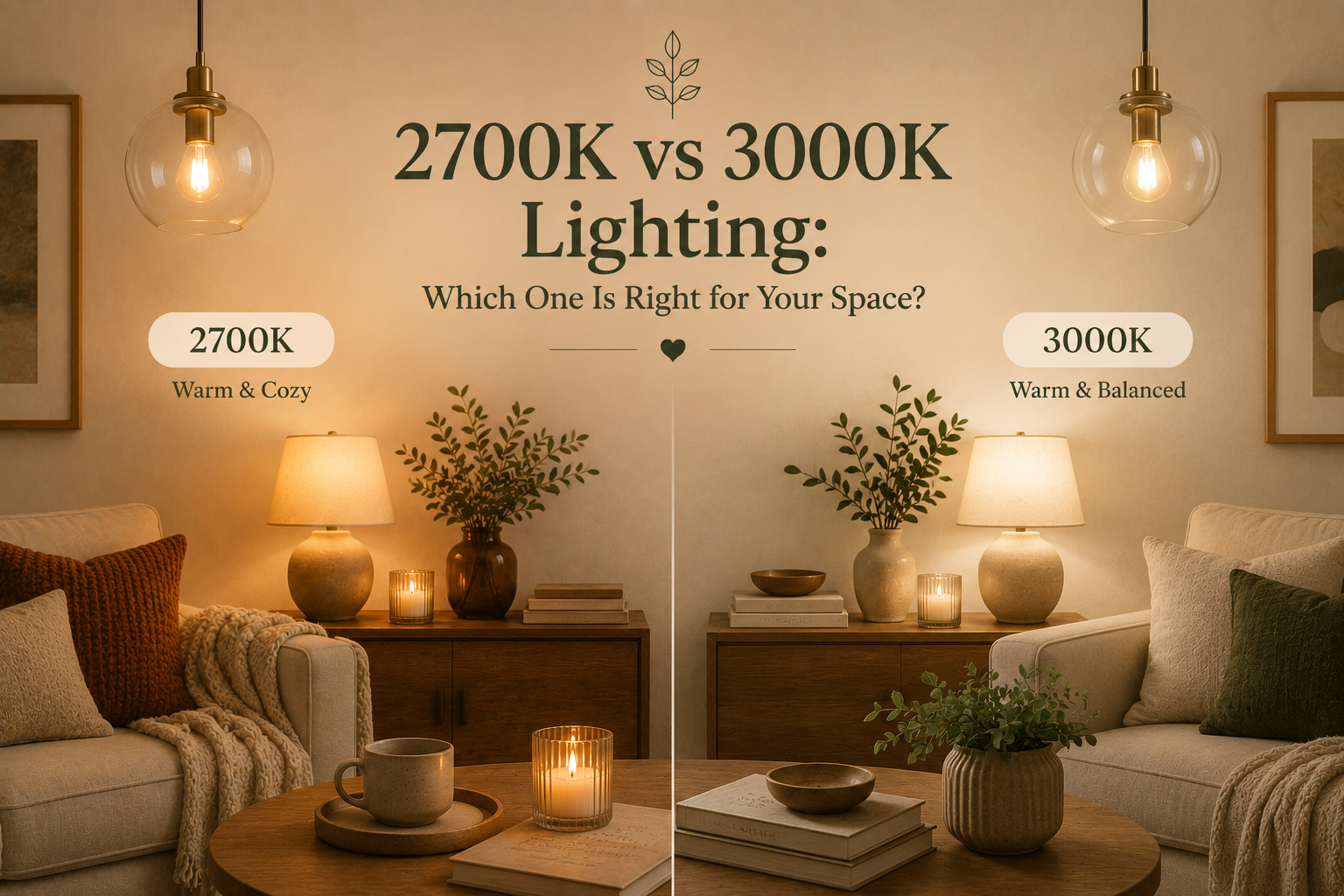
I have swapped bulbs in my own living room three times chasing the “right” glow, so I understand the confusion between 2700K and 3000K. Both sit on the warm end of the Kelvin scale, both get labeled “warm white” on the box, and both look nearly identical in a showroom aisle. Once installed at home, though, the difference becomes obvious.
This guide breaks down what separates these two color temperatures in appearance, function, and everyday use, so you can pick the right one without guesswork. If you’re building out a lighting plan from scratch, our guide on how to choose lighting for your home covers the basics of layering light room by room.
What Does 2700K and 3000K Actually Mean?
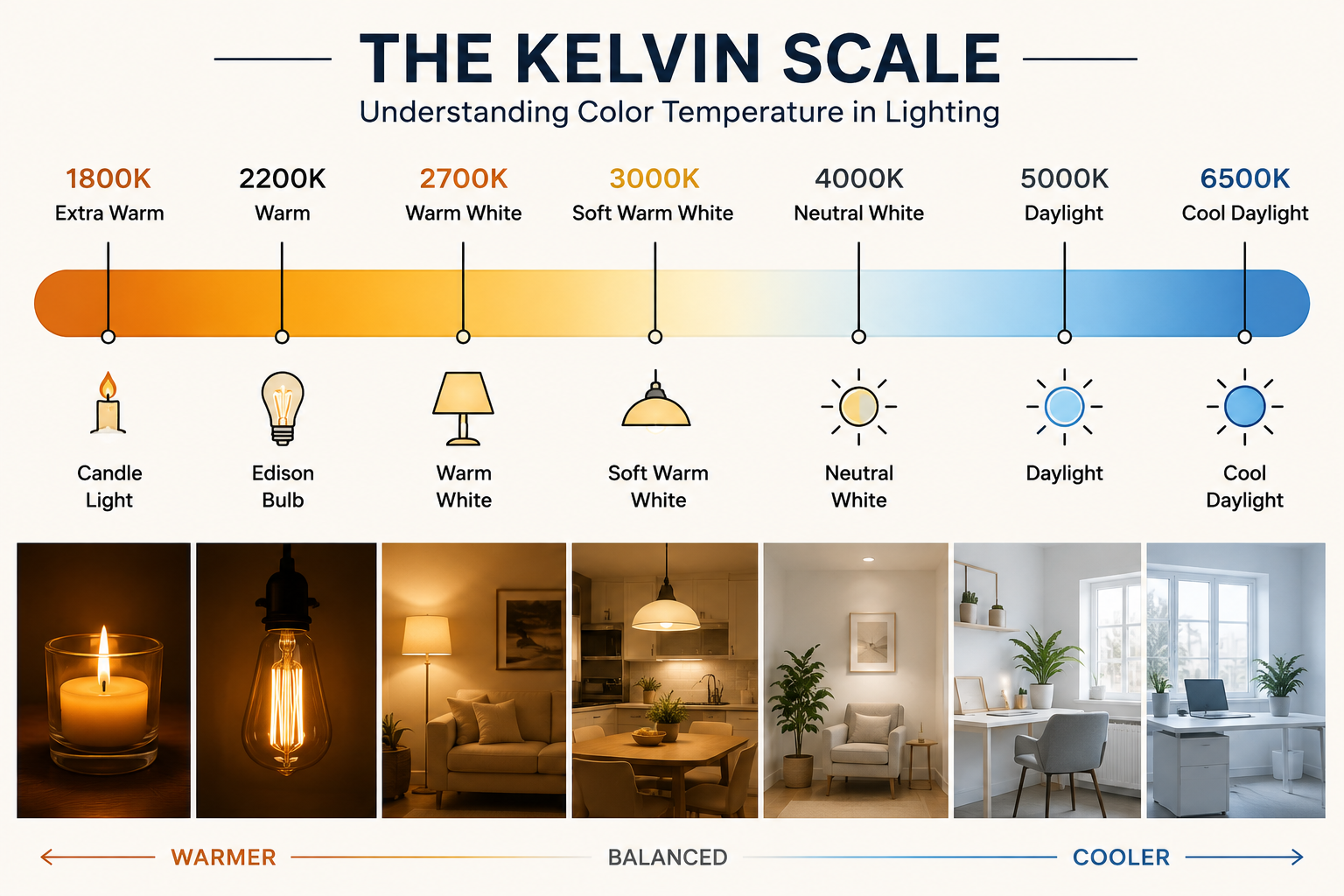
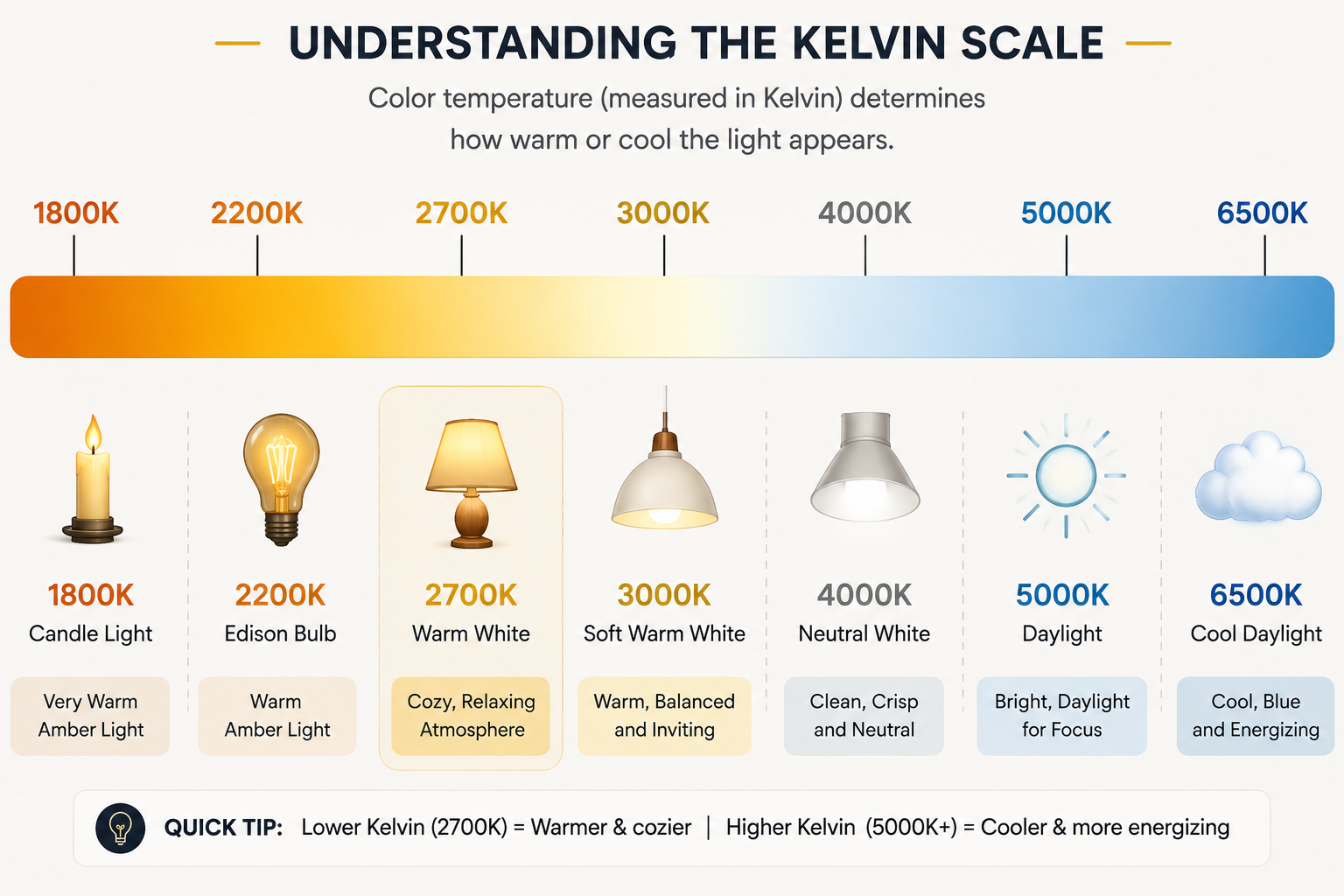
Color temperature measures how warm or cool a light source appears, expressed in Kelvin (K). Lower numbers lean amber and orange; higher numbers shift toward white and blue. Traditional incandescent bulbs, the kind your grandparents used, sit around 2700K, which is why that value still reads as “classic” warmth.
Daylight and overcast skies climb past 5000K, far cooler than anything discussed here. 2700K and 3000K both fall in the warm white range, just a few hundred Kelvin apart, but that small gap changes how a room feels once the lights click on.
2700K vs 3000K: The Real Difference in Light Appearance
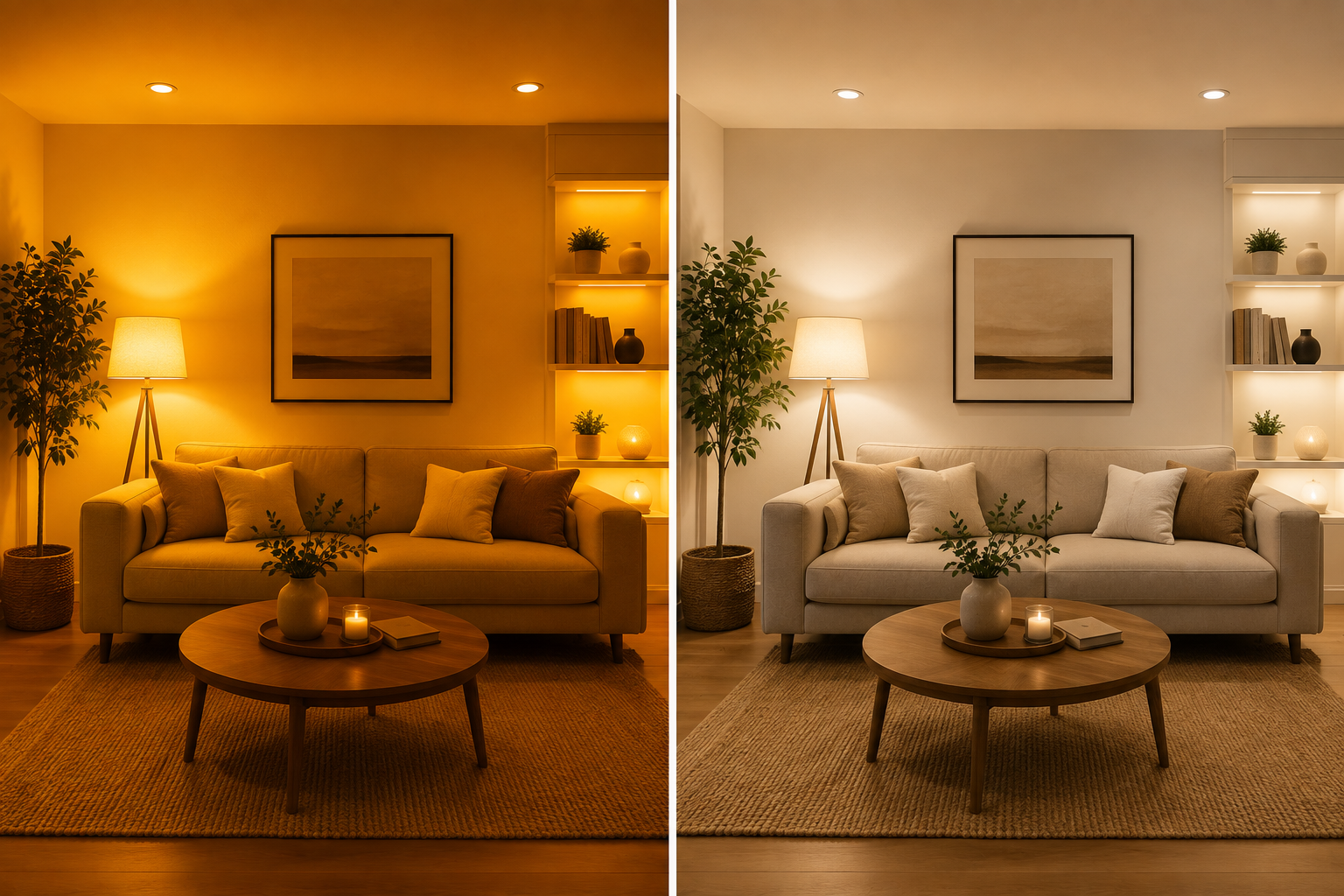
Picture a candle flame beside a fresh sheet of white paper under morning light. That contrast captures the gap between these two temperatures. 2700K glows amber and soft, echoing the nostalgic tone of an old filament bulb. Objects under it take on a golden undertone, flattering wood furniture and warm-toned decor. 3000K pulls back on that orange cast. It still reads as warm, not clinical, but colors appear crisper and slightly whiter. Flameless LED candles aim for a similar warm glow, and our guide to LED vs real candles for Halloween décor explains where each works best.
I tested both in my kitchen: the 2700K bulb made the countertops look cozy but dim, while 3000K kept the same comfort while letting me actually see what I was chopping. A dusty or foggy fixture skews either temperature, so if colors still look off after switching bulbs, our steps on how to clean a glass light fixture are worth a quick check. Neither temperature qualifies as cold or neutral; the difference lies in subtlety, not category.
Where Each Color Temperature Works Best
Choosing between them comes down to what a room needs to accomplish, not which bulb looks “nicer” in isolation. Outdoors, the same logic applies; these patio lighting ideas show both temperatures in use. Over the dining table, pair the bulb with the correct fixture height; see how to hang a dining room chandelier at the right height.
Best Uses for 2700K
Bedrooms, living rooms, and dining areas benefit most from 2700K. Its low blue-light output supports relaxation and doesn’t interfere with winding down before sleep, which is why I keep it in every lamp near my bed. Restaurants and hospitality spaces lean on this temperature too, since guests associate that amber glow with comfort rather than efficiency.
If your bedside lamp still throws a harsh tone despite the right bulb, swapping the shade can soften it further; I walked through that process in how to change a lamp shade.
Best Uses for 3000K
Kitchens, bathrooms, home offices, and closets call for 3000K. Tasks like reading labels, applying makeup, or reviewing paperwork need a touch more clarity than 2700K provides. Retail displays also favor this range because it balances a welcoming feel with enough crispness to show product detail accurately.
For a desk setup specifically, I put together a full breakdown of home office lighting ideas that pairs well with this Kelvin range.
Comparing the Key Factors
Beyond appearance, a few measurable attributes separate these bulbs.
Color Rendering Index (CRI): Both temperatures can ship with high CRI ratings above 90, but 3000K bulbs more commonly hit that mark, rendering colors closer to how they appear in natural light. Our lux and lumens calculator converts lux to lumens for any room size in seconds.
Eye comfort and blue light: 2700K emits less blue wavelength light than 3000K, making it gentler on the eyes during evening hours and less likely to delay melatonin production before bed. If you want to check light levels precisely, use our foot-candle calculator.
Brightness and output: Color temperature and brightness are measured separately, so a 2700K and a 3000K bulb can put out the same light level. If you’re unsure how much brightness a room actually needs, our guide on how many lumens is a 60W bulb breaks down lumens versus wattage, and candlepower vs. lumens explains how that measurement compares to older brightness terms. For other bulb types, our watts to lumens calculator for LED bulbs does the maths for you.
Dimmability and price: Both come in dimmable and non-dimmable versions at roughly the same price point, so cost rarely factors into the decision.
Which One Should You Choose?
Neither temperature outperforms the other; each suits a different purpose. If a room exists for winding down, reading in bed, or hosting relaxed dinners, 2700K delivers that cozy, familiar warmth. If the space demands focus, whether that’s chopping vegetables, applying skincare, or answering emails, 3000K offers the clarity without swinging into harsh, clinical territory.
Many homeowners mix both: 2700K in bedrooms and living rooms, 3000K in kitchens and bathrooms. Open-concept layouts can even use 3000K over task zones like a kitchen island and 2700K in the adjoining seating area, letting each zone do its job.
Ceiling setups add another layer to this decision; if you’re weighing fixture types alongside bulb temperature, can lighting vs recessed lighting covers how that choice affects the overall glow.
Final Thoughts
After testing both extensively at home, I keep landing on the same conclusion: this isn’t about one bulb being superior, it’s about matching light to purpose. Once you identify what a room is actually for, the Kelvin choice becomes obvious.
If you’re ready to put this into practice, Lume & Wick’s home lighting collection carries both 2700K and 3000K options across lamps, fixtures, and bulbs, making it easy to build the right mix for every room in your home.