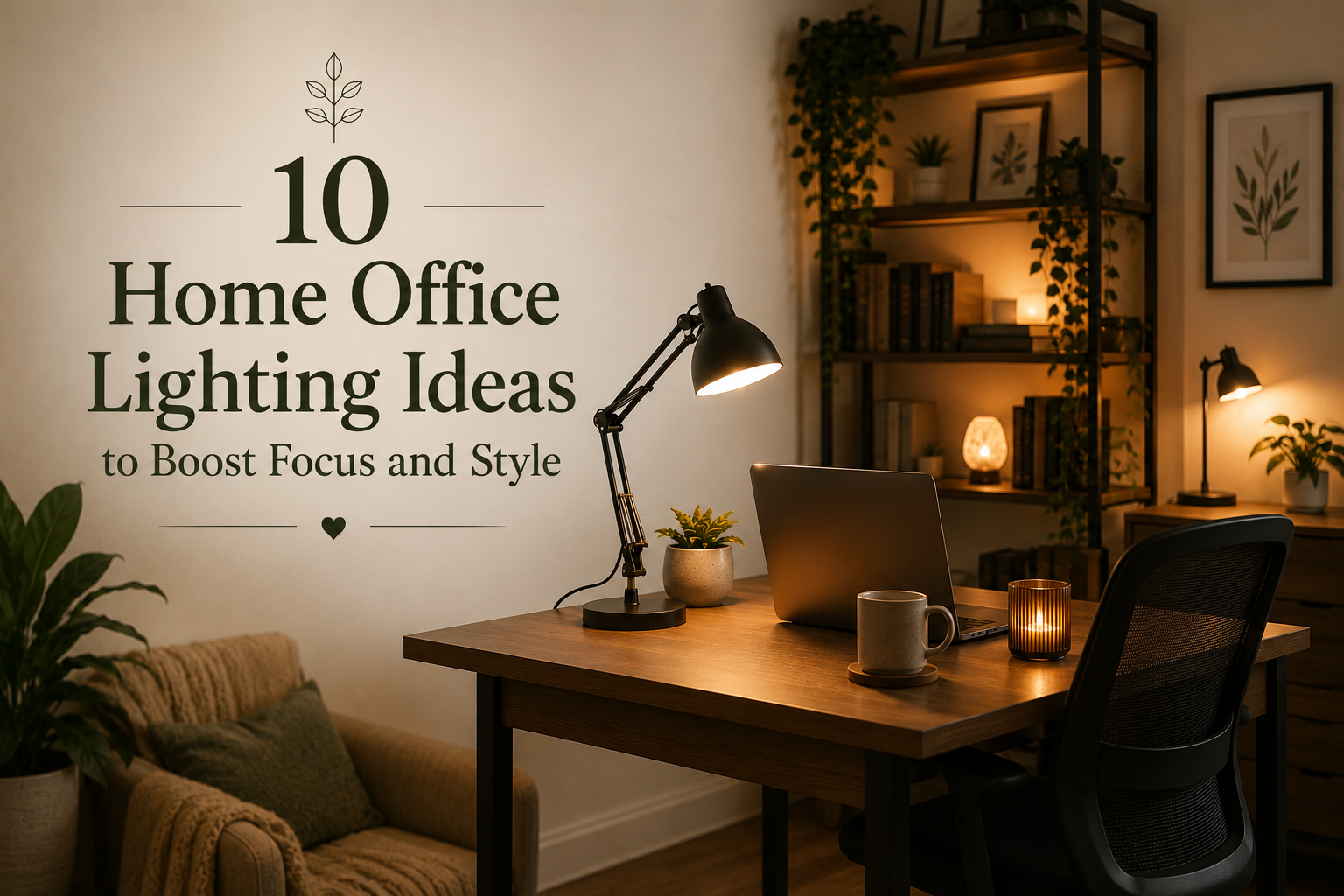
When I set up my first home office, I made every rookie mistake in the book. Harsh overhead light bounced straight off my monitor, my desk lamp threw a hot circle nowhere near my keyboard, and by 4 p.m. my eyes felt like they’d been staring into a headlight. It took months of trial and error to build a setup that actually supports focus instead of fighting it.
Below are the ten changes that made the biggest difference, drawn from real testing, not guesswork. Whether you’re chasing better productivity or just want your video calls to look less like a hostage tape, these home office lighting ideas will get you there.
1. Position Your Desk Near a Window for Natural Light
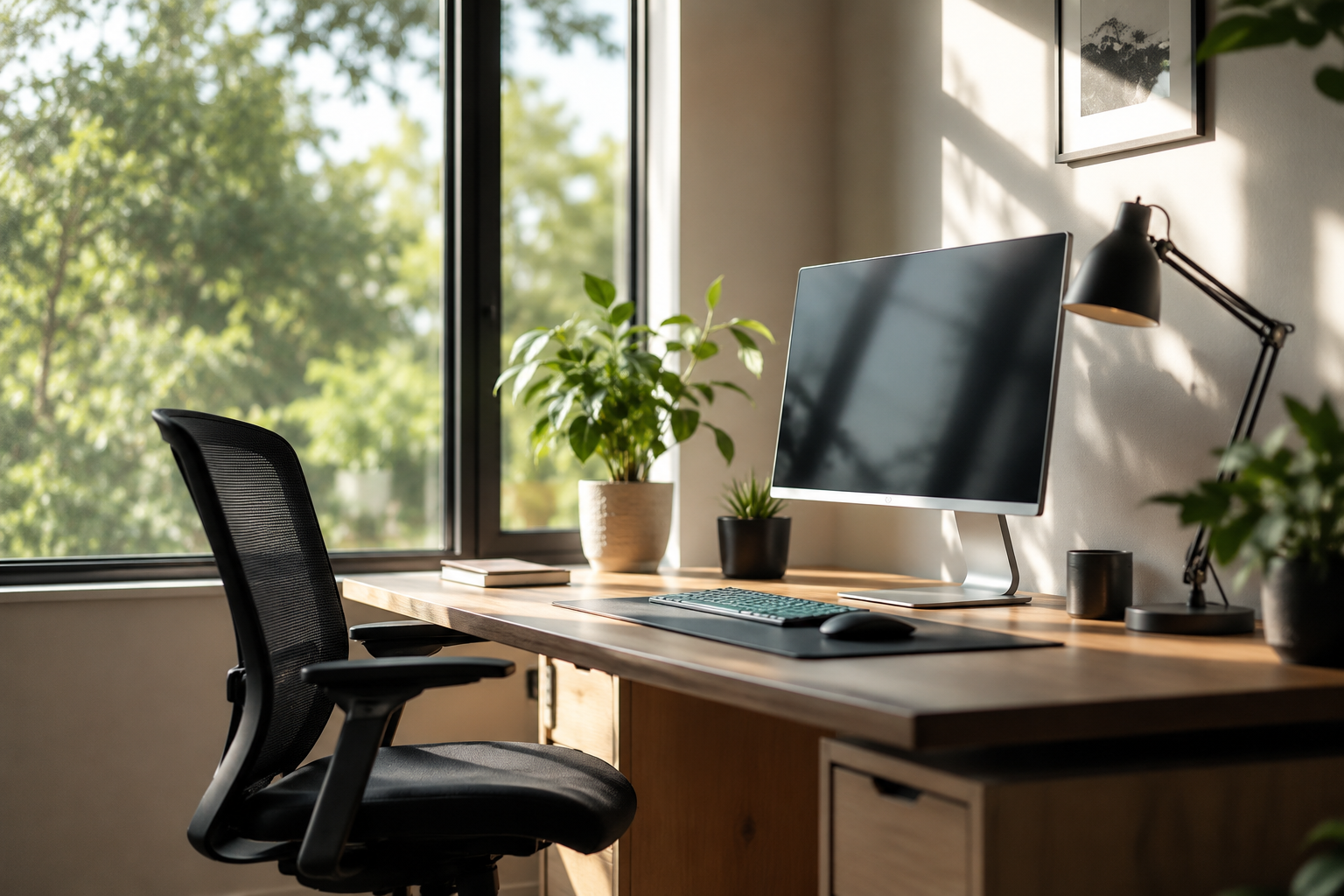
Daylight exposure should always be your starting point. Sunlight carries a full spectrum that artificial bulbs still struggle to replicate, and it does more for alertness than any gadget I’ve tried. The trick is desk positioning: place your setup beside the window rather than facing it directly. Facing a window head-on creates glare on your screen and forces your eyes to fight the contrast all day. A side angle gives you soft, even illumination without the squint.
2. Add a Task Lamp for Focused Desk Lighting
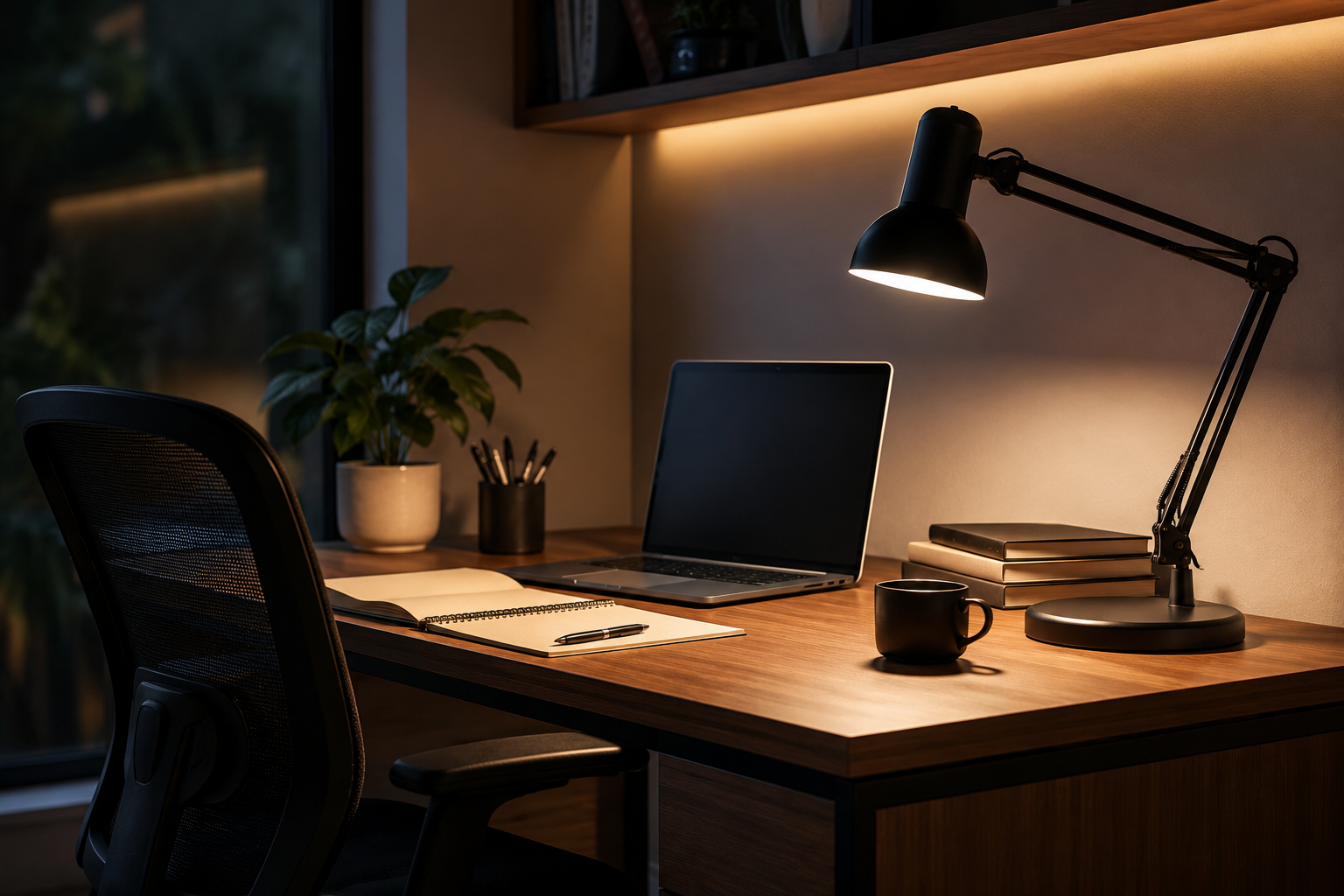
Overhead light alone leaves your actual work surface underlit, which is where task lighting earns its keep. A good desk lamp directs bright, controlled light exactly where your hands are, cutting shadows on paperwork and easing the strain of close-up tasks. I switched to an LED desk lamp with an adjustable arm and never looked back. Look for dimmable settings so you can scale brightness down for screen work and up for reading or sketching.
3. Layer in Ambient Ceiling Lighting
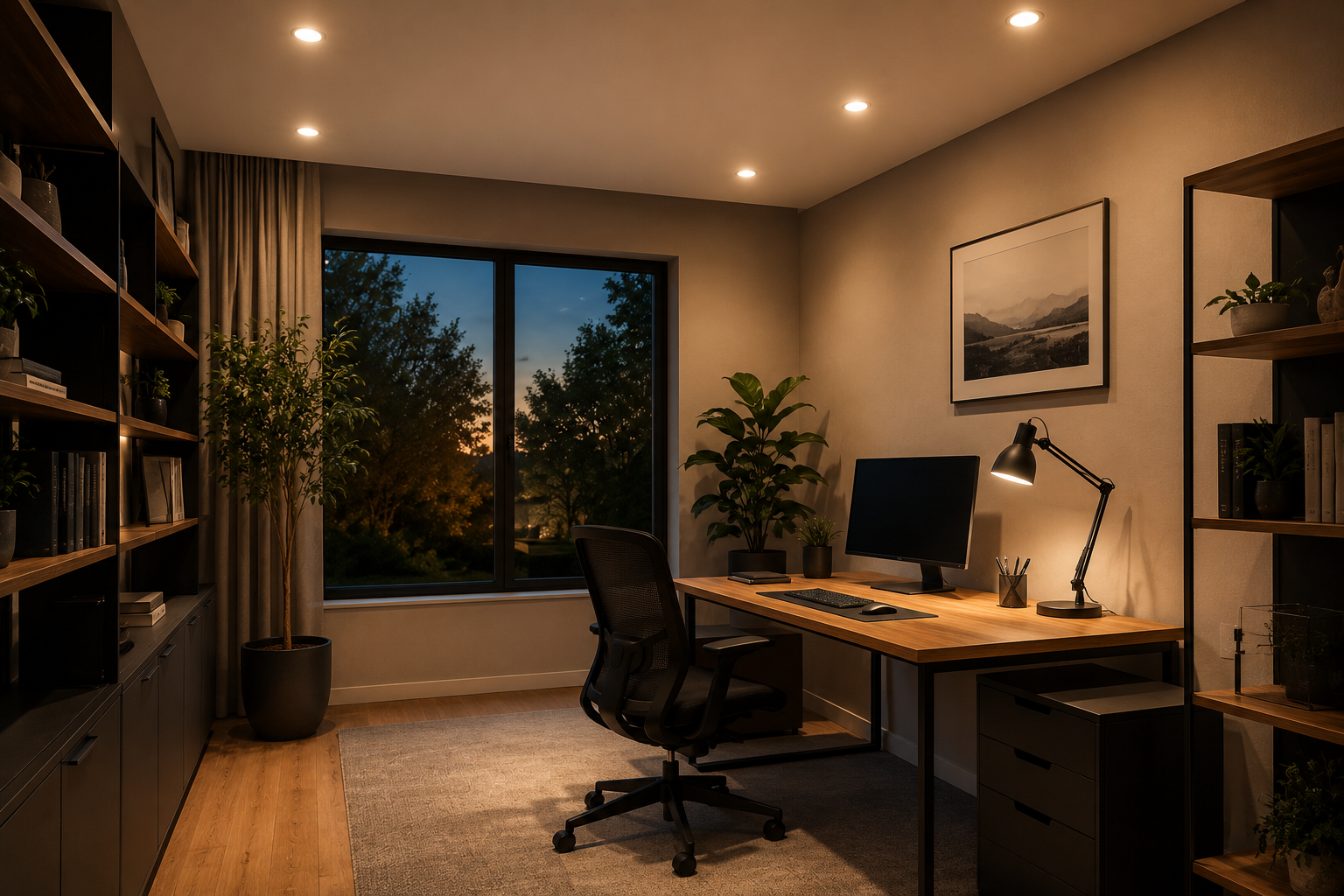
Ambient lighting is your base layer, the light that fills the room evenly so your bright screen isn’t glowing against a dark backdrop. That contrast is exhausting on the eyes over a full workday. Recessed lighting, a flush mount, or even a simple overhead office light can do the job. The goal isn’t brightness for its own sake. It’s removing the shadows and dark corners that make a room feel uneven and tiring to work in.
4. Hang a Statement Pendant Light Above the Desk
If your office has some ceiling height to work with, a pendant light turns a purely functional space into one with real character. I added one over my desk mainly for design, and it’s become the first thing people notice on video calls. Just remember it’s a mood-setter, not a workhorse. Pair it with proper task lighting rather than expecting it to carry the room on its own.
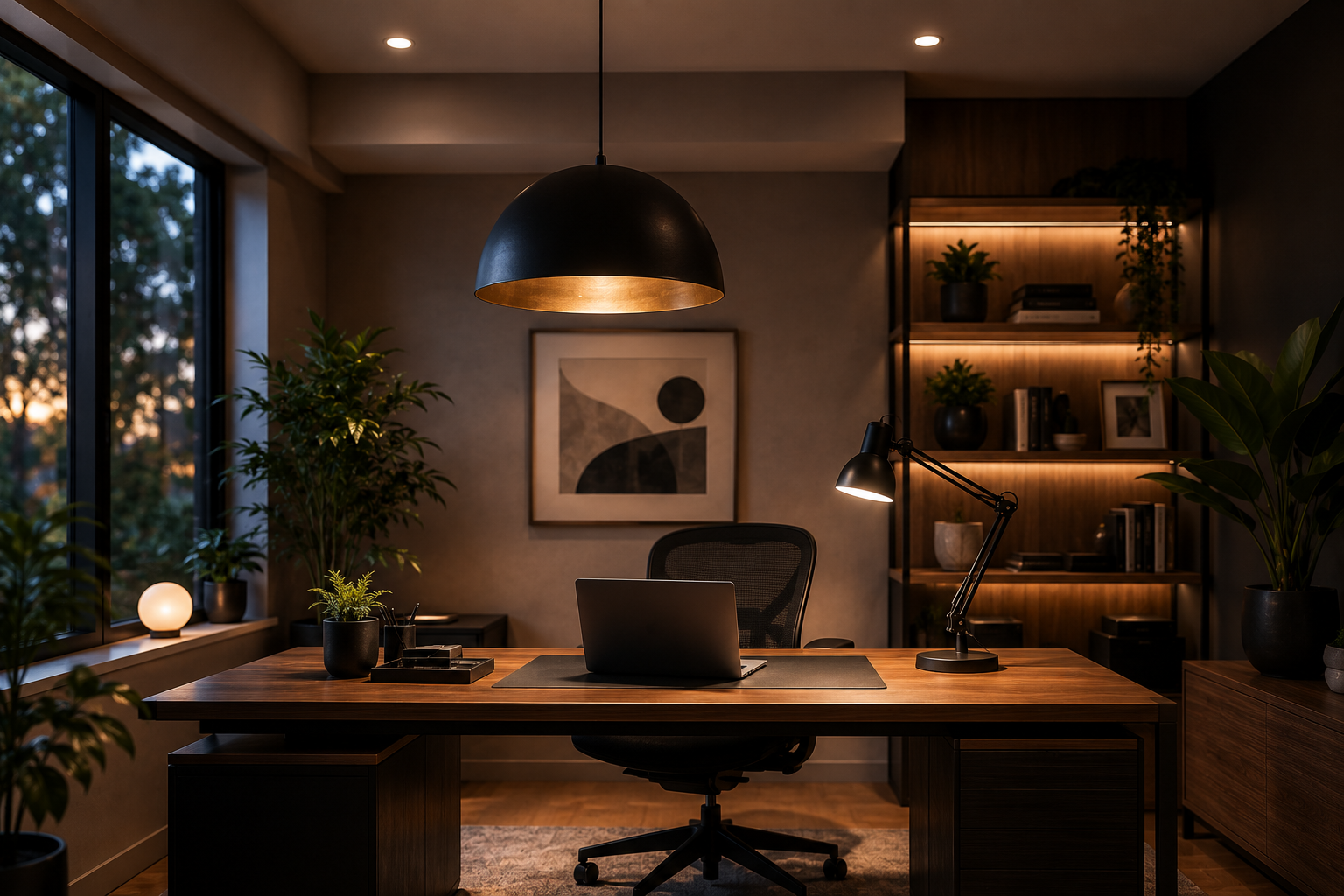
5. Use a Floor Lamp for Flexible, Space-Saving Light
Not everyone has room for wall-mounted fixtures, and that’s where a floor lamp for office use earns its place. It’s ideal for small rooms, shared spaces, or rentals where drilling holes isn’t an option. I keep one with an adjustable head in the corner of my office, angled to fill the one spot my ceiling light doesn’t quite reach. Look for a stable base rather than a clamp-mount design if you plan to move it often, since floor lamps take more bumps than desk fixtures.
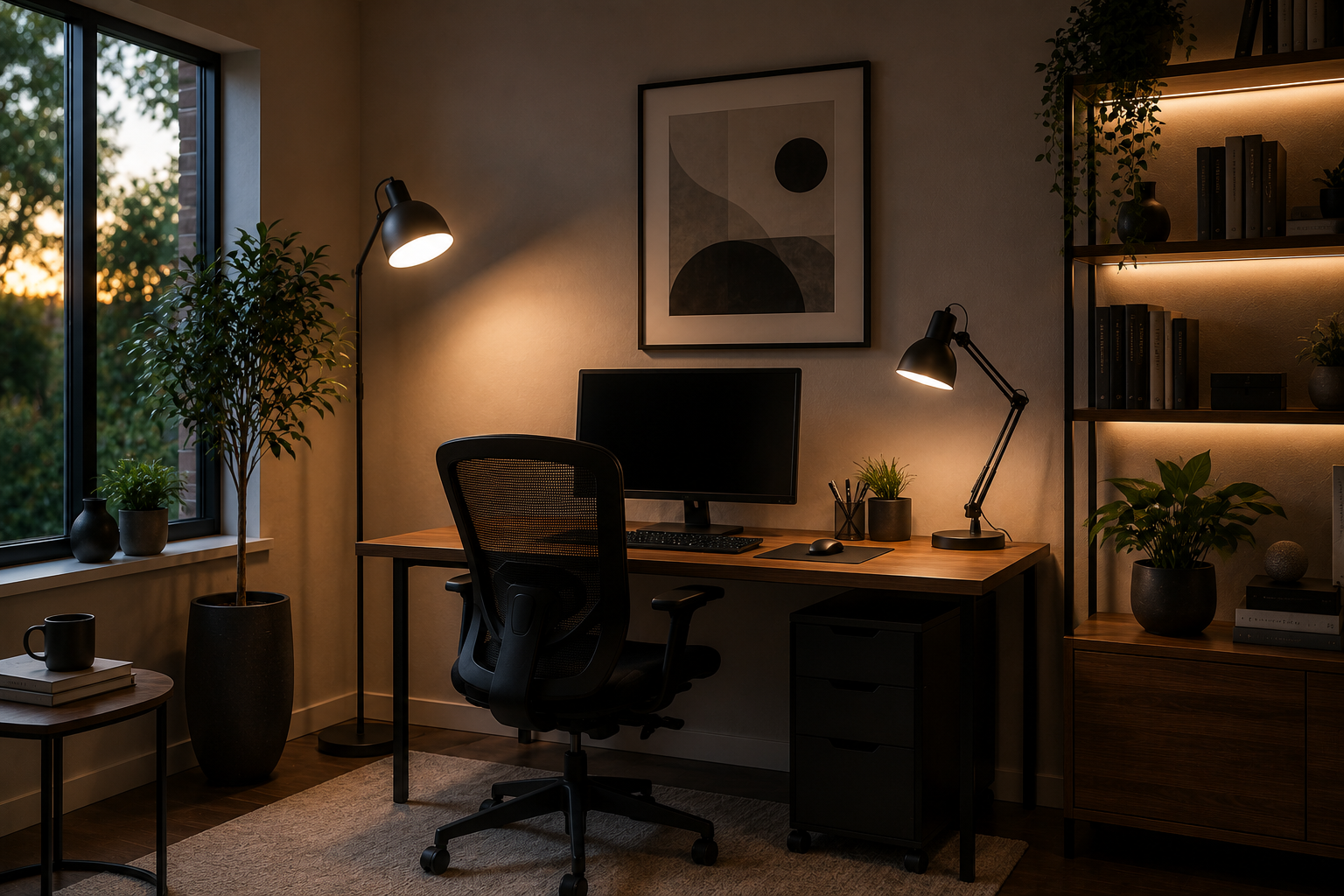
6. Add Wall Sconces for Soft Accent Lighting
Accent lighting softens a room in a way that overhead fixtures can’t. Wall sconces fill dark corners without eating into your desk space, and they add a warmth that feels closer to mood lighting than office lighting. I added a pair on either side of a bookshelf, and they’ve become my go-to for early morning or late evening sessions when full brightness feels too harsh on tired eyes.
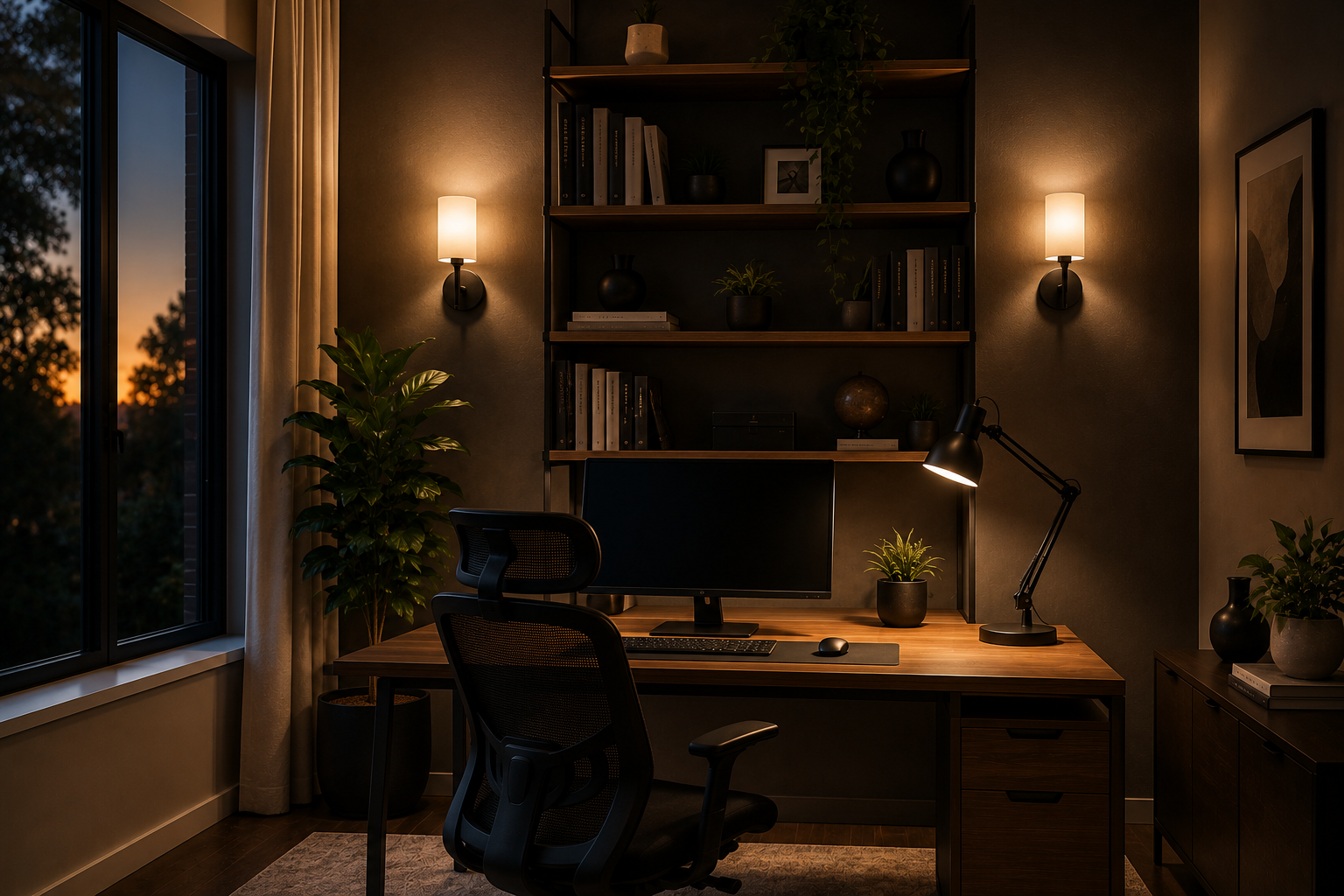
7. Set Up a Bias Light Behind Your Monitor
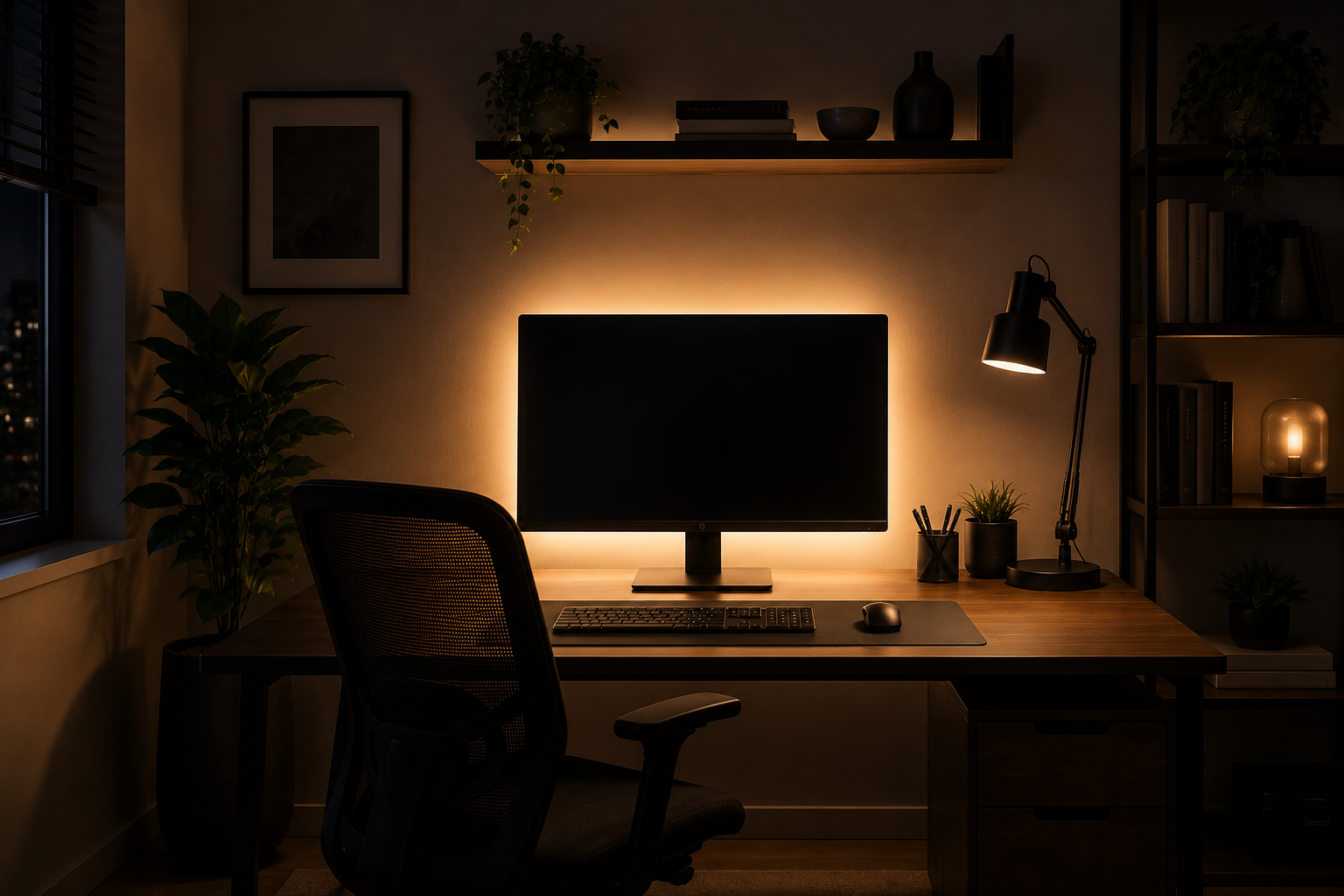
This one surprised me the most. A bias light is a slim strip placed behind your screen, and its job is simple: it narrows the gap between a bright monitor and a dark wall. That gap is a major driver of digital eye fatigue, since your pupils keep adjusting between the two. Keep the brightness low. You’re aiming for a soft halo behind the screen, not a second light source competing for attention. Within a week of adding mine, the end-of-day eye strain I used to blame on “too much screen time” dropped noticeably.
8. Choose the Right Color Temperature for Focus
Color temperature, measured in Kelvin, shapes how a room feels far more than most people realize. Cooler light in the 4000K to 5000K range mimics daylight and supports focus during working hours, while warmer light around 2700K to 3000K signals your body to wind down in the evening. This ties directly into circadian rhythm, your internal clock that reacts to light cues throughout the day. I run cooler light until early afternoon, then switch to warmer bulbs, and the shift in energy is noticeable enough that I now build it into my routine.
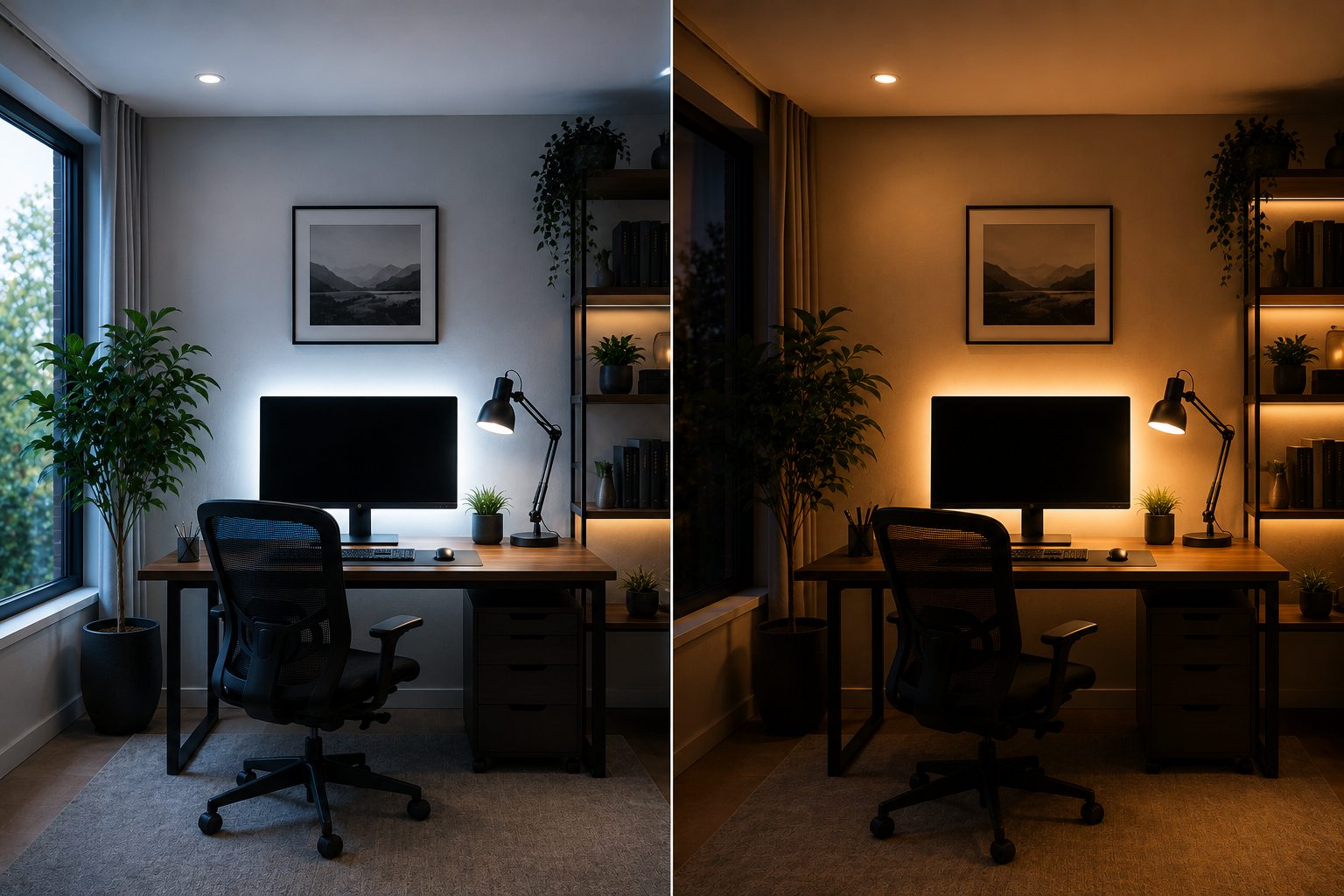
9. Upgrade to Smart, Dimmable Lighting
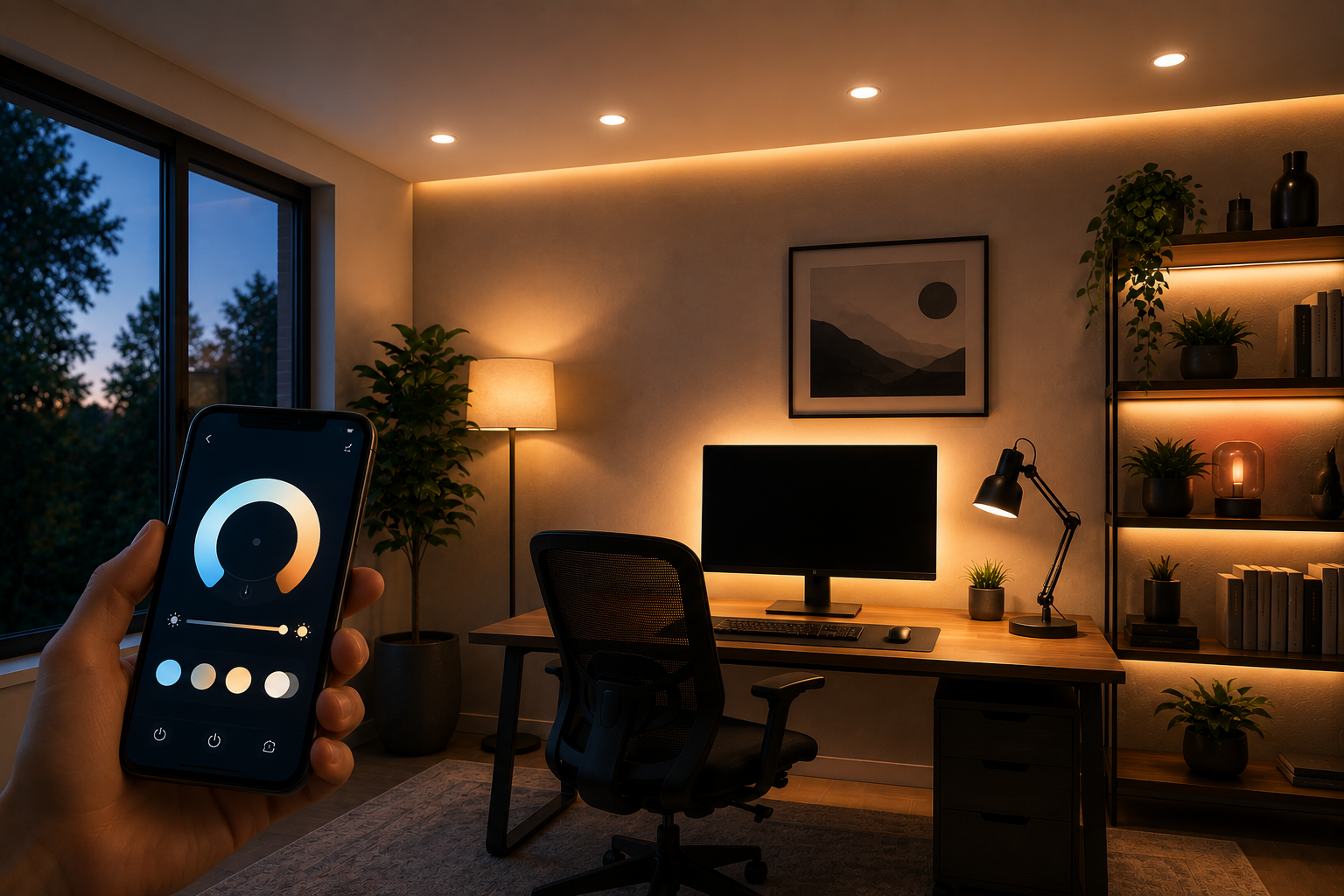
Smart lighting has changed how I manage a home office setup day to day. Swapping standard bulbs for smart bulbs with app or voice control lets me adjust brightness and color temperature without touching a single switch. Many now offer tunable white settings, so one fixture can shift from cool daytime light to a warmer evening tone. They’re also more energy-efficient than older incandescent options, which matters if your lights run eight or more hours a day. I set mine on a schedule and rarely think about it anymore, which is exactly the point.
10. Improve Video Call Lighting with a Ring Light
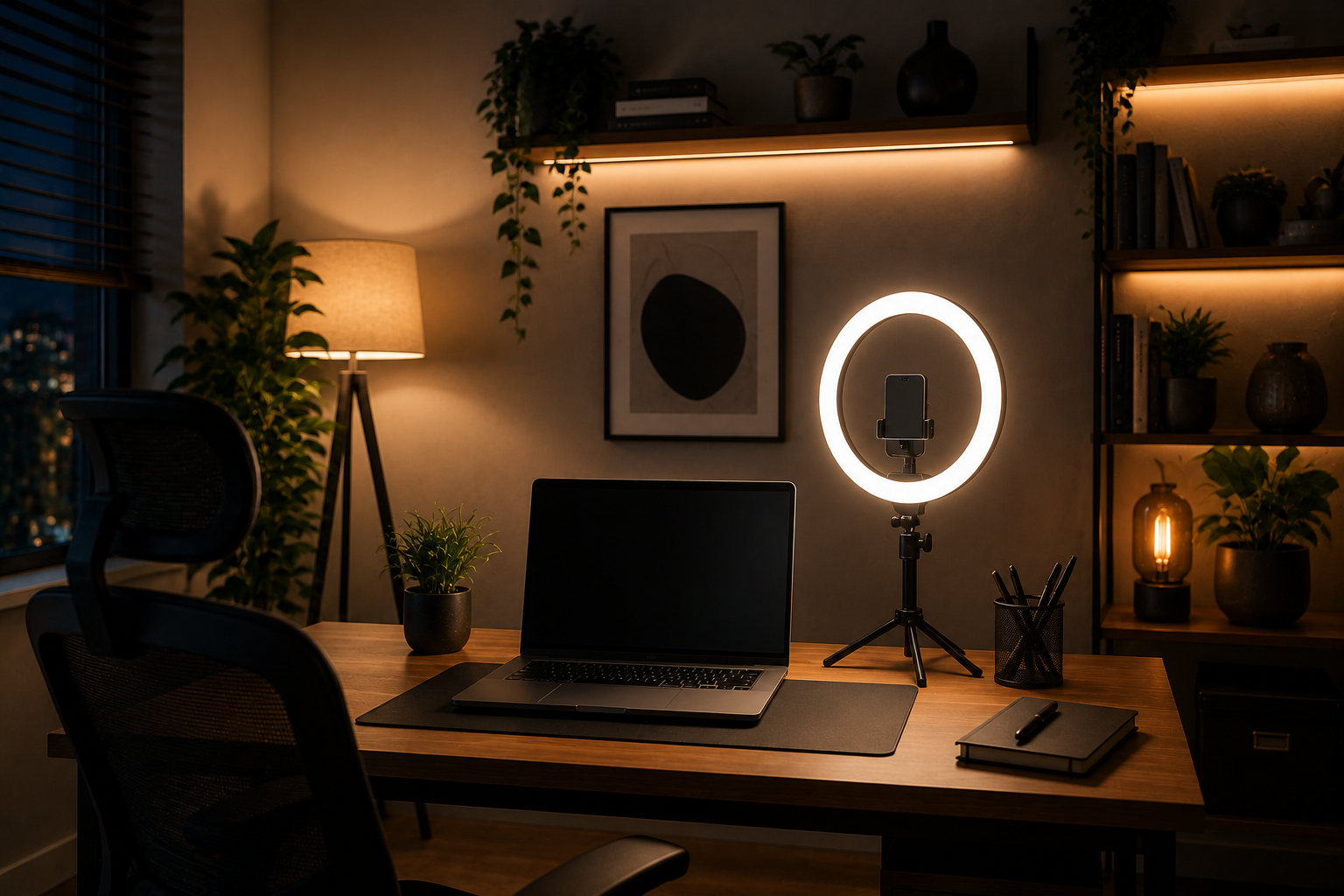
Overhead light rarely flatters a face on camera, and video call lighting deserves its own fix. A ring light placed in front of you, not behind, fills in shadows and gives a clean, even look that overhead bulbs simply can’t match. I added one after a client meeting where I looked like I was calling from a cave. It’s a small addition, but it’s made every Zoom call since noticeably better.
Conclusion
The best home office setups rarely rely on one fixture doing all the work. Natural light, task lighting, and ambient lighting each solve a different problem, and layering them is what actually reduces eye strain and keeps focus steady through a full workday. Start with your window, add a dependable desk lamp, fill in the gaps with ambient and accent pieces, then fine-tune with color temperature and smart controls once the basics are in place.
If you’re ready to put these ideas into action, Lume & Wick has a well-edited range of desk lamps, floor lamps, and ambient fixtures worth browsing, the kind of pieces that make a workspace feel considered rather than thrown together.