
A dining room chandelier does more than brighten a space. It creates a focal point, defines the table area, and shapes the overall atmosphere. I learned this after replacing a fixture that looked beautiful in the showroom but felt awkward once installed. The chandelier hung too high, leaving the table dim and the room disconnected. After lowering it to the correct hanging height, the difference was immediate. The dining area felt warmer, conversations became more comfortable, and the room looked balanced.
If you are wondering how to hang a dining room chandelier at the perfect height, the good news is that you do not need to guess. A few simple measurements help you achieve proper lighting, maintain clear sightlines, and keep the fixture proportional to your dining table and room.
What Is the Ideal Height for a Dining Room Chandelier?
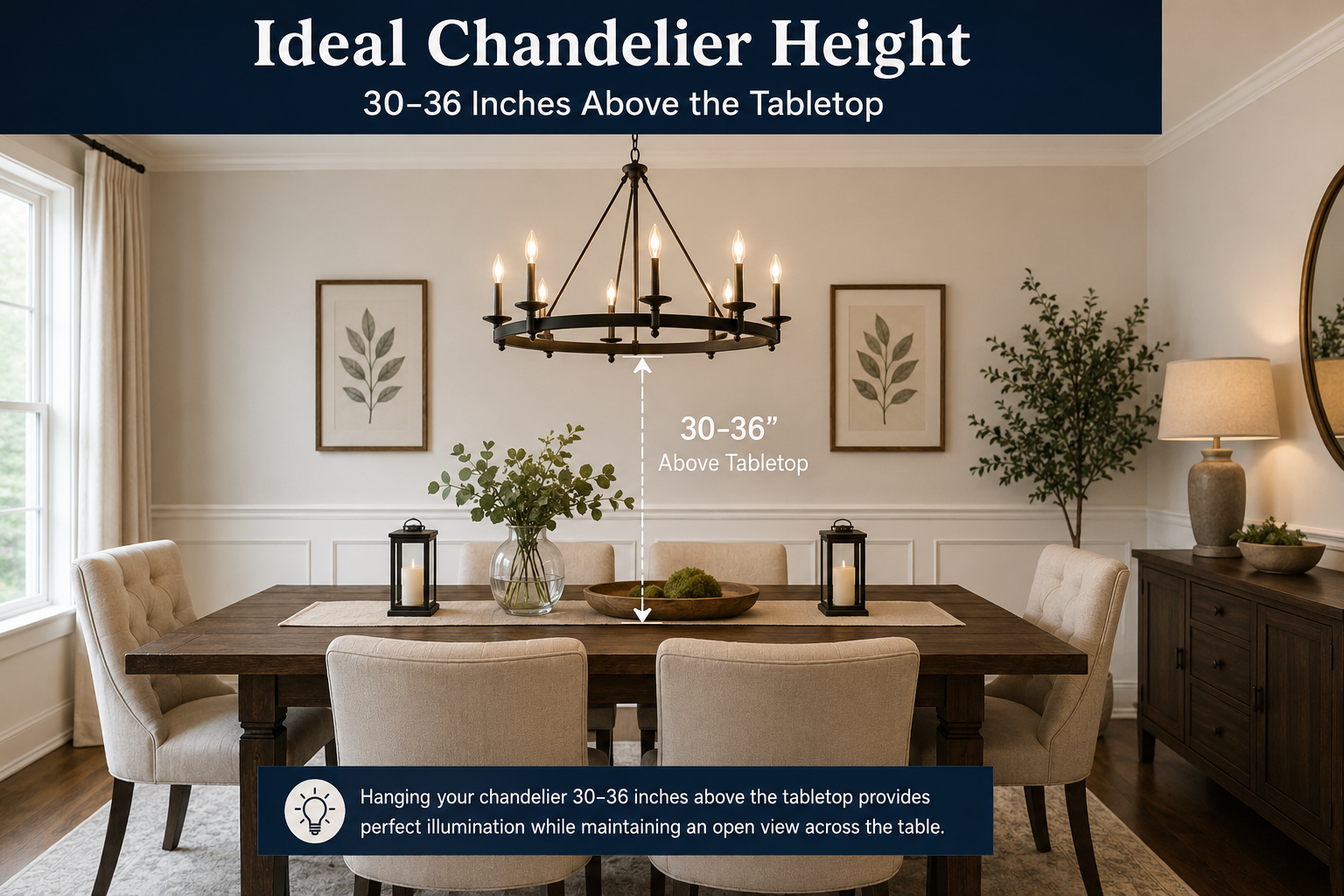
For most homes with an 8-foot standard ceiling, the bottom of the chandelier should hang 30 to 36 inches above the tabletop. This guideline has remained the industry standard because it provides excellent ambient lighting while keeping the fixture at a comfortable eye level. Not sure about scale? Our chandelier size calculator suggests diameter and drop for your room or table.
Positioning the chandelier within this range allows light to spread evenly across the table without shining directly into people’s eyes. At the same time, it leaves enough open space for guests to see each other across the table, making meals feel more inviting.
Another detail that many homeowners overlook is placement. The fixture should always be centered over the dining table, not necessarily in the middle of the room. Since the table is the primary gathering point, aligning the chandelier with it creates visual balance and strengthens the room’s layout.
Size also matters. A chandelier that matches the scale of the table naturally complements the space, while an oversized or undersized fixture can throw off the room’s proportions even if the hanging height is correct.
How Ceiling Height Changes the Hanging Position
For Standard 8-Foot Ceilings
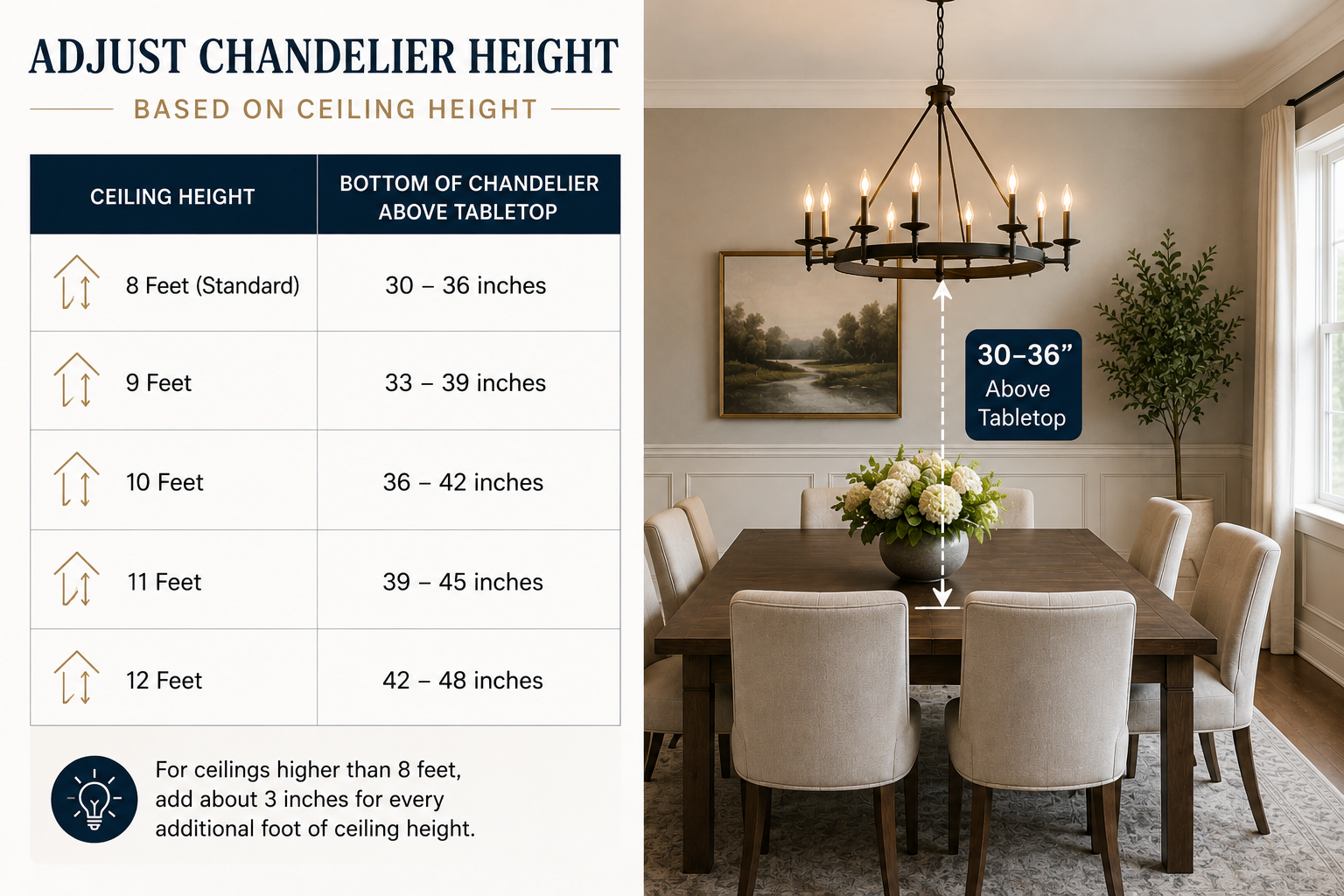
The 30 to 36 inch recommendation works perfectly in most dining rooms with an 8-foot ceiling. In my experience, aiming for about 32 to 34 inches above the tabletop often creates the most balanced appearance. It provides generous illumination while preserving an open view across the table. With a lower ceiling, a semi-flush mount may suit the room better than a hanging chandelier.
How Ceiling Height Changes the Hanging Position
For 9-Foot or Higher Ceilings
Higher ceilings need a small adjustment to keep the chandelier visually connected to the dining area. A simple rule I follow is to raise the fixture by about 3 inches for every additional foot of ceiling height. For example, with a 9-foot ceiling, the bottom of the chandelier usually sits around 33 to 39 inches above the tabletop.
Rooms with a vaulted ceiling require a little more judgment. Instead of focusing only on the ceiling, look at the relationship between the fixture, the table, and the surrounding space. The goal is to maintain proportional placement so the chandelier still feels like part of the dining setting instead of floating overhead.
How to Measure the Correct Chandelier Height
Accurate measurements make installation much easier and help avoid unnecessary adjustments later.
- Measure the height of your dining table from the floor. Most tables are about 30 inches tall.
- Measure your ceiling height to determine whether the standard guideline needs adjustment.
- Mark a point 30 to 36 inches above the tabletop. This becomes the target for the bottom of the fixture.
- Adjust the chain length or adjustable rod until the chandelier reaches the marked height.
- Before tightening the canopy, use a level to confirm the fixture hangs straight and check the alignment from different angles.
I always measure twice before securing the fixture. Spending a few extra minutes with a measuring tape is much easier than removing and reinstalling a chandelier after realizing it hangs too high or too low.
Factors That Affect Chandelier Placement
The standard height rule works well, but every dining room has unique characteristics.
A large dining table usually pairs better with a wider fixture diameter, while a compact table looks more balanced with a smaller chandelier. The size of the room also matters. Open dining areas often benefit from slightly higher placement so the light blends naturally with the surrounding space.
The ceiling type also influences installation. Flat ceilings allow a straightforward mount, while sloped ceilings may require a compatible adapter to keep the fixture level.
Finally, think about the chandelier as the room’s focal point. Its purpose is not only to provide light but also to complement the furniture and architecture. When the chandelier size, table dimensions, and room proportions work together, the entire dining space feels intentional and comfortable.
Common Mistakes to Avoid
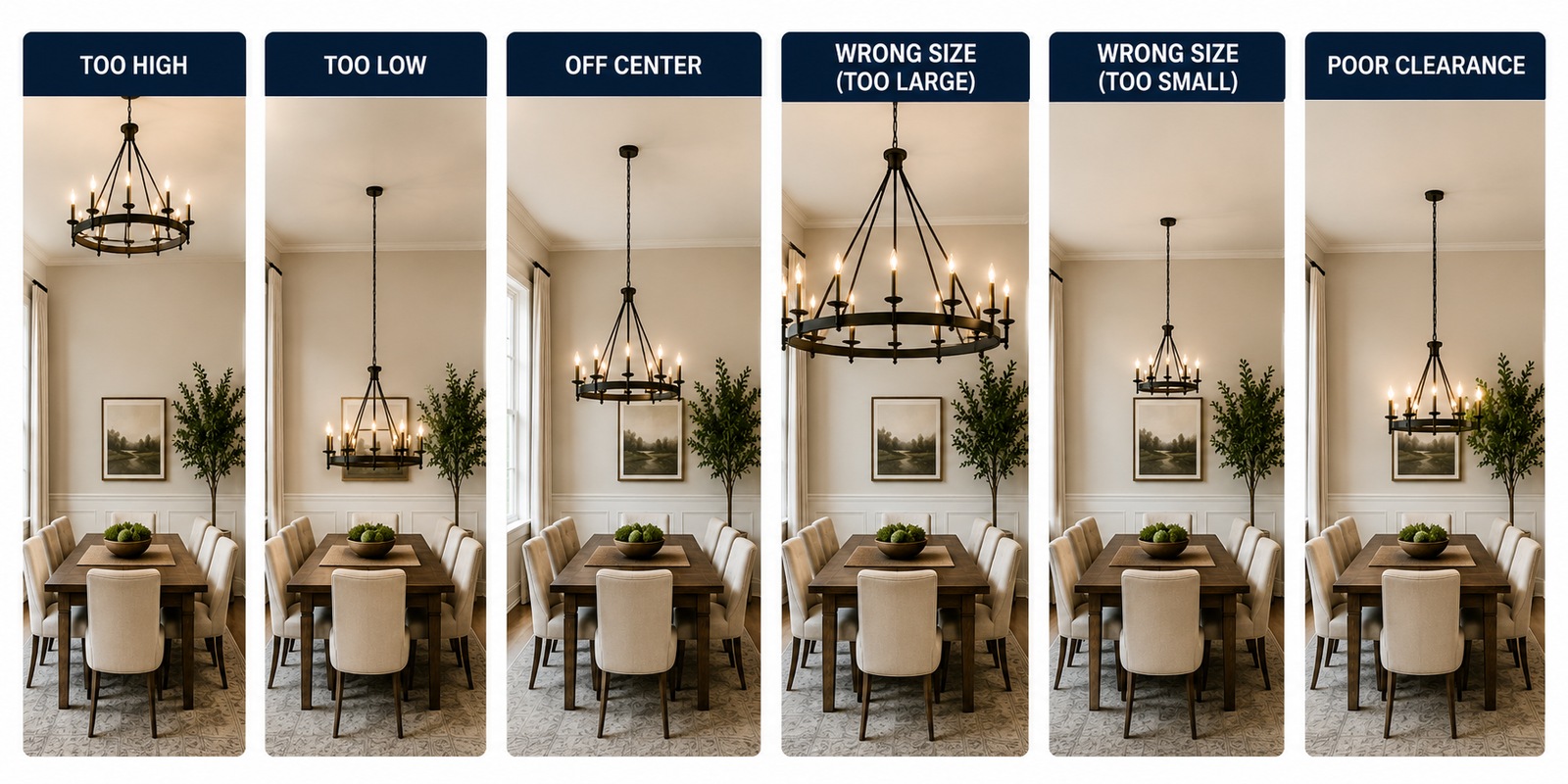
Even an attractive chandelier can look out of place if it is installed incorrectly. These are the mistakes I see most often:
- Hanging the fixture too high, which reduces light on the table and weakens its visual impact.
- Positioning it too low, making the dining area feel cramped and blocking conversation.
- Ignoring ceiling height instead of adjusting the hanging position for taller rooms.
- Choosing a chandelier that is too large or too small for the table.
- Installing it off center, which disrupts symmetry and makes the room feel unbalanced.
- Forgetting proper clearance, especially in spaces where people frequently walk beneath the fixture.
Checking each of these details before installation creates better lighting balance and improves both comfort and appearance.
Quick Tips for a Balanced Dining Room Lighting Setup
Keep these practical tips in mind for the best results:
- Install a dimmer switch to adjust brightness for everyday meals and special occasions.
- Center the chandelier over the dining table instead of the room itself.
- Match the fixture size to the table for balanced proportions.
- Choose warm white bulbs between 2700K and 3000K for a welcoming atmosphere.
- Sit at the table before finishing the installation to confirm the view remains unobstructed.
- Tighten every connection only after confirming the fixture is perfectly level.
Conclusion
Finding the perfect chandelier height is easier than many homeowners expect. In most dining rooms, hanging the fixture 30 to 36 inches above the tabletop provides the ideal combination of comfort, visibility, and even illumination. If your ceiling is higher, make small adjustments while keeping the chandelier proportional to the table and surrounding space. Use our room lighting calculator to plan the right output for any room.
I have found that taking accurate measurements before installation always delivers better results than relying on visual estimates. A well-positioned chandelier transforms the dining room into a comfortable gathering place that feels both functional and elegant. Once the light is right, style the table itself with everyday vs special-occasion table decor.
If you’re planning to upgrade your dining room lighting, explore the thoughtfully curated collection at Lume & Wick. Choosing the right chandelier with the correct placement will help you create a dining space that looks beautiful and feels welcoming for years to come. Check how many lumens a 60W bulb produces so the table is lit without glare.