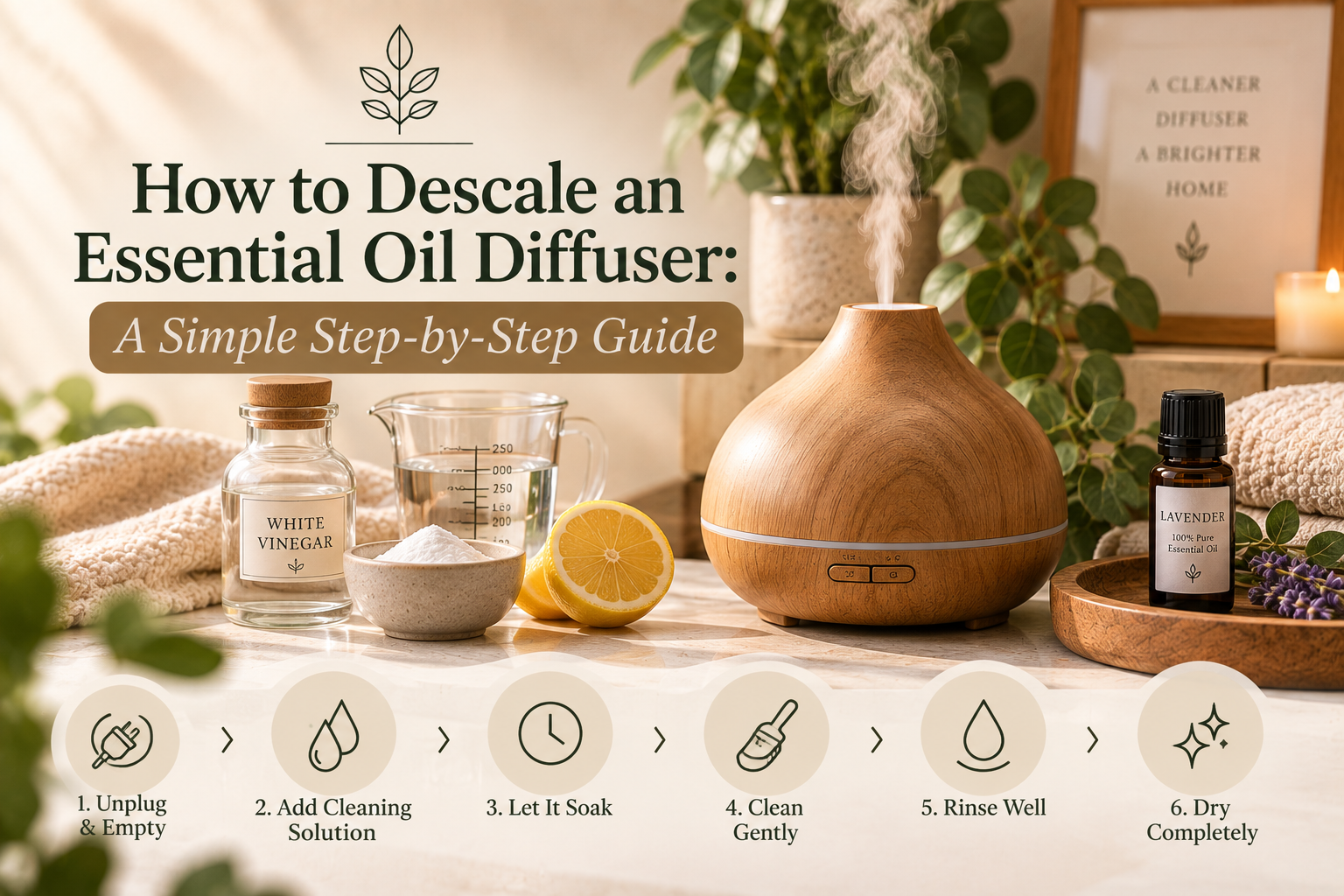
An essential oil diffuser can develop white, chalky residue over time, especially when you regularly fill it with tap water. This buildup usually comes from minerals left behind as water evaporates. If you ignore it, mineral deposits can collect around the water reservoir and ultrasonic plate, which may affect mist output.
Descaling an essential oil diffuser is different from simply wiping away leftover essential oil. The goal is to loosen and remove limescale, calcium deposits, and hard-water residue without damaging the diffuser. With the right approach, the process is simple and takes only a few minutes.
What Does It Mean to Descale an Essential Oil Diffuser?
Descaling means removing mineral buildup from the internal water reservoir and other water-contact surfaces of a diffuser. Hard water contains dissolved minerals such as calcium and magnesium. When the water evaporates, those minerals can remain behind as a thin film or visible white deposits.
An ultrasonic diffuser can be particularly sensitive to this buildup because it uses a small vibrating plate or mist chip to turn water into a fine mist. Mineral scale around this component can interfere with normal operation.
Regular wiping removes surface residue, but descaling targets deposits that have bonded to the reservoir or ultrasonic components.
How to Tell If Your Diffuser Needs Descaling
Look inside the reservoir before cleaning. A diffuser may need descaling if you notice:
- White or chalky spots around the water line
- A rough mineral film inside the tank
- Calcium or limescale deposits around the ultrasonic plate
- Reduced mist output
- Irregular misting
- Water residue that does not disappear with normal wiping
It also helps to distinguish mineral scale from essential oil residue. Oil usually leaves a slippery or fragrant film, while mineral buildup tends to look dry, white, and crusty.
What You Need to Descale an Essential Oil Diffuser
Keep the cleaning supplies simple:
- Distilled white vinegar
- Clean water
- Soft microfiber cloth
- Cotton swab
- Small soft brush, if recommended by the manufacturer
Before starting, check the diffuser manual. Some models have specific cleaning instructions, and those instructions should always take priority.
How to Descale an Essential Oil Diffuser Step by Step
1. Unplug the Diffuser and Empty the Reservoir
Turn off the diffuser and disconnect it from the power source. Empty any remaining water and essential oil from the reservoir.
Never clean a powered diffuser. Also, keep water away from electrical openings and never submerge the diffuser base.
2. Wipe Away Loose Residue
Use a soft, lint-free cloth to wipe the inside of the reservoir. Remove loose oil film, water residue, and mineral particles before applying a descaling solution.
Avoid abrasive sponges, knives, metal tools, or anything that could scratch the reservoir or ultrasonic plate.
3. Add a Diluted White Vinegar Solution
White vinegar is commonly used to loosen mineral deposits because its acidity helps break down limescale and other hard-water residue.
Prepare a diluted vinegar solution according to your diffuser manufacturer’s instructions. Different diffuser designs have different cleaning requirements, so avoid assuming that one vinegar-to-water ratio works for every model.
If your manual does not recommend vinegar, use the manufacturer’s approved cleaning method instead.
4. Let the Solution Loosen the Mineral Buildup
Allow the solution to contact the affected areas for the period recommended by the manufacturer. Some diffusers may allow a short cleaning cycle, while others should only be wiped or cleaned manually.
The purpose here is simple: soften the mineral scale so you can remove it without aggressive scrubbing.
Stubborn deposits may need gentle repeated cleaning rather than a stronger chemical solution.
5. Clean the Ultrasonic Plate
Pay special attention to the ultrasonic plate or mist chip. This small component plays an important role in producing the diffuser’s mist.
Use a cotton swab or another manufacturer-approved cleaning tool to gently loosen residue. Do not scrape the plate with a sharp object or apply excessive pressure.
If mineral buildup has collected around this area, careful cleaning can help restore normal mist performance.
6. Empty, Rinse, and Dry the Diffuser
Once the scale has loosened, empty the cleaning solution completely. Rinse the reservoir with clean water as directed by the manufacturer.
Remove any remaining vinegar or cleaning solution. Wipe away excess moisture and leave the diffuser open so it can air dry completely.
Make sure the electrical base remains dry throughout the process.
How Often Should You Descale an Essential Oil Diffuser?
There is no single descaling schedule that works for every diffuser. Your cleaning frequency depends on how often you use the device, the hardness of your water, and how quickly mineral deposits appear.
Someone using a diffuser every day with hard tap water may notice scale much sooner than someone using it occasionally with low-mineral water.
A practical approach is to inspect the reservoir regularly. If you see white deposits, a rough film, or a noticeable change in mist output, it is time to descale rather than waiting for heavy buildup.
How to Prevent Mineral Buildup in Your Diffuser
Prevention makes descaling much easier. Empty leftover water instead of allowing it to sit in the reservoir for long periods. Wipe the tank regularly and follow the cleaning routine recommended for your model.
Water quality also matters. If your manufacturer permits it, using distilled or demineralized water can reduce the amount of mineral residue left behind by evaporation.
Regular maintenance is easier than trying to remove a thick layer of limescale later.
What to Avoid When Descaling an Essential Oil Diffuser
Avoid harsh or aggressive cleaning methods. Do not use bleach, abrasive cleaners, or strong chemicals unless the manufacturer specifically approves them.
Never scrape the ultrasonic plate with a blade or metal object. Avoid soaking electrical components or submerging the diffuser base.
Most importantly, do not assume that every ultrasonic diffuser has identical cleaning requirements. The reservoir design, mist chip, sensors, and electrical components can vary considerably between models.
FAQs About Descaling an Essential Oil Diffuser
Can I use white vinegar to descale an essential oil diffuser?
Diluted white vinegar is commonly used to loosen mineral deposits, but check your diffuser’s manual first. Some manufacturers recommend vinegar, while others specify a different cleaning method.
How do I remove white mineral buildup from my diffuser?
Unplug the diffuser, empty the reservoir, apply an appropriate descaling solution, allow the deposits to loosen, then gently clean the affected areas. Rinse and dry the diffuser afterward.
How often should I descale my essential oil diffuser?
Descale it whenever visible mineral buildup appears. Usage frequency and water hardness can affect how quickly limescale develops, so regular inspection is more useful than following an arbitrary schedule.
Can hard water damage an essential oil diffuser?
Hard water can leave mineral deposits on water-contact surfaces and the ultrasonic plate. Heavy accumulation may affect mist performance, making regular cleaning and descaling important.
Should I use distilled water in my essential oil diffuser?
Distilled water contains fewer dissolved minerals than typical hard tap water, so it can help reduce mineral residue. However, always follow the water recommendations provided by your diffuser manufacturer.
Keep Your Diffuser Clean and Performing Well
Descaling does not need to become a complicated cleaning project. A quick inspection, gentle mineral removal, proper rinsing, and regular maintenance can keep the water reservoir and ultrasonic components in good condition.
Once the diffuser is clean, dry, and ready to use, it also becomes easier to maintain the calm, polished atmosphere you want at home. If you are refreshing your space, explore Lume & Wick’s Home Decor collection for pieces that complement a clean, comfortable, and thoughtfully styled interior.