I started testing candle packaging the hard way: three broken jars in one shipment before I ever thought about cushioning, closures, or how a box actually holds a scent. That mistake taught me something most candle makers learn eventually. Packaging isn’t decoration. It’s the last thing a customer touches before they light the wick, and it shapes whether they trust the product inside.
A candle box has two jobs. It protects a fragile, often glass item during transit, and it delivers a first impression before the lid even opens. Get either wrong, and the candle underneath won’t matter. Below are five packaging approaches I’ve tried, tested, or watched work well for small-batch and boutique brands, each suited to a different budget, brand voice, and shipping reality.
1. Kraft Paper Boxes for an Authentic, Handmade Look
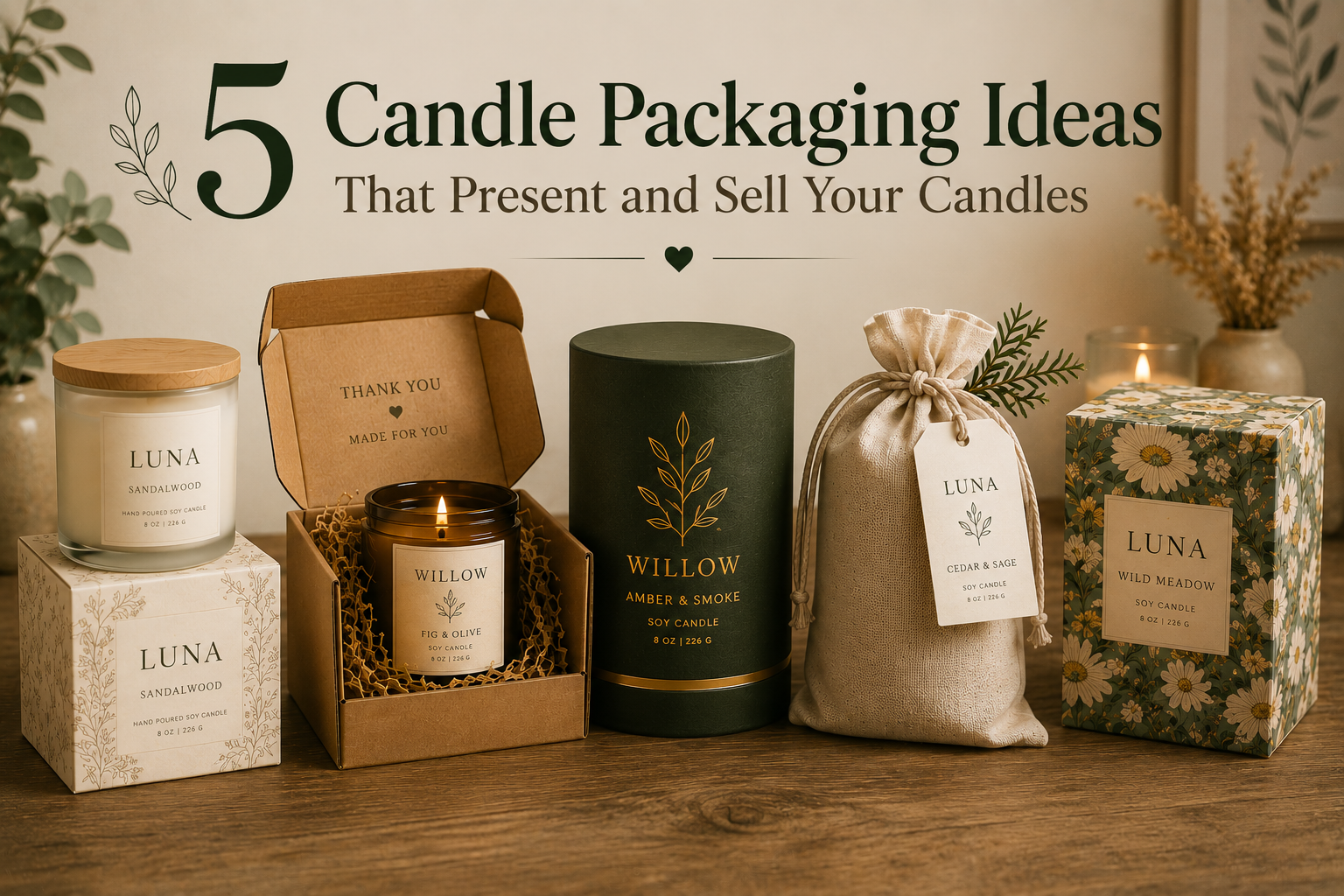
Kraft paper candle boxes remain the workhorse of candle packaging, and for good reason. Made from recyclable, often uncoated cardboard, they carry a raw, textured finish that instantly reads as handmade rather than mass-produced. I’ve used tuck-end kraft boxes for wax melts and small votives, and the format holds up well through shipping while keeping material costs low.
What makes kraft packaging feel intentional rather than cheap is the finishing. A stamped logo, a wrap of natural twine, or a hand-written batch number turns plain cardboard into something a customer wants to photograph. Because the material is biodegradable and widely recyclable, it also suits brands leaning into sustainable positioning without needing to say so outright. The box speaks for itself.
2. Rigid Boxes with a Window Cutout for Premium Shelf Appeal
Rigid boxes sit at the opposite end of the spectrum. Built from thicker, non-folding board, they feel substantial in the hand and signal a higher price point before a customer reads a single label. I first used one for a Lohri holiday gift set, and the weight alone changed how people described the candle inside, calling it “luxurious” without prompting.
The detail that does the most work here is a die-cut window. Instead of relying on product photography or descriptive copy, a window cutout lets the candle sell itself through the glass or wax color visible inside. Pair that with a magnetic or ribbon closure, and the unboxing itself becomes part of the experience, not just a barrier to get through before use.
3. Glass Jars with Custom Labels for a Reusable, Branded Container
Sometimes the container is the packaging. Glass jars skip the outer box entirely and put the branding directly on the vessel, usually through a wraparound or front-facing label. I switched to this format for a lavender line last year, and customers started sending photos of the empty jars repurposed as pencil holders and spice storage. That reuse became part of the appeal, not an accident.
A good label does more than name the scent. It carries burn instructions, ingredient notes, and often a batch or safety code, all in a font that matches the rest of the brand. Because the jar survives long after the wax is gone, it functions as ongoing advertising sitting on someone’s shelf, which few other formats can claim.
4. Tin Containers for Travel-Friendly, Durable Packaging
Tins solve a problem glass can’t: breakage. Metal containers hold up through rough handling, making them the natural choice for travel candles, subscription boxes, or any brand shipping heavy volumes without much control over how packages get tossed around in transit. I’ve relied on screw-top tins for a camping-themed set specifically because they survive drops that would shatter a jar.
Beyond durability, tins stack cleanly, which matters for Christmas gift sets built around three or four scents. A slip-lid design opens faster for everyday use, while a screw-top seals tighter for shipping and long-term storage. Either way, the format trades a bit of visual elegance for practical resilience, a fair swap for candles meant to travel.
5. Wraps and Fabric Bags for a Minimal, Package-Free Alternative
Not every candle needs a box. Tissue paper, muslin drawstring bags, and fabric wraps offer a low-waste, budget-friendly option that still feels considered. I’ve used muslin bags for market pop-ups where space and cost both mattered, tying them shut with jute twine and a small tag instead of printing custom boxes at all.
This approach works best for candles sold or gifted in person, where shipping durability matters less than tactile presentation. It also stores flat until needed, which saves space for makers working out of a small studio rather than a warehouse.
How to Choose the Right Packaging for Your Candles
Weigh four things before settling on a format: budget, how far the candle needs to travel, the image you want your brand to project, and how much you care about sustainability claims holding up under scrutiny. A jar sold at a local market doesn’t need the same protection as one shipped cross-country, and a luxury gift line calls for different materials than an everyday votive. If you’re scaling past small batches, sourcing candle packaging boxes wholesale can bring per-unit costs down significantly compared to ordering in small runs. None of these five ideas is universally “best.” Each solves a different combination of those four factors, and the right choice usually becomes obvious once you’re honest about which one matters most for your business.
Final Thoughts
Packaging is never separate from the candle itself. It’s the first impression, the shipping protection, and often the reason someone remembers where they bought a scent they loved. Whether that means a stamped kraft box, a windowed rigid box, or a simple muslin bag, the format should match how the candle is sold and who it’s for.
If you’re shopping for candles and want to see how thoughtful packaging translates into the actual product, Lume & Wick’s home fragrance collection is worth a look, each piece designed with the same attention to presentation covered above.