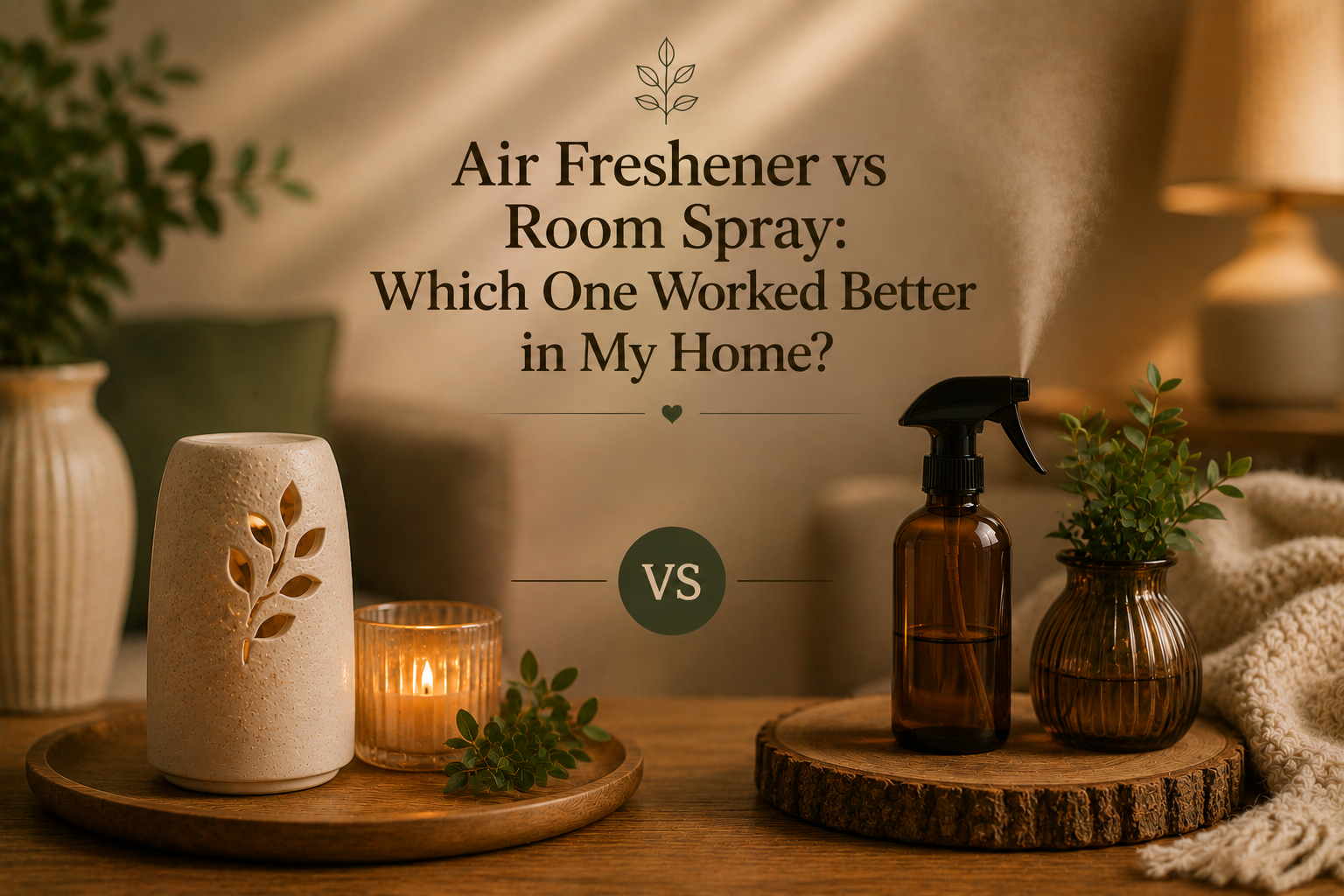
I never paid much attention to the difference between an air freshener and a room spray until I started testing both in different areas of my home. Like many people, I simply wanted a fresh-smelling room after cooking, dealing with pet odors, or freshening up a bathroom before guests arrived. I assumed all air care products worked the same way. After several months of use, I realized they serve very different purposes.
This comparison comes from personal experience rather than marketing claims. I tested multiple home fragrance products from well-known brands such as Febreze, Air Wick, Glade, and Lysol. Some products used fragrance oils, while others relied on aerosol spray systems or non-aerosol spray formats. My goal was simple. I wanted to know which option delivered better odor control, stronger scent performance, and longer-lasting household freshness.
The results surprised me. One product excelled at continuous fragrance throughout the day, while the other provided instant freshness exactly when needed. If you are trying to choose between an air freshener and a room spray, my experience may help you make a more informed decision.
Why I Decided to Compare Air Fresheners and Room Sprays
The comparison started because different rooms in my home had different fragrance needs. The kitchen often held cooking odors after preparing spicy meals. The bathroom needed quick odor neutralization. My living room required a pleasant ambient fragrance that could remain noticeable for hours. A single freshening solution was not delivering the results I wanted. You may also want to read air freshener ingredients.
At first, I believed a room freshener and an air freshener were essentially the same product packaged differently. However, after using automatic air freshener units, plug-in fresheners, gel fresheners, and various fragrance spray options, I noticed major differences in fragrance delivery and scent coverage.
Many air fresheners focus on passive scent diffusion or automatic dispensing. Their purpose is maintaining whole-room freshness through steady fragrance output. Some modern systems even use smart fragrance technology with programmable fragrance intervals and refill systems. These products create an aromatic environment without requiring constant attention.
Room sprays work differently. Most are designed for on-demand application. A quick burst from a trigger spray or aerosol can provides immediate scent impact. This makes them ideal for targeted odor treatment when unpleasant odor molecules suddenly appear. Instead of continuous operation, they provide rapid scent release exactly when needed.
Another reason I wanted a real comparison involved indoor air quality concerns. Many shoppers now pay attention to volatile organic compounds (VOCs), fragrance ingredients, allergen considerations, and eco-friendly formulations. Understanding how different scented products perform helps determine whether convenience justifies ongoing use.
My Testing Setup and What I Looked For
To keep the comparison realistic, I tested each product during normal daily life rather than under controlled conditions. The living room, bedroom, bathroom, and kitchen all became part of the evaluation process. You may also want to read how to make your home smell good.
Several factors influenced my assessment. Fragrance intensity mattered because a scent should be noticeable without becoming overwhelming. Scent longevity was equally important since nobody wants freshness that disappears within minutes. I also paid close attention to odor elimination capability. Some products merely performed odor masking, while others appeared to use odor-neutralizing technology that tackled smells more effectively.
Room size compatibility became another important factor. A fragrance experience that works well in a small bathroom may struggle in a larger open-plan living area. Air circulation, scent throw, and fragrance dispersion all affected overall performance.
Ease of use also played a role. Automatic dispensing systems offered convenience through maintenance-free operation and consistent fragrance concentration. Room fragrance spray products required manual application but provided greater control over scent strength and fragrance application.
Throughout testing, I focused on one question: which option created a cleaner, fresher, and more inviting home scenting experience without requiring constant effort?
Air Freshener vs Room Spray: My Experience With Key Differences
First Impression and Immediate Freshness
The first noticeable difference appeared within seconds of use. A room spray delivered instant fragrance release the moment I pressed the trigger. Whether I used a fragrance mist, deodorizing spray, or scented mist, the room immediately felt fresher. This rapid scent boost worked particularly well when unexpected guests arrived or when I wanted quick bathroom freshness.
Most room fragrance spray products create a strong fragrance burst because the fragrance concentration enters the air all at once. The scent profile becomes noticeable almost immediately. Some formulas also include odor-fighting technology designed to interact with odor molecules instead of simply covering them.
Air fresheners created a different experience. Plug-in fresheners, gel fresheners, and automatic air freshener systems focused on gradual fragrance dispersion. Freshness developed over time rather than appearing instantly. The effect felt more subtle during the first few minutes but became increasingly noticeable as scent diffusion continued.
For immediate scent impact, room sprays clearly performed better in my home. They provided fast-acting freshness whenever I needed it.
Scent Longevity Throughout the Day
While room sprays impressed me initially, the performance changed after several hours.
Many fragrance sprays produced a highly fragrant environment during the first hour. After that, the lingering scent gradually weakened. Depending on room size, air circulation, and fragrance notes, the aroma sometimes faded sooner than expected.
Air fresheners delivered a completely different result. Continuous odor control allowed fragrance release throughout the day. Plug-in systems maintained a consistent scent level from morning until night. Certain refillable units even adjusted fragrance output automatically, helping preserve freshness duration.
This steady performance proved valuable in larger spaces. Instead of experiencing a strong scent followed by nothing, I enjoyed a balanced fragrance experience that remained detectable without becoming overpowering.
For long-lasting freshness, air fresheners had a clear advantage. Their steady fragrance output created better scent longevity and more reliable household freshness.
Handling Strong Household Odors
Kitchen odor control became one of the most revealing parts of the test.
After cooking foods with garlic, onions, or strong spices, room sprays performed surprisingly well. A few sprays provided quick odor masking and noticeably improved the atmosphere. The room felt cleaner almost instantly.
However, when the source odor remained present, the effect sometimes faded. Once the fragrance burst disappeared, traces of the original smell occasionally returned.
Air fresheners approached the problem differently. Products equipped with odor elimination technology and odor absorber components worked continuously over time. They did not always remove strong smells immediately, but they helped reduce lingering odors throughout the day.
Pet odor management produced similar results. Room sprays excelled as a spot treatment capability solution. Air fresheners performed better when maintaining freshness in areas where odors appeared regularly.
My experience showed that room sprays handled emergency situations more effectively, while air fresheners provided ongoing odor neutralization and long-term odor reduction.
Room Coverage and Fragrance Distribution
Coverage area became especially important in larger rooms.
A room spray worked exceptionally well in small spaces such as bathrooms, laundry rooms, and home offices. Direct fragrance application allowed me to target specific areas. Adjustable spray amount also gave better control over scent intensity.
Larger rooms presented a challenge. The fragrance often remained strongest near the application point. While the scent spread eventually, coverage felt less uniform.
Air fresheners produced better whole-room freshness. Continuous fragrance diffusion allowed aroma to circulate naturally throughout the space. Automatic units placed near normal airflow achieved particularly impressive results.
I also compared air fresheners with other home fragrance products such as fragrance diffusers, reed diffusers, scented candles, and wax melts. While each offered unique benefits, air fresheners provided one of the most consistent methods for maintaining room fragrance across larger areas.
For scent coverage and fragrance dispersion, air fresheners generally delivered stronger results.
Convenience and Daily Use
Convenience became a major deciding factor over time.
Room sprays offered flexibility. I could choose when, where, and how much fragrance to use. Their portable design made them easy to move between rooms. Travel-friendly packaging also made them practical for temporary use.
The downside involved usage frequency. Frequent spraying meant the product emptied faster. Continuous manual dispensing eventually became a routine task.
Air fresheners required less involvement. Once installed, many operated automatically for weeks. Battery-powered units, plug-ins, and refill systems reduced daily effort while maintaining a consistent fragrance level.
For busy households, that convenience matters. A product that quietly works in the background often feels more practical than one requiring repeated application.
After months of testing, I found myself reaching for room sprays when I needed instant freshness and relying on air fresheners when I wanted dependable, long-term fragrance performance.
Situations Where an Air Freshener Worked Better for Me
Several situations made me appreciate the value of an air freshener more than a room spray.
The living room was the best example. This space remains occupied throughout the day, so maintaining an ambient fragrance mattered more than creating a quick fragrance burst. A plug-in freshener provided consistent scent performance from morning until bedtime. The room always felt welcoming without requiring additional effort.
Entryways produced similar results. Since this is often the first area visitors notice, steady fragrance output helped create a positive first impression. Instead of spraying the area multiple times, the automatic system maintained a pleasant aroma continuously.
Bedroom scenting also benefited from continuous fragrance. A lightly scented environment felt more relaxing than periodic strong sprays. The gradual fragrance release created a balanced atmosphere that never felt overwhelming.
For larger rooms where long-lasting freshness was the priority, air fresheners consistently delivered the better experience.
Situations Where a Room Spray Worked Better for Me
Although air fresheners won in several categories, room sprays solved problems that air fresheners could not address as effectively.
The biggest advantage was speed. After cooking a strong-smelling meal, I could use a room deodorizer spray and notice an immediate improvement. Waiting for passive scent diffusion would not have produced the same result.
Bathrooms represented another clear use case. When quick odor masking or targeted odor treatment was necessary, a fragrance spray worked instantly. A few sprays transformed the room within seconds.
I also found room sprays useful before guests arrived. If I wanted a fresh fragrance and noticeable scent strength right away, a quick application produced results that felt immediate and effective.
The customizable fragrance strength was another benefit. Some days I preferred a subtle aroma. Other times I wanted a stronger scent release. Room sprays allowed that flexibility.
For fast room refresh situations, room sprays remained unmatched.
Cost and Value From My Perspective
Price alone does not determine value. Product lifespan and effectiveness matter just as much.
Room sprays often appear affordable initially. However, frequent use can shorten their lifespan significantly. Daily spraying in multiple rooms requires regular replacement, particularly when using premium fragrance formulations.
Air fresheners usually involve a higher upfront investment because of refill systems or plug-in units. Despite that, many lasted longer than expected. Automatic dispensing systems used fragrance efficiently and required fewer replacements over time.
Value also depends on purpose. If someone needs occasional odor control and quick freshness, a room spray can be a cost-effective choice. For households seeking continuous fragrance and whole-room coverage, air fresheners may provide better long-term value for money.
My experience showed that both products justify their cost when used for the right purpose rather than expecting one product to do everything.
Air Freshener vs Room Spray: Which One Would I Choose Again?
After testing multiple products across different rooms and situations, I no longer view this as a battle where one product completely defeats the other.
If I could only choose one product for maintaining household freshness every day, I would select an air freshener. The combination of continuous fragrance, reliable scent longevity, large-area coverage, and convenience made it more useful for my lifestyle.
However, I would never stop using room sprays entirely. Their instant fragrance release and rapid odor-fighting capability make them incredibly valuable when unexpected odors appear.
The real takeaway is simple. Air fresheners excel at maintaining freshness. Room sprays excel at creating freshness immediately.
Choosing between them depends on whether you value ongoing fragrance or quick odor control.
Conclusion
Testing air fresheners and room sprays in real-life situations changed my perspective on home fragrance products. Both improve a home’s atmosphere, but they achieve that goal in different ways.
Room sprays delivered instant freshness, strong fragrance intensity, and effective spot treatment for cooking smells, bathroom odors, and other temporary issues. Air fresheners provided better scent longevity, consistent fragrance dispersion, and dependable whole-room freshness throughout the day.
For me, the ideal solution was not choosing one over the other. Using both strategically produced the best fragrance experience. An air freshener maintained a pleasant background aroma, while a room spray handled situations requiring immediate attention.