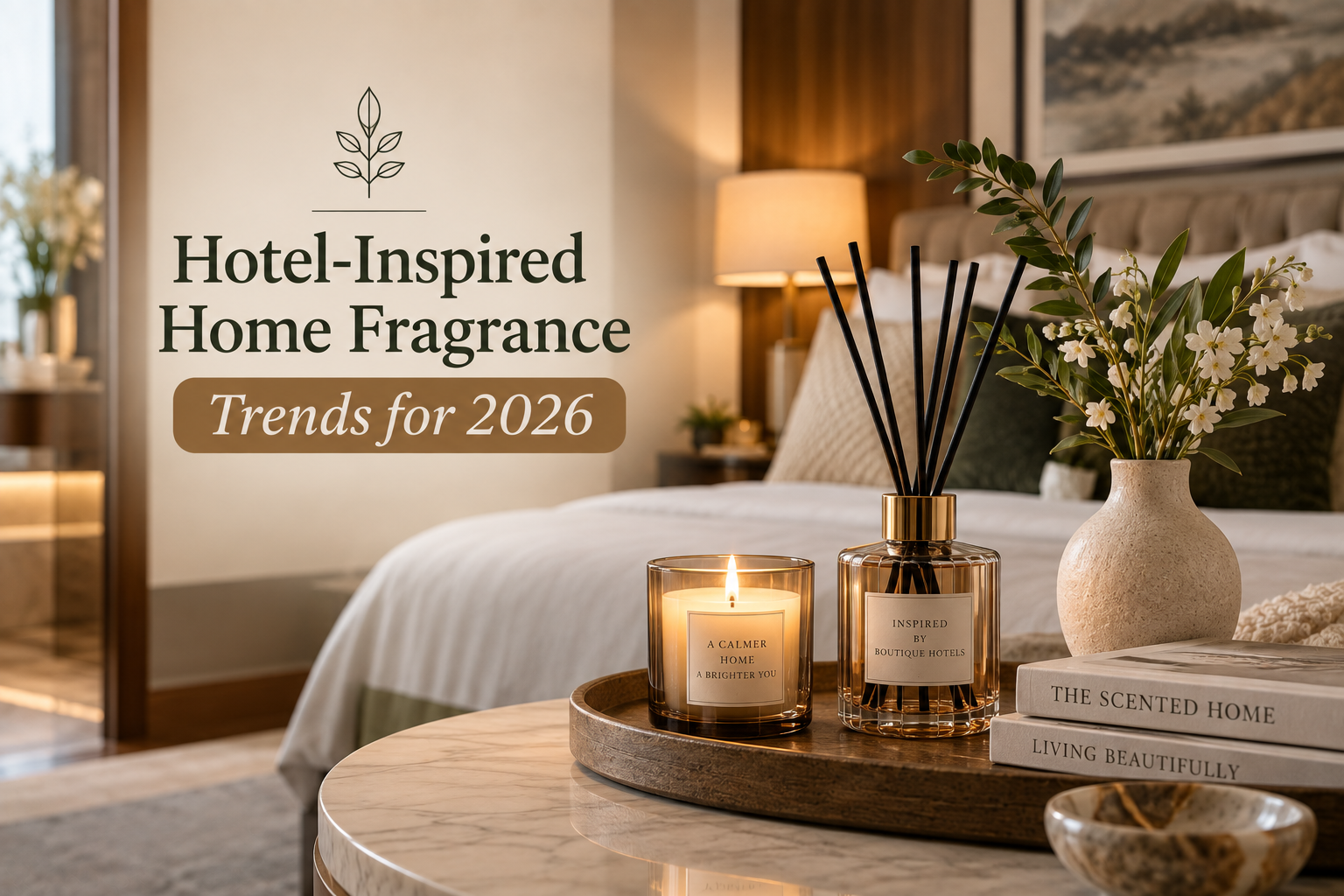
Walk into a well-designed luxury hotel and you may notice the fragrance before the furniture. The scent feels clean, polished, calm, and quietly luxurious. That experience is influencing how people approach home fragrance in 2026.
Instead of using fragrance simply to cover unwanted odors, homeowners are treating scent as part of interior design. Candles, reed diffusers, room sprays, incense, and scent diffusers now help define the atmosphere of individual spaces. Current 2026 trends also show growing interest in travel-inspired scents, fragrance layering, wellness-focused aromas, and more intentional scenting throughout the home.
I have always found hotel-inspired fragrance particularly interesting because it changes the character of a room without changing its decor. After experimenting with different scent profiles at home, I have found that the best results come from subtle, balanced fragrances rather than simply choosing the strongest scent.
Why Hotel-Inspired Fragrance Is Trending in 2026
Hotels have understood the emotional value of fragrance for years. A signature scent can become part of a guest’s memory and make a particular property feel recognizable. Today, homeowners are borrowing the same concept to create a more refined atmosphere at home.
The goal is not to make a home smell like a commercial hotel lobby. Instead, hotel-inspired fragrance creates the feeling associated with luxury hospitality: fresh linens, polished wood, a calm spa, clean air, soft lighting, and comfortable surroundings.
This shift also reflects a broader change in home fragrance. People increasingly choose scents based on mood, memory, and atmosphere, rather than simply selecting a pleasant fragrance.
1. Clean and Airy Scents Are Taking Center Stage
One of the easiest ways to create a hotel-like atmosphere is with a clean fragrance profile.
White tea, bergamot, light citrus, fresh linen, green notes, and soft florals work particularly well because they feel bright without becoming overpowering. These compositions often create the impression of freshly prepared rooms and crisp bedding.
White tea remains especially associated with upscale hospitality, while citrus adds freshness and energy. When I want my living room to feel cleaner and more sophisticated, I prefer this type of combination over heavy sweet fragrances.
The key is restraint. A luxury-inspired scent should sit comfortably in the background rather than dominate the room.
2. Woody and Musky Bases Add Quiet Luxury
Clean notes alone can sometimes feel too simple. In 2026, hotel-inspired fragrances are becoming more layered, with woods and soft musks adding depth.
Sandalwood, cedarwood, amber, cashmere woods, and clean musk can give a fragrance a warmer foundation. They also work particularly well in bedrooms, lounges, and reading spaces where you want a relaxed atmosphere.
This combination of fresh top notes with a warm base creates the familiar “expensive hotel” effect. You get freshness first, followed by a subtle richness that remains in the room.
3. Spa-Inspired Fragrance Moves Into the Home
Wellness continues to influence fragrance choices. Luxury hotels and spas increasingly use scent as part of an immersive relaxation experience, and homeowners are adopting similar ideas.
Lavender, eucalyptus, sandalwood, neroli, chamomile, and soft herbal notes can create a calmer environment. These fragrances work particularly well in bathrooms, bedrooms, and personal relaxation areas.
I prefer keeping spa-inspired scents lighter than traditional aromatherapy blends. The objective is to create a peaceful atmosphere, not make the room smell medicinal.
4. Travel Memories Are Becoming Part of Home Scenting
Another important 2026 trend is fragrance inspired by destinations and memorable stays. Consumers are increasingly using scent to recreate experiences associated with travel, resorts, and favorite places.
A tropical fragrance can bring back memories of a beach resort. Citrus and neroli can suggest a Mediterranean escape. Cedar, incense, and earthy woods can create the atmosphere of a secluded mountain retreat.
This approach makes fragrance more personal. Rather than asking, “What smells good?”, you can ask, “What experience do I want this room to create?”
5. Scent Layering Creates a More Expensive Feel
Hotels rarely rely on one fragrance product. A coordinated scent experience can appear across different areas and touchpoints. Homeowners can use the same principle.
For example, place a reed diffuser near the entryway, use a candle in the living room, and introduce a lighter room spray before guests arrive. Keep the fragrance family consistent instead of mixing unrelated aromas.
This creates a subtle scent journey as you move through the home. It also prevents one product from having to carry the entire fragrance experience.
6. Whole-Home Scenting Is Becoming More Popular
For larger homes and open-plan interiors, whole-home scenting is gaining attention. Instead of concentrating fragrance in one corner, diffusion systems can distribute a consistent aroma across connected spaces.
However, more fragrance does not automatically mean more luxury. I have found that controlled diffusion works better when the scent remains noticeable without becoming distracting.
Smaller rooms may only need a reed diffuser or candle. Larger areas can benefit from a diffuser designed for broader coverage.
7. Richer, More Complex Fragrance Profiles
Simple single-note fragrances are giving way to more sophisticated compositions. Modern home scents increasingly combine contrasting elements, such as bright citrus with warm woods or soft florals with amber.
This complexity gives the fragrance a sense of progression. The first impression can feel fresh, while the dry-down becomes warmer and more comforting.
That balance is one reason hotel-style fragrances feel different from ordinary air fresheners. They are designed more like fine fragrance, with top, heart, and base notes working together.
How to Create a Hotel-Inspired Scent at Home
Start with the room’s purpose. Choose refreshing citrus or tea notes for an entryway, refined woods for a living room, and calming florals or soft musk for a bedroom.
Next, consider intensity. Begin with less fragrance and increase gradually. Good scenting should complement your interior rather than compete with it.
Finally, keep your fragrance family consistent. You do not need identical products throughout the house. Similar notes can create continuity while allowing each room to have its own character.
Final Thoughts
Hotel-inspired home fragrance is becoming less about copying a particular hotel and more about recreating the feeling of thoughtful hospitality. In 2026, clean tea notes, soft citrus, refined woods, spa-inspired blends, destination fragrances, layering, and controlled diffusion are shaping this approach.
If you want to bring that atmosphere into your own space, explore the Home Fragrance collection from Lume & Wick. Choose a scent that matches the mood you want your home to create, then use it thoughtfully. The most luxurious fragrance experience is often the one you notice without immediately realizing why the room feels so inviting.