I started exploring incense years ago while trying to improve my evening meditation routine. At first, every product smelled similar to me. After testing different incense varieties at home, I realized that each type creates a completely different sensory experience. Some produce dense scented smoke for spiritual incense rituals, while others offer a softer room fragrance with low smoke emission. Many people also burn it outdoors and ask whether incense keeps bugs away.
Modern home fragrance products now include many incense forms made from fragrance materials like aromatic wood, herbs, resins, flowers, and essential oils. Traditional incense often focuses on natural incense ingredients such as sandalwood, cedarwood, frankincense, and botanical incense blends. Newer handcrafted incense products also improve clean-burning performance, aroma longevity, and fragrance diffusion.
Choosing the right incense depends on burn time, smoke intensity, fragrance strength, and indoor fragrance performance. A slow-burning incense coil works well for long meditation sessions, while cone incense quickly fills small spaces with a calming scent. I personally rotate between stick incense for daily relaxation and resin incense during quiet reading sessions because the layered scent profile feels richer and more grounding.
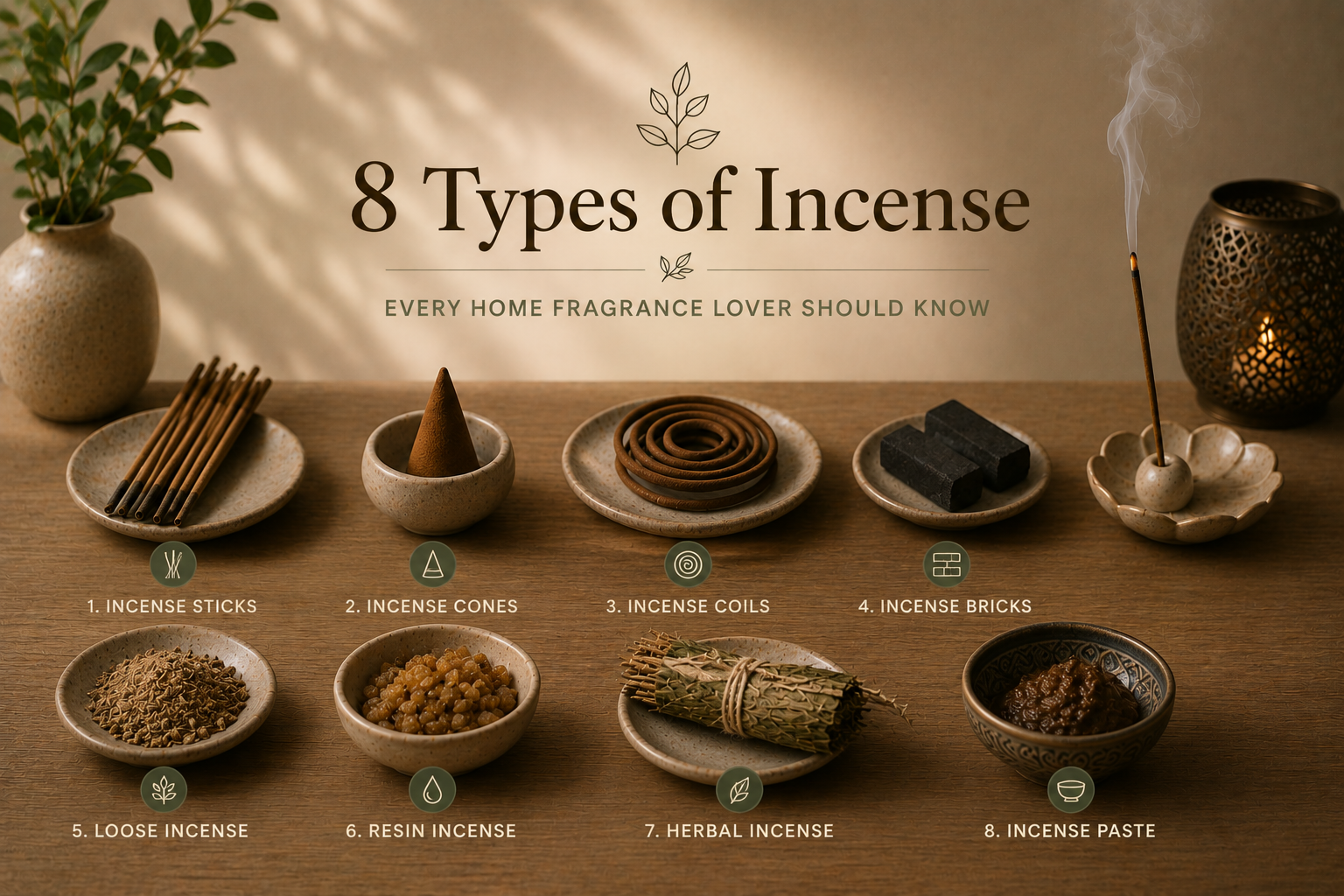
1. Stick Incense
Stick incense remains the most widely used incense format because it is simple, affordable, and beginner-friendly. Most incense sticks use bamboo core construction where combustible powder and aromatic ingredients coat a thin bamboo stick. This design supports steady combustion speed and consistent fragrance release.
Masala incense usually contains wood powder base ingredients mixed with herbs, floral extracts, spices, and essential oil fragrance blends. Many agarbatti products also include sandalwood incense, jasmine incense, patchouli incense, or rose incense to create different aromatic atmosphere styles.
I personally prefer hand-rolled incense with a charcoal-free formula because it produces minimal ash production and cleaner fragrance smoke. Cheap synthetic products often create harsh smoke density and poor scent retention duration. High-quality bamboo stick incense burns evenly and leaves a soft woody fragrance instead of an overpowering chemical smell.
Benefits of Stick Incense
Stick incense offers balanced fragrance intensity and reliable room coverage performance. Many people use aroma stick products during yoga, mindfulness practice, or evening relaxation because the burn time stays predictable.
Japanese incense has become popular for smokeless burning and refined scent projection strength. Tibetan incense focuses more on herbal concentration and earthy scent profiles using natural herb blend formulas. Temple-grade quality Indian dhoop sticks create stronger air-filling capacity for larger prayer rooms and ceremonial incense settings.
Best Uses for Stick Incense
Daily meditation fragrance routines benefit greatly from stick incense because lighting and extinguishing remain easy. I usually place incense sticks inside a ceramic incense holder near an open window to maintain balanced smoke level and fragrance purity level.
Lavender incense works best before sleep because of its cooling aroma effect. Cedarwood incense creates a warm aromatic wood character that feels calming during rainy evenings. Sage incense and palo santo blends help refresh indoor spaces after cooking or long work hours.
2. Cone Incense
Incense cones create a stronger fragrance throw compared to standard scented stick products. Their compact cone structure burns faster because the incense ingredients stay densely packed together. This increases fragrance intensity and smoke density within minutes.
Many cone incense products use resin-rich composition formulas that combine herbal aroma with floral incense notes. Oud incense and Arabian incense cones often contain premium oud content and oil-coated incense surface layers for deeper aroma persistence.
I normally use incense cones in small rooms where quick fragrance diffusion matters more than long burnout duration. A single cone can transform the atmosphere of a bedroom or reading corner surprisingly fast. The scent projection strength feels more concentrated than most bamboo core incense options.
Benefits of Cone Incense
Cone incense delivers long-lasting aroma despite shorter combustion time. The strong fragrance release consistency makes it ideal for quick aromatherapy incense sessions or short mindfulness breaks.
Backflow incense cones also create decorative fragrance smoke patterns when paired with a specialized incense burner. The cascading effect adds visual relaxation alongside the scent itself.
Best Uses for Cone Incense
Cone incense works best in spaces where quick fragrance diffusion matters. I usually use incense cones before guests arrive because the strong fragrance throw fills the room much faster than stick incense.
These incense forms suit:
- Small bedrooms
- Meditation corners
- Aromatherapy sessions
- Reading spaces
- Prayer rooms
- Evening relaxation routines
Backflow cone incense also works well for decorative setups because the cascading fragrance smoke creates a calming visual effect alongside the scent. Oud incense cones add a rich woody fragrance for cozy indoor settings, while lavender incense and jasmine incense blends create a softer calming scent for stress relief and mindfulness practice.
3. Coil Incense
Coil incense stands out because of its spiral coil design and extremely long burn time. Unlike incense sticks or incense cones, coils burn slowly for several hours, making them ideal for large indoor areas and outdoor spaces. Many temples across Asia still use coil incense because the slow combustion rate maintains a continuous aromatic atmosphere throughout ceremonies.
I first tried coil incense during a long meditation retreat. One hanging incense coil burned almost the entire evening without losing fragrance strength. That steady scent diffusion rate created a calmer environment compared to relighting smaller incense forms repeatedly.
Most coil incense products use wood-based incense ingredients blended with aromatic wood powders, natural resin, herbs, and spices. High-quality versions produce clean-burning performance with low residue level and controlled ash production rate.
Benefits of Coil Incense
Coils offer excellent aroma longevity and room coverage performance. Their burnout duration works well for yoga studios, temple fragrance settings, and larger living rooms.
Many traditional incense manufacturers also design smokeless incense coils with charcoal-free formulas for people sensitive to heavy smoke level. Premium products maintain fragrance release consistency without creating overwhelming scented smoke.
Best Uses for Coil Incense
Coil incense fits extended relaxation sessions, spiritual incense rituals, and ceremonial incense practices. I usually burn one on weekends while reading or working because the woody fragrance stays subtle yet noticeable for hours.
Sandalwood incense coils create a grounded atmosphere, while jasmine incense blends add softer floral incense notes to the room.
4. Resin Incense
Resin incense feels completely different from modern aroma stick products. Instead of using bamboo stick incense construction, resin incense burns through heated natural resin pieces placed on charcoal discs inside an incense burner.
Frankincense and myrrh incense remain the most recognized resin incense types. Both have deep historical roots in incense culture, temple incense traditions, and ceremonial rituals across the Middle East, Africa, and Europe.
The first time I burned frankincense properly, I noticed how layered the scent profile felt compared to regular incense sticks. The fragrance changed gradually from citrus-like brightness to warm earthy depth. That natural transition created a richer sensory experience.
Benefits of Resin Incense
Resin incense offers high resin content, strong aroma persistence, and natural fragrance purity level. Since many blends avoid synthetic fragrance-free additives, the scent often feels smoother and more authentic.
Good resin incense also provides excellent air-filling capacity with very small quantities. A few pieces placed over charcoal incense can fragrance an entire room quickly.
Best Uses for Resin Incense
This incense type works best for meditation incense routines, ceremonial incense practices, and quiet evening relaxation. I personally use myrrh incense during winter because the spicy aroma and woody fragrance feel warm and comforting.
Proper ventilation matters because resin concentration and smoke intensity can become strong in smaller rooms.
5. Powder Incense
Powder incense uses loose incense blend materials instead of solid shapes. Most products contain finely ground incense ingredients such as aromatic wood, herbs, flowers, spices, and botanical incense powders.
Traditional powder incense remains popular in parts of Japan and India because users can customize fragrance strength and ignition speed more easily. Some people create incense trails on ash beds, while others place incense powder over charcoal discs.
This format initially felt complicated to me, but after experimenting with different incense blend combinations, I understood why experienced users enjoy it. Powder incense gives more control over scent projection strength and fragrance intensity.
Benefits of Powder Incense
Powder incense supports artisanal craftsmanship because every blend can be adjusted for herbal concentration, resin concentration, or essential oil infusion. It also allows cleaner combustion speed control compared to heavily processed incense products.
Many handcrafted incense powders use eco-friendly materials and organic ingredient sourcing for a more natural herbal aroma.
Best Uses for Powder Incense
Powder incense suits people interested in incense rituals, traditional incense preparation, or custom room fragrance creation. I sometimes mix sandalwood powder with cedarwood incense notes for a softer meditation fragrance during work sessions.
6. Rope Incense
Rope incense comes from Himalayan incense traditions where fragrance materials get wrapped inside handmade paper strands. Tibetan incense makers often use natural herb blend ingredients, aromatic wood powders, and botanical incense compounds to create earthy, grounding aromas.
Unlike heavily perfumed aromatic products, rope incense focuses more on cultural fragrance identity and herbal aroma depth. The hand-rolled texture and thick incense body create slower combustion and steady scent release.
I tested Tibetan incense during winter meditation sessions and immediately noticed the difference. The fragrance smoke felt less sweet and more natural. Notes of cedarwood incense, sage incense, and woody fragrance stayed in the air longer without becoming overpowering.
Benefits of Rope Incense
Rope incense usually contains synthetic fragrance-free ingredients with minimal processing. Many products use non-toxic formulation methods and eco-friendly materials sourced from mountain herbs and natural resin compounds.
The slow-burning incense structure also improves aroma persistence and calming effectiveness during mindfulness practice.
Best Uses for Rope Incense
This incense type works best for meditation incense routines, spiritual incense environments, and quiet evening relaxation. I prefer using rope incense in smaller rooms because the earthy scent creates a warm, peaceful atmosphere quickly.
7. Backflow Incense
Backflow incense became popular because of its visual effect. Instead of rising upward, fragrance smoke flows downward through specially designed incense burner systems. The smoke waterfall appearance adds a decorative element to the aromatic atmosphere.
Most backflow products use cone incense shapes with compact cone structure and controlled airflow channels. While the visual effect attracts attention, fragrance quality still depends on incense ingredients and resin-rich composition.
I originally bought a backflow set purely for decoration, but certain herbal incense blends actually performed well for relaxation. Lavender incense and jasmine incense created soft calming scent profiles that matched the slow-moving smoke effect beautifully.
Benefits of Backflow Incense
Backflow incense combines room fragrance with visual relaxation. Good-quality cones maintain consistent fragrance diffusion while producing dense but controlled smoke level.
Premium products with essential oil infusion and charcoal-free formula create cleaner fragrance smoke and lower residue level inside the burner.
Best Uses for Backflow Incense
These incense forms suit meditation corners, reading spaces, and home fragrance setups where ambiance matters as much as scent. Ceramic waterfall burners especially enhance the sensory experience during evening relaxation routines.
8. Herbal Incense
Herbal incense uses plant-based incense ingredients like flowers, bark, spices, roots, leaves, and essential oils. Many natural incense products combine lavender incense, rose incense, patchouli incense, cedarwood incense, and palo santo for balanced fragrance profiles.
Compared to heavy charcoal incense products, herbal incense often feels lighter and fresher. Good botanical incense maintains clean-burning performance with low smoke emission and minimal ash production.
I regularly use herbal incense while working because the fragrance stays gentle instead of overpowering. Floral incense blends create softer room fragrance, while wood-based incense options add warmth and depth.
Benefits of Herbal Incense
Herbal incense supports aromatherapy incense use because natural herb blend ingredients often produce calming scent effects and smoother aroma longevity. Many handcrafted incense products also avoid artificial fragrance additives.
Organic ingredient sourcing and essential oil fragrance infusion improve fragrance purity level and overall indoor fragrance performance.
Best Uses for Herbal Incense
Herbal incense works well for daily relaxation, yoga practice, aromatherapy sessions, and general home fragrance use. Sage incense blends help refresh indoor air, while sandalwood incense supports meditation fragrance routines.
Conclusion
Exploring different incense varieties helped me understand how much fragrance style, smoke intensity, and burn time influence the overall experience. Stick incense remains my everyday choice for convenience, while resin incense and Tibetan incense feel better for deeper relaxation and incense rituals.
Each incense type creates a different aromatic atmosphere. Cone incense offers strong fragrance intensity, coil incense provides extended burnout duration, and herbal incense delivers softer room fragrance with natural ingredients. Choosing the right option depends on personal preference, room size, scent diffusion rate, and desired mood.
If you want high-quality home fragrance products with thoughtfully crafted incense blends, natural fragrance materials, and clean-burning performance, it is worth exploring collections from Lume & Wick. A well-made incense product can completely change the feeling of a space without overwhelming it.