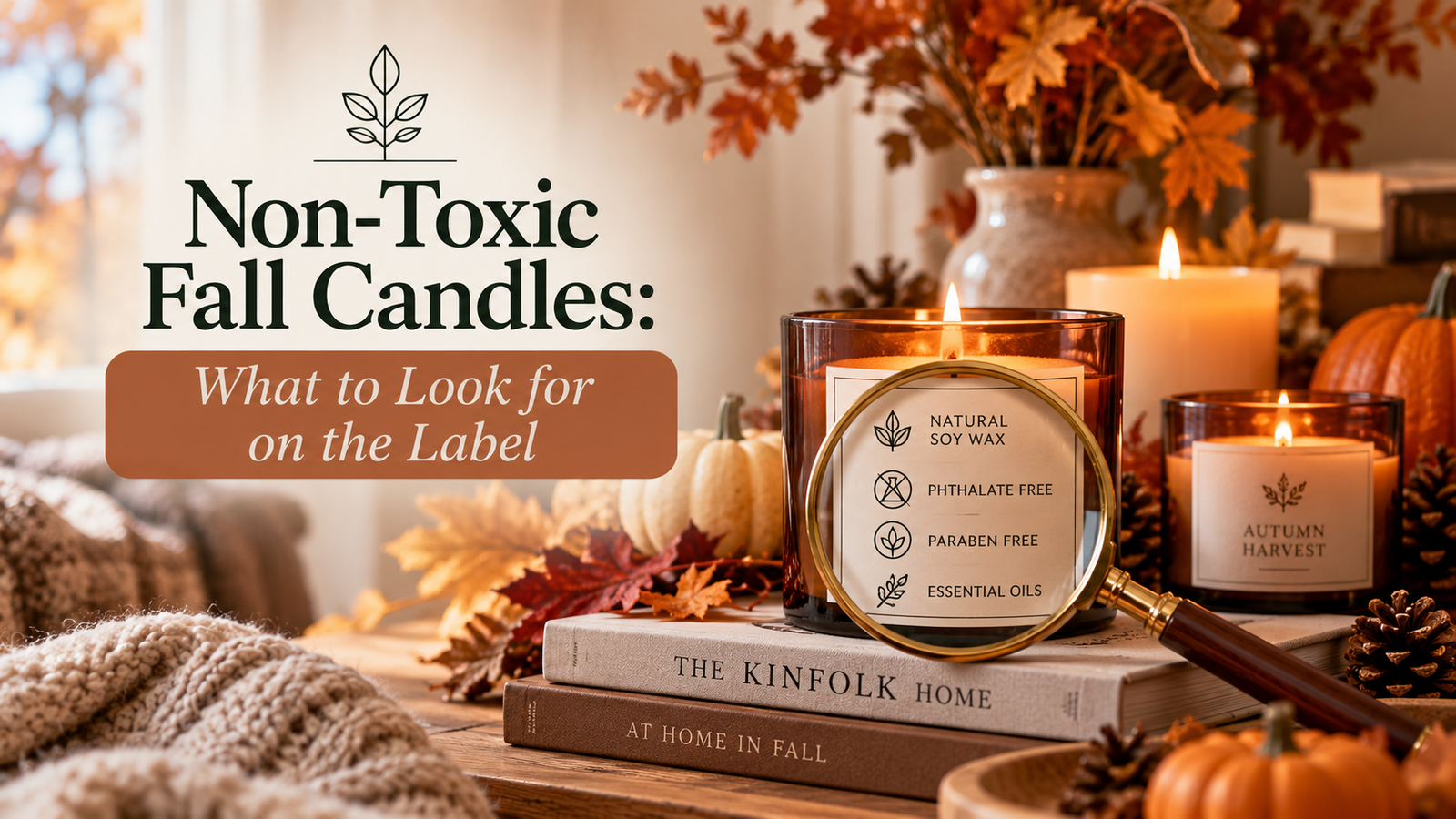
Fall candles bring pumpkin spice, baked apple, cinnamon, vanilla, and warm woods into the home. But if you want a cleaner home fragrance option, the scent on the front of the jar should not be your only consideration. The label can tell you much more about the candle’s formulation.
When I evaluate a candle, I look past claims such as “natural” or “clean” and check the details that actually describe the product. Wax, fragrance, wick materials, additives, and safety information give a much clearer picture.
What Makes a Fall Candle “Non-Toxic”?
“Non-toxic” is not a universal ingredient standard for candles. It is often used as a marketing term, so shoppers should avoid treating it as proof that a candle is automatically safer.
Instead, look for ingredient transparency, clearly identified wax, responsible fragrance information, suitable wick materials, and proper safety instructions. A well-labeled candle makes it easier to understand what you are buying and how to burn it responsibly.
A candle also produces combustion byproducts when it burns. Good ventilation, correct wick trimming, and sensible burn practices remain important even when a product uses plant-based wax or makes clean-burning claims.
Check the Wax Type
Wax forms the main body of a candle, so it is one of the first details worth checking.
Common options include soy wax, coconut wax, beeswax, paraffin wax, and plant-based wax blends. Some candles combine two or more waxes to achieve a particular texture, appearance, scent throw, or burn performance.
Look for Clearly Identified Wax Ingredients
A transparent label should tell you what type of wax the candle contains. “Soy wax” provides more useful information than a vague description such as “premium wax blend.”
That does not mean every blend is a poor choice. A blend can combine different wax properties and still be a reasonable option. The important point is knowing what the manufacturer actually uses.
Plant-based wax can appeal to shoppers looking for alternatives to petroleum-derived materials, but “plant-based” alone does not establish that a candle is non-toxic. Consider the complete formulation rather than judging the product by one ingredient.
Look at the Fragrance Information
Fragrance deserves close attention because it creates much of the character associated with fall candles. Pumpkin spice, cinnamon, clove, apple cider, vanilla, amber, and cedarwood may come from fragrance oils, essential oils, or combinations of aromatic ingredients.
Look for information about fragrance oils, essential oils, synthetic fragrance, fragrance blends, and phthalates. A “phthalate-free” statement can provide useful information, but it should not replace a broader look at the formulation.
Likewise, “natural fragrance” and “made with essential oils” do not automatically mean a candle is safer for every person. Natural substances can still cause sensitivities, and fragrance formulations vary.
For shoppers with allergies or sensitivities, fragrance disclosure becomes especially useful. If a label provides little information, check whether the manufacturer offers additional ingredient or product details.
IFRA standards can also provide context around fragrance safety practices, but compliance should not be confused with a blanket certification that a finished candle is “non-toxic.”
Check the Wick Material
The wick controls how the candle flame consumes the wax and fragrance. Its construction can therefore affect the way a candle burns.
Labels may identify cotton wicks, wood wicks, lead-free wicks, or metal-free wicks. Clear information about wick construction is preferable to vague descriptions.
A lead-free statement is particularly useful when evaluating older or unfamiliar candle products. Regardless of wick type, trimming the wick before burning helps maintain an appropriate flame and can reduce excessive soot and smoke.
Watch for Additives and Other Label Details
Do not stop at wax and fragrance. Check whether the candle contains dyes, colorants, additives, or other disclosed formulation ingredients.
This is where ingredient transparency becomes more valuable than broad words such as “green,” “clean,” or “eco-friendly.” Marketing language can describe the overall positioning of a product, while ingredient information tells you more about what is actually inside the container.
If a manufacturer provides detailed product information, fragrance details, safety guidance, and clear material descriptions, you have more useful information to base your decision on.
Don’t Ignore the Safety Label
A responsibly labeled candle should include basic burning and fire-safety instructions. Look for guidance about wick trimming, recommended burn time, keeping the candle within sight, and placing it away from flammable materials.
These instructions matter because candle safety depends on more than the ingredients. Even a candle marketed as clean or non-toxic still creates heat, flame, smoke, and combustion products during use.
Good ventilation and proper burning habits are simple ways to make seasonal candle use more responsible.
A Quick Non-Toxic Fall Candle Label Checklist
Before buying a fall candle, check:
- Wax type is clearly identified
- Fragrance information is provided
- Phthalate information is available where relevant
- Wick material or safety information is provided
- Lead-free or metal-free information is stated where applicable
- Dyes and additives are disclosed when relevant
- Manufacturer provides adequate product information
- Clear burning and safety instructions are included
Final Takeaway
Choosing a non-toxic fall candle is less about finding one “perfect” ingredient and more about reading the entire label. Check the wax, fragrance, wick, additives, and safety information instead of relying on a single marketing claim.
If you want to explore thoughtfully made candles for autumn and other seasons, browse the collection at Lume & Wick. Choosing a candle with clear product information can make your seasonal home fragrance experience feel just as considered as the scent itself.