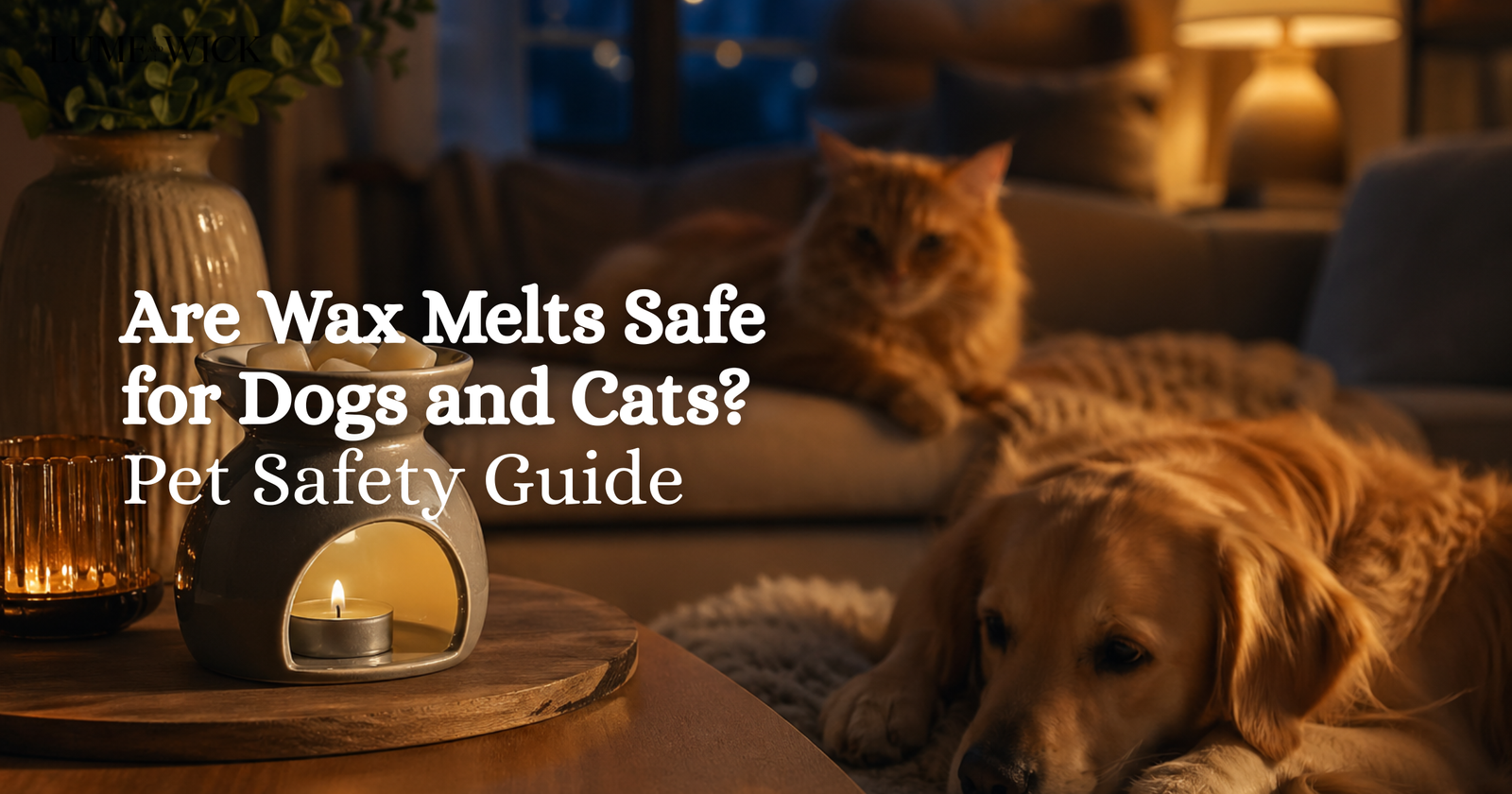
If you use wax melts at home and have pets, it’s natural to question their safety. Wax melts create a strong, continuous fragrance that can affect indoor air quality, and pets are far more sensitive to scent than humans. Dogs and cats process airborne compounds differently, especially when essential oils or synthetic fragrances are involved.
In this guide, I’ll break down whether wax melts are safe for pets, what risks to watch for, and how to use home fragrance more responsibly around animals.
Are Wax Melts Safe for Dogs and Cats?
The short answer is not absolute. Wax melts are not always dangerous, but they are not completely safe either. Safety depends on ingredients, usage patterns, and environmental conditions. You may also want to read essential oil safety for pets.
Many users search for are wax melts safe for dogs or are wax melts safe for cats. The answer varies because dogs and cats process airborne compounds differently. Dogs can tolerate certain scents in low concentrations. Cats are more vulnerable due to biological limitations. Their liver lacks a key enzyme called glucuronyl transferase. This affects how they process toxins and increases the risk of liver toxicity in cats (essential oils).
From my experience, occasional use in a well-ventilated room did not cause noticeable issues with my dog. However, prolonged use in a closed room led to subtle signs such as restlessness. This aligns with what we know about wax melts pet toxicity. The problem is not just the wax. The real concern is what gets released into the air.
Wax melts create scent through heat. This process releases volatile organic compounds (VOCs) in wax melts, along with fragrance oils. These compounds interact with air quality and may affect pets over time. That is why scented wax and pet health risks are often linked to duration and intensity rather than a single exposure.
Why Can Wax Melts Be Harmful to Pets?
Understanding the mechanism helps you make better decisions. Wax melts are flameless, but they still function as a continuous scent diffuser. Heat melts the wax, and fragrance molecules evaporate into the air.
Strong Fragrance Oils and Synthetic Chemicals
Many wax melts use synthetic fragrance blends. These blends may contain multiple chemical components that are not fully disclosed. This creates uncertainty around artificial fragrance vs natural oils safety.
Synthetic fragrances can release airborne irritants. These irritants contribute to inhalation hazards in pets, especially in enclosed environments. Small rooms with low airflow increase concentration levels. Over time, this affects indoor air quality and pets, even if the scent feels mild to humans.
From personal use, I noticed that strong scents filled a room quickly but lingered longer than expected. This lingering effect suggests continuous emission, which increases exposure duration from minutes to hours.
Essential Oils That Are Toxic to Cats and Dogs
Some wax melts contain natural oils, but natural does not always mean safe. Many people assume natural oils are better, yet essential oil toxicity in pets is a well-documented concern.
Essential Oils
Certain oils are particularly harmful. Tea tree, eucalyptus, peppermint, and citrus oils can trigger toxic reactions. These oils affect the nervous system and liver. Cats are highly sensitive due to their limited detoxification ability.
When users search for essential oils toxic to cats or toxic scents for pets list, these oils appear consistently. Even small concentrations can cause reactions if exposure is repeated.
Dogs have slightly higher tolerance, but high concentrations or prolonged exposure still create risk. This highlights the importance of understanding aromatherapy safety for cats and dogs before using scented products.
H3: Airborne Particles and Respiratory Sensitivity
Wax melts release fragrance through heat. This creates airborne particles that pets inhale. Unlike humans, pets cannot choose to leave the environment easily, especially in smaller homes.
Room size plays a major role. In a small room, scent concentration increases quickly. Poor ventilation traps these particles. This increases fragrance exposure risks for animals and may lead to symptoms like sneezing or discomfort.
Another factor is melt temperature. Higher temperatures increase vapor release intensity. This means stronger scent output in shorter time. Combined with frequent use, this creates cumulative exposure.
Continuous Diffusion and Residue Build-Up
Wax melts differ from candles in one key way. They release fragrance continuously without a natural stopping point. This makes diffuser vs wax melts safety comparison important. If this topic interests you, see electric wax warmer vs tea light warmer.
Over time, residue builds up in warmers. This residue can intensify scent strength even when fresh wax is not added. I noticed this when my warmer produced a stronger scent on the second day than the first. That increase was not from new wax but from accumulated oils.
Plug-in warmers maintain consistent heat, which means constant emission. Tea-light warmers fluctuate more, but they still release scent steadily. Both methods contribute to prolonged exposure.
This is why safe scenting practices for pet owners focus on duration, ventilation, and moderation rather than complete avoidance.
Are Wax Melts More Dangerous Than Candles for Pets?
This question comes up often when people compare wax melts vs candles pet safety. At first glance, wax melts seem safer because they are flameless. No soot, no open flame, and lower fire risk. That part is true. However, pet safety is not only about fire. It is about what enters the air.
Wax melts release fragrance continuously as long as heat is applied. Candles, on the other hand, have a burn cycle. Once extinguished, emission stops. This difference matters when evaluating fragrance exposure risks for animals.
In practical use, I noticed that a single wax melt session lasted longer than a candle burn. The scent remained active for hours without interruption. This creates higher cumulative exposure, especially in enclosed rooms.
Another point is concentration. Wax melts often contain higher fragrance load because they rely entirely on scent throw rather than flame ambiance. This makes scent intensity level a critical factor. Strong scents may feel pleasant to humans but overwhelming to pets.
From a safety perspective:
- Wax melts reduce fire hazards
- Candles may produce soot
- Both can affect indoor air quality and pets
So the answer is not about which is safer overall. It depends on how they are used. In terms of inhalation, wax melts can pose equal or greater risk due to continuous diffusion.
Which Ingredients in Wax Melts Are Safe or Unsafe?
Understanding ingredients gives you control. Most risks associated with wax melts come from additives, not the wax itself.
Safer Wax Types
Wax type influences emission behavior but is rarely the primary risk factor.
Common types include:
- Soy wax
- Beeswax
- Paraffin wax
When people search are soy wax melts safe for animals, they often expect a clear yes. Soy wax is considered cleaner because it burns at a lower temperature and produces fewer byproducts. Beeswax is also stable and natural.
However, even with soy or beeswax, safety depends on fragrance content. This is why paraffin vs soy wax safety for pets should be viewed in context. Wax type affects emission profile, but fragrance determines toxicity.
Harmful Additives to Avoid
Many wax melts include synthetic components that raise concerns.
Key additives:
- Artificial fragrance oils
- Phthalates
- Synthetic dyes
These substances contribute to volatile organic compounds (VOCs) in wax melts. VOCs impact air quality and may cause irritation in sensitive animals.
The challenge is transparency. Synthetic fragrance blends often contain undisclosed compounds. This makes it difficult to assess true safety. From my testing, stronger and longer-lasting scents usually indicate higher chemical load.
When evaluating products, treat “long-lasting fragrance” as a signal to investigate further.
Pet-Safe Fragrance Options
There is growing demand for non-toxic wax melts for pets. Some brands offer low-intensity or diluted scent formulations. These can reduce risk but do not eliminate it.
Safer approaches include:
- Mild scent concentration
- Limited essential oil use
- Clear ingredient labeling
Avoid assuming that “natural” equals safe. Even plant-derived oils can trigger inhalation hazards in pets if used incorrectly.
The focus should be on pet-friendly scenting methods that minimize exposure rather than eliminate scent entirely.
What Happens If Pets Inhale or Ingest Wax Melts?
Understanding symptoms helps you respond quickly. Effects vary based on exposure duration, concentration, and the animal’s sensitivity.
Symptoms in Dogs
Dogs tolerate scent better than cats, but they are still vulnerable.
Common signs include:
- Sneezing or coughing
- Lethargy
- Mild breathing discomfort
- Vomiting if ingested
When people ask can dogs breathe in wax melts or do wax melts affect pets, the answer depends on concentration and frequency. Occasional exposure may not cause visible symptoms, but repeated exposure increases risk.
Symptoms in Cats
Cats show stronger reactions due to metabolic limitations.
Key symptoms:
- Drooling
- Rapid or labored breathing
- Tremors
- Reduced activity
These symptoms relate closely to essential oil toxicity in pets and liver toxicity in cats (essential oils). Even small amounts can accumulate over time.
In my observation, cats often show early behavioral changes. Leaving the room or hiding can signal discomfort before physical symptoms appear.
When to Contact a Vet
Immediate action is necessary if symptoms escalate.
Contact a vet if you notice:
- Continuous coughing or breathing difficulty
- Neurological signs such as tremors
- Sudden lethargy or collapse
Ingestion also requires attention. Wax itself is not highly toxic, but fragrance oils can cause internal irritation.
Quick response reduces long-term impact. Do not wait for symptoms to worsen.
Real Risk Factors That Increase Pet Exposure
Safety is not just about ingredients. It is about how and where wax melts are used.
Important factors include:
Exposure duration
Long sessions increase inhalation risk. Short use is safer than continuous use.
Room size
Small rooms concentrate scent faster. Large spaces dilute fragrance.
Ventilation rate
Open windows reduce buildup. Poor airflow traps airborne compounds.
Frequency of use
Daily use creates cumulative exposure. Occasional use lowers risk.
Melting temperature
Higher heat releases more vapor. Plug-in warmers maintain steady output.
Scent intensity level
Strong fragrances produce higher concentration in the air.
When combined, these factors define overall risk. For example, using a strong wax melt daily in a small, closed room creates a high exposure environment.
How to Use Wax Melts Safely Around Pets
You do not always need to remove wax melts completely. In most cases, adjusting how you use them reduces risk significantly. I changed a few habits at home, and it made a noticeable difference in how my pets reacted.
Improve Ventilation and Airflow
Fresh air is the simplest safety control. Open windows or use cross-ventilation to maintain airflow. This helps dilute airborne compounds and improves indoor air quality and pets at the same time.
In practice, I noticed that even a partially open window reduced scent buildup. Without airflow, fragrance tends to settle and linger longer than expected.
Limit Exposure Time
Avoid running wax melts for long, continuous periods. Short sessions reduce overall inhalation.
A practical approach:
- Use for 20 to 40 minutes
- Turn off warmer after scent fills the space
This directly controls exposure duration and lowers cumulative risk. Continuous use for several hours increases concentration, especially in enclosed spaces.
Control Scent Intensity
Strong fragrances create unnecessary stress for pets. Choose mild or low-intensity scents when possible.
Instead of using a full wax cube, try a smaller portion. This reduces vapor release and keeps scent intensity level manageable.
In my case, reducing quantity gave enough fragrance without overwhelming the room.
Keep Warmers Out of Reach
Wax melts also carry physical risk. Pets may lick or touch melted wax if it is accessible.
Place warmers:
- On elevated surfaces
- Away from edges
- In areas pets cannot reach
This prevents ingestion and reduces accidental exposure. Direct ingestion is less common but still possible, especially with curious dogs.
Observe Pet Behavior Closely
Pets often show early warning signs before symptoms appear. Watch for:
- Leaving the room
- Restlessness
- Sudden quiet behavior
These signals indicate discomfort. When I first noticed my cat avoiding scented areas, it became clear that subtle behavior changes matter more than visible symptoms.
Monitoring behavior supports safe scenting practices for pet owners.
Are There Pet-Safe Alternatives to Wax Melts?
If you prefer a lower-risk approach, there are several pet friendly home fragrance options. These alternatives focus on minimal chemical exposure.
Natural Air Freshening Methods
Simple solutions often work best:
- Open windows for airflow
- Use indoor plants that improve air quality
- Maintain regular cleaning to reduce odors
These methods support chemical-free home fragrance alternatives without introducing airborne compounds.
Low-Emission Scenting Options
Some scenting methods are less intense than wax melts:
- Light, occasional candle use
- Very mild diffusers with controlled output
This brings up the diffuser vs wax melts safety comparison. Diffusers can release essential oils in controlled amounts, but they still require caution.
Aromatherapy
Aromatherapy works well for humans, but for pets, even therapeutic oils may pose risk. Always consider dilution, frequency, and ventilation.
Unscented Living Approach
One overlooked option is reducing reliance on fragrance altogether. A clean, well-ventilated home often feels fresher than artificially scented spaces.
This approach eliminates concerns around fragrance exposure risks for animals entirely.
Should Pet Owners Avoid Wax Melts Completely?
The answer depends on your comfort level and your pet’s sensitivity.
Complete avoidance is not necessary in every case. Many households use wax melts without noticeable issues. However, that does not mean risk is absent.
A balanced approach works best:
- Use occasionally instead of daily
- Choose mild formulations
- Maintain proper ventilation
- Monitor pet behavior consistently
Dogs generally tolerate scent better than cats, but both require caution. The key is awareness. Once you understand how wax melts interact with air and how pets respond, you can make informed decisions.
Conclusion
Wax melts are not inherently dangerous, but they are not risk-free either. Their impact depends on ingredients, usage patterns, and environmental conditions. Continuous fragrance release, airborne compounds, and pet sensitivity all play a role.
From my experience, small adjustments made the biggest difference. Reducing usage time, improving airflow, and selecting milder scents allowed me to continue using home fragrance without affecting my pets.
If you enjoy a scented home, focus on moderation and awareness. Choose products carefully and avoid strong, synthetic blends.