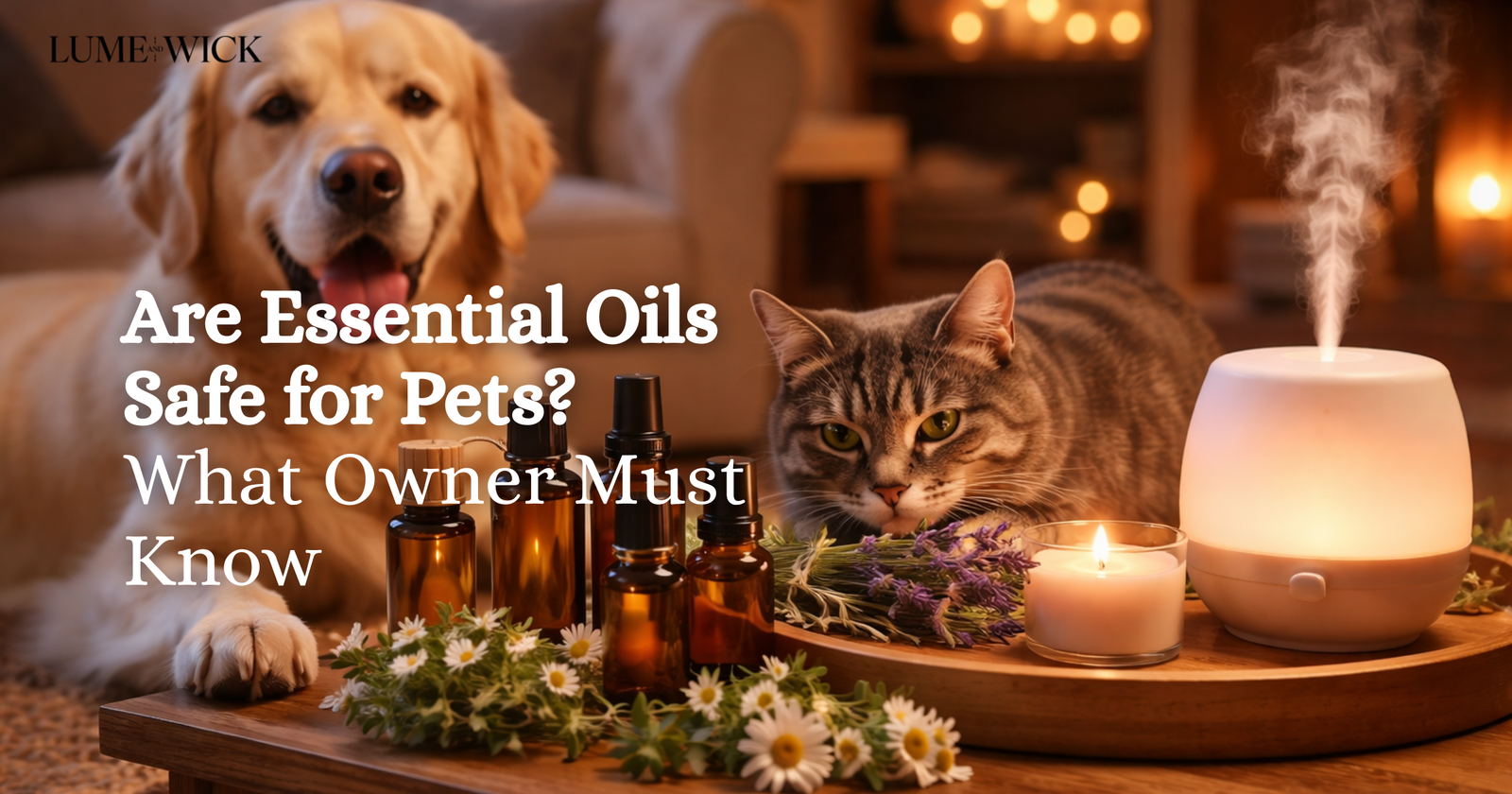
As someone who has worked with aromatherapy for years, I have often seen pet owners wonder whether the soothing scents they enjoy can also benefit their furry companions.
Essential oils are highly concentrated plant extracts prized for their aromatic and therapeutic properties. While humans may use them for relaxation, mood enhancement, or even natural cleaning, the same oils can pose significant risks to pets.
Pet safety must always come first. Pets experience aromatherapy differently due to species-specific sensitivities, unique metabolic processes, and their smaller size.
Cats, for example, have liver enzyme limitations that make them particularly vulnerable to certain volatile aromatic compounds.
Dogs and small mammals have their own unique skin absorption and respiratory sensitivities, which means what is safe for one pet may be harmful to another.
In this post, I’ll share my personal experiences using essential oils around pets, along with vet-approved guidelines, safe practices, and the common mistakes that pet owners make. The goal is to help you enjoy aromatherapy without compromising your pet’s health.
Understanding Essential Oils and Their Popularity
What Are Essential Oils?
Essential oils are highly concentrated plant extracts containing potent phytochemicals and aromatic compounds. These oils are extracted from flowers, leaves, stems, and roots through methods such as steam distillation or cold pressing.
Their olfactory-driven effects can influence mood, stress levels, and even physical comfort in humans.
Many pet owners are drawn to essential oils as natural remedies for pets, seeking alternatives to synthetic chemicals for calming anxious behavior, reducing mild inflammation, or repelling pests.
However, natural does not always mean safe. Oils contain highly concentrated plant compounds that can lead to essential oil toxicity if used incorrectly.
Why Pet Owners Use Essential Oils
Pet owners often turn to oils for a variety of uses:
- Calming anxious dogs during thunderstorms with lavender or chamomile blends
- Reducing fleas or ticks naturally using citrus or cedarwood oils
- Creating a pleasant home environment through diffuser use
From my experience, even a few drops in a diffuser can make a noticeable difference in the home atmosphere.
But without proper ventilation and species-specific considerations, these aromatic compounds can trigger respiratory issues or skin irritation in pets.
Diffuser use and pets require careful planning to avoid inhalation hazards or prolonged exposure to high-risk concentrations.
Are Essential Oils Safe for Pets?
Species-Specific Sensitivities
Each pet species metabolizes essential oils differently. Cats, in particular, have limited ability to process certain toxic compounds due to cat liver metabolism limitations.
Dogs may absorb oils more readily through their skin, leading to topical application risks if oils are not properly diluted.
Small mammals, such as rabbits or guinea pigs, are extremely sensitive to volatile aromatic compounds, and even low-risk oils can become harmful in enclosed spaces.
Understanding pet species sensitivity is critical for any aromatherapy practice. Awareness of toxicity symptoms—from mild drooling or lethargy to severe tremors or difficulty breathing—can help prevent serious incidents.
Veterinarians often stress a pet-first approach, emphasizing the need for vet consultation before introducing any essential oils into a pet’s environment.
Common Toxic Oils for Pets
Not all essential oils are created equal when it comes to pets. Some oils contain potent phytochemicals that can quickly overwhelm a pet’s system. Common poisonous essential oils include:
- Tea tree oil
- Eucalyptus
- Cinnamon
- Peppermint
- Citrus oils
- Wintergreen
Even minimal exposure to these high-risk oils can trigger acute toxicity symptoms, while repeated low-level exposure can result in chronic health issues.
Recognizing the difference between toxic vs. safe oils is crucial for holistic pet care and maintaining pet health risks at a minimum.
Proper Dilution and Application
One of the most important lessons I learned from experience is that essential oil potency can be deceptively strong. Even pet-friendly oils must be diluted properly. Our free essential oil dilution calculator converts any percentage into drops for the amount of carrier oil you use.
Carrier oils such as coconut, jojoba, or sweet almond oil help reduce skin sensitivity in pets and prevent rapid absorption through fur or skin.
Safe dilution ratios vary depending on the oil and the pet species. For example, a dog-friendly lavender blend may require 0.5% to 1% dilution, while even a few drops of tea tree oil can be harmful to cats.
Observing dosage and concentration guidelines ensures minimal absorption while retaining the therapeutic aromatic effects.
Topical application should be gentle and limited to areas pets cannot lick. I always advise applying oils to a cloth or using diffuser use and pets rather than direct application.
This reduces inhalation hazards and topical application risks, while still providing the desired calming or aromatic effect.
Diffusion Safety
Diffusing oils can be safe, but it requires attention to diffusion safety and proper ventilation. Place diffusers in areas where pets can leave if the scent becomes overwhelming. You may also want to read wax melt safety for dogs and cats.
Limit diffusion to short intervals, ideally 15–20 minutes, and avoid using high concentrations.
Even low-risk oils can cause respiratory issues in pets if used in enclosed spaces. Cats are particularly sensitive due to olfactory-driven effects combined with limited liver metabolism, which can magnify essential oil toxicity.
Dogs may tolerate gentle diffusion better, but caution is always necessary. In my home, I always ensure pet supervision during diffusion and provide fresh air to prevent high-risk exposure.
Alternative Pet-Safe Oils
When selecting oils, consider non-toxic alternatives with proven pet safety. Gentle options include:
- Chamomile: calming and soothing
- Lavender: mild, relaxing, often tolerated by dogs
- Frankincense: low toxicity, supports general wellness
These pet-friendly oils are ideal for holistic pet care practices. Using essential oil blends carefully formulated for pets can also reduce risks while providing aromatherapy benefits.
Always choose vet-approved products and follow label warnings to ensure safe dilution levels and minimal absorption.
Common Precautions
Even with non-toxic alternatives, certain precautions remain essential:
- Supervise pets during exposure
- Maintain proper ventilation
- Avoid ingestion; ingestion hazards can result in vomiting, diarrhea, or liver stress
- Monitor for toxicity symptoms like lethargy, drooling, or respiratory distress
Applying these practices helps balance the benefits of aromatherapy with the realities of pet species sensitivity.
My personal approach emphasizes a pet-first approach, ensuring that oils enhance the home environment without compromising pet health risks.
When to Seek Veterinary Help
Even with careful precautions, essential oils can occasionally pose risks. Pet owners must recognize when professional guidance is necessary.
Veterinary guidance is critical if pets show signs of essential oil toxicity or unusual behavior. Symptoms can appear suddenly or develop over time, including:
- Vomiting or diarrhea
- Drooling or excessive licking
- Lethargy or unusual agitation
- Tremors or unsteady gait
- Difficulty breathing or coughing
Prompt consultation with a veterinarian ensures accurate assessment and timely treatment.
I have personally seen dogs recover fully after acute exposure when owners acted quickly and sought expert care. Remember, the pet-first approach means prioritizing health over experimentation.
Debunking Common Myths About Essential Oils and Pets
Many pet owners assume that natural remedies for pets are inherently safe. This is not always the case. Understanding the truth about toxic vs. safe oils prevents preventable harm.
Myth 1: All natural oils are safe for pets
Reality: Some oils, like tea tree or eucalyptus, contain highly concentrated plant extracts that can overwhelm a pet’s system, especially cats. Even small quantities can trigger respiratory issues or skin sensitivity.
Myth 2: Small exposure is harmless
Reality: Chronic, low-level exposure can cause cumulative harm, leading to long-term health risks.
Diffusing oils in enclosed areas for extended periods can lead to high-risk exposure, even if initial reactions seem mild.
Myth 3: Topical oils are always safe if diluted
Reality: Pets often lick their fur, ingesting oils unintentionally. This is why ingestion hazards and oil absorption must be considered.
Using carrier oils and applying them to inaccessible areas mitigates these risks.
By addressing these misconceptions, pet owners can make informed choices that support holistic pet care, pet safety, and gentle application practices.
Awareness and caution are key, ensuring aromatherapy benefits without compromising well-being.
Conclusion
Essential oils can provide natural remedies for pets, from calming anxiety to enhancing the home environment, but they carry pet health risks if misused.
Understanding pet species sensitivity, choosing low-risk oils, and following dosage and concentration guidelines are essential for safe practice.
Diffuser use and pets, proper dilution ratios, and vigilant observation for toxicity symptoms are non-negotiable steps for responsible pet aromatherapy.
A pet-first approach combined with vet consultation, proper ventilation, and gentle application ensures that your pet enjoys the benefits of aromatherapy safely.
Always monitor your pet closely, and never assume that natural means harmless.
For those seeking high-quality aromatherapy products crafted with pet safety in mind, I personally recommend exploring offerings from Lume & Wick.