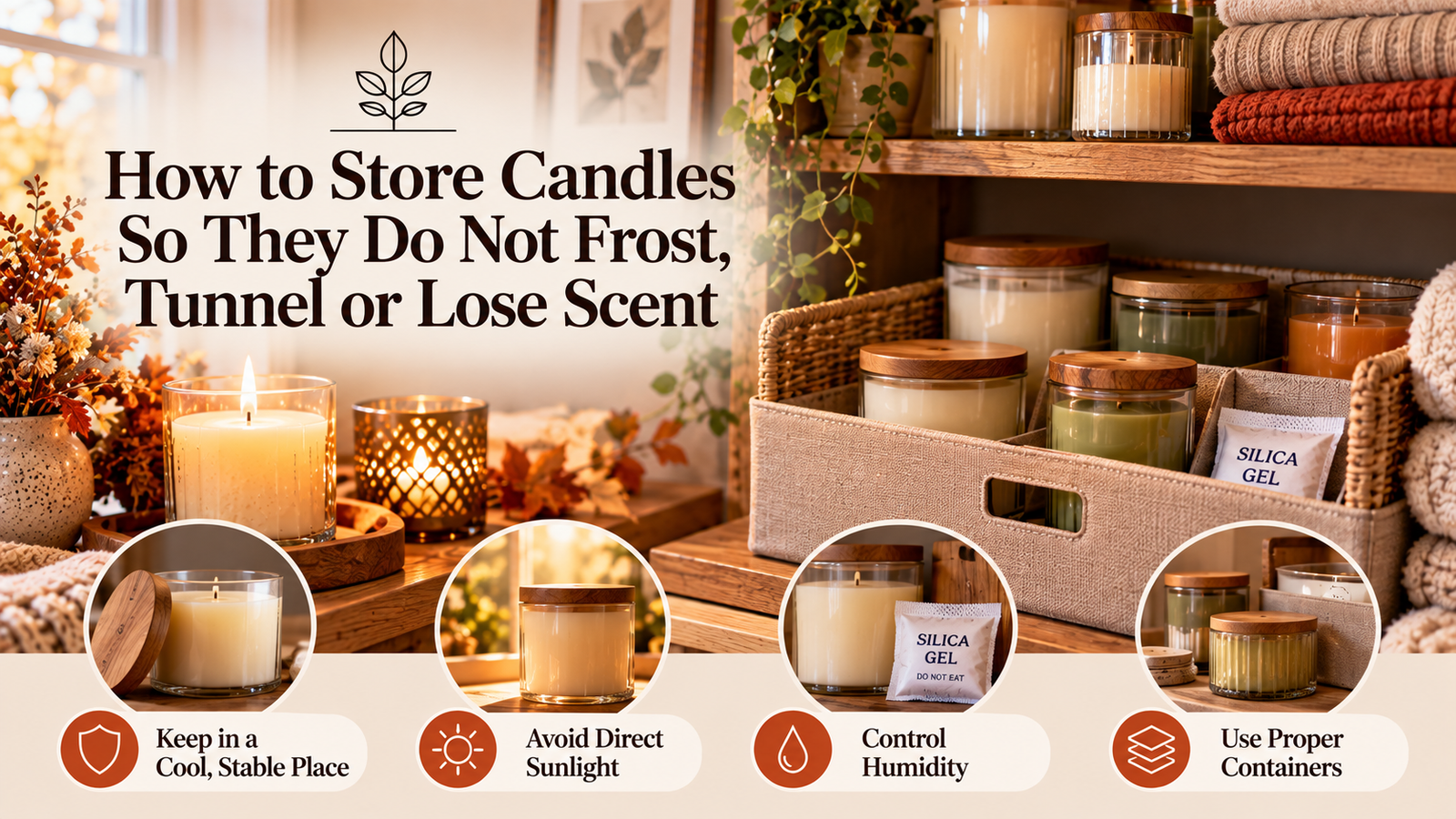
I once pulled a favorite vanilla soy candle from a closet shelf and found pale, frosty patches across the top. The scent smelled flat, too. That jar had spent a whole winter beside a heating vent. I lost a good candle, yet I gained a lasting lesson: storage matters as much as the burn.
A candle has three working parts: wax, fragrance oil, and a cotton wick. Each part reacts to heat, light, and air. Store them well and the fragrance stays vivid for months. Store them badly and you get frosting, tunneling, and a dusty aroma. Here are the habits I follow at home.
Why Candles Frost, Tunnel and Fade
Frosting shows up as white, crystalline patches on soy wax. Soy wax comes from fully hydrogenated soybean oil, so it recrystallizes as it cools. Temperature swings speed that process. The candle still burns and smells normal. Only the look suffers. Beeswax develops a similar haze called bloom, which wipes away with a soft cloth.
Tunneling means the wick burns a narrow well and leaves thick walls of unmelted wax. Short burns usually cause it. Still, a candle stored warm and then chilled burns unevenly, so storage plays a part.
Scent loss comes from volatility. Fragrance oil escapes when heat, sunlight, and open air work on the wax. A candle left uncovered on a sunny shelf can lose its throw before you ever light it.
Choose a Cool, Dark, Steady Spot
A closet shelf, bedroom drawer, or lidded bin works best. I keep mine near ordinary room temperature, far from windows and appliances. Avoid attics, garages, radiators, and parked cars. Soy blends soften somewhere between 120 and 180°F depending on the formula, and a summer car passes that easily.
Light matters as much as heat. Ultraviolet rays in sunlight fade dye and break down fragrance compounds, so colored candles on a sunny sill often look washed out.
Skip the fridge and freezer too. Sudden cold can crack the wax or pull it away from the glass, which leaves gaps and patchy, wet-looking spots.
Prep Each Candle Before Shelving
These steps take about a minute per jar:
- Trim the wick to about ¼ inch, as the National Candle Association advises.
- Pick wick trimmings and soot out of the wax pool.
- Wipe the glass with a dry cloth.
- Replace the lid, or fit a snug dust cover.
A lid blocks dust and slows fragrance evaporation. Tissue paper or the original box adds a light shield from sun. Stand jar candles upright. Lay tapers flat in a drawer so warm air cannot bend them. Pillar candles sit nicely in a covered bin. No lid? A small glass cloche or an upturned bowl shields the wax just as well.
I pencil the purchase date on each base and burn the oldest first. Most scented candles keep peak performance for roughly one to two years, though formulas vary. This breakdown of how long candles last covers every type. Wax choice matters too. Paraffin, soy, beeswax, and coconut blends handle heat differently, so candle wax types can guide where each jar belongs.
Match Storage to Scent and Season
Not every fragrance ages the same way. Citrus, mint, and other bright top notes fade fastest, so I burn those first. Deeper base notes such as amber, sandalwood, and vanilla hold on far longer.
Humidity and climate shape the plan. Damp rooms invite dust and condensation. Dry, cold homes favor frosting. In summer, I move my stash to the coolest room. In winter, I keep jars off windowsills, where cold glass meets warm indoor air. Holiday candles live in labeled bins, so December never turns into a scavenger hunt.
Store Partly Burned and Gifted Candles
A half-burned candle needs a little extra care. Let it cool completely, trim the wick, and remove debris so the next burn starts clean. Cover the jar right away, since an exposed melt pool absorbs dust and loses fragrance quickly.
Gifted candles deserve the same respect. Keep them in their boxes until you plan to use them, and avoid stacking heavy items on top. Pressure can dent soft wax and bend wicks. When you travel with a candle, wrap it in a sweater and pack it away from heat. A hot trunk ruins more candles than any burning mistake I have made.
Fix a Candle That Already Frosted or Tunneled
For frosting, set a hair dryer on low and sweep warm air across the top from several inches away. The surface turns glossy within a minute or two. Lighting the candle works as well, since the melt pool smooths the wax on its own.
For tunneling, burn the candle until the melt pool reaches the jar’s edge. Many makers suggest about one hour per inch of diameter. A three-inch jar needs roughly three hours. Trim the wick first and keep the flame out of drafts. My guide to fixing candle tunneling covers stubborn cases.
For a flat scent, trim the wick, close the door, and burn the candle in a small room for half an hour. Fresh melt releases fresh fragrance.
Burn Smart to Protect Scent
Storage and burning work as a team. Limit each session to about four hours, because longer burns overheat the wax and wick. The 3 hour rule explains the reasoning. Let the wax harden fully before moving a jar. Keep it away from fans, vents, and open windows.
Safety counts as much as scent. The NFPA candle safety guidance reminds readers that candles cause home fires, so stay in the room while a flame burns. For more practical advice, check Ask About Candles and the NCA expert tips.
Store Smart, Burn Better
Treat candles like fine chocolate: keep them cool, dark, and covered. A few small habits protect color, scent, and burn quality. If you want candles worth saving, browse the soy wax candle collection at Lume & Wick and pick a fragrance you will love to light.