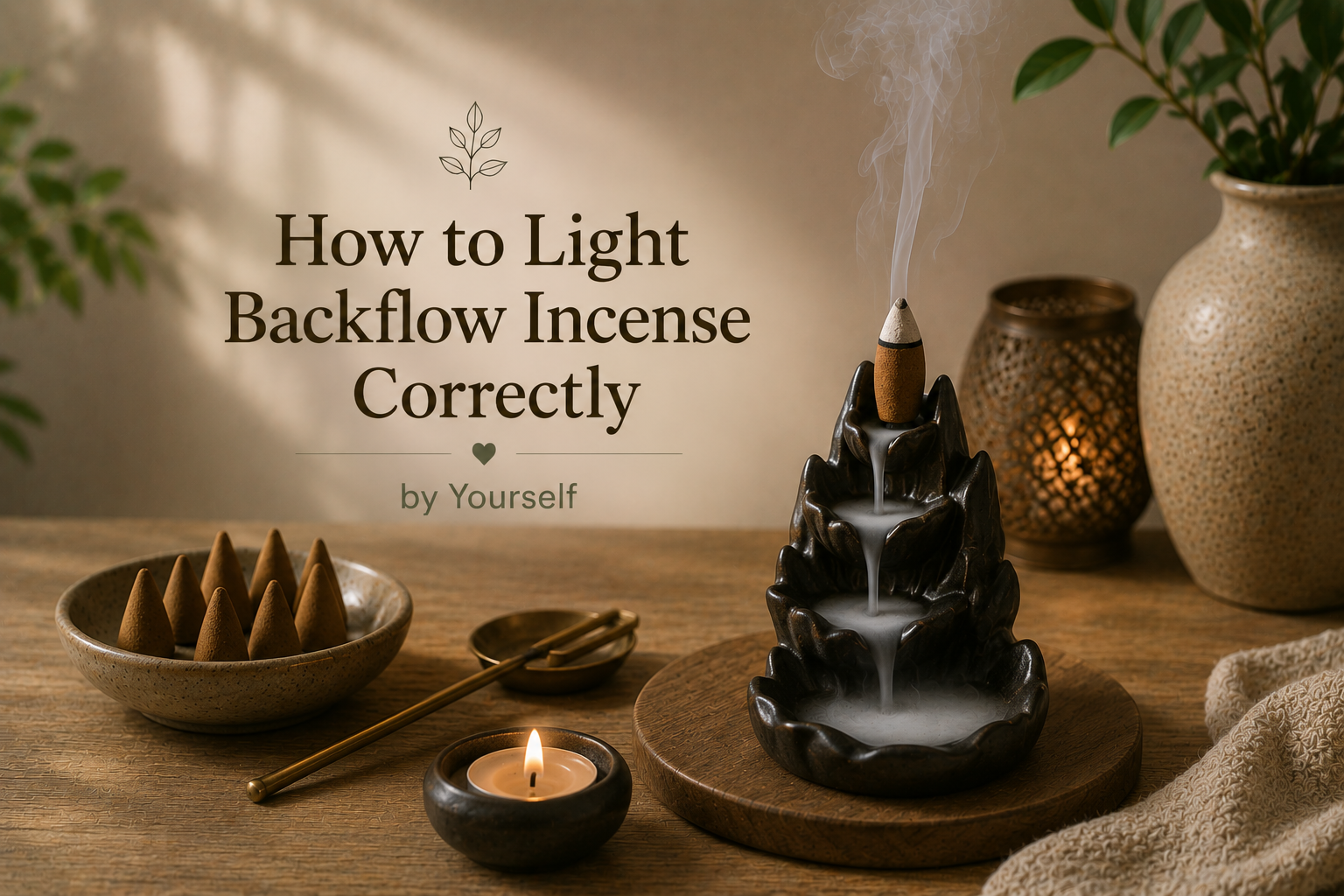
The first time I tried to light backflow incense, I honestly thought the burner was defective. The cone burned, the fragrance filled the room, but the dramatic smoke cascade I saw in videos never appeared. After testing different cones, burner styles, and airflow conditions, I realized the problem usually comes from the incense lighting method, not the burner itself. Many people also burn it outdoors and ask whether incense keeps bugs away.
Backflow incense works differently from regular incense cones. A backflow incense cone contains a hollow-bottom incense cone design that pushes aromatic smoke downward through the incense cone hole instead of sending it upward into the air. When paired with a ceramic incense burner or waterfall incense burner, the smoke creates a calming visual experience that looks like flowing mist or a smoke fountain effect.
People often search for how to light incense cone products because the smoke flowing down effect depends on several small details. Proper cone placement, ember formation, burner channels, and airflow control all affect the final result. Even a ceiling fan or open window can interrupt the downward smoke flow and ruin the layered smoke pattern.
Once you understand the incense burning process, the setup becomes simple. A properly lit cone creates dense smoke formation, steady fragrance diffusion, and a smooth smoke trail that slowly pools around the incense holder. The result feels relaxing, especially during meditation incense sessions, evening reading, or a quiet relaxation ritual at home.
What Is Backflow Incense?
Backflow incense is a special type of incense cone setup designed to create downward-flowing smoke instead of the upward smoke seen in standard incense products. The effect comes from the small tunnel inside the cone. As the heat source burns through the aromatic cone, smoke travels through the opening and moves downward because of cooler air and gravity-based smoke flow.
Most backflow incense products work best with a smoke waterfall burner that contains carved pathways or backflow burner channels. These channels guide the smoke movement and create the waterfall smoke appearance many people use as part of a home fragrance or spiritual practice routine.
Things You Need Before Lighting Backflow Incense
Before you light backflow incense, keep the setup simple. You only need a few essentials for a clean and consistent smoke effect. For related tips, see incense cones vs incense sticks.
Use a high-quality incense cone made specifically for backflow burners. Regular scented incense cones cannot produce the same downward smoke flow because they lack the internal tunnel needed for smoke movement. Pair the cone with a ceramic incense burner or smoke fountain design that supports cone hole alignment and proper ash collection.
Keep a lighter or match nearby and place the entire setup on a fire-safe surface. I usually avoid wooden shelves with fabric décor around them because aromatic smoke can leave light ash residue over time. A stable table with minimal airflow works best for smooth downward flow and controlled smoke release.
How to Light Backflow Incense Properly
Learning how to use backflow incense cones correctly makes a huge difference in both fragrance diffusion and the smoke waterfall effect. Small adjustments can completely change the incense experience.
Place the Burner on a Flat Surface
Start by placing the incense burner on a stable surface away from fans, windows, or direct AC airflow. Heat-sensitive airflow affects smoke direction more than most people realize. Even gentle air movement can break the slow smoke movement and stop the smoke cascade from forming properly.
Indoor spaces with still air usually create the best calming atmosphere.
Light the Tip of the Backflow Cone
Hold the flame directly on the pointed tip for several seconds. Proper incense cone ignition helps create rapid ember formation and even burn rate. Many beginners remove the flame too quickly, which causes weak smoke output later.
When I first learned how to light incense cone products properly, I noticed the cone needed a few extra seconds under the flame to burn incense properly.
Let the Flame Burn Briefly
Allow the incense cone flame to stay visible for a short moment before extinguishing it. This stage helps the cone develop a glowing ember inside the cone incense material. A strong ember improves cone burn consistency and heavy smoke density.
You should notice a faint orange glow near the tip.
Blow Out the Flame Gently
Blow softly until only smoke remains. At this point, the incense cone burning process changes from open flame to smoldering heat. Thick aromatic smoke should begin appearing within seconds. If this topic interests you, see how to stop incense from burning.
If the cone stops producing smoke quickly, relight incense cone products again and allow more ignition time.
Position the Cone Correctly on the Burner
This step matters most. Carefully place incense cone correctly over the burner opening so the incense cone hole alignment matches the channel beneath it. Incorrect positioning prevents smoke flowing down through the burner pathways.
A proper fit creates smooth downward-flowing smoke and a decorative incense display that looks almost like water.
Wait for the Smoke Cascade Effect
The backflow smoke effect usually starts after one or two minutes. As the interior heats, the smoke becomes cooler and heavier, creating the visual smoke effect associated with waterfall burners.
Good quality cones create fast smoke cascade performance with low ash production and steady fragrance diffusion.
Why Backflow Incense Is Not Flowing Downward
One common reason for incense cone not working properly is poor airflow control. Open windows, ceiling fans, or air conditioners disturb the concentrated smoke stream and break the smoke trail before it settles into the burner channels.
Incorrect cone placement also causes problems. If the incense cone hole does not align with the burner opening, the smoke effect becomes weak or disappears completely. I made this mistake often during my first few attempts with a waterfall incense burner.
Low-quality cones can also affect performance. Some products create excess ash residue, uneven smoke output, or inconsistent burn rate. A clean-burning incense cone with balanced smoke performance usually produces better results and a stronger aromatic ambiance.
Tips for Better Backflow Smoke Effect
Use the burner indoors where the environment remains stable. Controlled spaces improve gravity-based smoke flow and help maintain the calming visual experience.
Regular incense burner cleaning also matters. Built-up incense cone ash can block smoke movement and reduce the smoke fountain effect. I normally wipe my ceramic cascade burner after every few uses to keep the airflow path open.
Choosing fragrance varieties carefully improves the overall relaxation tool experience. Sandalwood, lavender, and cedarwood blends often create a mild fragrance strength that feels soothing during meditation or evening relaxation rituals.
Safety Tips When Using Backflow Incense
Always keep burning incense away from curtains, paper, or pets. Although backflow incense creates a gentle smoke waterfall burner effect, it still uses an active heat source.
Place the incense holder on a fire-safe surface and never leave it unattended. Light room ventilation helps prevent excessive smoke buildup while preserving the calming scent and long-lasting fragrance.
Conclusion
Once I understood the correct backflow cone instructions, the entire process became easy and enjoyable. Proper ignition, steady ember formation, correct cone placement, and minimal airflow all work together to create that beautiful smoke cascade effect.
Backflow incense adds more than fragrance to a room. The combination of aromatic smoke, slow movement, and visual décor creates a peaceful atmosphere that feels perfect for meditation, reading, or quiet evenings at home.
If you enjoy creating a relaxing home fragrance setup, exploring thoughtfully crafted incense products and aromatic décor from Lume & Wick can help elevate the experience naturally.