Lighting an incense stick should feel simple. You spark the tip, watch the soft smoke rise, and let the fragrance slowly fill the room. Yet many people run into the same frustrating problem. The incense won’t stay lit. A few seconds later, the ember disappears, smoke stops, and you end up reaching for the lighter again.
I dealt with this often when I first started using incense during evening meditation sessions at home. Some sticks burned perfectly, while others kept extinguishing halfway through. At first, I blamed the incense holder. Later, I realized several small factors affect incense burn continuity, including airflow, moisture, resin composition, and even the way the incense is lit. Many people also burn it outdoors and ask whether incense keeps bugs away.
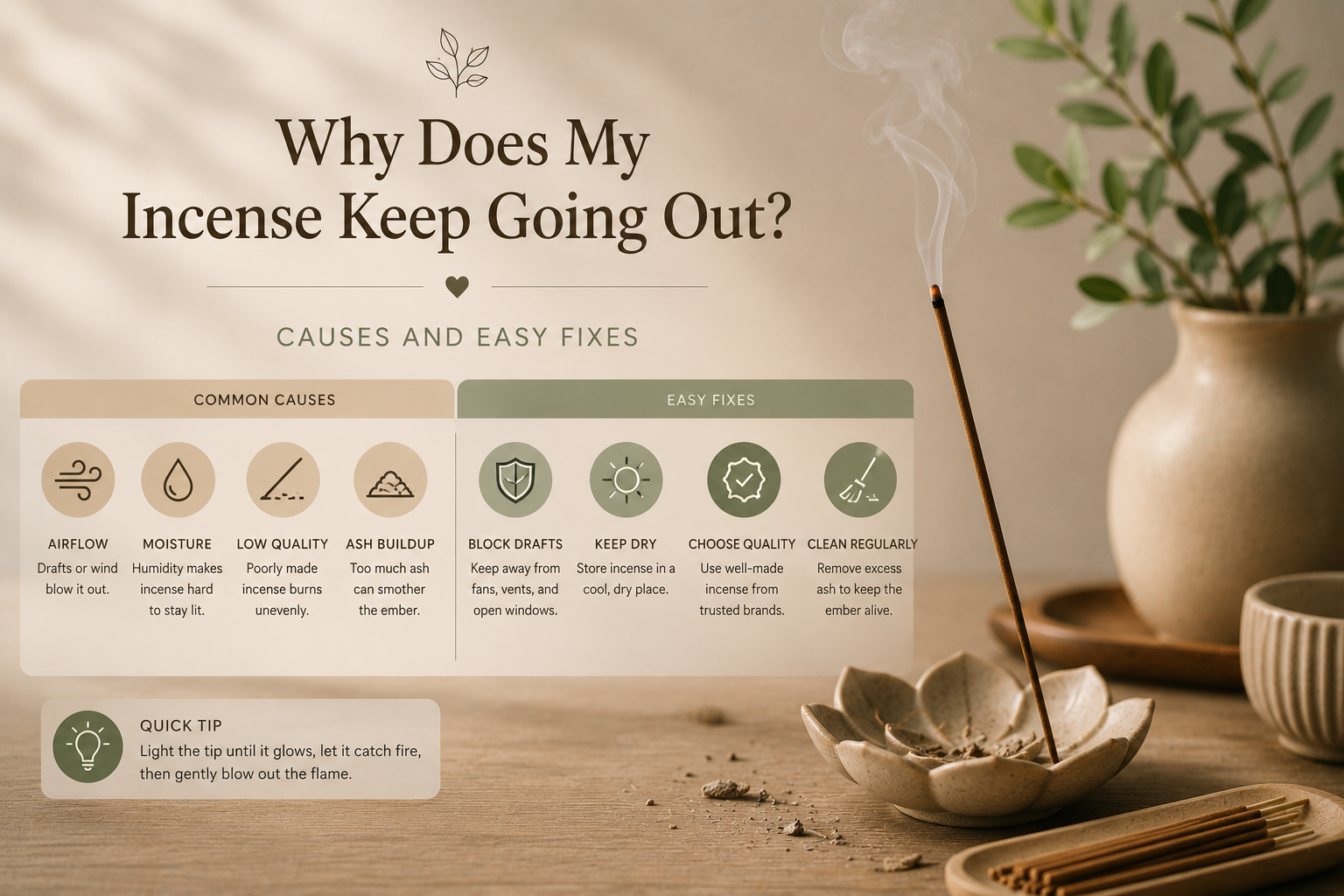
Most incense burning issues come from incomplete combustion. Incense does not burn like a candle with a steady flame. It smolders slowly through a glowing ember. That ember needs stable oxygen supply, dry material, and balanced heat retention to continue burning evenly. When one of those elements fails, the incense relighting problem begins.
Understanding how incense actually burns makes troubleshooting much easier.
How Incense Is Supposed to Burn
An incense stick or incense cone burns through controlled smoldering. After lighting the tip with a match or lighter, the flame should remain for several seconds before gently blowing it out. A small glowing ember stays behind and slowly consumes the aromatic blend.
That glowing point is responsible for incense fragrance release, smoke consistency, and burn duration. Healthy combustion creates a smooth burn with steady smoke output and gradual ash formation. If the ember loses heat or oxygen, the incense keeps extinguishing before the fragrance fully develops.
Traditional incense making relies on balancing herbs, woods, charcoal, oils, and resin. High-quality handmade incense usually burns more evenly because the ingredients are blended with better density control and moisture balance. Poorly packed incense often develops airflow sensitivity, uneven incense burn patterns, or weak ember strength.
The surrounding environment matters too. Ventilation, humidity, and incense holder design all influence combustion efficiency.
Common Reasons Your Incense Keeps Going Out
The Incense Was Not Lit Properly
This is the most common issue I see, especially with natural incense and hand-rolled incense quality products.
Many people light the tip for only a second or two. That creates surface heat but not enough ignition retention quality inside the incense material. The flame disappears quickly, leaving a weak spark instead of a stable ember.
A proper incense lighting technique makes a noticeable difference.
Hold the flame against the tip until a visible glow spreads across the edge. Let the flame stay for around 10 to 15 seconds. Once you blow it out, check for a bright orange ember and steady smoke.
If smoke stops within a minute, the incense never fully ignited.
Low-quality incense sticks often make this worse because synthetic fragrance oils and compact incense packing interfere with smooth smoldering duration.
Humidity and Moisture Exposure
Humidity affecting incense is another major cause of poor incense combustion.
Incense naturally absorbs moisture from the air. Damp incense struggles to maintain ember stability because excess moisture cools the burn point. The result is weak smoke, reduced fragrance intensity, and frequent extinction.
I noticed this during monsoon season when several incense sticks from the same box suddenly developed self-extinguishing behavior. The fragrance became dull, ash production increased, and burn speed slowed dramatically.
Bathrooms, kitchens, and closed storage drawers often create improper incense storage conditions. Moisture in incense sticks changes the burn rate and weakens ignition success rate.
Dry incense burns more reliably because the aromatic oils and charcoal can smolder consistently without fighting excess moisture.
Store incense inside airtight containers away from direct humidity. Silica gel packs also help maintain moisture absorption resistance, especially in tropical climates.
Poor Airflow or Excessive Drafts
Incense airflow problems work both ways.
Too little ventilation reduces oxygen consumption rate around the ember. Too much airflow creates draft sensitivity that cools the burn tip and extinguishes it.
A ceiling fan pointed directly at an incense holder often causes uneven incense burn patterns. Open windows may also interrupt ember longevity by pushing air too aggressively across the ash line.
On the other hand, completely enclosed spaces reduce combustion efficiency because the ember cannot access enough fresh oxygen.
Moderate ventilation works best.
I usually place incense in a calm corner with light air circulation instead of directly near fans or air conditioners. That small adjustment improved consistency of burn almost immediately.
Low-Quality Incense Materials
Not all incense is made equally.
Some mass-produced incense sticks contain excessive synthetic fragrance, poor charcoal concentration, or weak herbal composition. Cheap fillers can interfere with proper smoldering and reduce fragrance diffusion efficiency.
You may notice:
- inconsistent smoke density control
- rapid ash fall rate
- short burn time
- harsh smoke
- weak scent throw strength
Bamboo core incense issues also appear in lower-quality products. If the bamboo core thickness is uneven, the incense may burn faster on one side and extinguish on the other.
Premium incense blend products usually maintain better ember strength because the resin-to-wood ratio is more balanced. Natural ingredients also support cleaner smoke and more stable heat generation rate.
Handmade incense often performs better because artisans carefully control packing tightness, oil saturation, and herbal blend stability.
Ash Buildup Can Suffocate the Ember
Ash looks harmless, but excessive buildup affects oxygen supply for incense.
During long burn sessions, ash holding capability becomes important. Some incense forms light, breathable ash that falls away naturally. Others create dense ash layers that trap heat and block airflow around the ember.
When that happens, incense smoke consistency drops and the glowing tip slowly fades.
I noticed this frequently with thicker incense stick varieties used for meditation use and spiritual ambiance. The outer layer burned properly, but trapped ash underneath prevented steady combustion.
A gentle tap on the incense holder usually fixes the issue. Removing excess ash exposes the ember and restores burn continuity.
This problem becomes more noticeable with compact incense packing and low-smoke incense technology products because airflow channels remain smaller during combustion.
Incorrect Incense Holder Position
The incense holder affects burn consistency more than most people expect.
If the stick points downward at a steep angle, ash can collect unevenly around the burn point. Poor positioning also changes heat retention and oxygen flow. Some holders trap ash too tightly around the base, especially during indoor fragrance use in smaller rooms.
Incense cones need even more attention.
An incense cone burning out quickly often points to restricted ventilation underneath the cone itself. Many decorative burners look attractive but reduce airflow tolerance around the base. Without enough oxygen, the ember weakens and extinguishes before completing the burn.
Backflow incense creates additional challenges because smoke travels downward through narrow airflow channels. Residue buildup inside those channels interferes with smoke persistence and combustion efficiency over time.
Cleaning the burner regularly improves fragrance release rate and keeps airflow stable.
Flat ceramic surfaces usually work best because they allow better heat distribution while maintaining ember longevity.
How to Keep Incense Burning Properly
Use the Correct Lighting Method
A stable ember begins with patience.
Instead of quickly touching a flame to the tip, allow the incense to catch fully before blowing it out. You should see a visible glow and steady smoke stream before removing the flame.
For thicker incense stick varieties, rotating the tip slightly while lighting improves ignition retention quality. This helps the aromatic blend heat evenly and prevents weak burn spots.
Matches often work better than cheap lighters because they produce softer heat distribution. However, either method works when done properly.
If you constantly need to relight incense, focus on ember strength rather than flame size.
Store Incense the Right Way
Proper storage protects fragrance oils, burn consistency, and herbal composition.
Incense absorbs environmental moisture surprisingly fast. Even premium products lose combustion efficiency when exposed to humidity for long periods.
I keep handmade incense inside sealed containers with minimal light exposure. Since making that change, I have noticed stronger aroma, cleaner smoke, and more reliable burn duration.
Avoid storing incense near:
- bathrooms
- kitchen steam
- windows with condensation
- damp drawers
- direct sunlight
Humidity-resistant incense performs better in challenging climates, but even those products benefit from dry storage conditions.
Improve Room Ventilation
Good ventilation supports smooth smoldering without overwhelming the ember.
A relaxing environment with mild airflow helps incense maintain stable combustion while spreading fragrance naturally throughout the room.
For yoga atmosphere or meditation use, I prefer partially open windows instead of fans. Gentle air movement encourages clean smoke circulation without creating airflow sensitivity problems.
If smoke appears weak or uneven, adjust the incense holder position before changing incense types. Small environmental changes often solve the problem faster than replacing products.
Why Incense Cones Go Out Faster Than Sticks
Many users assume incense cones are defective because they extinguish more often. In reality, their structure behaves differently.
An incense cone contains tightly packed aromatic material with limited internal airflow. That compact design creates stronger scent throw strength and denser smoke output level, but it also increases oxygen demand around the ember.
Poor ventilation underneath the cone interrupts combustion quickly.
Moisture absorption rate also tends to be higher in cones because the dense shape traps humidity more easily than sticks. Damp incense cones frequently develop incomplete combustion and weak smoke persistence.
Cleaning residue from cone burners helps maintain proper airflow channels. Elevating the cone slightly above the burner surface may also improve ember stability and burn continuity.
When You Should Replace Your Incense
Sometimes the problem is not your lighting technique or ventilation. The incense itself may simply be too old or damaged to burn properly.
Over time, aromatic oils evaporate, herbal composition dries unevenly, and moisture slowly weakens combustion efficiency. Even high-quality natural incense can lose performance when stored improperly for months.
I once kept a premium incense blend inside a wooden drawer near a bathroom cabinet. The fragrance still smelled pleasant in the box, but every stick produced weak smoke and constant relight attempts. The ember faded halfway through each burn because hidden moisture had already affected the internal structure.
A few warning signs usually appear before incense becomes unusable:
- musty or stale fragrance
- brittle texture
- uneven ash formation
- reduced scent throw strength
- unusually high extinction frequency
- inconsistent smoke output level
Old incense may also develop poor ignition retention quality because the oils and resin no longer distribute heat evenly through the stick or cone.
Fresh incense should create smooth burn patterns, stable ember behavior, and gradual fragrance release without repeated relighting.
Final Thoughts
Most incense burning issues come down to a few simple factors. Poor airflow, excess humidity, weak ignition, low-quality materials, and improper storage all affect ember longevity and combustion stability.
Once I understood how incense actually burns, troubleshooting became much easier. Small adjustments made the biggest difference. Better ventilation, dry storage, and properly lighting the tip improved consistency of burn almost immediately.
Quality also matters more than many people realize. Well-crafted incense made with natural ingredients, balanced resin composition, and careful hand-rolled craftsmanship usually delivers cleaner smoke, smoother burn patterns, and stronger fragrance release.
If you enjoy creating a calming scent and relaxing environment at home, choosing thoughtfully made home fragrance products makes the experience far more enjoyable. Collections from Lume & Wick are a good place to explore premium incense and home fragrance options designed for consistent performance and rich aromatic character.
Frequently Asked Questions
Why does my incense burn for a minute and stop?
This usually happens because the ember never stabilizes fully. Humidity, weak lighting technique, compact incense packing, or insufficient airflow commonly interrupt combustion after the initial flame disappears.
Allow the tip to burn longer before blowing it out and make sure the incense stays in a dry, ventilated space.
Why won’t my incense cone stay lit?
Incense cone burning out often relates to restricted oxygen flow underneath the cone. Dense cone structure also increases heat retention demands compared to incense sticks.
Using a clean burner with better ventilation usually improves burn consistency.
Does humidity really affect incense?
Yes. Moisture in incense sticks weakens ember strength and reduces combustion efficiency. Damp incense struggles to smolder because excess moisture cools the burn point continuously.
Dry storage conditions help maintain fragrance intensity, smoke persistence, and stable burn duration.
Should incense burn with an active flame?
No. Properly burning incense should smolder instead of maintaining a visible flame. After lighting, the flame should be blown out gently, leaving behind a glowing ember that produces steady smoke.
If the flame continues aggressively, the incense may burn too quickly and reduce fragrance diffusion efficiency.