Incense creates a calming fragrance that instantly changes the atmosphere of a room. I still remember burning sandalwood incense during late-night work sessions because the woody scent made the space feel peaceful and grounded. Over time, though, I started noticing that excessive incense burning inside a closed room left behind lingering aroma, smoke residue, and occasional sinus irritation. That experience pushed me to look deeper into incense health risks and how incense smoke affects indoor air quality. Many people also burn it outdoors and ask whether incense keeps bugs away.
Many people use incense sticks, incense cones, and backflow incense for meditation use, stress relief, mindfulness practices, or simply to create a scented environment at home. While aromatic smoke can feel relaxing, burning incense indoors also releases combustion particles, volatile organic compounds, and other household air contaminants into the air. The real concern is not the fragrance itself but the smoke inhalation and exposure duration.
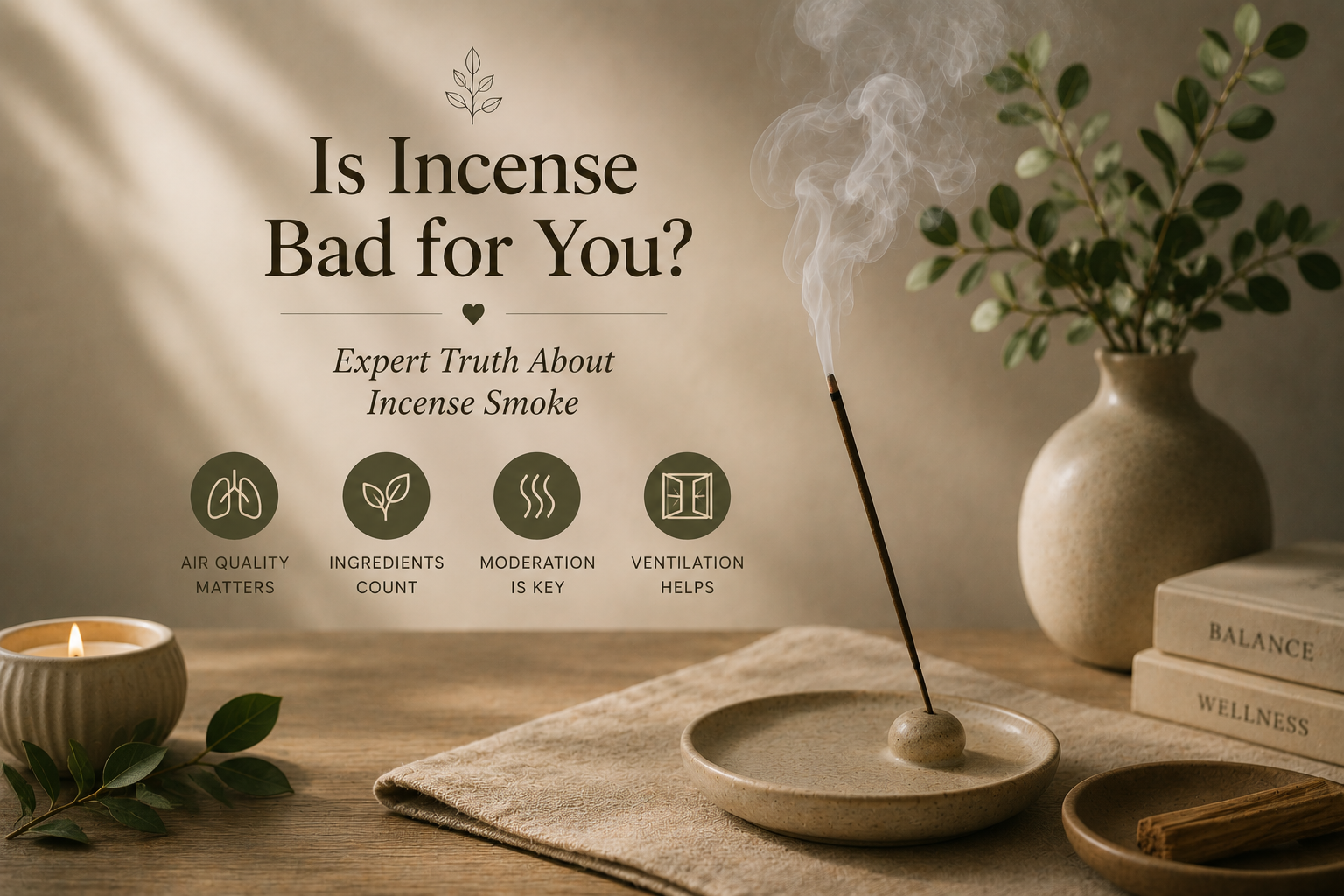
Is Incense Bad for You?
Incense is not considered highly dangerous for most healthy adults when used occasionally in a well-ventilated space. However, burning incense releases particulate matter, volatile organic compounds (VOCs), carbon monoxide, and other combustion byproducts that can reduce indoor air quality.
Scientific studies show that incense smoke contains PM2.5 particles and airborne pollutants that may irritate the lungs and respiratory system, especially during frequent or long-term exposure in enclosed rooms. The overall health risk depends on factors such as ventilation, frequency of use, smoke concentration, and incense ingredients.
Compared to cigarette smoke, incense is generally less harmful because it does not contain nicotine or many tobacco-specific toxicants. Still, excessive incense burning can contribute to indoor air pollution and may trigger smoke sensitivity, headaches, or breathing irritation in some individuals.
What Happens When You Burn Incense?
Burning incense starts a slow combustion process. Whether you light bamboo core incense, cone incense, or resin incense, the heated material releases aromatic compounds into the air. That pleasant aroma comes from fragrance smoke created during combustion. Along with scent diffusion, the burning tip also releases combustion particles, carbon monoxide, soot accumulation, and volatile organic compounds.
The smoke trail may appear light and calming, especially during wellness rituals or spiritual practices, but microscopic particles spread through the room much faster than most people realize. Indoor diffusion rate becomes even higher in bedrooms, meditation corners, or apartments with limited airflow.
I noticed this personally after using backflow incense in a small workspace. The backflow smoke effect looked beautiful, but the airflow-sensitive burning created dense aromatic smoke that stayed suspended for a long time. After an hour, the room felt heavy and stale despite the relaxing fragrance.
Different incense products also burn differently. Hand-rolled incense made with natural incense material often produces lower smoke density than dipped incense sticks filled with synthetic incense fragrance. Charcoal-free incense usually burns cleaner because it contains less charcoal content and fewer artificial binders. On the other hand, cheap incense with strong fragrance chemicals can create higher toxin release potential and stronger odor retention time.
Potential Health Risks of Burning Incense
Research around incense toxicity usually focuses on smoke inhalation, particulate emission level, and chemical release rate. Most concerns come from long-term exposure rather than occasional use. A single incense stick used in a ventilated room rarely creates serious issues for healthy individuals, but daily incense use in enclosed indoor spaces can gradually affect air quality.
One thing I learned after years of testing different home fragrance products is that the body reacts differently depending on burn composition and smoke density level. Some incense blends feel light and clean, while others create immediate throat dryness or heavy smoke persistence. The difference often comes from resin concentration, synthetic fragrance level, and overall combustion temperature.
Respiratory Irritation and Breathing Problems
One of the most common incense side effects involves respiratory irritation. Burning incense releases fine combustion particles that may irritate the lungs, throat, and nasal passages. This irritation frequency increases when smoke output level becomes high or when airflow remains restricted. If this topic interests you, see incense safety for dogs.
People often search phrases like “incense and lungs” or “breathing incense smoke” because symptoms can appear surprisingly quickly. Short-term exposure may lead to coughing, dry throat, wheezing, or mild lung irritation. Strong smoke accumulation rate may also contribute to breathing issues in sensitive individuals.
I experienced this personally while testing temple incense inside a room with minimal ventilation. The calming fragrance initially felt comforting, but after several hours, the smoky air caused noticeable sinus pressure and irritation around the throat. Opening windows immediately improved the environment, which showed how ventilation dependency affects incense safety.
Another concern involves incense PM2.5 particles. These tiny airborne particles remain invisible once the visible smoke fades. Because of their small size, they can travel deeper into the respiratory system compared to larger dust particles. Indoor pollution level may increase significantly during excessive incense burning, especially in apartments or compact meditation rooms.
Can Incense Affect People With Asthma or Allergies?
People with smoke sensitivity often notice stronger reactions from fragrance smoke. Incense and asthma discussions usually center around airborne irritants and allergen potential rather than fragrance alone. Certain products contain synthetic incense fragrance or chemical additives that may function as asthma triggers.
Symptoms vary depending on sensitivity response level and inhalation exposure. Some individuals experience watery eyes, sneezing, chest tightness, or headaches after burning incense indoors. Others react to specific fragrance varieties such as floral scents or resin incense blends.
Natural incense sticks made from herbal incense ingredients may feel gentler than dipped incense sticks loaded with synthetic fragrance chemicals. However, even natural incense still produces smoke particles through combustion. Many people assume “natural” automatically means smoke-free or non toxic incense, but every burning material creates some level of particulate concentration.
Essential oil diffuser products have become popular partly because they offer smoke-free alternatives for fragrance lovers. Unlike incense combustion, diffusers disperse aroma without creating soot buildup speed or ash fall rate. That does not make them perfect, but they generally reduce smoke-related indoor pollutants.
Is Incense Smoke Harmful Over Long-Term Exposure?
Long-term exposure creates the biggest concern in discussions around incense harmful chemicals and health risks. Studies examining household air contaminants suggest that prolonged exposure to combustion smoke may increase respiratory irritation and indoor pollution concerns over time.
Researchers often focus on carcinogenic compounds formed during burning. Some incense products may release toxic chemicals linked to benzene exposure or formaldehyde exposure, particularly when low-quality materials burn at high combustion intensity. Smoke residue settling on walls, fabrics, and furniture may also contribute to overall household contamination.
This does not mean occasional incense for relaxation automatically becomes dangerous. Context matters. Frequency of use, ventilation practices, room size, and product quality all influence toxin exposure level. Someone burning one low smoke incense stick near an open window experiences a completely different exposure scenario compared to someone burning multiple charcoal incense products daily in a closed bedroom.
After experimenting with many aromatherapy products over the years, I found that charcoal-free incense with organic incense material generally produced lower soot accumulation and cleaner burn residue. Hand-rolled incense also tended to create softer fragrance diffusion compared to heavily perfumed commercial products.
Can Incense Cause Headaches or Dizziness?
Many people experiencing incense headaches are reacting to fragrance intensity or indoor smoke buildup rather than scent alone. Strong aromatic compound strength can overwhelm enclosed spaces, particularly when scent longevity remains high for several hours.
Synthetic fragrance level plays a major role here. Cheap incense products often rely on artificial fragrance oils that create sharp smoke smell and stronger chemical exposure. Combined with low air circulation rate, this environment may trigger dizziness, headache triggers, or mental fatigue.
I noticed this most with heavily scented cone incense products marketed for meditation incense use. While the relaxing environment initially felt pleasant, the lingering smoke and odor retention time became overwhelming after prolonged use. Switching to low smoke formulation incense and improving airflow made a noticeable difference.
Is Incense Worse Than Candles or Cigarettes?
People often compare incense vs candles because both products create room fragrance and scented smoke indoors. The difference mainly comes down to burn composition, smoke output level, and harmful emissions. Scented candles usually release fewer visible combustion particles than incense sticks, especially when made with cleaner wax blends. Incense, however, produces direct smoke through continuous burning, which increases particulate matter and smoke residue in the surrounding air.
The secondhand smoke comparison also appears frequently in discussions around incense health risks. Cigarette smoke remains significantly more harmful because it contains nicotine, tar, and thousands of toxic combustion compounds linked to severe long-term health conditions. Incense smoke dangers should not be exaggerated to that level, but regular incense exposure still contributes to indoor air pollution and household air contaminants.
From my experience testing multiple home fragrance options, smoke density matters more than people realize. Some sandalwood incense products produce soft aromatic smoke with moderate fragrance diffusion speed, while heavily perfumed charcoal-based incense creates thick smoke persistence that lingers for hours. Excessive incense burning in compact spaces often feels much heavier than lighting a single candle.
Product construction also changes the overall experience. Bamboo core material may create additional ash production during combustion, while charcoal-free incense tends to burn cleaner with reduced soot particles. Backflow incense products create dramatic visual smoke trails, but their airflow-sensitive burning often increases particulate concentration inside smaller rooms.
Many people now prefer smoke-free alternatives for everyday fragrance use. Essential oil diffuser systems provide natural fragrance without combustion particles or soot buildup. Reed diffusers and low-emission aromatherapy products also reduce inhalation exposure while maintaining a calming fragrance indoors.
Final Verdict: Is Incense Bad for You?
So, is incense bad for you? In my experience, the answer depends more on how often, where, and what type of incense you burn rather than incense itself.
Occasional use with proper air ventilation is unlikely to create major health concerns for most healthy adults. Problems usually arise from daily incense use in poorly ventilated environments where indoor pollutants, smoke accumulation rate, and PM2.5 concentration level continue building over time. Respiratory irritation, headaches, and smoke sensitivity become more noticeable when fragrance smoke remains trapped indoors for long periods.
Choosing better incense ingredients also makes a difference. Natural incense, hand-rolled incense, and charcoal-free incense often create lower smoke density and cleaner aromatic atmosphere compared to synthetic incense fragrance products with heavy chemical additive presence. Paying attention to ventilation efficiency, exposure duration, and burn quality can significantly improve incense safety.
After trying everything from meditation incense to resin incense and backflow incense, I eventually realized that balance matters most. A pleasant aroma should enhance a relaxing environment, not overwhelm the air inside your home. Small changes like reducing frequency of use or improving airflow can make incense for relaxation feel far more enjoyable.
If you enjoy creating a warm scented environment without overwhelming smoke, exploring thoughtfully crafted home fragrance products from Lume & Wick can help you find cleaner and more balanced fragrance options for everyday use.