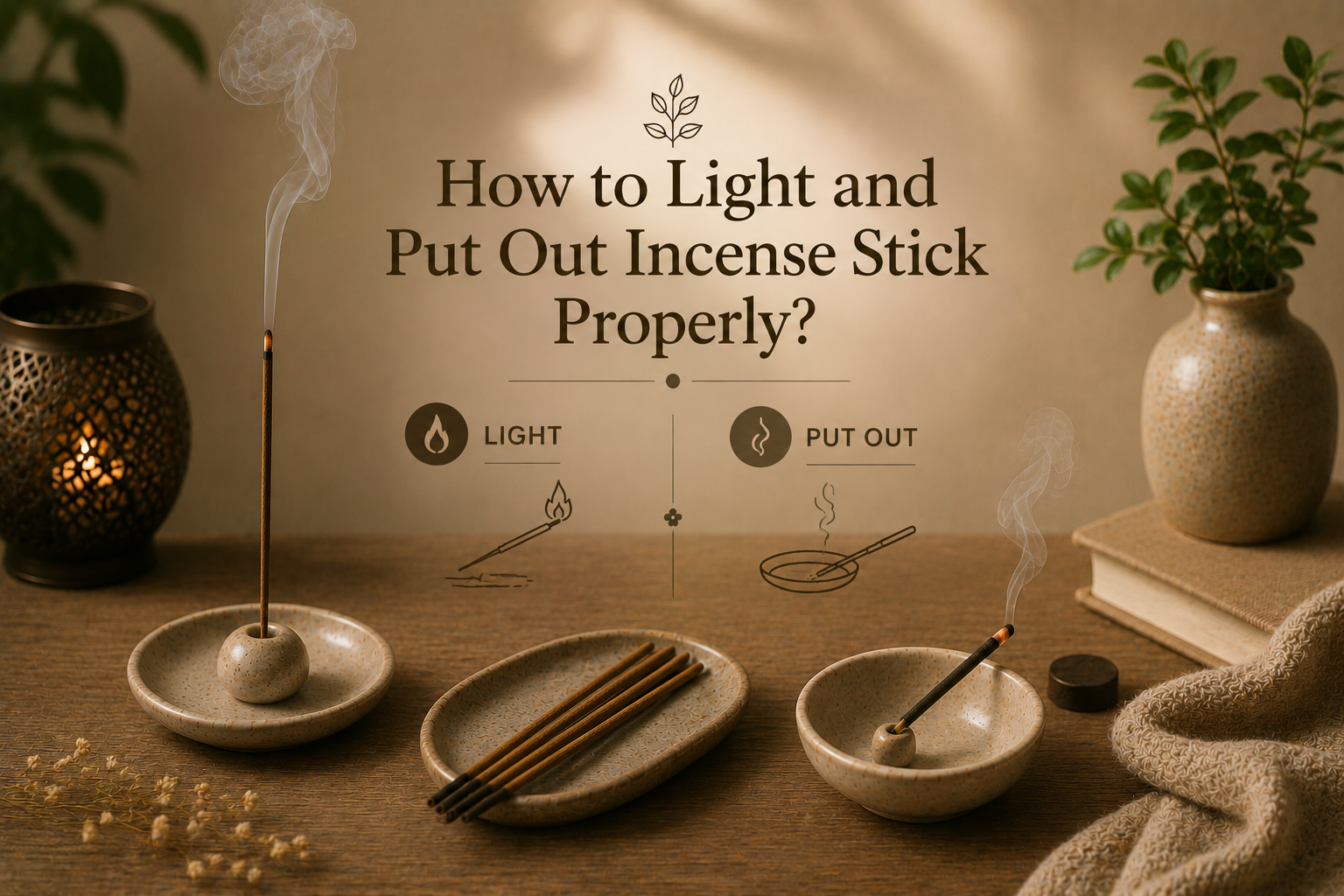
I started using incense sticks during late evening meditation sessions when constant screen time made my room feel mentally exhausting. At first, I thought lighting incense was simple. After a few failed attempts, I realized proper incense preparation changes everything. Incorrect lighting creates uneven burning, harsh smoke, and weak fragrance diffusion. Proper technique creates a calming atmosphere with balanced scent release and cleaner aromatic smoke.
A quality incense stick slowly smolders instead of producing a large flame. That slow-burning incense process helps release aroma steadily across the room. Whether you use Indian masala incense, Japanese incense sticks, or resin-based incense, the method remains almost the same. Good airflow circulation, correct incense placement, and safe extinguishing incense practices improve both fragrance intensity and indoor safety.
I personally prefer handcrafted aroma sticks with natural essential oils because they create a more relaxing ambiance during my mindfulness routine. Sandalwood aroma, woody scent notes, and herbal incense blend profiles usually work best for yoga room aroma, prayer incense, or aromatherapy sessions. A clean-burning incense with low ash production also keeps the space comfortable, especially in smoke-sensitive areas.
How to Light an Incense Stick?
Choose a Safe and Ventilated Spot
Before lighting incense, place the incense burner on a fire-resistant surface away from curtains, paper, bedding, or direct fan airflow. Proper smoke control matters more than many people realize. Strong air movement causes uneven burning speed and excessive ash fall.
I normally use a ceramic incense holder with an ash catcher because it keeps the bamboo stick incense upright and prevents scattered incense ash on furniture. Heat-resistant holders also reduce open flame hazards during longer burn duration sessions.
Rooms with balanced ventilation work best. Fresh airflow helps avoid smoke buildup while maintaining fragrance balance. Closed spaces often trap smoky air and reduce the pleasant-smelling effect of the scented stick.
Light the Tip Correctly
Use a lighter or matches to ignite incense at the coated end. Hold the stick at an angle while keeping the flame directly on the ember tip for several seconds. Charcoal incense usually needs slightly more heating time compared to charcoal-free incense.
Many beginners remove the flame too early. That mistake stops the incense from burning continuously. I learned this after repeatedly relighting hand-rolled incense during meditation practice. Once the tip catches properly, a small visible flame appears near the slow-burning core.
Temple-style incense and traditional incense craftsmanship products often burn more evenly because of their dense herbal incense blend and bamboo core construction.
Let It Smolder Before Blowing Out the Flame
Allow the flame to stay for a few seconds before gently blowing it out. The goal is not active fire. Proper incense rituals rely on smoldering incense that produces controlled ember glow and balanced smoke release.
After blowing out the flame, check for a thin stream of aromatic smoke. That smoke indicates clean combustion rate and efficient fragrance delivery. If no smoke appears, relight incense and repeat the process.
Good incense should create fragrance naturally without harsh smoke output. Premium clean-burning incense usually offers prolonged aroma retention with minimal residue and reduced soot formation.
Place the Incense Stick Properly in the Holder
Once the scented stick starts producing smoke consistently, place in holder carefully so the burning end remains stable. The incense placement angle affects both scent release and ash-retaining design performance. A tilted stick often drops hot ash outside the tray.
I usually keep upright positioning slightly diagonal because it helps incense ash collect neatly inside the ash catcher. Decorative holders look attractive, but stability matters more than appearance. Lightweight holders sometimes tip over during long burn time sessions.
Good placement also improves high aroma diffusion across the room. I noticed that keeping incense near open windows weakens indoor fragrance because airflow pushes the smoke outside too quickly. Center placement works better for odor neutralization and relaxing room coverage.
Monitor the Burn and Maintain Safety
Proper incense safety does not end after lighting the stick. Monitor ember occasionally to ensure even burning speed and controlled smoke release. Some low-quality products produce thick smoke, rapid ash buildup, or inconsistent burn quality.
I prefer eco-friendly ingredients and toxin-free incense because they create non-irritating smoke during longer meditation-grade incense sessions. Luxury fragrance blend products made with natural oils usually smell softer and more refined than synthetic scented varieties.
Keep away from children and pets during burning. Incense may appear harmless, but combustible materials and falling ash still create risk. I also avoid placing incense near air conditioners because sudden airflow can spread hot ash across nearby surfaces.
If ash becomes too long, gently trim ash into the holder to prevent accidental breakage. This simple habit helps maintain fragrance balance while reducing unwanted mess.
How to Put Out an Incense Stick?
Decide Whether to Let It Burn Naturally or Stop Early
Most incense sticks are designed for a slow smolder rate and gradual fragrance spread. During evening mindfulness routines, I often allow the incense to burn completely because the lingering scent duration feels smoother and more natural.
Still, there are moments when extinguishing incense early makes sense. Smoke-sensitive areas, unexpected guests, or leaving the house require fast extinguishing methods. Partial burn incense can easily be reused later if stored properly.
Long-lasting fragrance products with slow-burning core construction may continue burning for over an hour. Monitoring burn continuously helps avoid unnecessary smoke accumulation indoors.
Extinguish Safely Without Creating Excess Smoke
The cleanest incense extinguishing method involves pressing the glowing tip gently into ash or sand. I personally use leftover ash inside the burner because it stops burning quickly without damaging the remaining stick.
Some people dip in water, which works for fast extinguishing, but moisture affects future ignition. Wet incense often struggles to release aroma evenly after drying. Sand extinguishing preserves the fragrance profile much better.
Avoid crushing the ember aggressively. Excess pressure breaks fragile bamboo core construction and creates loose residue. Proper extinguish safely techniques maintain reusable incense quality while reducing smoke instantly.
Allow Cooling and Dispose of Ash Carefully
After extinguishing incense, allow cooling before touching the burned end or cleaning the holder. A glowing ember may continue producing heat for several minutes even when visible smoke disappears. I usually wait until the tip feels completely cool before moving the remaining stick.
Remove excess ash carefully because loose particles spread easily across furniture and fabric. An ash-producing product with low residue level keeps cleanup simple and maintains a minimalistic setup around the incense burner. I prefer holders with deeper ash trays because they contain debris more effectively during daily use.
If you plan to reuse partially burned incense, store it in a dry container away from humidity. Moisture weakens scent quality and affects quick ignition later. Proper storage also preserves floral fragrance profile details, woody aroma depth, and the soothing character of handcrafted incense.
Conclusion
Learning how to light and put out incense stick properly changes the entire home fragrance experience. Correct lighting technique improves fragrance intensity, burn evenly performance, and overall scent release. Safe extinguishing methods reduce smoke problems while helping the incense maintain its original aroma quality for future use.
Over time, I realized that quality incense creates more than fragrance. It supports spiritual cleansing, meditation practice, and a calming atmosphere after stressful workdays. Clean-burning products with natural ingredients feel far more comfortable indoors compared to overly smoky alternatives.
If you enjoy creating a relaxing ambiance at home, explore thoughtfully crafted home fragrance products from Lume & Wick. Their collection fits beautifully into modern mindfulness routines, aromatherapy sessions, and everyday indoor fragrance rituals.