Every Diwali, my aunt asks the same question over video call: are you still lighting real diyas in that apartment? The honest answer is yes, but not everywhere. Over several festivals, I tested terracotta lamps, tealights and LED diyas side by side in my living room. I timed burns, watched for soot and noted which ones my cat ignored. Here is how the three compare, and where each one belongs.
What Counts as a Diya?
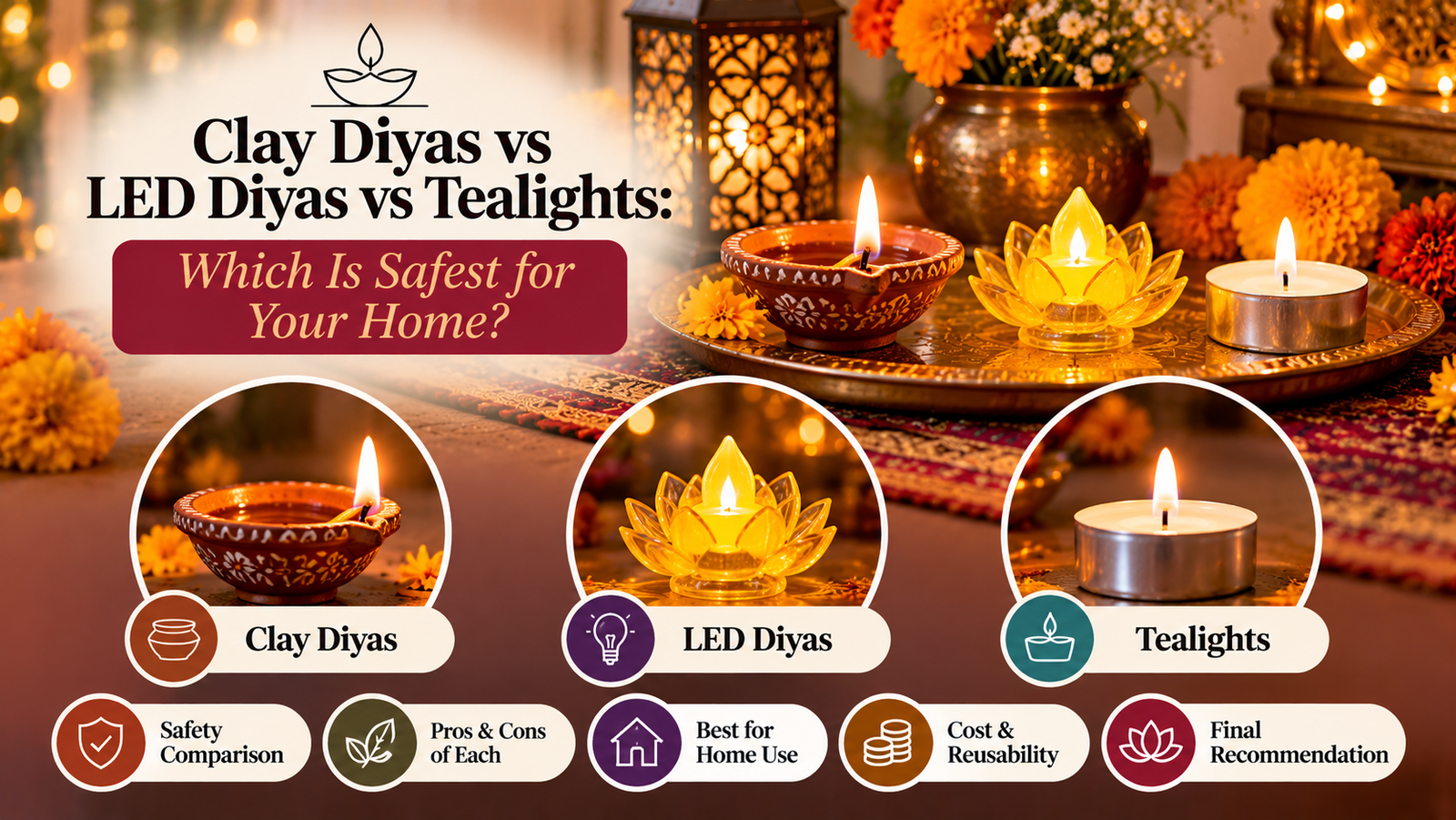
A diya is a small oil lamp, traditionally shaped from terracotta, with a cotton wick resting in ghee or vegetable oil. The word traces back to the Sanskrit dipa, meaning lamp. Tealights are small wax candles set in aluminum or plastic cups. LED versions are battery-powered replicas that imitate a flame with a flickering bulb. All three belong to the broader family of festival lighting, yet they behave very differently indoors.
Quick Comparison
| Feature | Clay Diya | Tealight | LED Diya |
|---|---|---|---|
| Fuel | Ghee or oil, cotton wick | Paraffin, soy or beeswax | Coin cell or rechargeable battery |
| Typical burn time | 1 to 3 hours, depending on size and oil | 3 to 5 hours | Dozens of hours per battery |
| Open flame and heat | Yes | Yes | No |
| Smoke and soot | Moderate, higher with long wicks | Low to moderate | None |
| Reusable | Yes, after cleaning | Cup only | Yes |
| Best spot | Puja table, supervised | Glass holders, dining table | Windows, shelves, balconies, kids’ rooms |
Clay Diyas: Tradition With Responsibility
Nothing replaces the soft, steady glow of a terracotta lamp. Lighting one connects families to the story of Ayodhya welcoming Lord Rama home with rows of lamps. That meaning is why I still light five on our puja table each year.
Clay diyas carry real risks, though. The flame sits uncovered, the base gets hot and spilled oil spreads fire quickly. A few preparation steps make them safer:
- Soak new diyas in water for a few hours, then let them dry. Porous clay absorbs less oil afterward.
- Keep the wick short, about a quarter inch above the oil. Long wicks create black soot.
- Set each lamp on a metal plate or tile, never directly on wood or fabric.
- Keep them away from curtains, rangoli powder and silk dupattas. Loose festive clothing catches fire faster than people expect.
Ghee gives a sweet, familiar aroma, while sesame and mustard oil remain traditional, affordable fuels. Curious how oil compares with wax? I broke it down in my oil lamp versus candle guide.
Tealights: The Easy Middle Ground
Tealights cost little, burn roughly four hours and fit almost any holder. I like them in glass votives along the dining table, where the cup keeps the flame contained. In my testing, soy and beeswax versions left less visible soot than cheap paraffin packs.
They still need care. The metal cup gets surprisingly hot and can scorch a table or melt a plastic tray. Space them a few inches apart, because tightly clustered tealights heat each other until the wax can flare. Check standard candle burn times before planning a long evening.
LED Diyas: Safest for Busy Homes
LED diyas solved my biggest worries. Kids can hold them, pets can bump them and nothing ignites. Better models offer amber flicker, realistic terracotta finishes and remote or timer controls. They also work wherever open flames are banned, including dorms, offices and most apartment balconies.
One overlooked hazard deserves attention. Many LED tealights run on coin cell batteries, which cause severe internal burns if a child swallows one. Choose products with screw-secured battery doors, store spares up high and recycle dead cells promptly. Rechargeable sets avoid the issue entirely.
The trade-off is atmosphere. Even the best LED lacks the gentle dance of a living flame. Mixing types gives you warmth and peace of mind together. LED diyas also make thoughtful Diwali gifts for teachers.
Cost, Waste and Sustainability
A dozen terracotta lamps cost only a few dollars at most Indian grocery stores, and they last for years when washed and stored dry. Tealights look cheap per piece, yet they leave a pile of spent aluminum cups by Bhai Dooj. Refillable glass holders with cupless soy refills cut that waste. LED sets cost more upfront, but one purchase serves many festivals. Rechargeable models eliminate disposable batteries, making them the greenest long-term choice.
My own mix settled at reusable clay, refillable tealights and a single rechargeable LED string. Now my recycling bin no longer overflows the week after Diwali.
Which Light Belongs Where?
After plenty of trial and error, here is my room-by-room plan:
- Puja table: clay diyas, always supervised and extinguished before bed.
- Dining and coffee tables: tealights in glass or metal holders.
- Windows, stairs, entryways and balconies: LED diyas or warm string lights.
- Bedrooms, nurseries and homes with pets: flameless only.
Planning a rental setup? My guide to renter-friendly Diwali decorating covers torans, rangoli and smoke alarms.
Safety Habits for Every Diwali Night
Fire safety guidance stays simple. Keep any flame at least 12 inches from anything that burns. Never leave lit lamps unattended or sleep while they glow. Smother a small oil fire with a metal lid instead of water, which splashes burning oil. Test your smoke alarms before the festival begins, and keep an extinguisher within reach.
Light Up Diwali the Smart Way
Clay diyas carry the heart of Diwali. Tealights offer easy charm, while LED diyas deliver worry-free glow. The safest home uses all three thoughtfully. For the rest of your festive setup, explore the soy candles and home decor at Lume & Wick. Our clean-burning candles and warm accents pair beautifully with traditional diyas and keep your rooms glowing through the holiday season.