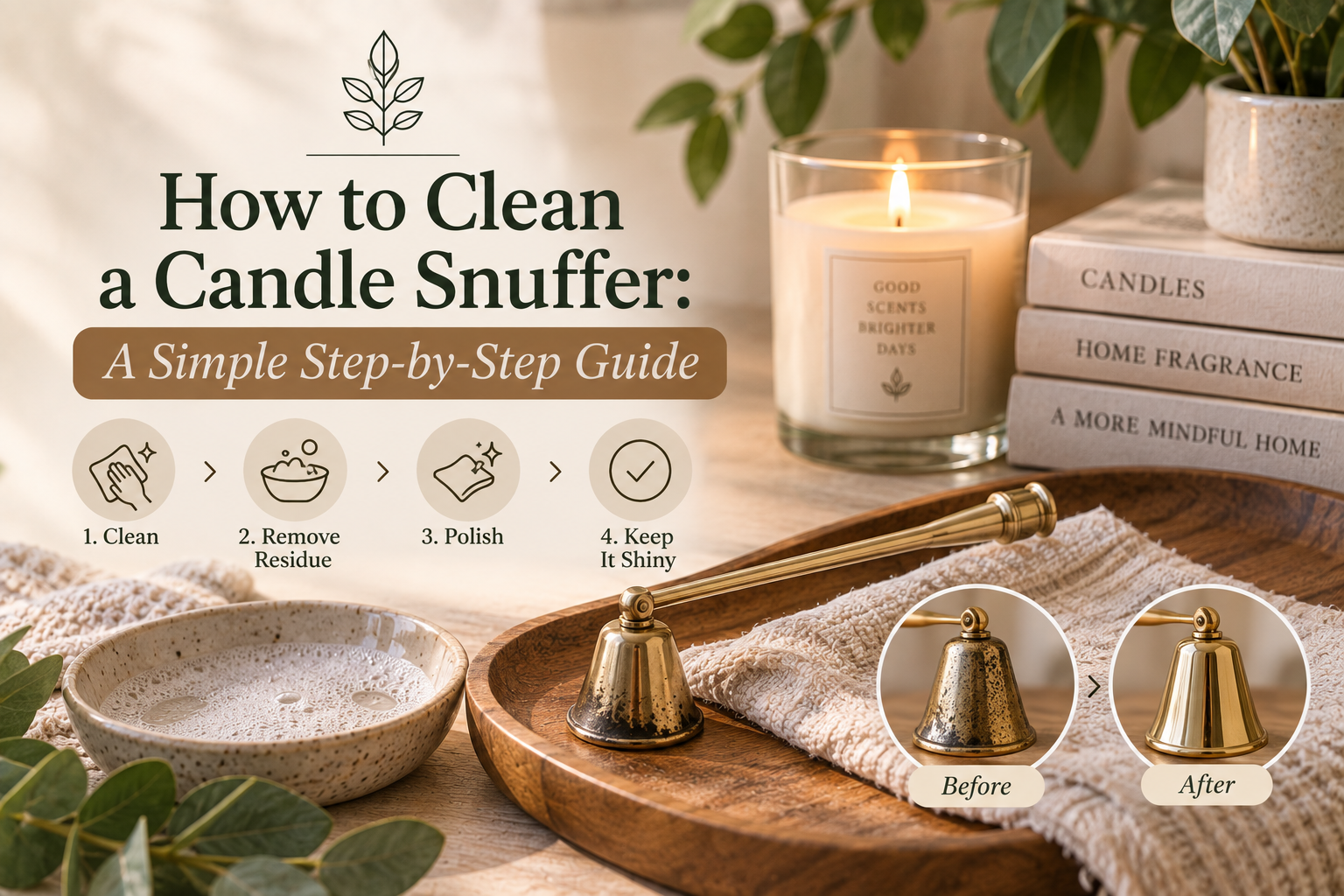
A candle snuffer is one of those small candle care tools that can make a noticeable difference during everyday use. However, repeated use can leave melted wax, black soot, smoke residue, and fragrance oils on its surface. If you leave the buildup for too long, it can become harder to remove and may affect the appearance of the snuffer.
I have found that cleaning a candle snuffer does not require complicated products. A gentle approach with the right supplies usually works well. The important part is to consider the material and finish before you start.
What You’ll Need to Clean a Candle Snuffer
For routine candle snuffer cleaning, keep the process simple. You will usually need:
- A soft microfiber cloth
- Warm water
- Mild dish soap
- A soft-bristled toothbrush or small cleaning brush
- A cotton swab for narrow areas
- A clean, dry cloth
Avoid abrasive pads and strong chemical cleaners unless the manufacturer specifically recommends them. They can scratch metal or damage decorative finishes.
How to Clean a Candle Snuffer Step by Step
1. Let the Snuffer Cool Completely
Always allow the candle snuffer to cool before cleaning it. If you have just extinguished a candle, the bell can remain hot even when the flame is gone.
Give the tool enough time to reach a safe temperature. This also allows soft melted wax to harden, making wax removal easier and safer.
2. Remove Hardened Wax
Start by removing visible candle wax buildup. Hardened wax often collects inside the snuffer bell or around areas that come close to the candle flame.
Gently lift or peel away loose pieces with your fingers or a soft cloth. For stubborn wax residue, work slowly rather than scraping aggressively. A sharp object can scratch the surface, especially on polished, plated, or coated metal.
If a small amount remains, gently loosen it and wipe the area clean. Patience works better than force when dealing with delicate finishes.
3. Clean Away Soot and Smoke Residue
After removing the wax, check for black soot or smoke residue. This buildup commonly appears around the part of the snuffer that covers the flame.
Dampen a soft microfiber cloth with warm water and add a small amount of mild dish soap. Wipe the affected areas gently. For narrow crevices or detailed sections, use a soft-bristled brush or cotton swab.
Avoid hard scrubbing. Soot may look stubborn, but abrasive cleaning can leave fine scratches on the metal surface.
4. Wash the Snuffer Gently
Once the visible residue is gone, clean the remaining surface with mild soapy water. Use a soft cloth instead of an abrasive sponge.
If your candle snuffer has hinges or moving parts, avoid soaking it unnecessarily. Moisture can remain inside small joints and crevices, particularly when the tool has a detailed construction.
Decorative and antique candle snuffers need extra care. Their existing finish may be part of their character, so the goal should be to remove dirt and residue without trying to make the piece look brand new.
5. Rinse and Dry Thoroughly
Remove any remaining soap with a clean, damp cloth or an appropriate rinse for the material. Then dry the snuffer immediately with a soft towel.
Pay special attention to hinges, joints, and narrow sections where water can collect. Leaving moisture on metal for an extended period can contribute to tarnishing or corrosion, depending on the material and finish.
6. Polish the Surface if Needed
Polishing is optional. You do not need to polish a candle snuffer every time you clean it.
If the material is suitable for polishing, use a product specifically designed for that type of metal. Brass, stainless steel, and silver-plated surfaces can have different care requirements.
Be particularly cautious with antique, lacquered, plated, or intentionally aged finishes. Aggressive polishing can remove or alter the original surface. When in doubt, follow the manufacturer’s care instructions.
How to Clean Different Types of Candle Snuffers
The material matters when choosing a cleaning method.
Brass candle snuffers: Brass can develop tarnish over time. Clean gently and avoid polishing an antique or intentionally aged finish unless you want to change its appearance.
Stainless steel candle snuffers: Stainless steel is generally easy to maintain. Mild soap, warm water, and a soft cloth are usually sufficient. Avoid abrasive scrubbers that can create scratches.
Silver-plated or decorative snuffers: Use a gentle approach because the surface coating can be more delicate. Check the manufacturer’s recommendations before using a metal polish.
Antique candle snuffers: Focus on preserving the existing finish. Avoid harsh chemicals, aggressive scraping, and heavy polishing. Valuable or historically significant pieces may benefit from professional restoration.
How to Remove Stubborn Wax From a Candle Snuffer
Thick, hardened wax sometimes needs more attention. Instead of attacking the buildup with a sharp metal tool, loosen it gradually and remove small pieces at a time.
A soft cloth can help wipe away softened residue, while a soft brush can reach areas around the snuffer bell and handle. Avoid using an open flame or excessive heat to melt wax off the tool. That approach can create unnecessary safety risks and may damage certain finishes.
Once the wax is gone, clean the remaining oily or smoky residue with mild soap and a soft cloth.
How Often Should You Clean a Candle Snuffer?
There is no universal cleaning schedule. The best approach is to clean the snuffer whenever visible wax or soot begins to accumulate.
If you use it frequently, a quick wipe after several uses can prevent heavy buildup. A more thorough cleaning becomes useful when residue starts affecting the tool’s appearance or movement.
Regular maintenance takes only a few minutes and makes future cleaning much easier.
What to Avoid When Cleaning a Candle Snuffer
A few simple precautions can protect the finish:
- Never clean the snuffer while it is hot.
- Do not aggressively scrape hardened wax.
- Avoid abrasive pads and rough brushes.
- Do not use harsh chemicals without checking material compatibility.
- Avoid unnecessary soaking, especially around hinges.
- Do not leave the snuffer wet after cleaning.
- Avoid polishing antique or coated finishes without checking their care requirements.
Quick Candle Snuffer Cleaning Routine
For regular maintenance, remember this simple sequence:
Cool the snuffer → Remove wax → Wipe away soot → Clean gently → Rinse or wipe → Dry thoroughly → Polish only when appropriate.
With this routine, a candle snuffer can remain clean, functional, and attractive without complicated maintenance.
If you are also refreshing your candle collection, explore home candles from Lume & Wick to pair with well-maintained candle care accessories. A clean snuffer and a thoughtfully chosen candle make everyday candle rituals feel a little more intentional.