Walking into a room filled with incense feels very different from walking into a room sprayed with artificial air freshener. Incense creates a layered aroma that slowly spreads through the air, settles into fabrics, and lingers long after the smoke disappears. Some blends smell woody and grounding, while others feel floral, spicy, sweet, or deeply resinous.
The first time I tried high-quality sandalwood incense, I expected a harsh smoky scent. Instead, the fragrance felt warm, creamy, and calming, almost like polished wood mixed with soft earth after rain. Since then, I’ve tested dozens of incense varieties, from Japanese incense sticks to thick resin blends used during meditation. One thing became clear quickly. Incense never smells the same across all products because ingredients, burn quality, essential oils, herbs, and aromatic resins shape the entire scent profile.
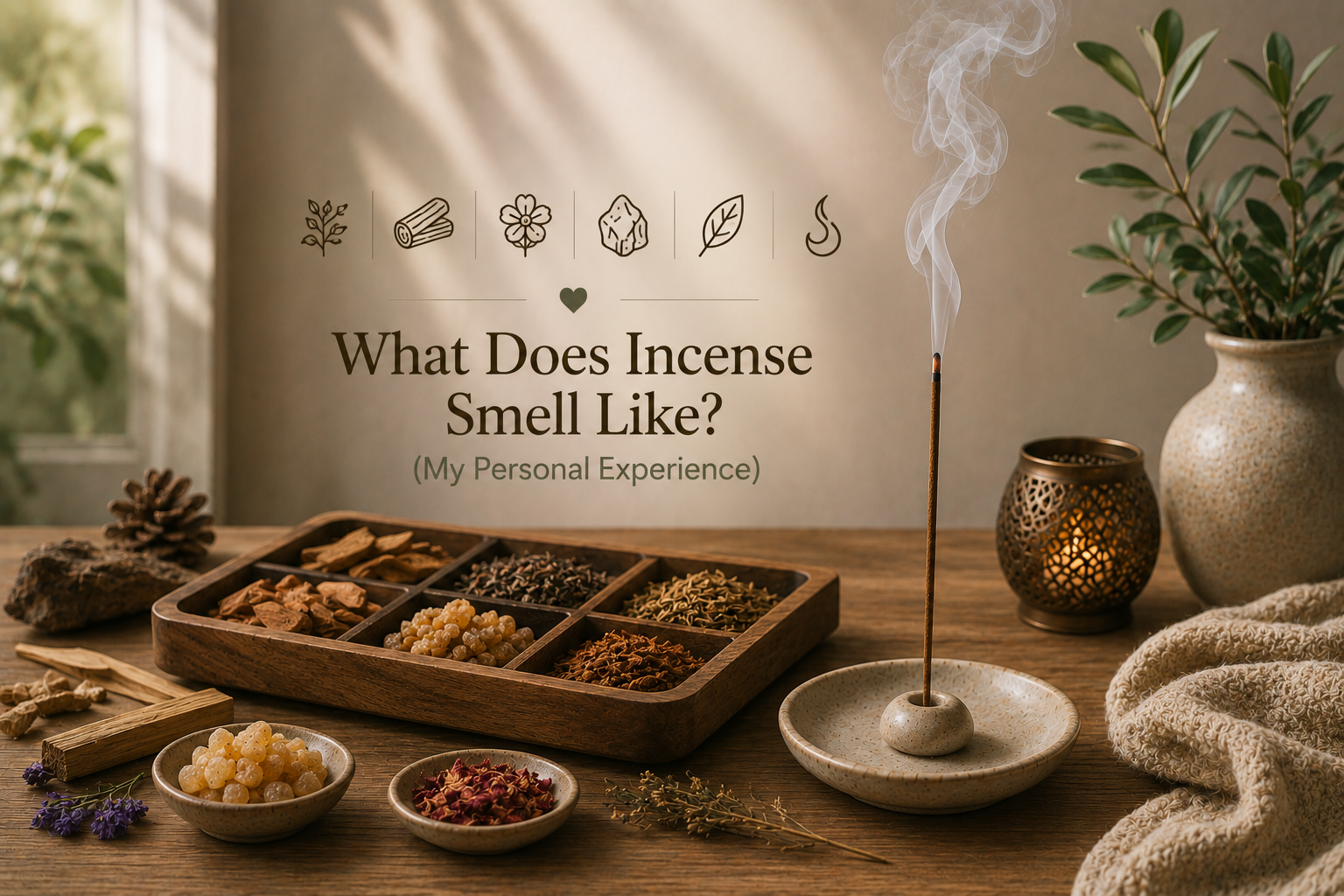
What Does Incense Smell Like?
Most incense carries a smoky aroma combined with natural fragrance notes. The smell can range from fresh and herbal to dark and earthy. Traditional incense often contains sandalwood powder, cedarwood, frankincense, myrrh, spices, flower extracts, bark, or plant-based oils. When these materials burn, they release aromatic compounds that create a rich sensory experience.
Unlike candles, incense develops in stages. The first few seconds usually smell smoky because combustion starts immediately. After a minute, the core fragrance becomes more noticeable. Good incense feels balanced rather than overpowering. The lingering scent left in the room often becomes softer, warmer, and more pleasant over time.
Some people describe incense as “temple-like” because many blends carry resinous and woody notes associated with meditation spaces, yoga studios, and spiritual rituals. Others compare certain fragrances to forests, dried flowers, antique wooden furniture, spices, or herbal tea.
Why Incense Smells Different From Candles or Air Fresheners
Candles mainly release fragrance through melted wax and fragrance oils. Air fresheners disperse synthetic aroma particles into the air. Incense works differently because heat and smoke transform natural materials during burning.
That process creates deeper and more textured aromas. Even floral incense usually carries subtle earthy or smoky undertones. Lavender incense, for example, smells calmer and warmer than a lavender room spray. Frankincense has a balsamic scent with faint citrus notes, but smoke adds depth that feels richer than perfume oil alone.
Natural incense also changes depending on airflow and room temperature. In smaller rooms, the aroma feels denser and more concentrated. Open windows create a lighter and cleaner fragrance experience.
Common Types of Incense Scents
Incense fragrances generally fall into several scent families. Understanding these categories makes it easier to choose a fragrance that matches your mood or space.
Woody Incense Scents
Woody incense remains one of the most popular fragrance categories. Sandalwood smells creamy, smooth, and warm. Cedarwood feels dry, fresh, and slightly forest-like. Agarwood, also called oud, creates a darker and richer aroma with smoky depth.
These fragrances work well during reading, meditation, or evening relaxation because they create a grounded atmosphere without feeling too sharp or sweet.
Floral Incense Scents
Floral incense smells softer and more delicate. Rose creates a romantic and powdery fragrance. Jasmine smells sweet, lush, and slightly exotic. Lavender offers a calming aroma often associated with stress relief and bedtime routines.
Many floral blends combine flowers with herbs or wood powder to prevent the fragrance from becoming overly perfumed.
Spicy and Herbal Incense Scents
Spicy incense blends usually contain cinnamon, clove, patchouli, sage, or herbal extracts. These fragrances smell warm, earthy, and energizing. Patchouli incense often surprises first-time users because it carries a musky and damp-earth aroma instead of a sweet perfume scent. You may also want to read white sage incense benefits.
Herbal incense works especially well during rainy weather or colder months because the fragrance feels comforting and rich without becoming heavy.
Resin-Based Incense Scents
Resin incense produces one of the deepest fragrance experiences. Frankincense smells resinous, slightly citrusy, and sacred. Myrrh feels darker, earthy, and balsamic. Copal creates a cleaner pine-like aroma with subtle sweetness. For related tips, see dragon’s blood incense.
These scents are commonly used during spiritual practices because they create a meditative atmosphere and long-lasting ambient fragrance.
What Factors Affect How Incense Smells?
Two incense sticks with the same label can smell completely different depending on quality, ingredients, and environment. I noticed this clearly while testing budget incense against handcrafted blends. Cheap incense often smelled heavily burnt after a few minutes, while natural blends released smoother fragrance layers with less harsh smoke.
Ingredients Used in the Incense
Natural ingredients create a cleaner and more realistic aroma. High-quality incense usually contains resins, herbs, bark powder, essential oils, flower petals, and aromatic woods. Synthetic fragrance oils sometimes produce an overly chemical or artificial scent.
Charcoal-heavy incense burns faster and generates stronger smoke. Masala incense, made from blended herbs and wood powders, tends to smell richer and softer because fragrance comes directly from plant materials rather than heavy perfume coating.
Type of Incense
Different incense forms change how fragrance spreads through a room. If this topic interests you, see how long incense cones burn.
Incense sticks burn evenly and produce a balanced aroma suitable for daily use. Cones release thicker smoke with a stronger fragrance concentration. Coil incense burns slowly for hours, making it useful in larger spaces. Resin incense, often heated on charcoal discs, creates the deepest and most intense aromatic experience.
Japanese incense usually smells lighter and cleaner because many blends contain less bamboo and minimal smoke-producing fillers.
Ventilation and Room Size
Small rooms amplify fragrance quickly. Burning strong patchouli or oud incense in a closed room can feel overwhelming within minutes. Larger rooms diffuse scent more evenly and create a softer atmosphere.
Good airflow improves the experience significantly. Slight ventilation helps aromatic notes spread naturally while reducing excessive smoke buildup.
Quality of the Incense
Low-quality incense often smells burnt, dusty, or overly perfumed. Excess fillers and synthetic binders can overpower natural fragrance notes. Premium incense smells smoother because ingredients remain balanced.
A good incense blend should never smell aggressively smoky from start to finish. Instead, smoke should support the fragrance rather than dominate it.
What Do Popular Incense Scents Smell Like?
Many people search for specific incense fragrances before buying them because scent descriptions online often feel vague. Here’s how some of the most recognizable incense scents actually smell in real spaces.
What Does Sandalwood Incense Smell Like?
Sandalwood smells creamy, woody, smooth, and slightly sweet. The aroma feels warm and calming without becoming heavy. Some blends remind me of polished wood furniture mixed with soft earth and warm milk tea.
This fragrance works beautifully in bedrooms, meditation corners, and quiet reading spaces because it creates a peaceful atmosphere.
What Does Patchouli Incense Smell Like?
Patchouli smells earthy, musky, rich, and herbal. Some people notice damp soil or forest-floor notes after rainfall. Others detect spicy warmth mixed with dark herbs.
Good patchouli incense feels grounding rather than overpowering. Lower-quality versions can smell too smoky or sharp.
What Does Lavender Incense Smell Like?
Lavender incense smells clean, floral, calming, and lightly herbal. Compared to lavender candles, incense versions feel warmer because smoke softens the floral sharpness.
I personally like using lavender incense during late evenings because the fragrance feels relaxing without becoming too sweet.
What Does Frankincense Incense Smell Like?
Frankincense produces a resinous aroma with citrusy freshness and smoky depth. The scent feels ancient, meditative, and slightly balsamic. Many churches and spiritual spaces use frankincense because it creates a calming and reflective environment.
What Does Nag Champa Incense Smell Like?
Nag Champa smells sweet, powdery, woody, and floral at the same time. Most blends contain sandalwood and champa flower notes, creating the classic “temple incense” fragrance many people recognize instantly.
The aroma feels cozy and nostalgic, especially in quiet indoor spaces.
Why Some People Love the Smell of Incense
Incense creates more than fragrance. It changes atmosphere. Certain aromas make a room feel calmer, warmer, or more grounded within minutes.
Woody and resinous scents help many people during meditation, journaling, yoga, or prayer. Floral blends support relaxation routines, while herbal fragrances create freshness without the sterile smell of synthetic sprays.
For some, incense also carries emotional memory. The smell may remind them of temples, cultural celebrations, tea houses, or peaceful evenings at home. That emotional connection explains why incense remains popular across different traditions and lifestyles.
Why Some Incense Smells Too Strong or Smoky
Not all incense smells pleasant immediately. Sometimes the fragrance becomes too dense, burnt, or overwhelming. In most cases, the issue comes from poor ventilation, low-quality ingredients, or burning too much incense at once.
I made this mistake when I first started using cone incense in a small room. The fragrance became heavy within minutes and masked the actual scent notes. Opening a window slightly changed the entire experience. The aroma felt cleaner, smoother, and far more balanced.
Cheap incense often contains excess fillers, synthetic fragrance oils, and charcoal powder. These materials create thick smoke that can overpower floral, woody, or herbal notes. High-quality incense burns more evenly and releases fragrance gradually instead of flooding the room instantly.
Using one incense stick at a time usually creates the best ambient fragrance. Smaller spaces benefit from lighter scents like lavender, sandalwood, or jasmine, while larger rooms can handle deeper resinous blends such as frankincense or myrrh.
How to Choose an Incense Scent You’ll Like
Choosing incense becomes easier when you focus on mood rather than popularity. Relaxing evenings often pair well with floral or creamy woody scents. Meditation spaces benefit from resin incense or earthy patchouli blends. Fresh herbal aromas work nicely during daytime routines because they feel cleaner and lighter.
Beginners should avoid extremely strong oud or charcoal-heavy incense at first. Softer blends create a better introduction to home fragrance.
Best Incense Scents for Beginners
Sandalwood remains one of the easiest scents to enjoy because it feels smooth, warm, and balanced. Lavender works well for relaxation and sleep routines. Vanilla-based incense creates a cozy atmosphere without becoming overly smoky. Nag Champa offers a classic incense aroma that blends floral sweetness with woody warmth.
Testing small packs helps you understand personal scent preferences before committing to larger quantities. Incense reacts differently in every home depending on airflow, humidity, furniture, and room size.
Conclusion
So, what does incense smell like? The answer depends on the ingredients, burn style, and fragrance family. Some incense smells woody and creamy, while other blends feel floral, spicy, smoky, herbal, or resinous. High-quality incense creates layered aromas that slowly fill a space and leave behind a calming ambient fragrance.
After trying many varieties over the years, I’ve found that natural incense always feels more balanced and enjoyable than overly synthetic blends. A good fragrance should enhance the atmosphere without becoming harsh or overpowering.
If you’re exploring home fragrance options, trying different incense scent families can help you discover what feels most relaxing and personal for your space. Brands like Lume & Wick offer thoughtfully crafted home fragrance products that make experimenting with cozy and calming aromas much easier.