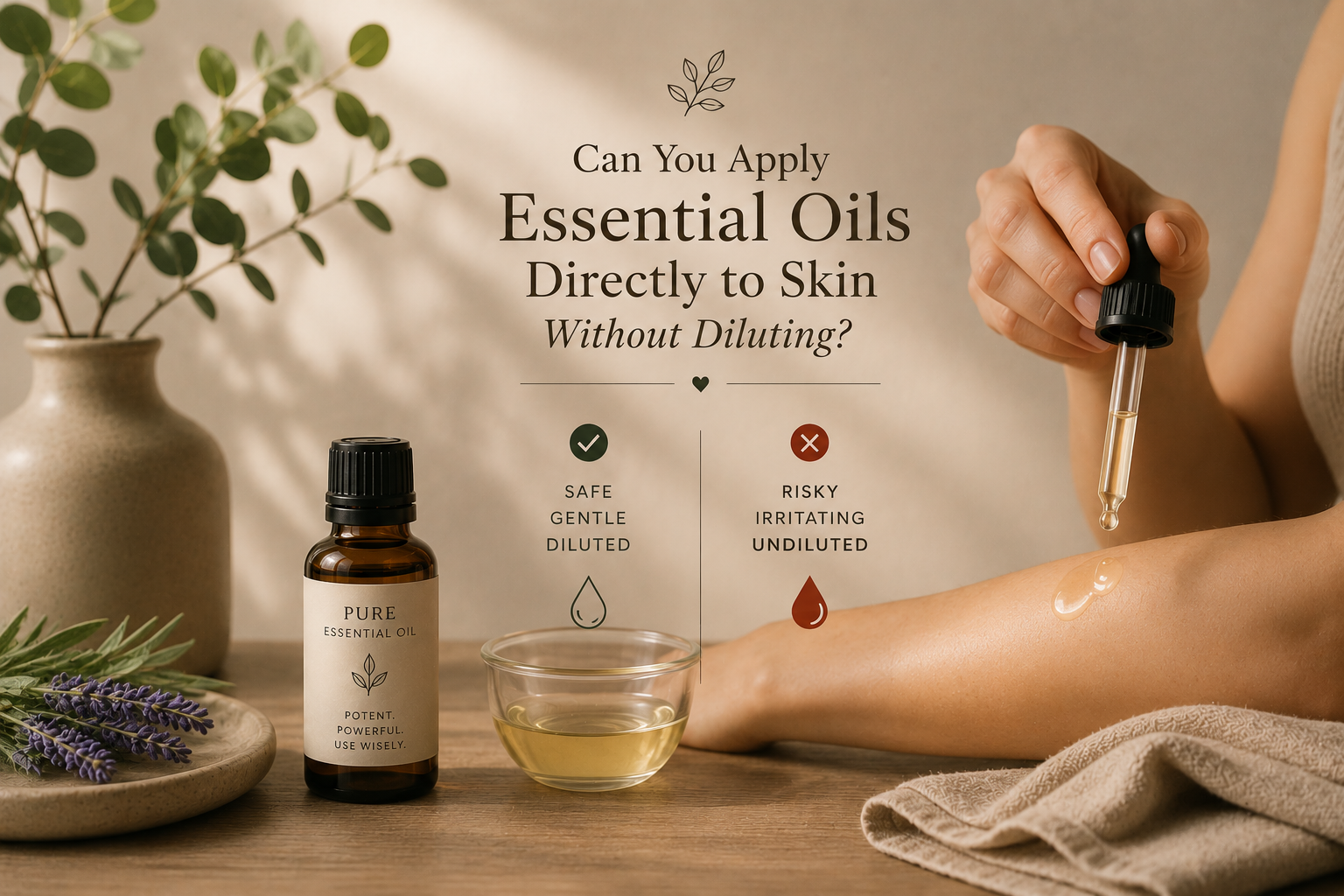
When I first started using essential oils, I assumed natural meant safe. I applied a drop of tea tree oil directly to my skin without thinking much about it.
It felt fine for a few minutes, then irritation slowly kicked in. That moment changed how I approached aromatherapy.
A very common question people ask is: can you apply essential oils directly to skin without diluting?
The short answer is no for most situations. But to really understand why, you need to look at how essential oils behave on the skin, their concentration levels, and how the body responds to direct exposure.
What Does “Applying Essential Oils Directly” Mean?
Neat Application and Undiluted Oils
Neat application means using undiluted oils directly on the skin without mixing them with a carrier oil. This exposes your skin to the oil at its full concentration and potency.
In aromatherapy, this is very different from standard topical application of essential oils, where dilution is used to control strength and reduce risk.
Why This Matters for Skin Safety
Essential oils are concentrated plant extracts. A single drop contains a high amount of active compounds. Without dilution, your skin receives this concentration all at once, which increases the chance of irritation or sensitivity.
Is It Safe to Apply Essential Oils Directly to Skin?
Clear Answer Based on Aromatherapy Safety Guidelines
Direct application is not considered safe for regular use. Most aromatherapy safety guidelines recommend essential oil dilution before any skin contact. You may also want to read organic vs regular essential oils.
This recommendation exists because undiluted oils increase dermal toxicity risk and can damage the skin barrier over time.
Why Undiluted Essential Oils Are Not Safe for Skin
High Concentration and Potency
Essential oils are highly concentrated. It takes a large amount of plant material to produce a small quantity of oil. This makes their concentration level extremely high compared to typical skincare products.
Because of this potency, even a small amount can overwhelm the skin.
Rapid Skin Absorption Rate
Essential oils have a lipophilic nature, which means they easily penetrate the skin. Their small molecular size allows rapid absorption into deeper layers.
When applied undiluted:
- Skin absorption speed increases
- Exposure becomes intense
- Dermal exposure effects become stronger
This is not always beneficial. Fast absorption without control can lead to irritation.
Lack of Controlled Dosage
Dilution ratios for skin exist to manage how much essential oil is applied. Without dilution:
- You apply an uncontrolled amount
- Safe dosage limits are exceeded
- Risk probability of adverse reactions increases
This is one of the biggest reasons why neat applications are discouraged.
What Happens When You Apply Essential Oils Without Dilution?
Immediate Skin Reaction
Undiluted oils can cause:
- Irritation
- Burning sensation
- Redness
- Rash
These reactions can appear quickly depending on the oil’s potency.
Delayed Reaction and Sensitisation
Not all reactions happen instantly. Some develop after repeated use.
Skin sensitisation risk increases when:
- Undiluted oils are used frequently
- Exposure duration is long
- Concentration remains high
Over time, the skin may become reactive even to small amounts.
What Are the Risks of Applying Essential Oils Without Dilution?
Skin Irritation and Chemical Burns
Undiluted oils are one of the most common causes of irritation in aromatherapy. Because of their high potency and concentration, they can disrupt the skin barrier almost instantly.
You may experience:
- Burning sensation
- Redness
- Itching
- Visible rash
Some oils are more aggressive due to their chemical profile. Oils rich in phenols and aldehydes tend to cause stronger reactions.
In extreme cases, this can lead to mild chemical burns, especially when applied repeatedly on the same area.
The irritation severity scale varies, but undiluted use always increases the intensity.
Skin Sensitisation Risk with Repeated Use
This is the most overlooked risk.
Skin sensitisation does not always happen on first use. Instead, it develops gradually:
- First few uses may feel normal
- Repeated exposure builds internal sensitivity
- Sudden reaction appears later
This process increases sensitisation frequency over time. Once it develops, even diluted blends can trigger irritation. For related tips, see how to dilute essential oils safely.
This is why safe essential oil usage focuses more on prevention than treatment. Related reading: the best essential oils for focus.
Phototoxic Reactions from Citrus Oils
Certain oils react with sunlight due to photoreactive compounds. These are called phototoxic essential oils.
When applied undiluted and exposed to UV light, they can cause:
- Severe burn
- Skin damage
- Long-lasting pigmentation
Common examples include:
- Lemon
- Bergamot
- Lime
The risk becomes much higher when these oils are used neat on exposed skin like face, neck, or arms.
Increased Dermal Toxicity from Overexposure
Dermal toxicity occurs when the skin absorbs more active compounds than it can handle safely.
With undiluted oils:
- Concentration remains very high
- Skin absorption rate is rapid
- Exposure duration often goes uncontrolled
This combination increases the risk probability of adverse reactions, especially with frequent use.
How Different Essential Oils Behave on Skin
Mild vs Strong Oils (Not All Oils Are Equal)
Essential oils do not behave the same way on skin.
Some are considered milder:
- Lavender
- Frankincense
Some are much stronger:
- Cinnamon
- Clove
- Oregano
This difference comes from their natural chemical compounds. Strong oils have higher irritation potential and should never be used without dilution.
Why “Gentle Oils” Can Still Cause Reactions
Even oils known for being gentle can cause issues.
This happens because:
- Individual skin sensitivity variation is different for everyone
- Skin condition changes over time
- Repeated use increases reaction risk
So even if an oil feels safe once, it does not guarantee long-term safety.
Impact of Purity and Extraction Method
Purity plays a major role in how oils affect the skin.
Therapeutic-grade vs non-therapeutic oils differ in:
- Chemical composition
- Presence of impurities
- Stability
Poor-quality oils may increase irritation due to unwanted compounds. At the same time, highly pure oils are more potent, which also increases risk when used undiluted.
Are There Any Situations Where You Can Apply Essential Oils Directly?
Limited Spot Application
There are rare cases where neat application is used in very controlled ways.
Examples include:
- Applying tea tree oil on a single acne spot
- Using lavender on a small insect bite
In these cases:
- Quantity is minimal
- Area is very small
- Usage is occasional
This is not the same as applying oils across larger skin areas.
Conditions That Must Be Met
Even in these limited cases, certain conditions reduce risk:
- Skin is not sensitive or damaged
- Exposure duration is short
- Usage frequency is low
Skipping these precautions increases the chance of irritation.
Why Even These Exceptions Are Not Risk-Free
These exceptions exist, but they are not completely safe.
Reasons include:
- Skin behaviour is unpredictable
- Reaction onset time can be delayed
- Sensitisation can still develop
This is why most aromatherapy safety guidelines still recommend dilution as the default practice.
Patch Testing Before Any Direct Application
Why Patch Testing Is Essential
A patch test helps you understand how your skin reacts before full application.
It reduces uncertainty and helps detect early signs of irritation or sensitivity.
How to Perform a Patch Test
- Apply a small amount of diluted or undiluted oil on inner arm
- Wait 24 hours
- Observe for redness, itching, or rash
Even when trying a neat application, patch testing is a non-negotiable step.
How to Use Essential Oils Safely on Skin
Why Essential Oil Dilution Is Non-Negotiable
After testing both methods, I can confidently say dilution changes everything. It does not reduce effectiveness. It makes the application safer and more consistent.
Essential oil dilution lowers concentration to a level your skin can handle. It reduces dermal toxicity while still allowing therapeutic benefits to work through controlled skin absorption rate.
Safe essential oil usage always starts with dilution, especially for regular topical use.
Role of Carrier Oils in Skin Safety
Carrier oils for essential oils act as a protective base. They dilute potency and create a balanced blend that supports skin health.
A good carrier oil:
- Slows down absorption
- Reduces irritation and sensitivity
- Helps spread the oil evenly
Common options include coconut oil, jojoba oil, and sweet almond oil. Each works differently depending on skin type, but all serve the same purpose: safe delivery.
Recommended Dilution Ratios for Skin
General Dilution Guidelines
Dilution ratios for skin depend on purpose and skin tolerance. To get the drop count right for your carrier oil, use our safe dilution calculator.
- 1% dilution for daily use and sensitive skin
- 2% dilution for general application
- 3% to 5% for short-term targeted use
These ratios help maintain safe dosage limits while still allowing effective topical application of essential oils.
Why These Ratios Matter
Using proper dilution:
- Controls concentration level
- Reduces risk probability of adverse reactions
- Keeps exposure duration within safe limits
Without these ratios, application becomes unpredictable and increases the chance of irritation or burn.
How to Create a Safe Essential Oil Blend
Simple Blending Method
Creating a safe blend does not require complex formulas.
- Add essential oil drops based on dilution ratio
- Mix with a suitable carrier oil
- Stir gently and store properly
This basic method ensures controlled potency and better skin compatibility.
Storage and Stability
Essential oils are sensitive to light and heat. Their high volatility affects stability over time.
To maintain quality:
- Store in dark glass bottles
- Keep away from sunlight
- Close lids tightly after use
Proper storage supports safe essential oil usage and prevents degradation.
Essential Oil Safety Precautions You Should Always Follow
Avoid High-Risk Areas
Never apply essential oils, diluted or undiluted, on:
- Eyes
- Inner nose
- Broken or damaged skin
These areas absorb faster and are more prone to irritation.
Adjust Usage Based on Skin Type
Skin type directly affects how oils behave.
- Sensitive skin needs lower dilution
- Oily skin may tolerate slightly higher levels
- Dry skin benefits from richer carrier oils
Understanding this helps reduce skin sensitisation risk.
Monitor Usage Frequency
Using essential oils daily increases exposure. Even diluted blends should be used with awareness.
Lower usage frequency reduces:
- Sensitisation frequency
- Long-term irritation risk
Consistency matters, but overuse creates problems.
Choose Quality Oils Carefully
Purity and extraction methods impact safety.
Therapeutic-grade vs non-therapeutic oils differ in composition. High-quality oils provide better results but still require dilution due to their potency.
Always check sourcing and quality before application.
Final Verdict
After working with essential oils and understanding their behaviour on skin, the conclusion is clear.
Applying undiluted oils directly to skin is not the safest approach. It increases the chances of irritation, sensitivity, and long-term skin reactions.
While rare exceptions exist for very limited use, they do not apply to regular skincare or aromatherapy routines.
Dilution remains the most reliable way to balance effectiveness and safety. It supports controlled absorption, reduces risk, and aligns with holistic aromatherapy practices.
If you want to build a safe and consistent routine, always prioritise proper dilution, patch testing, and mindful application.
For those looking to start or refine their aromatherapy journey, choosing high-quality, well-crafted blends makes a real difference.
Brands like Lume & Wick focus on thoughtful formulations that support safe and effective use, making it easier to enjoy the benefits of essential oils without unnecessary risk.