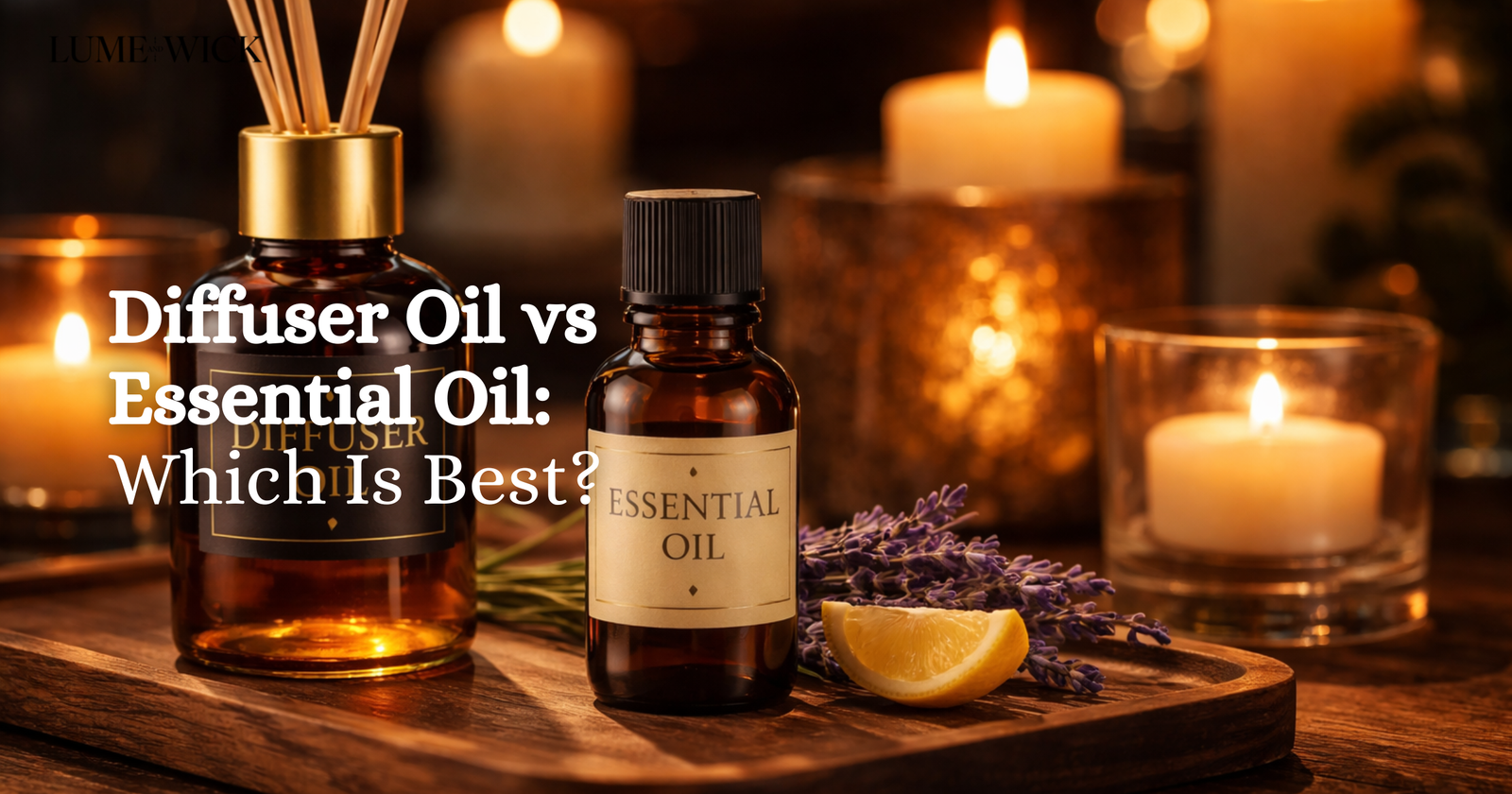
Walk into any home fragrance aisle or browse online, and you will quickly see terms like diffuser oil, essential oil, aroma oil, and fragrance oil used almost interchangeably. I used to think they were the same too. After testing both in different diffusers and environments, the difference became very clear.
In simple terms, diffuser oil and essential oil serve different purposes. One focuses on consistent home fragrance, while the other connects to natural plant extracts and aromatherapy benefits. Understanding this difference helps you choose the right oil for your space, your mood, and your lifestyle.
What Is Diffuser Oil?
Diffuser oil refers to oils specifically designed for home fragrance solutions. These oils are commonly known as synthetic fragrance oils, aroma oils, or scent oils. They are created to deliver a strong, stable, and long-lasting scent when used in various air diffusion methods.
From experience, diffuser oils perform best when your goal is to fill a room with a noticeable fragrance that lasts for hours without frequent reapplication.
Key Characteristics of Diffuser Oils
Diffuser oils stand out because of their engineered scent performance rather than natural origin:
- Often made from artificial scent formulations or blended compositions
- Designed for high scent longevity, sometimes lasting 6–12 hours depending on usage
- Offer a wide fragrance range, including complex profiles like vanilla cake, ocean breeze, or luxury hotel scents
- Provide consistent fragrance output across sessions
- Usually more cost-effective per ml compared to essential oils
These oils are built for scent dispersion mechanisms that prioritize intensity and coverage. In larger spaces, I noticed diffuser oils perform better because they maintain a steady fragrance without fading quickly.
How Diffuser Oils Are Made
Unlike botanical oils, diffuser oils are formulated using:
- Synthetic aromatic compounds
- Stabilizers to control evaporation rate
- Carrier components that improve absorption rate in air
This formulation ensures controlled diffusion, especially in ultrasonic diffuser compatibility setups and reed diffusers. Many are pre-diluted, which makes them easier to use without additional preparation.
What is an Essential Oil?
Essential oils are natural plant extracts obtained through botanical oil extraction methods such as steam distillation or cold pressing. These oils capture the true essence of plants, including their aroma and active compounds.
When I first used therapeutic-grade essential oils, the difference in scent felt more subtle but significantly more authentic. Instead of a strong artificial fragrance, the aroma felt closer to nature.
Key Characteristics of Essential Oils
Essential oils are valued for their purity and holistic properties:
- Derived from 100% plant-based sources such as leaves, flowers, bark, or roots
- Produced through steam-distilled oils or cold-pressed essential oils
- Known for high volatility and potency, meaning they evaporate faster
- Often used in holistic wellness applications, including relaxation and mood balance
- Limited to natural scent profiles such as lavender, citrus, or eucalyptus
Unlike fragrance oils, essential oils are not designed for long-lasting scent alone. Their value lies in therapeutic interaction with the body and mind.
Common Types of Essential Oils
Some widely used options include:
- Lavender for calming and sleep support
- Peppermint for focus and mental clarity
- Eucalyptus for respiratory benefits through inhalation therapy
- Lemon for uplifting and refreshing environments
These oils are often referred to as aromatherapy oils because of their connection to mood-enhancing scents and wellness routines.
Diffuser Oil vs Essential Oil: Key Differences
When comparing diffuser oil vs essential oil, the differences go beyond just scent. They involve composition, performance, safety, and purpose.
Source and Composition
- Diffuser oils come from synthetic fragrance oils or blends
- Essential oils originate from natural plant extracts
This creates a fundamental difference in oil purity vs fragrance blends. One is engineered, the other is naturally extracted.
Purpose and Usage
- Diffuser oil focuses on home scent and ambiance enhancement
- Essential oil supports aromatherapy vs home fragrance goals
If your goal is a luxury home scent, diffuser oil works better. If you want wellness-focused use, essential oil fits better.
Scent Strength and Longevity
- Diffuser oil offers strong scent throw and longer diffusion time
- Essential oil provides a milder, more natural aroma
In my testing, diffuser oils often lasted twice as long in the same setup due to their controlled evaporation rate.
Health and Therapeutic Benefits
- Diffuser oil does not guarantee wellness benefits
- Essential oils may support relaxation, stress relief, and mood balance
This is why essential oils are widely used in spa environments and wellness routines
Safety and Sensitivity
- Diffuser oils may contain volatile organic compounds (VOCs) depending on formulation
- Essential oils require carrier oil dilution when used on skin
Even natural oils are potent, so proper usage matters in both cases.
Can You Use Diffuser Oil and Essential Oil in the Same Diffuser?
This is one of the most common questions people ask when exploring best oils for diffuser use.
The answer depends on the oil diffusion technology and diffuser type.
Compatibility by Diffuser Type
- Ultrasonic diffuser compatibility: Both oils can work, as they mix with water and disperse through mist
- Reed diffusers: Typically designed for diffuser oils due to viscosity and stability
- Nebulizing diffuser oils: Best suited for pure essential oils without dilution
In practice, I found ultrasonic diffusers to be the most flexible option. They allow switching between oils depending on mood or purpose.
Which Is Better for You?
Choosing between diffuser oil vs essential oil depends on what you expect from your space. I learned this after testing both in different settings like bedroom, workspace, and living area. The right choice becomes obvious when you define your goal clearly.
Choose Diffuser Oil If You Want Strong Home Fragrance
If your focus is consistent indoor scent and ambiance, diffuser oils perform better.
- You want diffuser oil for home scent that fills large rooms
- You prefer strong intensity level with steady scent throw
- You need longer scent longevity, often lasting several hours per session
- You like creative fragrance profiles beyond natural limits
Diffuser oils work well in environments where scent acts as part of interior design. Hotels, showrooms, and retail spaces often rely on these oils because they provide predictable fragrance performance and better diffusion coverage area.
Choose Essential Oil If You Prefer Natural and Wellness-Focused Use
If your goal connects to aromatherapy oils and personal well-being, essential oils are the better option.
- You want essential oil for health benefits and mood support
- You prefer natural plant extracts over synthetic vs natural oils debate
- You value purity level and plant origin
- You are comfortable using 5–10 drops per session with water-based diffusers
Essential oils are ideal for routines like relaxation, meditation, or improving focus. In my experience, using lavender or eucalyptus in the evening created a calmer environment compared to synthetic scents.
Pros and Cons of Diffuser Oils and Essential Oils
Understanding advantages and limitations helps avoid unrealistic expectations.
Diffuser Oil Pros and Cons
Pros:
- Strong fragrance with high absorption rate in air
- Long-lasting scent due to controlled evaporation rate
- Affordable with lower cost per ml
- Stable shelf life, often lasting years when stored properly
Cons:
- May include synthetic compounds or artificial scent formulations
- Limited connection to holistic wellness applications
- Some blends may contain VOCs depending on formulation
Essential Oil Pros and Cons
Pros:
- Derived from 100% plant-based sources
- Supports mood-enhancing scents and aromatherapy routines
- Suitable for wellness-focused environments
- Free from artificial fragrance when pure
Cons:
- Higher cost due to botanical oil extraction complexity
- Shorter scent duration because of natural volatility
- Sensitive to light and heat, affecting shelf life stability
- Requires careful usage, especially when considering oil concentration percentage
Are Diffuser Oils Safe Compared to Essential Oils?
Safety is a major concern when comparing essential oil vs fragrance oil for diffuser use. Both types are safe when used correctly, but risks differ based on composition.
Safety Considerations for Diffuser Oils
Diffuser oils are generally safe for air diffusion, but their composition matters.
- Some formulations may contain volatile organic compounds (VOCs)
- Lower-quality oils may trigger sensitivity in enclosed spaces
- Always check diffuser oil ingredients and manufacturer transparency
High-quality diffuser oils are designed for controlled scent dispersion mechanisms, which reduces risks when used properly.
Safety Considerations for Essential Oils
Essential oils are natural, but that does not mean risk-free.
- High potency means improper use can cause irritation
- Some oils are not suitable around pets or infants
- Direct skin application requires carrier oil dilution
Purity also matters. Learning how to perform a basic essential oil purity test helps avoid diluted or adulterated products.
From personal use, moderation makes the biggest difference. Using the right number of drops and proper ventilation ensures both oil types remain safe.
Practical Usage of Diffuser Oils and Essential Oils
Optimizing your experience depends on how you use the oil, not just what you choose.
For diffuser oils:
- Use them in larger rooms where coverage area matters
- Ideal for continuous fragrance throughout the day
- Works best in reed and ultrasonic diffusers
For essential oils:
- Use fewer drops to control intensity and volatility
- Best for short sessions focused on mood or relaxation
- Store bottles in a cool, dark place to maintain quality
In my routine, I often switch between the two. During work hours, I use a mild essential oil for clarity. In the evening, I switch to a richer diffuser oil for a cozy atmosphere.
Final Thoughts
Understanding the difference between fragrance oil and essential oil helps you make smarter choices for your space. Both types of oils play a role in modern home fragrance solutions, whether you aim for aesthetic ambiance or personal well-being.
If you want a balanced approach, keep both in your collection. Use diffuser oil for home scent coverage and switch to therapeutic-grade essential oils when you need calm, clarity, or relaxation.
For those looking to elevate their environment with carefully crafted fragrances, exploring premium options from Lume & Wick can be a great starting point. Their focus on quality and scent experience aligns well with both everyday use and refined home ambiance.
Frequently Asked Questions
Is diffuser oil the same as essential oil?
No. Diffuser oils are typically synthetic fragrance oils or blends, while essential oils are natural plant extracts obtained through distillation or pressing. They differ in composition, purpose, and benefits.
Can you use essential oils in a diffuser?
Yes. Most ultrasonic diffusers support essential oils mixed with water. They disperse fine mist that carries the aroma into the air. However, nebulizing diffusers require pure essential oils without dilution.
Which lasts longer in a diffuser?
Diffuser oils usually last longer due to controlled evaporation rate and stable formulation. Essential oils evaporate faster because of their natural volatility and lower molecular stability.
Are essential oils safer than fragrance oils?
Safety depends on usage and quality. Essential oils are natural but highly concentrated. Diffuser oils may contain synthetic components. Both are safe when used correctly, with proper ventilation and recommended dosage.
What is the best oil for home fragrance?
For strong and consistent scent, diffuser oils perform better. For a natural and subtle aroma with added wellness value, essential oils are the better choice. The best option depends on your goal.