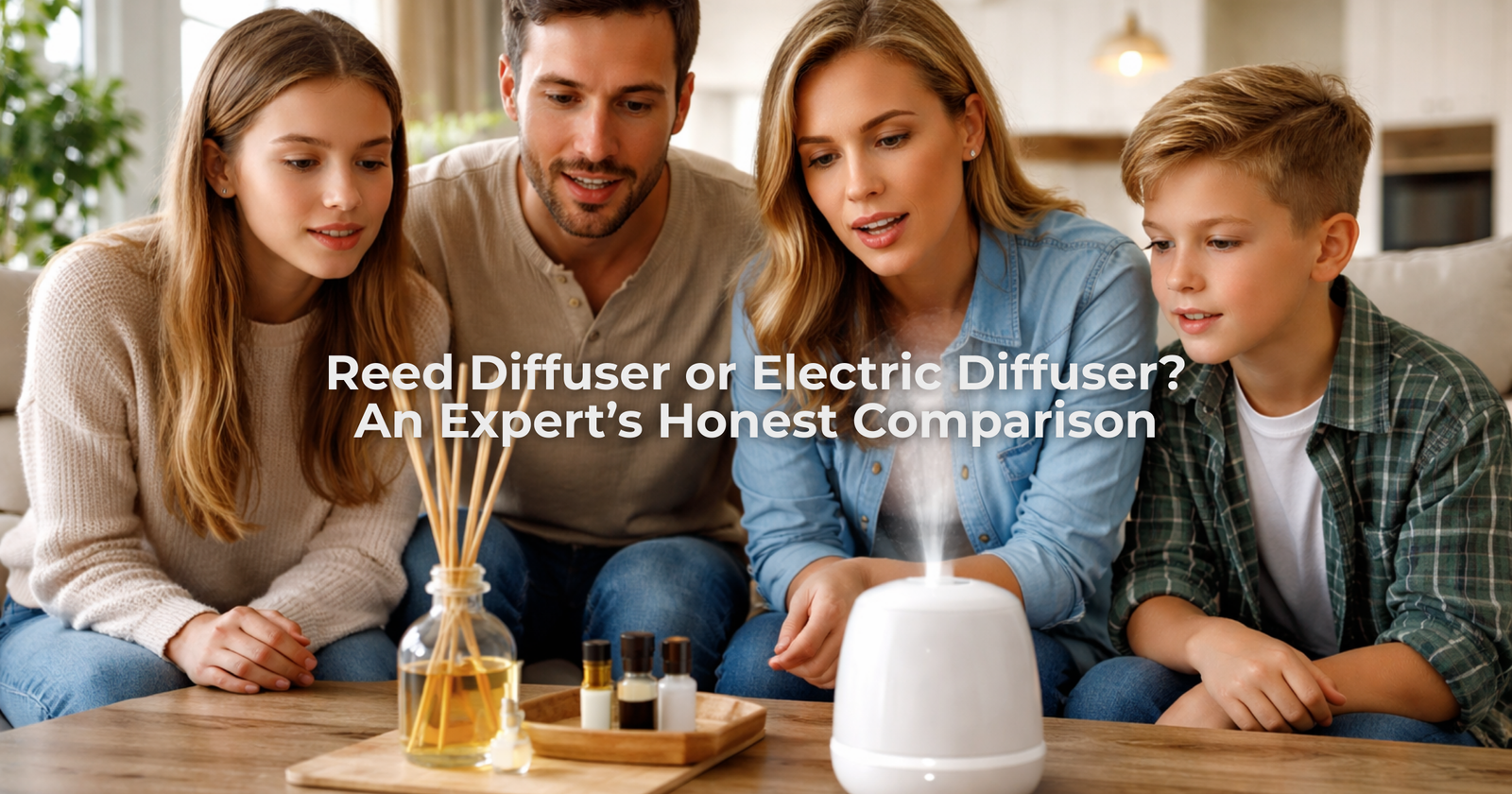
When clients ask me about reed diffuser vs electric diffuser, they usually feel overwhelmed by options. Both promise beautiful scent.
Both claim convenience. Yet performance, control, cost, and long term value differ significantly.
After testing multiple home scent diffuser setups across apartments, villas, studio offices, and bedrooms, I have learned one thing.
Choosing the right fragrance diffusion system depends less on trends and more on how you live.
Some people want energy-free air freshening that works quietly in the background. Others prefer an aroma diffuser machine with timer settings and stronger projection.
This diffuser comparison will help you decide clearly, without marketing noise.
What Is a Reed Diffuser?
A reed oil diffuser is a passive diffuser that provides continuous fragrance release without electricity. It consists of a glass oil bottle filled with fragrance oils or essential oils mixed with a carrier oil base.
Bamboo reeds or rattan reeds absorb the liquid through capillary action and release aroma molecules into the air through the natural evaporation process.
This essential oil dispersion method depends on oil evaporation rate and air circulation. It requires no power adapter, produces no mist, and operates silently.
Because there are no moving parts, reed diffuser maintenance is minimal. You only replace the oil and reeds when needed.
It works best in small to medium room size square footage coverage where subtle fragrance intensity is preferred.
What Is an Electric Diffuser?
An electric aroma diffuser is an active diffuser that uses power to disperse fragrance. It functions as an essential oil diffuser device through mechanical or thermal methods.
Common aromatherapy diffuser types include:
- Ultrasonic diffuser using ultrasonic technology and water-based diffusion to create mist
- Nebulizing diffuser that disperses pure oil for higher scent projection
- Heat diffuser that warms oil to accelerate diffusion
- Ceramic diffuser with integrated heating element
- Plug-in aroma diffuser that connects to a wall outlet
Unlike passive systems, electric models provide adjustable scent intensity and intermittent diffusion mode.
Many include timer functionality, LED ambient lighting, auto shut-off feature, or child-lock function.
Electric systems enhance ambiance with stronger scent throw strength and wider room coverage, but they require cleaning to prevent oil residue buildup, especially when using oils containing volatile organic compounds.
Reed Diffuser And Electric Diffuser Comparison
As someone who has tested both formats across bedrooms, studio spaces, and open living rooms, I focus on how each fragrance diffusion system behaves under real conditions.
1. How They Work
A reed oil diffuser operates through passive evaporation. The system includes a glass oil bottle filled with fragrance oils or essential oils blended in a carrier oil base.
Bamboo reeds or rattan reeds absorb liquid through capillary action. The evaporation process then releases aroma molecules into air gradually. This scent delivery method does not rely on heat, fan, or vibration. It functions as a true passive diffuser.
An electric aroma diffuser represents active diffusion. It requires a power source and uses mechanical force to disperse fragrance. In a reed vs ultrasonic diffuser comparison, the difference becomes clear.
An ultrasonic essential oil diffuser device uses ultrasonic technology to create microscopic mist particles from water-based diffusion.
That mist carries scent throughout the room. Other electric formats such as nebulizing diffuser systems push pure oil into air, while heat diffuser models warm oil to accelerate dispersion.
2. Scent Strength & Coverage Area
Scent throw remains one of the biggest decision factors in any oil diffuser comparison.
A reed stick diffuser produces subtle scent diffusion. Fragrance intensity stays moderate and steady. Because it relies on continuous evaporation, the output feels soft rather than bold. This works well in small bedrooms, study areas, or compact living spaces where overpowering aroma becomes uncomfortable.
Electric systems provide stronger fragrance intensity. An electric oil vaporizer can fill a larger room quickly because mist or vapor output spreads more efficiently. Adjustable intensity settings allow users to increase or reduce projection depending on occasion. This controlled diffusion differs significantly from the continuous fragrance release of a reed diffuser.
For room coverage, passive systems suit small to medium room size square footage coverage. Active systems function better as diffuser for large rooms where airflow and open layout demand stronger dispersion.
From personal testing, I noticed that reed diffusion creates an elegant background scent. Electric systems create a noticeable aromatic presence. The right choice depends on how prominent you want the fragrance to feel.
3. Maintenance & Cleaning
Maintenance often determines long term satisfaction more than scent performance.
Reed diffuser maintenance remains simple. Flip oil fragrance sticks every few days to refresh scent output. Replace liquid when bottle empties.
Clean the glass oil bottle occasionally to prevent oil residue buildup. Because there is no water-based diffusion, you do not deal with internal mechanical parts.
Electric aroma diffuser units require more routine care. Ultrasonic models use water mixed with essential oils. That reservoir must be cleaned regularly to prevent residue buildup from oil particles.
Neglect can reduce mist efficiency and affect indoor air quality over time. Nebulizing diffuser systems also require periodic cleaning of internal components to maintain performance.
In daily practice, passive diffusers demand minimal attention. Active diffusers reward consistent cleaning with better scent delivery.
4. Cost Comparison
Cost structure varies beyond initial purchase.
A reed oil diffuser has lower upfront investment. You buy the bottle and oil. Ongoing expense involves fragrance refill cost. Since no electricity required, operating cost remains limited to oil replacement. Oil evaporation rate influences how frequently refills become necessary.
An electric aroma diffuser involves higher initial cost due to internal components and power adapter.
Operating expense includes electricity usage, though energy consumption stays modest. Ongoing oil refill cost depends on how often you run the device and at what intensity.
In plug-in diffuser vs reed cost comparison, plug-in systems require refill cartridges that may cost more per unit compared to bulk oil refills used in reed diffusers. However, adjustable scent intensity and timer functionality can extend usage when managed wisely.
From practical experience, passive systems offer predictable expense. Active systems offer flexibility that may justify slightly higher long term investment.
5. Safety & Convenience
Both diffuser types qualify as flameless fragrance option, which already improves safety compared to candles.
A reed oil diffuser operates without heat and without power. That makes it suitable for continuous unattended use.
There are no cords, no internal electronics, and no mechanical parts. For child safety and pet safety, placement remains the primary consideration rather than electrical risk.
Electric systems require power source but often include built-in safeguards. Many models feature auto shut-off feature when water level runs low. Some advanced units include child-lock function or smart app control for remote management.
In everyday use, passive systems feel effortless because they function silently and continuously. Active systems provide convenience through programmable cycles but depend on electricity.
Choice here depends on whether you value energy-free air freshening or controlled automation.
6. Aesthetic & Design Appeal
Design plays a subtle yet important role in selecting a home scent diffuser.
A reed stick diffuser often appears as decorative home décor accessory. The glass oil bottle and exposed reeds create minimalist visual appeal. It blends naturally into shelves, bedside tables, and console displays.
An electric aroma diffuser presents a more modern look. Some resemble sculptural ceramic diffuser pieces, while others emphasize functionality. LED ambient lighting adds visual mood, especially in bedrooms.
In visual terms, reed diffusers feel organic and understated. Electric systems feel contemporary and technical. Both enhance ambiance, but each complements different interior styles.
When to Choose a Reed Diffuser?
Choose a reed oil diffuser when you want fragrance that works quietly in the background without constant adjustment.
This passive diffuser relies on natural evaporation process and capillary action rather than powered dispersion, which makes it ideal for certain lifestyles.
A reed stick diffuser is the right choice if:
- You prefer low-maintenance fragrance with minimal interaction
- You want no electricity required and no power adapter involved
- Your space is small to medium room size, such as bedrooms or study areas
- You enjoy subtle fragrance intensity instead of bold projection
- You value continuous fragrance release without programming
- You want energy-free air freshening that operates silently
In my experience, reed systems perform best in calm spaces where consistent scent matters more than control.
They suit readers, remote workers, and anyone sensitive to fluctuating fragrance levels.
Because there is no mechanical output, the scent delivery method feels natural and stable rather than dynamic.
If decorative appeal and simplicity outweigh customization, passive diffusion aligns well.
When to Choose an Electric Diffuser?
Choose an electric aroma diffuser when performance, projection, and control matter more than simplicity.
An active diffuser uses powered dispersion through ultrasonic technology, heat activation, or pressurized airflow to distribute scent more aggressively.
An electric oil diffuser is better suited if:
- You want strong scent throw strength that fills open areas
- You need adjustable intensity settings for different occasions
- Your space requires larger room coverage, such as living rooms
- You prefer controlled diffusion instead of continuous output
- You want features like timer functionality or intermittent cycles
- You appreciate smart app control or home automation compatibility
From practical testing in larger layouts, active diffusion maintains noticeable fragrance even when air circulation is high.
Ultrasonic models, which operate through water-based diffusion, also function as humidifying diffuser units in dry environments.
If flexibility, projection power, and customization define your expectations, an electric aroma diffuser delivers more control over how scent behaves throughout the day.
Final Verdict
Choose based on space, strength, maintenance, and budget.
Pick a reed oil diffuser if you want subtle fragrance intensity, continuous fragrance release, no electricity required, and minimal upkeep. It works best in small to medium rooms where passive diffusion feels calm and consistent.
Pick an electric aroma diffuser if you need stronger scent throw strength, adjustable intensity settings, and wider room coverage. It suits larger areas and users who prefer controlled diffusion with timer functionality or smart features.
There is no universal winner. The right choice depends on how you use your space and how noticeable you want the scent to be.
If you invest in either format, pair it with high-quality blends. Well-crafted formulations from Lume & Wick perform better in both passive and active systems and create a cleaner, more refined fragrance experience.
Frequently Asked Questions
How long does a reed diffuser last compared to an electric diffuser?
A 100 ml reed diffuser typically lasts between 4 and 8 weeks depending on room temperature and airflow. An ultrasonic electric diffuser using moderate daily settings can stretch the same oil volume to around 6 to 10 weeks.
Does climate affect diffuser performance?
Yes, temperatures above 28°C can increase reed diffuser evaporation by up to 30 percent, while cooler rooms below 22°C slow diffusion noticeably. High humidity above 70 percent can also reduce scent dispersion efficiency in ultrasonic mist systems.
Which diffuser works better for a 300–400 sq ft room?
An electric diffuser rated for 400 to 600 sq ft coverage performs better in that size range. A single reed diffuser effectively covers only about 100 to 200 sq ft, so multiple units would be required.
Is it safe to leave a diffuser on overnight?
A reed diffuser is safe for continuous unattended use because it requires no power or heat. An electric diffuser is safe overnight only if it includes an automatic shut-off feature when water runs low.
Which type uses more oil in a month?
A nebulizing electric diffuser typically consumes 30 to 50 ml of oil per month at moderate use. An ultrasonic diffuser averages 10 to 20 ml monthly, while a 100 ml reed diffuser usually empties within 30 to 60 days.