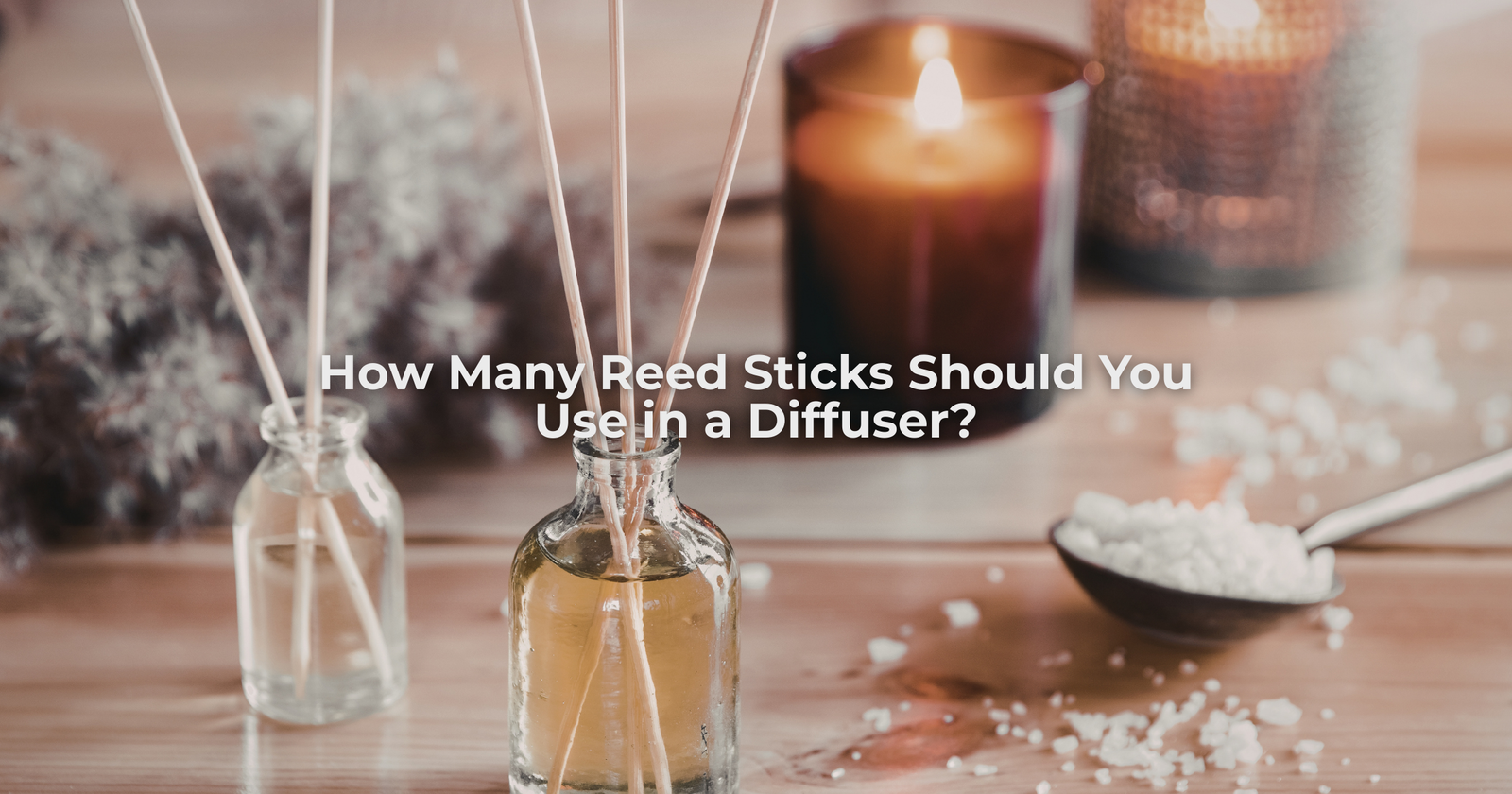
A reed diffuser is one of the simplest ways to keep a home smelling fresh throughout the day. Unlike candles or electric aroma diffusers, this system works continuously without heat or power. A glass diffuser bottle filled with fragrance oil holds a bundle of aroma sticks that slowly release scent into the air. Many people buy a diffuser expecting instant fragrance, then feel confused when the scent feels weak or disappears after a few days.
I experienced this during my early experiments with home fragrance. I placed a scented oil diffuser in my study and used every stick that came with the kit. The fragrance smelled strong at first but the oil level dropped quickly. When I reduced the sticks, the scent became softer but lasted much longer. That experience taught me an important lesson. The number of reeds in diffuser plays the biggest role in controlling fragrance intensity.
Understanding how reed diffusers work and how to adjust the diffuser stick quantity helps you maintain the right balance between scent strength and oil longevity.
How Reed Diffusers Work?
A reed diffuser relies on a natural physical process rather than heat or electricity. The bottle contains perfume-grade fragrance oil or essential oil blends. When bamboo reeds or fiber aroma sticks are placed into the liquid, they begin soaking fragrance oil through microscopic channels inside the material. For related tips, see ultrasonic vs electric diffusers.
This process occurs through capillary action in reeds. The tiny pores pull oil upward from the bottle toward the exposed top of each stick. Once the oil reaches the upper surface, fragrance oil evaporation begins. The scent molecules disperse slowly into the surrounding air and create steady room fragrance diffusion.
Several physical characteristics influence this system. Reed porosity, reed diameter, and the diffuser bottle opening size affect how easily oil moves upward. The reed saturation time also matters. Newly inserted sticks often require several hours before fragrance becomes noticeable because the internal channels must fill with oil first.
As the oil travels upward, it creates a gentle diffuser scent distribution across the room. Each stick acts as a small fragrance pathway. More sticks increase the evaporation surface and allow faster reed diffuser oil flow. This produces a stronger scent throw but also increases the evaporation rate of the oil.
Because of this mechanism, adjusting the number of sticks becomes the easiest method for reed diffuser strength control.
How Many Reed Sticks Should You Use in a Diffuser?
Most scent diffuser kits include between six and ten reeds. Many people assume that all sticks should be used at once. In reality, the ideal number of diffuser sticks depends on how strong you want the fragrance to be.
A practical starting point is four to six reeds. This range provides balanced fragrance output in most living spaces while keeping the oil from evaporating too quickly. After the reeds absorb oil and reach full saturation, the diffuser begins steady diffuser fragrance diffusion.
If the scent feels too light, you can increase the reed diffuser stick count gradually. Adding one or two more sticks increases evaporation surface area and improves reed diffuser scent throw. The fragrance spreads farther across the room and becomes easier to notice.
On the other hand, using all available sticks often produces excessive fragrance intensity. The oil evaporates faster and the diffuser may empty much sooner than expected. In many homes this results in strong aroma during the first week followed by rapid oil depletion.
The best approach is simple experimentation. Start with fewer sticks, allow them to saturate, then adjust the number of reeds in diffuser until you achieve comfortable scent strength.
Factors That Affect the Number of Reeds You Should Use
Several environmental and product characteristics influence the correct diffuser stick arrangement. Understanding these factors helps you build an optimal reed diffuser setup.
Room Size
Room size has a strong impact on room fragrance diffusion. A compact bathroom or entryway needs only three to four reeds because the scent concentrates easily in a smaller air volume. Large spaces such as living rooms require more sticks to extend the scent throw radius and achieve even diffuser scent distribution.
Diffuser Bottle Size
The diffuser bottle size and bottle opening also influence fragrance output. A small decorative diffuser vessel with a narrow neck limits airflow around the reeds. This slows evaporation and may require fewer sticks. Larger bottles allow better reed bundle airflow dynamics, which supports stronger scent diffusion when more reeds are used.
Type of Fragrance Oil
The chemical composition of the oil also affects performance. Some essential oils and perfume oils contain lighter molecules with higher volatility. These spread quickly through the air. Heavier fragrance blends contain thicker compounds with higher viscosity and diffuse more slowly. Oils with lower viscosity often create faster diffusion speed, while dense oils may require additional sticks to improve fragrance movement.
Signs You Are Using Too Many or Too Few Reed Sticks
Adjusting the correct reed stick usage guide becomes easier when you recognize common warning signs.
Too many reeds usually cause rapid oil loss. The oil level in bottle drops quickly because multiple sticks increase the evaporation rate. The scent may feel overpowering in a small room and shorten overall diffuser longevity management.
Too few reeds create the opposite problem. Fragrance remains close to the bottle and the room smells almost unchanged. Weak diffuser fragrance intensity often indicates that the evaporation surface is too small to support effective scent diffusion.
Balancing the oil-to-reed ratio helps maintain stable reed diffuser performance without wasting fragrance oil.
Why Your Reed Diffuser Is Not Smelling?
Many people search for solutions when their reed diffuser not smelling properly. In most cases the issue relates to poor oil flow or clogged reeds.
Over time, fragrance oils can leave residue that blocks the microscopic pores inside the sticks. This phenomenon is often called reed clogging from fragrance oils. When this happens the internal channels stop carrying oil upward and scent diffusion slows dramatically.
Environmental conditions also influence performance. Limited air movement reduces diffuser scent distribution because fragrance molecules remain near the bottle. High humidity or cool temperature can slow evaporation while warm conditions increase it. Another factor is diffuser oil oxidation over time, which weakens fragrance strength as oils age.
Replacing the reeds or adjusting the number of diffuser reeds often restores proper fragrance output.
How to Adjust Reed Diffuser Scent Strength?
Fine tuning fragrance intensity requires only a few simple adjustments. The most effective method involves adjusting diffuser scent strength by modifying the number of sticks. Adding reeds increases evaporation while removing reeds softens the scent.
Another useful method is the reed flipping technique. By turning the sticks upside down, the oil-saturated end becomes exposed to the air and releases fresh fragrance. This creates a temporary reed flipping fragrance boost and refreshes the aroma.
Positioning the diffuser also matters. Placing the bottle where gentle airflow exists improves room fragrance diffusion and supports consistent scent distribution.
Final Thoughts
The best answer to how many reeds in diffuser depends on balance. Start with four to six sticks, allow them to absorb oil, and adjust gradually until the fragrance feels comfortable. This method prevents excessive evaporation while maintaining pleasant home aroma decor throughout the room.
Choosing a well-crafted diffuser also improves overall performance. High quality fragrance oils and well designed reeds produce cleaner scent diffusion. If you are exploring new home fragrance options, the curated collections from Lume & Wick offer beautifully balanced diffuser blends designed for consistent aroma and long lasting scent.