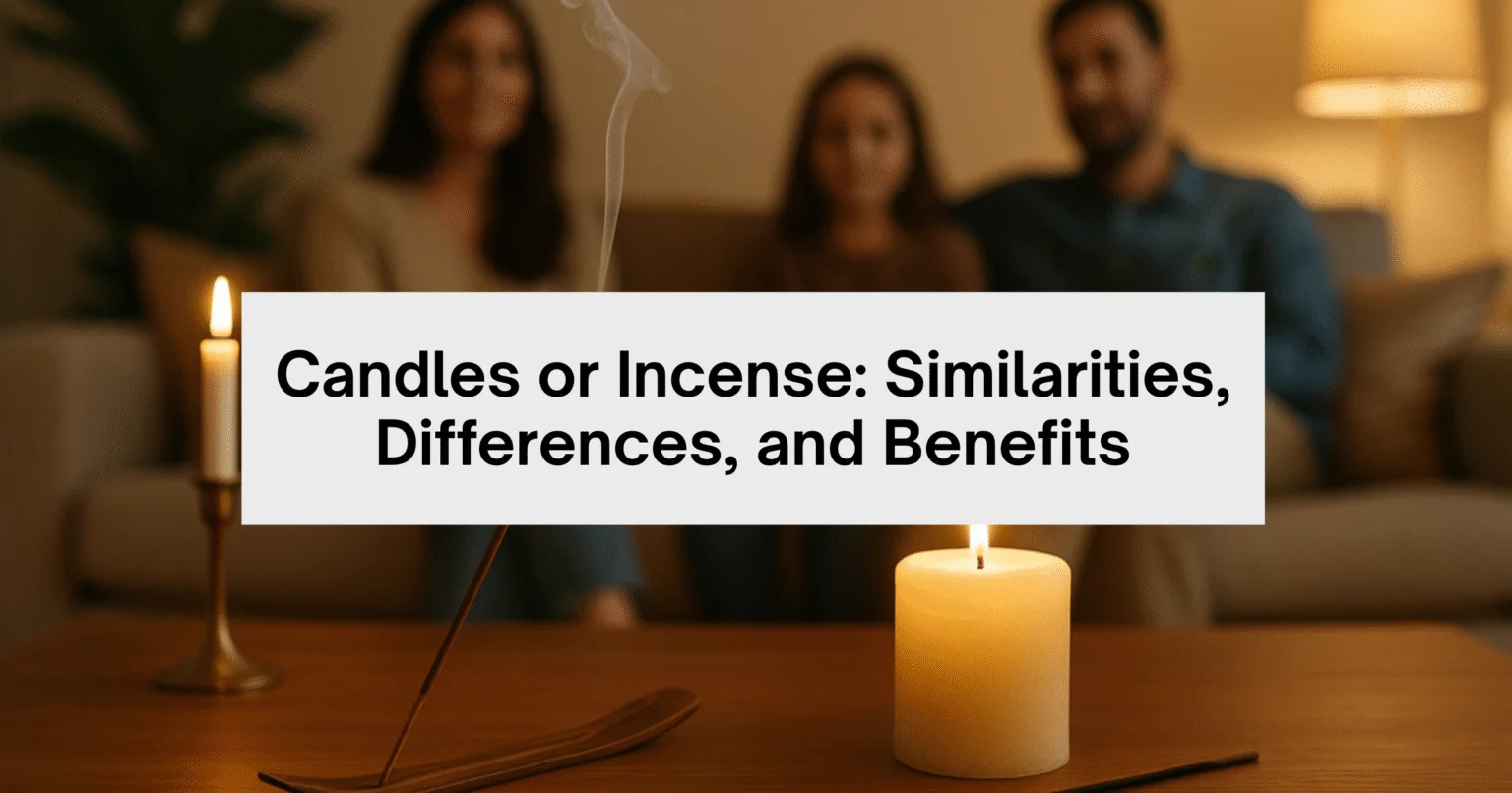
When I walk into a room filled with fragrance—whether it’s the soft curl of incense smoke or the warm glow of a candle—the mood instantly changes.
Both incense and candles have been part of my life in different ways. Candles are my go-to for cozy evenings, reading sessions, and adding atmosphere when friends are over.
Incense, on the other hand, has been something I’ve turned to during meditation, relaxation, or when I wanted a fragrance to linger for hours.
The debate of incense vs candle isn’t just about which smells better. It’s about culture, ambience, wellness, and even health.
People often wonder: Which is more relaxing? Which is safer for indoor air quality? Which works best for meditation or setting a romantic mood?
In this article, we’ll explore these questions with both history and modern lifestyle in mind.
Incense is a blend of aromatic materials—resins, herbs, spices, woods, and oils—that release fragrance when burned.
The term comes from Latin incensum, meaning “that which is burned.” It has been used for centuries in Egyptian temples, Roman rituals, and Christian ceremonies, often symbolizing purification and prayer.
Types of Incense
Most incense is made by grinding plant materials and resins into powder, mixing them with a natural binder, and shaping them into sticks or cones.
Essential oils may be added for fragrance. To use incense, it’s lit until the tip glows, then gently blown out to let it smolder.
The smoke carries the aroma while the ash collects in a holder.
In modern Western culture, incense is strongly associated with mindfulness, spirituality, and relaxation.
Many people use it to deepen meditation, set intentions, or simply create an atmosphere that feels calming and reflective.
A candle is a wax cylinder with a central wick that, when lit, provides both light and fragrance.
The word comes from Latin candēla, meaning “to shine or glow.” Candles date back to Ancient Rome and medieval Europe, once serving as a primary light source but now valued mainly for ambience, design, and scent.
Candles are usually made from paraffin, soy, beeswax, or palm wax. A wick runs through the center, drawing melted wax upward to fuel the flame.
Cleaner-burning varieties use soy or beeswax, while paraffin is cheaper but less eco-friendly. To use, you simply light the wick—no extra tools required.
Candles are more than scent—they create ambience, intimacy, and symbolism.
From candlelit dinners to church services, their glow transforms spaces in ways incense cannot, combining atmosphere with fragrance and light.
Despite their differences, incense and candles share a surprising number of qualities. Both are designed to transform atmosphere—they change not just the way a space smells, but also how it feels.
One similarity I’ve noticed is how both work to enhance mood. Incense smoke can create a meditative vibe that feels grounding, while a flickering candle flame adds warmth and intimacy.
Both are often used in relaxation practices, rituals, and spiritual settings.
They also share some practical attributes. Both are relatively inexpensive, easy to find in home goods stores, and simple to use.
And whether you’re using incense in a yoga studio or candles during a bath, the end goal is often the same: creating a space that feels calm, intentional, and inviting.
Incense tends to produce a stronger, more immediate aroma. Light a stick of sandalwood or frankincense, and the entire room smells different within minutes.
Candles last for longer, especially scented jar varieties, diffuse fragrance more slowly and gently. They’re better for a subtle, long-lasting scent that doesn’t overwhelm.
One of the biggest differences is smoke. Incense always produces visible smoke, which carries its fragrance.
While many people enjoy this, those sensitive to smoke or prone to allergies might find it irritating.
Candles can burn much cleaner—especially soy or beeswax versions—though paraffin candles may emit small amounts of soot.
Culturally, incense leans toward ritual, meditation, and spiritual symbolism. It’s still commonly used in Western churches and in modern mindfulness practices.
Candles, by contrast, are associated with ambience, coziness, and decor. From dinner tables to bath time rituals, candles are more often tied to everyday lifestyle than spirituality.
Another clear distinction is light. Incense contributes fragrance but no illumination.
Candles, even unscented ones, bring both glow and atmosphere, making them versatile for settings where lighting matters as much as scent.
Incense delivers a powerful and lingering fragrance that can transform the atmosphere of a room within minutes.
Unlike many air fresheners, its scent often clings to fabrics and surfaces, making the aroma last even after it stops burning.
It is also deeply tied to spiritual and ritual traditions. From the use of frankincense in Christian ceremonies to incense sticks in meditation and mindfulness practices, the act of lighting incense carries symbolic meaning beyond fragrance.
Another advantage is its affordability and variety. Sticks, cones, and resins come in countless scents—from sandalwood and lavender to frankincense and myrrh—allowing users to experiment without high cost.
It’s also compact and easy to store, requiring little more than a simple holder.
Candles provide a unique blend of fragrance and illumination. A single candle can scent a room while also adding warmth through its soft, flickering glow.
This dual effect makes candles as much about mood and visual ambience as about aroma.
They also play a key role in home decor and style. With endless designs—from minimalist jar candles to ornate tapers—candles can complement interior design while serving a functional purpose.
For those concerned about air quality, cleaner-burning options like soy, coconut, or beeswax candles are widely available.
These alternatives appeal to eco-conscious users and people sensitive to smoke, making candles versatile for both relaxation and wellness.
Incense does come with caveats. It produces smoke and ash, which may affect indoor air quality if used frequently in poorly ventilated rooms.
Some incense blends can also feel overpowering or artificial, particularly cheaper varieties that rely heavily on synthetic fragrance oils.
Candles, while visually appealing, tend to be more expensive per use than incense. Cheaper paraffin candles may emit soot and chemicals, raising environmental and health concerns.
Additionally, their fragrance throw—how strongly the scent spreads—can be lighter and more subtle compared to incense.
If your main purpose is meditation, prayer, or spiritual focus, incense often works better.
Its strong fragrance, ritualistic smoke, and deep cultural associations create an atmosphere of mindfulness and reflection.
For ambience and aesthetics, candles win. A candlelit dinner, a relaxing bath with jar candles, or a reading corner lit by soft glow all highlight how candles can transform a room’s energy in ways incense can’t.
Both can be used for aromatherapy, but the choice depends on sensitivity. If you’re smoke-sensitive, go with soy or beeswax candles.
If you want a more intense and immediate fragrance, incense is the stronger option.
Incense is generally cheaper per use and requires only a small holder. Candles, while more expensive, often last longer and double as decor.
It really comes down to whether you want practicality (incense) or a mix of fragrance and design (candles).
Both incense and candles affect indoor air. Incense produces smoke with fine particles that may bother sensitive lungs if used heavily in unventilated spaces.
Candles vary—paraffin can release soot and chemicals, while soy, coconut, and beeswax burn cleaner. Trimming wicks helps reduce smoke.
Quality matters. Natural incense made from resins, herbs, and oils is gentler than versions with artificial fillers.
The same goes for candles—those scented with essential oils often feel fresher than synthetic fragrance oils. From personal use, I’ve found soy candles noticeably cleaner than paraffin ones.
Sustainable choices include soy and beeswax candles, bamboo-core incense sticks, and responsibly harvested resins.
For a smoke-free option, essential oil diffusers or wax melts provide aroma without combustion.
When it comes to incense vs candles, there’s no one-size-fits-all answer. Both have unique strengths, and the choice depends on your needs.
In the end, the question isn’t which is better, but which is better for you in the moment.
Whether you light incense or candles, both have the power to shift mood, elevate space, and create experiences that linger long after the flame or smoke has faded.