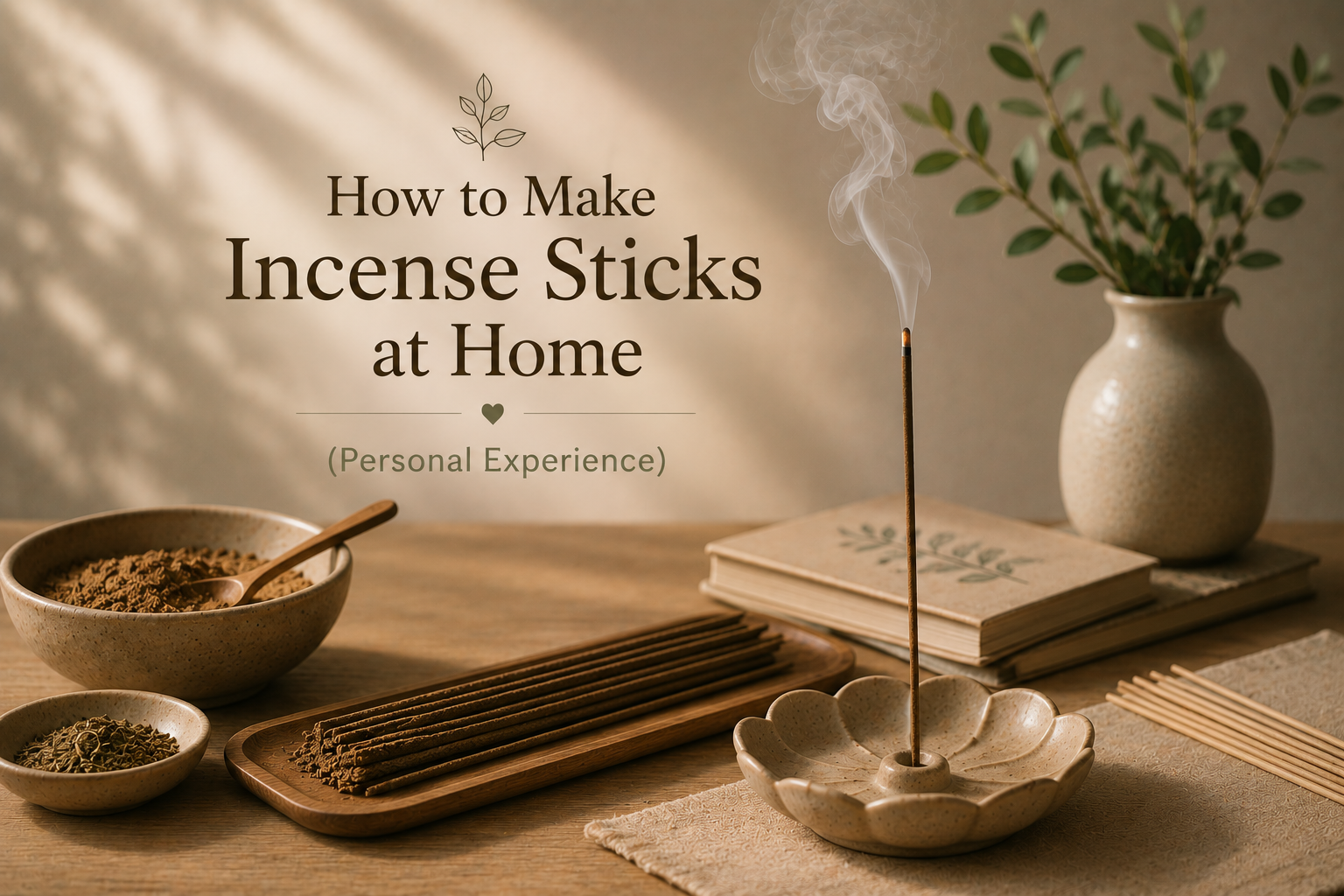
Homemade incense sticks create a softer and more natural home fragrance compared to many commercial agarbatti products. After testing different incense recipes over time, I noticed that hand-rolled incense gives better fragrance retention, smoother smoke diffusion, and a more balanced aroma profile.
Traditional incense stick making depends on three core elements: aromatic powder blend, combustible material, and a binding agent. When these stay balanced, the incense burns evenly, produces low ash residue, and releases pleasant aromatic smoke without harshness.
Tools and Materials Needed to Make Incense Sticks
You do not need complicated equipment for DIY incense. Most homemade agarbatti batches only require:
- Bamboo sticks
- Mixing bowl
- Measuring spoon
- Drying rack
- Grinder or mortar and pestle
The real difference comes from ingredient quality. A good incense formulation usually includes sandalwood powder, wood powder, powdered herbs, floral powder, resin, and essential oils. For a closer look, read how long incense cones burn.
Makko powder and jigat powder help bind the incense dough while improving burn stability and crack resistance during the drying process. Sandalwood, patchouli, lavender, rose fragrance, frankincense, and myrrh create a richer fragrance blend with better scent layering. If this topic interests you, see how to stop incense from burning.
I prefer charcoal-free composition because it creates smooth burning and lower smoke output level during indoor fragrance use, meditation use, and spiritual rituals.
How to Make Incense Sticks on Your Own?
1. Prepare the Dry Ingredients
Start with the incense base material. I usually mix sandalwood powder, wood powder, powdered herbs, floral powder, and a small amount of resin in a bowl. This aromatic powder blend creates the foundation for fragrance strength, smoke intensity, and smooth burning. For a closer look, read sandalwood incense benefits.
For beginners, this simple incense recipe works well:
- 4 parts sandalwood powder
- 2 parts makko powder or jigat powder
- 1 part charcoal powder
- 1 part floral powder or herbs
Grind everything into fine powder consistency. Uneven particles affect burn consistency and ash formation.
2. Make the Incense Dough
Slowly add water while kneading the mixture. The incense dough should feel soft and slightly sticky, not wet. Good incense paste consistency helps the coating stay attached to bamboo sticks during rolling and drying.
Too much moisture increases drying duration and may cause crack-resistant incense sticks to fail during curing. If the dough becomes too loose, add a little wood powder mixture to restore texture balance.
3. Add Fragrance Oils
Now add essential oils or fragrance oil into the dough. I personally prefer patchouli, lavender, rose fragrance, or jasmine fragrance because they create smooth fragrance diffusion inside small rooms.
Frankincense and myrrh also work well for temple-style incense formulation and meditation use. Balanced scent layering improves fragrance longevity without creating overpowering smoke density.
4. Roll the Paste on Bamboo Sticks
Take small portions of incense paste and spread them evenly around the bamboo support stick. The incense rolling technique matters here. Uneven stick coating creates airflow sensitivity problems and inconsistent burn time.
Hand rolling gives better handcrafted incense quality than the dipping method because the fragrance blend stays inside the incense body instead of sitting only on the surface.
5. Dry the Incense Properly
Place the handmade incense sticks on a drying rack with proper airflow. Avoid direct sunlight because fast drying can damage fragrance retention and create surface cracks.
The incense curing process usually takes one to three days depending on drying temperature and moisture content. Proper curing improves combustion control, aroma projection, and low ash production.
What are Mistakes to Avoid While Making Incense Sticks?
Many homemade incense sticks fail because of small formulation mistakes. I made the same errors during my first few batches, especially with moisture balance and fragrance concentration. You may also want to read what incense smells like.
Adding too much water weakens the incense coating process and increases drying time. Wet incense paste often cracks after curing and burns unevenly.
Poor ingredient ratio also affects combustion speed and smoke diffusion. Excess charcoal powder creates high smoke output level, while too little binder reduces burn stability.
Another common mistake is overusing fragrance oil. Strong oil concentration may smell good before burning, but excessive saturation blocks airflow inside the stick and reduces smooth burning performance.
Humidity also affects incense curing process. Always dry incense sticks in a ventilated area because trapped moisture lowers fragrance retention rate and creates weak ash residue.
Common Problems While Making Incense Sticks
Incense Sticks Cracking After Drying
Cracks usually appear when the incense dough contains excess water or dries too quickly. Poor moisture-controlled drying also weakens binder performance. Makko powder and jigat powder help improve natural binder stability and reduce breakage.
Incense Not Burning Properly
Uneven combustion often happens because of incorrect ingredient ratio or poor incense texture balance. Too much resin or excess floral powder can interrupt airflow and reduce burn consistency.
Weak Fragrance After Burning
Low fragrance retention usually comes from poor essential oil infusion or weak aromatic powder blend. High-quality sandalwood, patchouli, frankincense, and jasmine fragrance create stronger scent diffusion intensity and longer-lasting aroma projection.
Excess Smoke Production
Heavy smoke density normally indicates excess charcoal percentage or poor combustion control. A charcoal-free composition or low smoke incense formula creates smoother aromatic smoke for indoor fragrance use.
Final Thought
Learning incense stick making takes patience, but the process becomes rewarding once you understand fragrance balance, rolling technique, and drying control. Homemade incense sticks create a calming atmosphere with more natural aroma projection than many factory-made products.
I personally enjoy experimenting with sandalwood, lavender, patchouli, resin blending, and herbal incense preparation because every batch develops a different fragrance profile.
If you enjoy premium home fragrance and handcrafted aroma products, explore Lume & Wick for curated scents, relaxing fragrance blends, and luxury incense inspiration designed for modern indoor spaces.