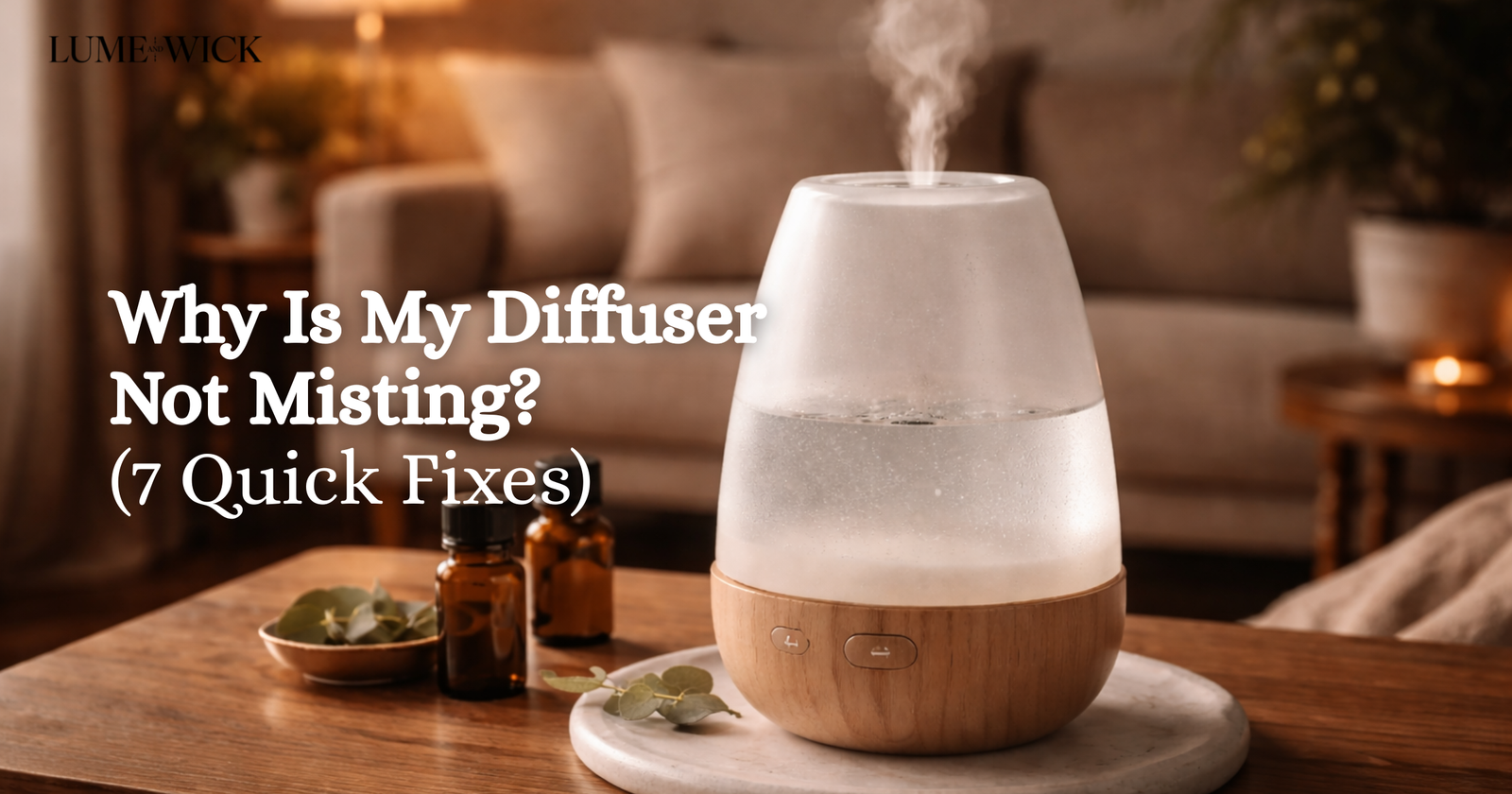
You set up your new diffuser, fill the water tank, add a few drops of essential oil, and expect a soft aromatic mist to fill your space. Instead, you see lights on, maybe even hear a faint hum, but no visible vapor. This is one of the most common frustrations people face with a new unit.
I have personally faced this exact situation with a newly purchased ultrasonic diffuser not misting on day one. It felt like a defect at first. In reality, most cases are not product failures but simple setup or performance issues that can be fixed in minutes.
This guide focuses on solving the diffuser no mist issue with clarity. You will learn the real causes behind diffuser power but no mist situations and how to fix them step by step without guesswork.
How a Diffuser Produces Mist?
Before jumping into troubleshooting, it helps to understand how mist actually forms.
Most modern units use ultrasonic technology. Inside the diffuser, a small ceramic disc called a transducer vibrates at a very high frequency. This vibration breaks water into microscopic particles. This process is known as water atomization. A small internal fan then pushes these particles upward, creating the visible mist output.
If any part of this system fails, the diffuser not producing vapor problem appears.
Key components involved:
- Water reservoir that maintains proper water tank level
- Ultrasonic plate responsible for vibration
- Airflow system that pushes mist through the nozzle
- Sensor system that regulates safety and water detection
When you see a diffuser runs but no steam scenario, it usually means power is reaching the unit but atomization or airflow is disrupted.
Common Reasons Why Your New Diffuser Is Not Misting
1. Incorrect Water Level Is Disrupting Mist Output
One of the most overlooked causes is improper water filling. Both overfilling and underfilling can lead to diffuser mist output failure.
Too much water affects airflow and reduces vapor intensity. Too little water prevents proper contact with the ultrasonic plate. This leads to diffuser water level issue and stops mist formation entirely.
In my case, I once filled slightly above the max line. The diffuser light works but no mist appeared. Adjusting the level fixed it instantly.
What to check:
- Fill exactly to the marked level
- Avoid guessing the amount
- Ensure the base plate is properly submerged
This small adjustment often resolves weak mist flow and low diffusion performance.
2. Ultrasonic Plate Not Vibrating Properly
If the diffuser plate not vibrating, mist will never form. This issue often appears as diffuser airflow problem or complete absence of vapor.
Even new units may have:
- Manufacturing residue
- Mineral buildup on diffuser plate
- Hard water residue scaling
These layers block proper vibration and lead to diffuser water atomization failure.
Signs to notice:
- No ripples in water when turned on
- Silent operation without mist
- Diffuser not blowing mist despite power
This indicates ultrasonic plate vibration failure or early-stage clogging.
3. Improper Assembly or Lid Placement
Diffuser design plays a big role in airflow direction. If the diffuser lid placement is not correct, mist cannot escape properly.
A slight misalignment can create internal pressure imbalance, resulting in diffuser not producing vapor even when everything else works.
Common mistakes:
- Lid not seated properly
- Mist outlet misaligned
- Inner components loosely placed
This often leads to diffuser not spraying mist or uneven mist consistency.
4. Airflow or Vent Blockage
Mist does not rise on its own. It depends on airflow rate generated inside the diffuser. If air intake blockage occurs, mist cannot be pushed out.
Dust, oil residue clogging, or placing the unit too close to walls can restrict airflow vents.
Symptoms include:
- Diffuser runs but no steam
- Intermittent misting
- Reduced mist density
This is a classic diffuser internal blockage problem affecting coverage efficiency and output frequency.
5. Power Supply or Adapter Issues
Sometimes the diffuser not working properly is not about internal parts but power delivery.
Using an incorrect adapter voltage or unstable power source can lead to weak ultrasonic activity. The unit may light up but fail to produce mist.
This results in:
- Diffuser turns on but no mist
- Inconsistent mist duration
- Diffuser performance drop
Power adapter inconsistency is more common than most users realize, especially when using third-party adapters.
6. Oil Type and Concentration Problems
Many users assume more oil means stronger fragrance. In reality, high essential oil concentration can reduce diffusion rate and cause clogging.
Using thick oils or additives leads to:
- Essential oil residue clogging
- Diffuser not diffusing scent
- Mist weak or absent
Stick to recommended ratios. Overuse creates long-term diffuser maintenance problem and affects evaporation rate.
7. Early Manufacturing Defects or Sensor Issues
Although rare, some units may have internal faults such as:
- Diffuser sensor malfunction
- Low water cutoff sensor defect
- Circuit board issue
- Diffuser ultrasonic membrane failure
These cases often appear as diffuser stopped misting suddenly right out of the box.
If basic troubleshooting does not fix the issue, a defective unit becomes a likely cause.
How to Fix When a Diffuser Is Not Misting?
Follow this sequence in order. Each step targets a specific failure point in the system.
1. Adjust the Water Tank Level
Start with the simplest fix.
- Empty the reservoir completely
- Refill using clean water up to the marked line
- Avoid overfilling or running it dry
Improper filling often causes diffuser not producing vapor or weak mist flow.
2. Check Ultrasonic Plate Activity
Turn the diffuser on and observe closely.
- Look for slight ripples on the water surface
- Place a finger near the mist outlet to feel airflow
If no vibration is visible, you may be dealing with diffuser plate not vibrating or early transducer malfunction.
3. Clean the Internal Components
Even a new diffuser may need cleaning.
Quick method:
- Empty the tank
- Add clean water with a small amount of vinegar
- Run the diffuser for 5 minutes
- Drain and rinse thoroughly
This removes mineral buildup on diffuser plate and clears any invisible residue. It often resolves diffuser clogging issue and restores mist consistency.
4. Reassemble the Diffuser Properly
Disassemble and reattach all parts carefully.
- Ensure lid fits tightly
- Align mist nozzle correctly
- Confirm internal parts are seated
Misalignment leads to diffuser airflow problem and disrupts mist output level.
5. Test Without Essential Oil
Run the diffuser with only water.
If mist appears, the issue relates to oil type or concentration. Thick blends reduce vapor intensity and may block internal pathways.
This step isolates diffuser not diffusing scent from mechanical problems.
6. Check Power Source and Adapter
Use the original power supply whenever possible.
- Avoid low-quality adapters
- Ensure stable voltage
- Check for loose connections
Power instability often causes diffuser runs but no steam or inconsistent output frequency.
7. Inspect Airflow and Placement
Placement directly affects airflow rate.
- Keep diffuser on a flat surface
- Avoid placing near walls or corners
- Ensure airflow vents remain open
Restricted airflow reduces mist density and overall coverage efficiency.
Tips to Prevent Misting Issues in New Diffusers
Consistent performance depends more on habits than product quality. Proper usage prevents most diffuser maintenance problems before they begin.
1. Use Clean or Distilled Water
Water quality directly affects internal components.
- Distilled water reduces mineral buildup
- Tap water increases scaling and residue
This simple change improves diffusion rate and protects the ultrasonic system.
2. Maintain Balanced Oil Usage
Adding excess oil reduces performance.
- Stick to recommended drops
- Avoid thick or carrier oils
- Do not mix incompatible liquids
Proper oil use ensures stable vapor intensity and avoids clogging.
3. Clean Regularly Without Delay
Cleaning frequency determines long-term efficiency.
- Quick rinse after every use
- Deep cleaning once a week
Skipping cleaning leads to gradual diffuser performance drop and airflow issues.
4. Place the Diffuser Strategically
Positioning impacts airflow and mist behavior.
- Use flat and stable surfaces
- Keep space around airflow vents
- Avoid enclosed or blocked areas
Correct placement improves airflow rate and enhances coverage efficiency.
5. Understand Your Diffuser Settings
Different modes affect mist output.
- Continuous mode provides stronger mist density
- Intermittent mode extends runtime
Learning how your diffuser works prevents confusion around output frequency and mist duration.
Conclusion
A diffuser not misting can feel frustrating, especially when the unit is new. However, most cases come down to simple factors like water level, cleaning, airflow, or oil usage.
Once you understand how ultrasonic diffusion works and follow a proper maintenance routine, these issues rarely repeat. From my experience, a well-maintained diffuser delivers consistent mist, better fragrance diffusion, and longer lifespan.
If you want a smoother experience from the start, choosing reliable home fragrance products makes a difference. Quality design, stable components, and better airflow engineering reduce the chances of performance issues.
For those looking to upgrade their setup, Lume & Wick offers thoughtfully designed home fragrance solutions that focus on performance, consistency, and everyday usability.