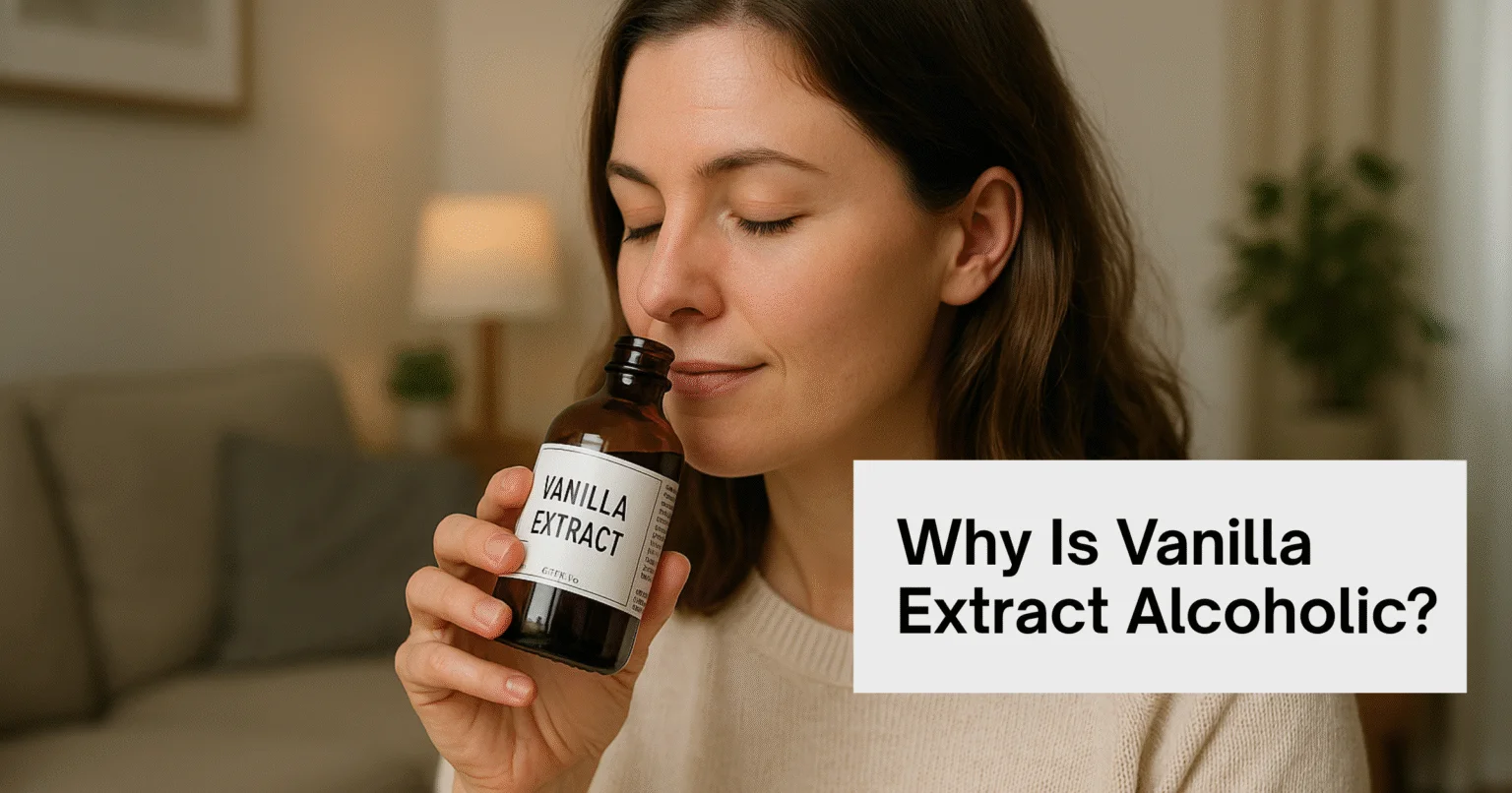
Open a bottle of vanilla extract and you’ll notice something surprising: instead of a sweet dessert-like scent, it carries a sharp kick of alcohol.
Many people pause and ask, Why is vanilla extract alcoholic, and Is that normal? The truth is, alcohol plays a crucial role in creating real vanilla extract.
It’s responsible for pulling flavor from the beans, preserving the liquid for years, and delivering the complex notes that make vanilla so valuable in baking.
This blog explores why alcohol is such an important part of vanilla extract, what it means for smell and taste, and how it behaves once the extract is added to recipes.
You’ll also learn how much alcohol is in vanilla flavoring, tips for storage, and the real answer to Will vanilla extract go bad.
The Science Behind Vanilla Extract
At its core, vanilla extract is a deceptively simple mixture: vanilla beans, alcohol, and water. Inside each bean are hundreds of aromatic and flavor compounds, but most of them remain trapped within the pod and seeds.
Alcohol acts as a natural solvent, drawing out those compounds and unlocking the rich, layered vanilla flavor that bakers, chefs, and even artisans prize.
By U.S. standards, pure vanilla extract must contain at least 35% alcohol to qualify as “pure.”
This regulation confirms two things: first, that vanilla extract does indeed contain alcohol, and second, that the alcohol isn’t just incidental — it’s essential.
Without it, the extract would lack the depth of flavor and stability that make it so valuable.
The role of alcohol goes beyond extraction. It also acts as a preservative, keeping volatile flavor compounds stable for years.
This is why a single bottle of pure vanilla extract can last through dozens of recipes without losing intensity.
Interestingly, this same stability and aromatic richness is why vanilla extract is sometimes discussed outside the kitchen — in crafts like making vanilla candles.
While extract itself isn’t typically the base for candle fragrance oils, the principle is similar: capturing and preserving the essence of vanilla so it can release its warm, comforting aroma over time.
Whether in baking or in home fragrance, the process depends on the careful balance of extraction, preservation, and delivery of those distinctive vanilla notes.
Why Vanilla Extract Smells Like Alcohol
One of the most common surprises for new bakers is the strong aroma. People often ask, What does vanilla extract smell like and Why does it seem more alcoholic than sweet? The reason lies in chemistry.
Ethanol, the alcohol used in vanilla extract, is extremely volatile, meaning it evaporates quickly and gives off a sharp scent.
When you first open the bottle, those ethanol vapors are what you smell most. The natural vanilla notes are present, but they are subtle compared to the punch of alcohol.
That’s why some people think vanilla extract smells like alcohol more than anything else.
The good news is that this strong aroma doesn’t mean the extract is bad or artificial. It simply reflects how alcohol carries the compounds.
Once the extract is mixed into a recipe and exposed to heat, the alcohol evaporates and the sweet, smooth vanilla flavor takes center stage.
What Vanilla Extract Tastes Like (Raw vs. Baked)
Taste is another area that confuses people. If you’ve ever dipped a spoon into a bottle, you probably thought vanilla extract tastes like alcohol or even bitter.
That’s completely normal. In its raw form, extract isn’t meant to be consumed straight — the alcohol dominates, leaving only hints of vanilla underneath.
However, once used in baking or cooking, the story changes. As the mixture heats, the alcohol evaporates and the deeper vanilla flavors come through.
This is why cakes, cookies, and creams taste rich and sweet instead of harsh. So while vanilla extract tastes like alcohol out of the bottle, in recipes it becomes the warm, familiar note everyone loves.
For cold preparations like frosting or whipped cream, where heat isn’t involved, you can use smaller amounts or look for alcohol-free vanilla to avoid any raw bite.
How Much Alcohol is in Vanilla Flavoring?
One of the most asked questions is how much alcohol is in vanilla flavoring. For pure vanilla extract, the legal minimum is 35% alcohol by volume.
That’s similar to many spirits like rum or vodka. The exact percentage can vary by brand, but most hover around that standard mark.
Imitation vanilla, made from synthetic vanillin instead of real beans, may contain little to no alcohol. There are also alcohol-free vanilla products available, often made with glycerin as the solvent.
These options are good for recipes where alcohol isn’t desirable, but they tend to have a lighter, less complex flavor compared to pure extract.
The alcohol content might sound high, but remember: only a teaspoon or two is typically used in baking, and nearly all of that alcohol burns off in the oven.
What remains are the flavor compounds that give vanilla its signature richness.
Does Vanilla Extract Go Bad?
A bottle of pure vanilla extract is one of the longest-lasting ingredients in a kitchen. If you’ve ever wondered, Will vanilla extract go bad, the answer is not in the way milk or oil would.
Because of its high alcohol content, the extract resists bacterial growth and spoilage. Properly stored, it can last for years, sometimes decades.
What may change over time is intensity. If exposed to heat or sunlight, the aroma can fade slightly.
To keep it fresh, store your bottle in a cool, dark place with the cap tightly closed. With these habits, you can rely on the extract to stay flavorful far longer than most pantry staples.
The alcohol that once smelled sharp is the same ingredient keeping your extract preserved and ready for your next batch of cookies or custard.
Cooking and Baking with Alcoholic Vanilla Extract
The fact that vanilla extract tastes like alcohol when raw often makes people nervous about adding it to recipes.
The truth is, alcohol isn’t a problem in cooking. Heat takes care of it. During baking, alcohol evaporates quickly, leaving behind only the concentrated vanilla compounds.
This is why you never bite into a cake and taste vodka-like notes. Instead, you taste the mellow sweetness and floral undertones that vanilla beans provide.
For stovetop recipes like sauces or custards, simmering helps the alcohol cook off while flavor deepens.
For those who prefer to avoid alcohol entirely, alcohol-free vanilla extract is available. These options work well in uncooked applications like smoothies, frostings, or drinks where the raw alcohol flavor would be too noticeable.
Conclusion
So, why is vanilla extract alcoholic? Alcohol is the best solvent for pulling flavor from vanilla beans, and it also acts as a natural preservative.
That explains why vanilla extract has alcohol — yes, they do, and quite a lot compared to other flavorings.
The alcohol is responsible for the strong smell and the raw taste that sometimes shocks first-time tasters.
But once exposed to heat, it evaporates, leaving only the rich vanilla flavor that makes desserts unforgettable.
By understanding how extract works, you can use it with confidence, store it properly, and appreciate the craftsmanship behind every drop.
That sharp aroma in the bottle isn’t a flaw; it’s proof that your vanilla is authentic and ready to transform any recipe.
Frequently Asked Questions
Why is vanilla extract required to contain alcohol?
Alcohol is the most effective solvent for extracting the hundreds of flavor compounds in vanilla beans. Regulations require at least 35% alcohol to qualify as a pure extract.
Is it safe to consume vanilla extract raw?
Yes, it is safe in small amounts, but the raw flavor is harsh. It’s meant to be used in recipes, not drunk directly.
Does alcohol in vanilla extract fully burn off when baking?
In most recipes, the majority of alcohol evaporates. What remains is minimal and doesn’t affect taste or safety.
What’s the difference between pure vanilla extract and imitation vanilla?
Pure extract comes from real beans and alcohol, while imitation uses synthetic vanillin. Pure extract is more complex and aromatic.
Can I buy or make alcohol-free vanilla extract?
Yes, alcohol-free versions are available and usually use glycerin. You can also make your own at home, though the flavor is often milder.