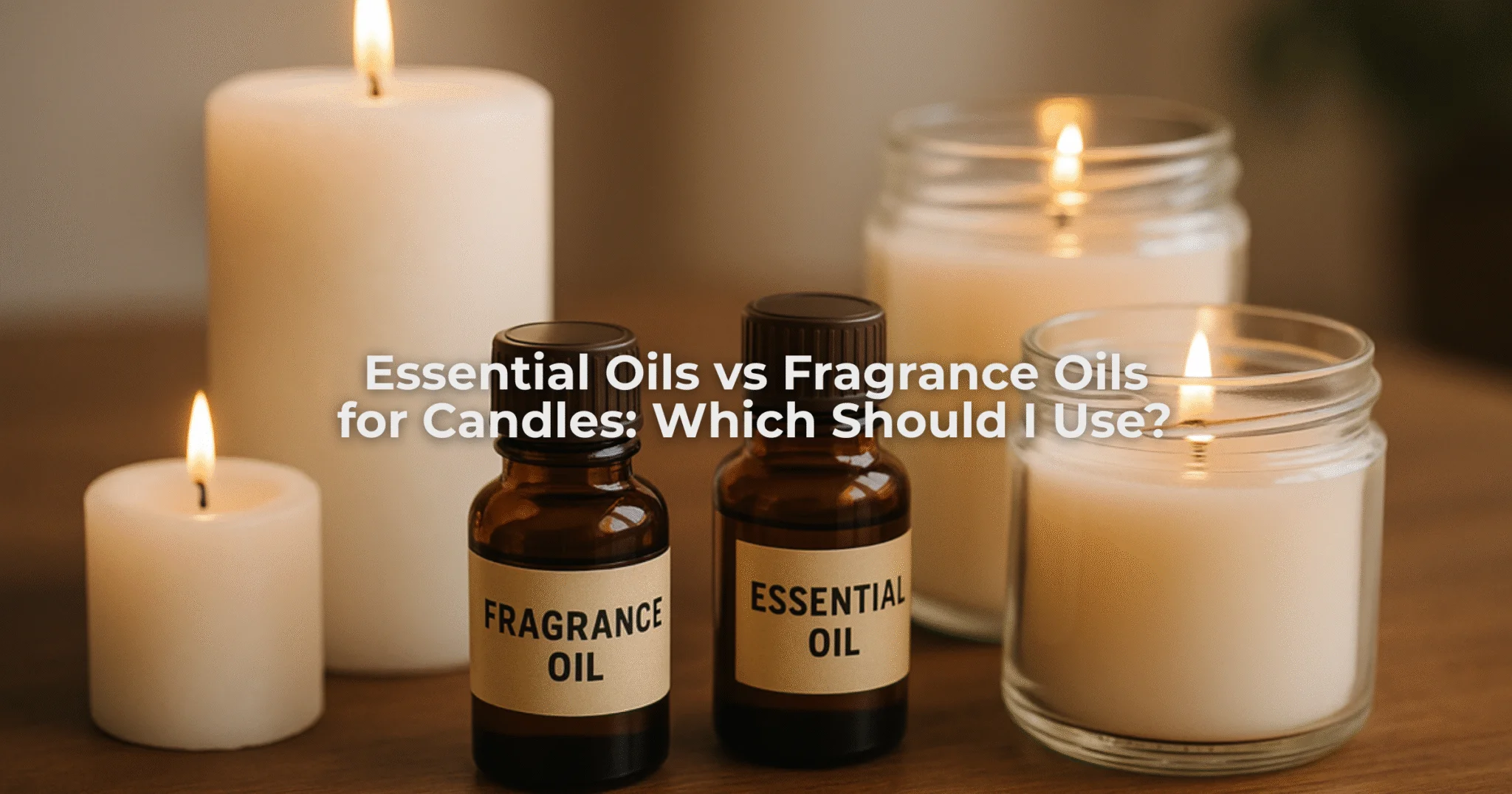
DIY and handmade candles have become a favorite hobby for many people who want to create cozy, personalized spaces. Along the way, one big question always comes up: essential oils vs fragrance oils for candles— which should I use?
Both options have their appeal. Essential oils carry natural plant-based aromas with a reputation for being therapeutic and eco-friendly. Fragrance oils, on the other hand, provide a stronger scent throw, last longer, and come in almost every scent imaginable.
This guide will walk you through the details of both, comparing essential oils vs fragrance oils for candles so you can make the right choice for your candle-making projects. By the end, you’ll know the strengths and weaknesses of each and how to decide what works best for your goals.
Essential oils are natural plant extracts that capture the pure aroma of flowers, herbs, fruits, and woods. They’re typically produced through steam distillation or cold-pressing, a process that concentrates the plant’s natural oils into small bottles of highly aromatic liquid.
For candle making, essential oils appeal to those who want something natural and free from synthetic additives. They are often linked to aromatherapy, meaning their scents can evoke relaxation, focus, or energy. For example, lavender oil is known for calming the mind, while peppermint oil provides an invigorating lift.
There are clear benefits:
But essential oils do have limitations. They tend to be more expensive than fragrance oils, and their scent throw in candles is often weaker.
Because they’re sensitive to heat, some oils lose their aroma during the candle-making process, especially when not handled carefully. This makes them trickier to use, particularly for beginners.
Fragrance oils are scents made in a lab, either entirely synthetic or blended with some natural ingredients. They’re specifically designed for use in products like perfumes, soaps, and candles.
For candle making, fragrance oils are a reliable option because they are built to withstand the heat of melted wax and provide a strong, lasting aroma.
Unlike essential oils, which are limited to what plants naturally produce, fragrance oils can replicate almost any scent imaginable—from fresh-baked cookies to tropical cocktails.
Their main benefits include:
However, fragrance oils also have limitations. Some people prefer all-natural candles and may avoid synthetic options. A few fragrance oils can contain chemicals that irritate sensitive users, which is why high-quality suppliers are important.
Still, for hobbyists and small businesses, fragrance oils remain one of the best oils for candle making because of their consistency and range.
When it comes to fragrance oils vs essential oils for candle making, the differences lie in origin, performance, and cost. Let’s break them down.
This difference makes essential oils appealing for eco-conscious candle makers, while fragrance oils win when you need variety and strength.
Fragrance oils almost always provide stronger hot throw and cold throw. Essential oils may smell wonderful in the bottle, but once added to wax, the scent often weakens. Essential oils in soy wax, for example, can smell subtle compared to the bold impact of fragrance oils.
Essential oils are pricier and limited to scents found in nature. For example, true rose or sandalwood essential oil can be very expensive. Fragrance oils, by contrast, are affordable and available in countless varieties.
Both oils can be used safely in candles, but safety depends on the oil itself. Essential oils have flash points that determine how well they tolerate heat. Some burn cleanly, while others may smoke or lose their scent.
Fragrance oils are designed to withstand high temperatures, but lower-quality ones may include ingredients that produce soot or irritation.
In practice, fragrance oils are easier to work with because they hold up well in different waxes—soy, beeswax, paraffin, or blends.
Essential oils require more precision, especially in soy wax, where timing and temperature matter to prevent the oils from evaporating.
Using essential oils for candles has a natural charm. They’re plant-derived, chemical-free in perception, and often tied to wellness traditions.
Many DIY candle makers love the idea of crafting a soothing lavender soy candle or energizing citrus blend with nothing but botanical ingredients.
Pros:
Cons:
If you’re making candles for personal enjoyment, scented essential oils for candles can be rewarding.
But for anyone hoping to sell candles, relying solely on essential oils may increase costs and limit scent performance.
Fragrance oils are the workhorse of the candle-making world. Designed for strong aroma and versatility, they’re often considered the best oils for candle making if your goal is bold, consistent scents.
Pros:
Cons:
For most hobbyists and sellers, fragrance oils provide reliable performance. They allow candle makers to experiment with unique combinations and create consistent products that appeal to a wider audience.
The debate of essential oils vs fragrance oils for candles doesn’t have a one-size-fits-all answer. The better choice depends entirely on your goals and preferences.
If your priority is creating candles that feel natural, therapeutic, and eco-friendly, essential oils are the way to go. They provide a soft, authentic aroma that pairs well with practices like yoga, meditation, or relaxation routines.
Many handmade candle enthusiasts choose essential oils in soy wax for this exact reason—clean burning combined with a plant-based scent feels wholesome and intentional.
On the other hand, if your focus is strong, long-lasting fragrance that can easily fill a room, fragrance oils win.
They are engineered to provide both hot throw and cold throw, and they offer a limitless palette of scents. From baked goods to exotic blends, fragrance oils deliver options that essential oils simply cannot match.
For many candle makers, a blend of both is the sweet spot. Using essential oils for their natural benefits and fragrance oils for strength creates candles that are both aromatic and effective. For example, you might combine lavender essential oil with a lavender-scented fragrance oil to boost performance without losing authenticity.
When weighing fragrance oils vs essential oils for candle making, it helps to step back and consider practical factors. Here are some points that can guide your choice:
At the end of the day, essential oils vs fragrance oils for soy candles or other wax types isn’t a strict either/or decision.
Think about your goals, your audience, and your budget, then experiment until you find what works.
So, which should you use—essential oils or fragrance oils? The answer is simple: both have their place.
Essential oils for candles bring natural beauty, therapeutic associations, and a sense of mindfulness to handmade candles. They’re ideal for those who want something plant-based and subtle, even if the scent throw isn’t as strong.
Fragrance oils, on the other hand, give you bold aroma, endless variety, and greater consistency. They are often the best oils for candle making when you want strong results and affordability.
The real magic lies in experimenting. Try essential oils in soy wax for a calming natural candle, or use fragrance oils when you want to fill your home with cozy bakery scents. Don’t be afraid to blend the two and create something unique—your own personal recipe for the perfect candle.
In the debate of essential oils vs fragrance oils for homemade candles, there’s no wrong answer. It’s about matching your goals with the strengths of each option, and enjoying the creative process along the way.