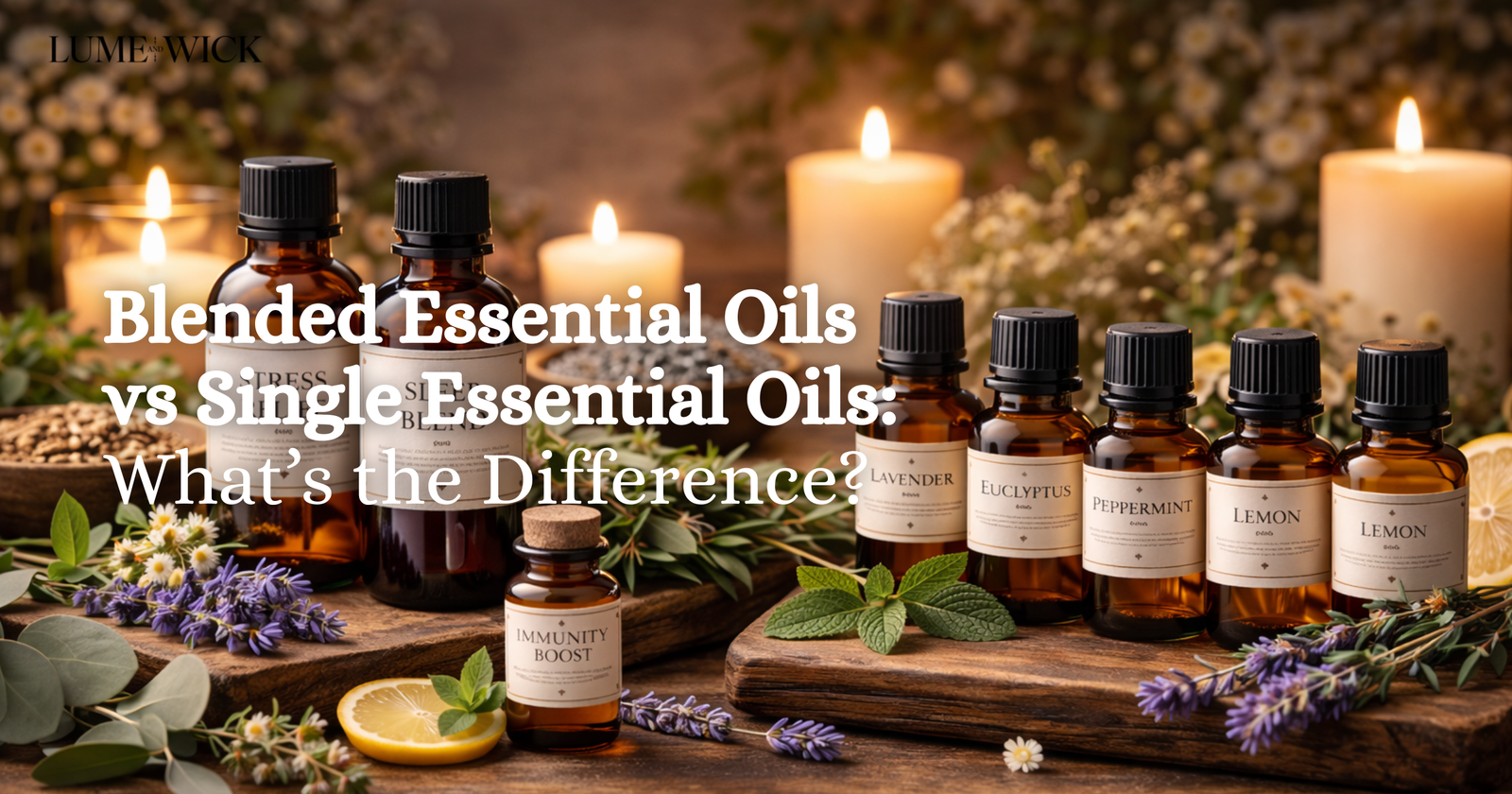
Essential oils are at the heart of aromatherapy and holistic wellness, offering natural solutions for relaxation, mood enhancement, and skin care.
These plant extracts capture the aroma and therapeutic benefits of flowers, leaves, and roots. When choosing oils, one often wonders whether to use single essential oils or blended essential oils.
Single oils provide the pure essence of a single plant, delivering consistent, targeted effects. Blended oils combine multiple plants, creating layered aromas and complementary therapeutic benefits through synergy in oils.
Both share common features, such as being volatile oils, requiring dilution before topical use, and being suitable for diffusers, massage, or skincare.
From my experience in essential oil therapy, single oils suit precise wellness needs, while blends offer convenience, balanced potency, and multi-purpose use.
This guide will explore their differences, benefits, and practical applications to help you choose the right oils for your routine.
Single essential oils are extracts obtained from one plant source, capturing its pure chemical composition and therapeutic benefits.
For example, Lavender oil promotes relaxation and sleep, while Peppermint oil improves focus and eases headaches.
Extracted via steam distillation or cold pressing, these oils maintain high purity and concentration, making them ideal for targeted aromatherapy.
Single oils have a simple aroma profile, reflecting the plant’s natural scent. This makes it easier to identify top, middle, and base notes for diffuser oils or scent layering.
They are highly versatile for DIY blends, allowing precise control over synergy in oils and custom wellness solutions.
Because of their concentration, single oils should be diluted with carrier oils for topical use to reduce allergen potential while preserving efficacy.
Their targeted properties, simplicity, and consistent potency make them perfect for users seeking specific effects, from stress relief to skin and hair care.
Blended essential oils combine two or more single oils to create a synergistic effect and a layered aroma profile.
Each blend is crafted to balance top, middle, and base notes, resulting in a harmonious fragrance that is both pleasing and therapeutically effective.
For instance, a “Relaxation Blend” with Lavender, Bergamot, and Sweet Orange offers stress relief, mood enhancement, and gentle skin care benefits.
Creating blends requires knowledge of oil blending techniques and chemical composition, ensuring that each oil complements the others.
The resulting synergy amplifies therapeutic benefits, making blends ideal for multi-purpose wellness, whether for diffusion, massage, or bath use.
Blended oils often include carrier oils or adjusted concentrations to maintain safety and balanced potency.
They are beginner-friendly, convenient, and designed for users who want ready-to-use aromatherapy solutions without the complexity of DIY mixing.
Choosing between single and blended essential oils is more than a matter of personal preference. It depends on therapeutic goals, aroma preferences, usage methods, and overall wellness objectives.
Understanding their differences helps you select the right oil for stress relief, mood enhancement, skincare, or holistic well-being.
Single essential oils come from a single plant source, capturing the full chemical profile and natural compounds unique to that plant. This purity ensures consistent therapeutic effects.
For example, Lavender oil is widely valued for its calming effects, while Eucalyptus oil supports respiratory health due to its naturally occurring 1,8-cineole content.
Single oils are ideal for users seeking precision in aromatherapy or for those who want to customize blends at home.
Blended essential oils combine two or more single oils to create synergistic effects. These blends are carefully formulated using techniques that balance top, middle, and base notes to produce a harmonious aroma.
A “Relaxation Blend” might combine Lavender, Chamomile, and Bergamot, offering a soothing scent that calms the mind, eases tension, and supports skin wellness simultaneously.
While single oils deliver maximum potency, blends are formulated for balanced concentration, ensuring safety and multi-purpose usability.
Single oils reflect the true, unaltered scent of the plant, making them perfect for diffusers, scent layering, or DIY aromatherapy.
Their simplicity allows users to identify the top, middle, and base notes easily. Examples include Rose oil with its delicate floral scent and Eucalyptus oil with a fresh, sharp aroma.
Blended oils produce complex, layered aromas. Combining multiple oils creates a fragrance that is balanced, long-lasting, and enjoyable for everyday use.
A “Stress Relief Blend” using Bergamot, Frankincense, and Lavender offers a calm, uplifting scent that can enhance meditation, relaxation baths, or sleep routines.
Blends are convenient for users who prefer ready-to-use oils that provide both aromatic pleasure and therapeutic benefits.
Single oils are known for specific effects, depending on the plant source:
Blends focus on holistic wellness, combining multiple benefits in one product. A mood-enhancing blend, for example, might combine Sweet Orange, Lavender, and Frankincense to support relaxation, uplift mood, and gently nourish the skin.
The synergy in blends often makes them more versatile, offering multi-layered therapeutic effects that single oils cannot provide alone.
Single oils offer maximum flexibility. They can be used alone, diluted with carrier oils, or combined into custom blends for topical use, diffusion, or baths.
This makes them ideal for DIY aromatherapy enthusiasts who enjoy creating personalized wellness routines.
Blended oils are designed for immediate, multi-purpose use. They work well in diffusers, baths, or massage applications without the need to mix multiple oils.
For example, a “Relaxation Blend” can be added directly to a diffuser to create a calming atmosphere or diluted with a carrier oil for a massage.
Single oils are highly concentrated, meaning that even a small amount can produce significant effects.
Precision is important when using them for topical application, and dilution with carrier oils is necessary to avoid skin irritation.
Blended oils are formulated for balanced potency, combining multiple oils to provide gentle yet effective effects.
This makes them suitable for frequent use and for users who prefer multi-benefit wellness routines without risking over-concentration.
Single oils may cause irritation if used undiluted, especially for sensitive skin. Careful dilution with carrier oils is recommended, particularly for essential oils with strong active compounds like Cinnamon, Clove, or Oregano.
Blended oils are often designed to be safer and beginner-friendly, with pre-balanced concentrations to minimize allergen risk while maintaining therapeutic benefits.
This makes blends ideal for everyday use, especially for diffusion, baths, and topical application.
Single oils can be expensive, particularly rare plant oils like Rose, Jasmine, or Sandalwood, due to low yield and labor-intensive extraction.
Blended oils offer a cost-effective alternative, combining a few expensive oils with more common ones while still delivering high-quality aromatherapy experiences.
Blends are convenient for beginners or anyone seeking multi-purpose oils that are ready-to-use without compromising quality. Single oils appeal to users who prioritize purity and targeted therapeutic action over cost.
Single oils vary in shelf life. Citrus oils such as Lemon and Bergamot oxidize more quickly, while heavier oils like Patchouli and Cedarwood are naturally long-lasting.
Proper storage in cool, dark places preserves both aroma and therapeutic effects.
Blended oils often include stabilizing ingredients or carrier oils to enhance shelf stability.
This ensures they maintain their aroma and effectiveness for longer periods, making them practical for daily use.
Single oils offer precision, while blends provide convenience and versatility, allowing users to enjoy multiple therapeutic benefits simultaneously.
| Feature | Single Essential Oils | Blended Essential Oils |
| Plant Source | One plant | Multiple plants |
| Aroma | Pure, unaltered | Complex, layered |
| Therapeutic Focus | Targeted | Multi-faceted |
| Usage | DIY blends, precise | Ready-to-use, versatile |
| Potency | Highly concentrated | Balanced, moderate |
| Safety | Requires dilution | Pre-formulated, beginner-friendly |
| Cost | Often higher | Usually cost-effective |
| Shelf Life | Varies by oil | Often enhanced by formulation |
Essential oils are versatile and can be applied in multiple ways depending on their type and purpose. Understanding common applications helps you choose oils that fit your lifestyle and wellness goals.
Diffuser Use
Topical Use
Bath & Spa Applications
Choosing the right oil requires careful consideration of several factors:
Choosing between single and blended essential oils depends on your wellness goals, preferences, and experience level. Single oils offer pure plant extracts, precise therapeutic benefits, and high potency, ideal for targeted aromatherapy or DIY blends.
Blended oils provide multi-layered aromas, balanced potency, and combined effects, perfect for those seeking convenience and holistic benefits.
Safety and potency matter. Single oils are highly concentrated, requiring careful dilution with carrier oils, while blended oils are often pre-formulated for safe, versatile use, making them beginner-friendly.
Factors like shelf life, storage, and cost also influence your choice. Rare single oils such as Rose or Sandalwood can be expensive, whereas blends offer a cost-effective, multi-benefit alternative without compromising quality.
For the full aromatherapy experience, invest in high-quality essential oils. Lume & Wick offers a curated range of therapeutic single oils and expertly crafted blends, made from natural plant extracts for relaxation, stress relief, mood enhancement, and holistic wellness.
Understanding the differences, benefits, and applications allows you to make informed decisions and create personalized, safe, and effective aromatherapy routines.
Take the first step in elevating your self-care with essential oils that truly support your mind, body, and spirit, and discover how the right combination of single and blended oils can transform your daily wellness practices.