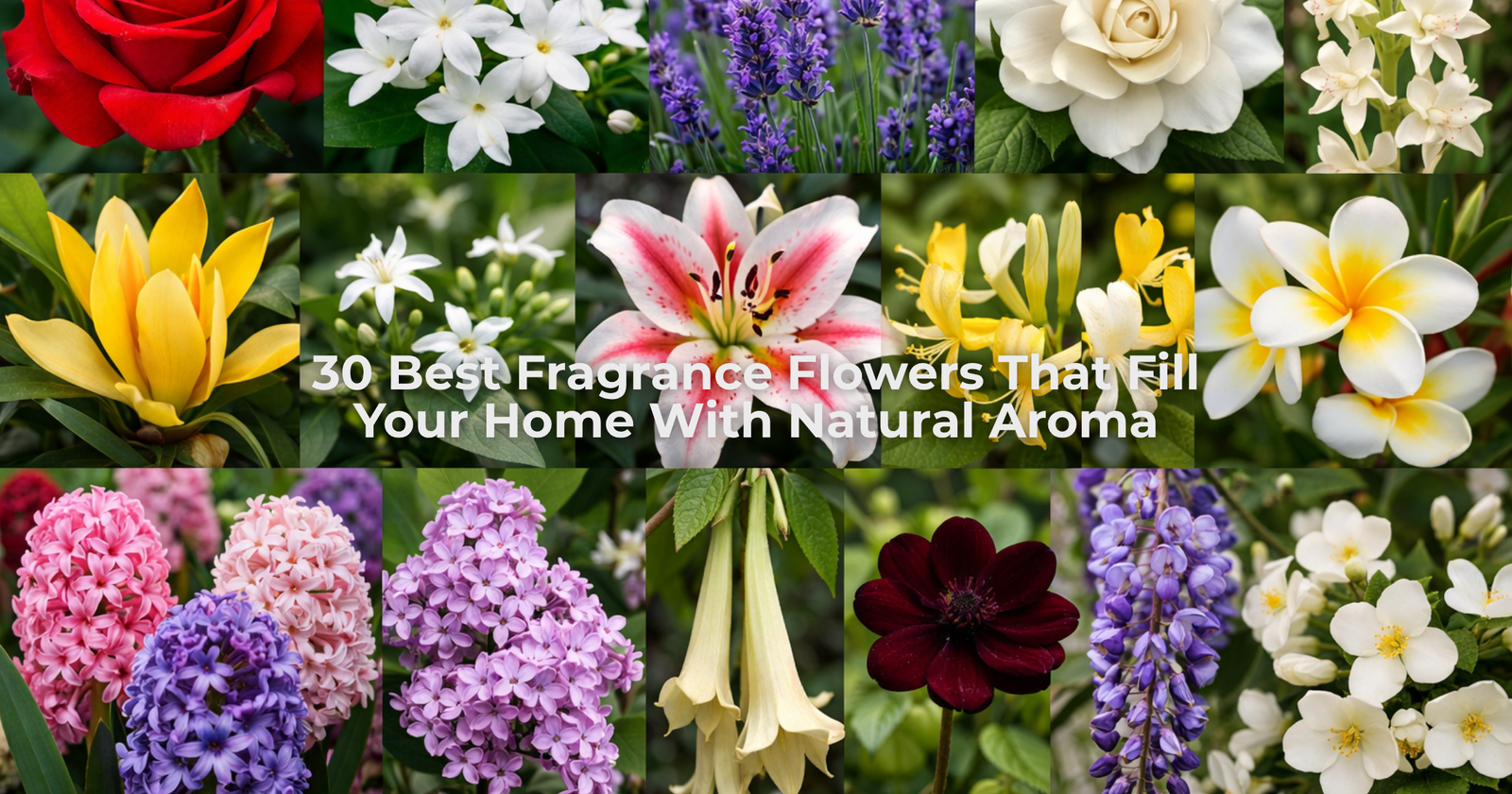
A few years ago, I started exploring natural ways to make my home smell fresh without relying on synthetic sprays. That journey slowly pulled me toward fragrant flowers. I still remember placing a small bowl of fresh jasmine near my window during a humid summer night. Within minutes, the entire room carried a soft, calming aroma that no artificial fragrance could match.
Fragrant flowers are not just about pleasant smell. They create an atmosphere. Some uplift mood, some calm the mind, and some instantly remind you of a memory or a place. From sweet floral notes to creamy, citrusy, or even spicy undertones, each flower has its own scent profile.
In this guide, I will walk you through the 30 best fragrance flowers that I have personally explored and researched deeply. If you want to build a naturally scented space, whether a garden, balcony, or indoor corner, this list will help you choose the most aromatic flowers with real impact.
Fragrance in flowers comes from natural compounds known as essential oils. These oils are stored in tiny glands within petals and released into the air as volatile organic compounds. Plants use these aromatic signals to attract pollinators like bees, butterflies, and moths.
Some flowers release scent during the day to attract bees, while others bloom at night and produce stronger fragrance to attract nocturnal insects. I noticed this clearly with night blooming jasmine. Its scent becomes intense after sunset and almost disappears by morning.
Temperature, humidity, and even soil health influence how strong a flower smells. In warmer conditions, fragrance molecules evaporate faster, making the scent more noticeable. That is why many tropical flowers feel richer and more powerful.
Rose is the most iconic fragrant flower and for good reason. Its scent ranges from soft sweet notes to deep, musky richness depending on the variety. I once grew desi roses in small pots, and even a single bloom filled my balcony with a classic floral aroma.
Roses work well in gardens, bouquets, and even for natural perfume extraction. Damask roses are especially known for essential oil production. Their layered petals hold a strong, long-lasting fragrance that feels both fresh and luxurious.
Jasmine carries a rich, sweet, and slightly intoxicating scent. In India, mogra is commonly used in hair garlands and home decor. I personally keep jasmine near my window during night hours because its fragrance becomes more noticeable after sunset.
It is perfect for balconies, indoor corners, and small gardens. The scent profile feels creamy and romantic, often used in perfumes and essential oils. Even a few flowers can transform the surrounding air.
Lavender has a clean, herbal, and slightly woody aroma. Unlike sweet floral scents, this one feels calming and therapeutic. I started using dried lavender in my room to improve sleep quality, and it genuinely helped create a relaxed environment.
This flower is widely used in aromatherapy, oils, and home fragrance products. It grows well in sunny conditions and works both fresh and dried. Its scent is subtle but long-lasting.
Gardenia produces a creamy, rich, and almost velvety fragrance. The scent feels luxurious and slightly tropical. When I first smelled gardenia, it reminded me of high-end perfumes.
It is best suited for outdoor gardens but can also grow in pots with proper care. The thick white petals release a strong aroma, especially in warm weather. This flower is often used in premium fragrance blends.
Tuberose has one of the strongest floral fragrances you will ever experience. The scent is intense, sweet, and slightly spicy. I remember placing rajnigandha sticks in a vase, and within hours, the entire room smelled like a floral sanctuary.
It blooms at night and releases maximum fragrance after sunset. This makes it perfect for evening ambiance. It is widely used in weddings, perfumes, and traditional decorations.
Champaca offers a deep, fruity, and slightly spicy fragrance. It feels warm and exotic. Many temples in India use this flower due to its spiritual and calming aroma.
The scent is powerful yet smooth, making it ideal for large gardens. It is also used in luxury perfumes because of its complex scent profile.
Known as Raat Rani, this flower releases fragrance only at night. The scent is sharp, sweet, and spreads quickly through the air. I once planted it near my window, and every night felt like a natural diffuser was running.
It is ideal for outdoor spaces where airflow can carry the fragrance. Even a single plant can scent an entire area.
Oriental lilies have a bold, sweet, and slightly citrusy fragrance. The scent feels clean yet powerful. I often use lily bouquets indoors because they instantly freshen up the space.
These flowers are perfect for both gardens and indoor arrangements. Their large petals and strong aroma make them highly noticeable.
Honeysuckle produces a sweet, honey-like fragrance with soft fruity undertones. The scent feels light but inviting. When grown along fences or walls, it creates a naturally scented pathway.
This climbing plant works best in outdoor gardens. Its nectar-rich flowers attract pollinators while adding a gentle aroma to the surroundings.
Freesia offers a fresh, slightly citrusy fragrance with a clean finish. It feels modern and uplifting. I often notice its scent in natural home fragrance blends.
It is commonly used in bouquets and indoor decor. The fragrance is not overpowering but stays noticeable for long periods.
Hyacinth carries a strong, sweet, and slightly powdery fragrance that feels rich and nostalgic. The first time I brought hyacinth indoors, its scent reminded me of classic floral perfumes with a soft vintage touch.
It blooms in early spring and works beautifully in both gardens and indoor pots. The dense flower clusters release a noticeable aroma even from a distance, making it one of the most fragrant spring flowers.
Peony offers a delicate, fresh, and slightly rosy fragrance with subtle green undertones. Unlike overpowering flowers, its scent feels soft and elegant. I personally like peonies for their balanced aroma that does not dominate the space.
They are ideal for bouquets and decorative arrangements. Some varieties have stronger fragrance than others, so choosing the right type matters if scent is your priority.
Plumeria produces a creamy, tropical fragrance with hints of coconut and citrus. It instantly creates a relaxed, vacation-like atmosphere. I remember experiencing its scent during a coastal trip, and it stayed with me long after.
This flower thrives in warm climates and works well in outdoor gardens. It is commonly used in spa environments and natural fragrance oils due to its soothing aroma.
Sweet pea has a light, airy fragrance that feels fresh and slightly honeyed. The scent is gentle yet noticeable, making it perfect for subtle home fragrance.
It blooms in cooler seasons and works best in garden borders or decorative arrangements. Its soft pastel flowers add both visual charm and a pleasant aroma without overwhelming the senses.
Dianthus, often called pinks, carries a spicy, clove-like fragrance. This makes it quite different from typical sweet floral scents. I found its aroma unique and slightly warm, almost like a natural blend of spice and flowers.
It grows well in small gardens and containers. The fragrance is moderate but distinctive, which adds variety to any fragrant flower collection.
Ylang-ylang has a deep, exotic, and slightly fruity fragrance with creamy undertones. It is widely used in high-end perfumes and essential oils. When I first smelled it, the richness stood out immediately.
This tropical flower is best suited for warm regions. Its scent becomes stronger as the flower matures, making it highly valued in natural fragrance extraction.
Narcissus produces a fresh, green, and slightly sweet fragrance with earthy undertones. The scent feels clean and natural, often associated with early spring.
It is commonly used in gardens and seasonal decor. Some varieties have a stronger aroma, so selecting fragrant types enhances the overall experience.
Stock flowers offer a warm, spicy, and slightly sweet fragrance that feels comforting. I once added them to a small indoor arrangement, and their scent created a cozy atmosphere.
They bloom in cooler weather and are often used in bouquets. The fragrance is noticeable but not overpowering, making it suitable for indoor spaces.
Daphne is known for its intensely sweet and citrusy fragrance. Despite its small flowers, the scent is surprisingly powerful. I found that even a single plant can fill a small garden area with aroma.
It blooms in late winter to early spring. This makes it valuable when most other flowers are not in bloom.
Mock orange produces a bright, citrus-like fragrance similar to orange blossoms. The scent feels fresh and uplifting. I remember walking past a mock orange shrub and instantly noticing its refreshing aroma.
It is best suited for outdoor gardens where it can grow freely. The fragrance spreads well in open spaces, especially during warm days.
Magnolia produces a smooth, creamy fragrance with subtle citrus and floral layers. The scent feels refined and slightly lemony. I first noticed magnolia during a morning walk, and its fresh aroma stood out even in open air.
These flowers grow on trees and suit larger gardens. Their fragrance is not sharp but spreads gently, creating a calm and inviting environment.
Lilac carries a soft, powdery, and sweet fragrance that feels classic and comforting. It often reminds people of spring gardens and fresh mornings. I personally find lilac scent very nostalgic.
It blooms in clusters and works well in outdoor landscapes. The fragrance is light but consistent, making it ideal for a subtle aromatic effect.
Angel’s trumpet has a strong, sweet, and slightly musky fragrance that becomes intense during the evening. I once encountered this plant in a garden, and its scent was noticeable even from a distance.
It is best grown outdoors due to its powerful aroma. The large hanging flowers release fragrance mainly at night, making it suitable for evening ambiance.
Chocolate cosmos offers a unique fragrance that resembles dark chocolate with a soft floral touch. The scent feels warm and slightly rich. When I first learned about it, the idea sounded unusual, but the aroma is surprisingly pleasant.
It works well in garden beds and adds diversity to fragrance profiles. This flower is perfect for those who want something different from typical floral scents.
Osmanthus produces a fruity, apricot-like fragrance with soft floral notes. The scent feels delicate yet noticeable. I find it very soothing, especially during calm evenings.
It grows as a shrub and works well in garden landscapes. Despite its tiny flowers, the fragrance spreads effectively.
Stephanotis carries a clean, sweet, and slightly creamy fragrance. It is often used in wedding bouquets due to its elegant scent. I once used it in indoor decor, and it added a refined freshness to the space.
This climbing plant works well in warm environments. Its fragrance feels soft but consistent.
Boronia has a complex fragrance that blends floral, fruity, and slightly spicy notes. The scent feels layered and rich. It is often used in niche perfumes because of its unique aroma.
This plant prefers mild climates and requires some care. The fragrance is distinctive and adds depth to any aromatic garden.
Nicotiana produces a light, sweet fragrance that becomes stronger in the evening. The scent feels airy and slightly green. I noticed its calming effect when placed near seating areas.
It is ideal for night gardens and outdoor relaxation spaces. The tubular flowers release aroma gradually as the sun sets.
Bluebells offer a soft, fresh, and slightly sweet fragrance. The scent is gentle and blends naturally with surrounding greenery. I find it perfect for creating a calm garden atmosphere.
They grow in clusters and are commonly seen in woodland settings. The fragrance is subtle but adds to the overall sensory experience.
Wisteria produces a sweet, grape-like fragrance with light floral undertones. The cascading flowers create both visual and aromatic appeal. Walking under a blooming wisteria feels like entering a naturally perfumed space.
It grows as a climbing vine and works well over pergolas and walls. The fragrance spreads softly through the air.
Exploring fragrant flowers changed how I think about home ambiance. Instead of relying on artificial scents, I started using natural floral sources that feel more authentic and calming. Each flower in this list offers a different scent profile, from deep and musky to fresh and citrusy, giving you multiple ways to create a naturally scented space.
If you want to enhance your home fragrance further, combining fresh flowers with thoughtfully crafted products can make a big difference. This is where brands like Lume & Wick come in. Their approach to home fragrance aligns well with natural scent experiences, helping you maintain a consistent and pleasant atmosphere indoors.
Start with a few flowers that match your preference, experiment with placement, and gradually build a space that smells as beautiful as it looks.