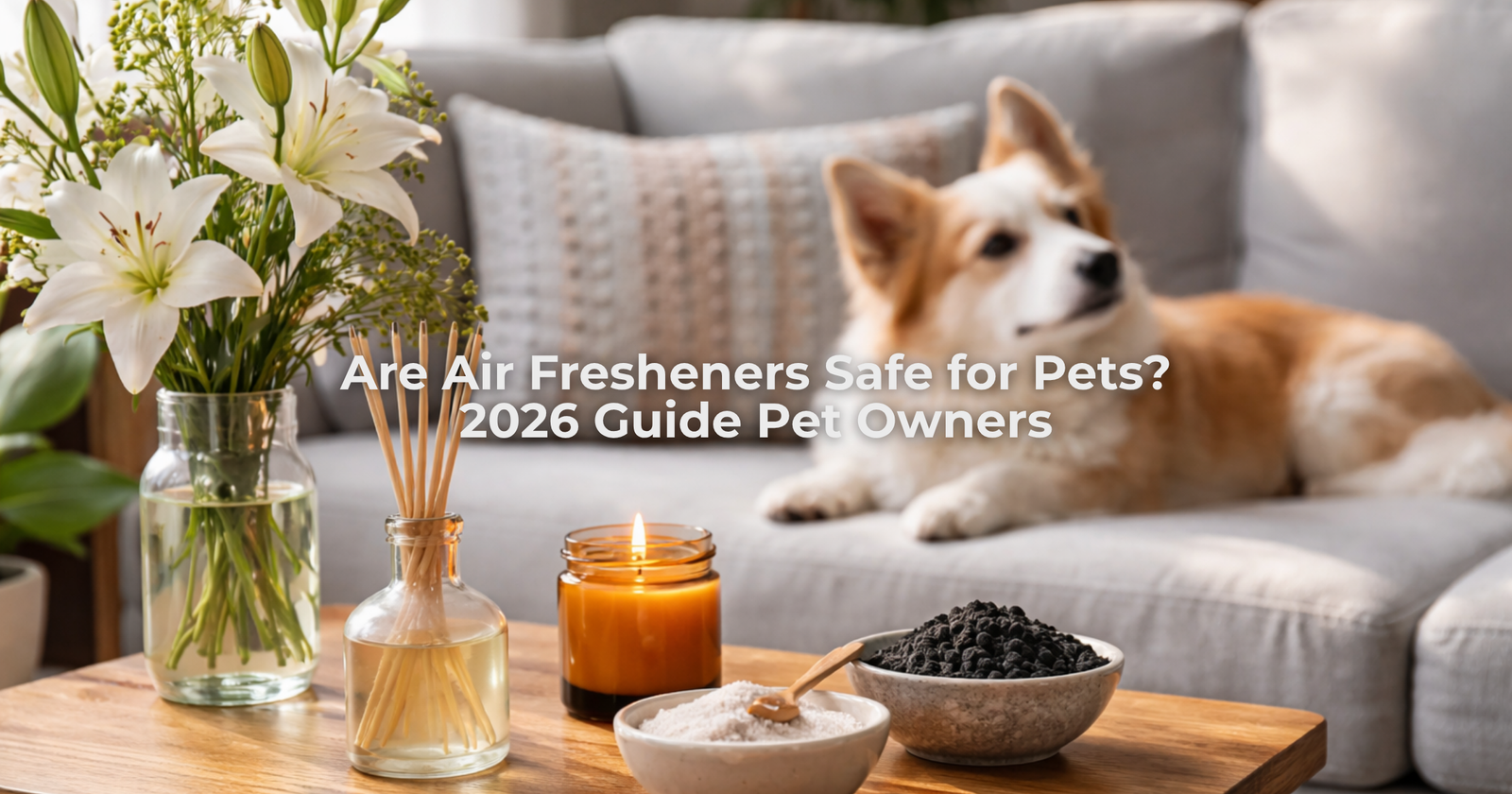
I still remember the moment I started questioning this. I had just used a strong room spray to freshen up my space. Within minutes, my dog began sneezing and moved away from the area. At first, I ignored it. Later, I realized that what smells pleasant to us can feel overwhelming or even harmful to pets.
This raises an important question many pet owners search for: are air fresheners safe for pets? The answer is not a simple yes or no. It depends on the type of product, ingredients used, and how often you expose your pets to it.
Most commercial air fresheners are designed for human comfort, not for animals with heightened smell and sensitive respiratory systems. Dogs and cats process airborne particles differently. Their bodies react faster to strong scents, especially in enclosed spaces where airflow is limited.
Understanding this helps you make better decisions about home fragrance. Instead of focusing only on scent, it becomes important to consider safety, indoor air balance, and long-term exposure.
Air fresheners may seem harmless, but pets react very differently to scents and airborne chemicals. Their stronger sense of smell and sensitive respiratory system make them more vulnerable even to mild fragrance exposure.
Pets have a much stronger sense of smell compared to humans. What feels light to us can feel intense to them. This creates higher fragrance sensitivity, especially in enclosed spaces where scent builds up quickly.
Most air fresheners release microscopic particles into the air that are inhaled. While humans may not notice any issue, pets can experience discomfort due to their sensitive respiratory system. I personally noticed this when using a plug-in freshener in a small room. The scent felt normal to me, but my dog started avoiding that area completely.
Another important factor is long-term exposure. Continuous use of synthetic fragrances affects indoor air quality over time. Pets spend more time near the floor, where heavier particles settle, which increases their exposure compared to humans.
Key reasons why air fresheners can be harmful to pets:
The real concern is not just the scent but the ingredients used to create it. Many products focus on fragrance appeal while hiding the actual chemical composition behind vague labels.
I used to assume that if something smells good, it must be safe. That changed when I started reading labels more carefully. Terms like “fragrance” or “parfum” often represent a mix of multiple chemicals that are not disclosed clearly.
Synthetic air fresheners often contain compounds that can impact both humans and animals. However, pets are more vulnerable due to their size, breathing rate, and constant exposure to indoor air.
Common ingredients linked to air freshener toxicity in pets:
Understanding these ingredients helps you make informed decisions. Once you know what to avoid, it becomes easier to choose safer alternatives and move toward a toxin-free environment at home.
No, plug-in, spray, and gel air fresheners are not completely safe for pets. Each type exposes pets to fragrance chemicals in different ways, which can affect their health over time.
Plug-in air fresheners release scent continuously, which creates constant chemical exposure and can reduce indoor air quality, especially in closed spaces. Spray fresheners produce a sudden burst of airborne particles that pets can inhale directly, increasing the risk of irritation. Gel-based fresheners release scent slowly, but they still contain synthetic compounds and can be harmful if pets come into contact with them or ingest them.
Using any of these products without proper ventilation or distance from pets increases the risk of discomfort and long-term exposure issues.
Pets cannot tell you when something feels wrong, so their behavior becomes the biggest indicator. Small changes often go unnoticed, but they can signal discomfort caused by fragrance exposure.
I once noticed my dog becoming unusually quiet after using a strong room spray. At first, it seemed unrelated. Later, I connected it to the scent because the behavior stopped once I removed the product.
Common symptoms often appear gradually and may vary depending on exposure level.
Signs to watch for:
If these signs appear consistently after using air fresheners, it is a strong signal to reassess the products you are using.
No, natural air fresheners are not always safe for pets. Some plant-based options reduce synthetic chemical exposure and improve indoor air quality, but certain essential oils can harm animals, especially cats.
Oils like tea tree, eucalyptus, and citrus can cause irritation or toxicity when used in high concentration or in enclosed spaces. Using diluted, pet-safe ingredients with proper ventilation makes natural options safer, but they are not completely risk-free.
No air freshener is completely risk-free, but you can choose safer options that reduce exposure and support a healthier indoor environment. I shifted to simpler, low-intensity solutions after noticing how sensitive pets can be to strong scents.
Safer choices focus on reducing synthetic chemicals and limiting continuous exposure. The goal is not just fragrance, but maintaining balanced indoor air quality while keeping your pet comfortable.
Safer options to consider:
Using these options carefully creates a more safe home fragrance for dogs and cats without overwhelming their senses.
Keeping your home fresh does not always require strong fragrances. Simple habits can make a noticeable difference without exposing pets to unnecessary chemicals.
I started focusing more on cleanliness and airflow instead of masking odors. The results felt more natural and long-lasting.
Improving ventilation allows fresh air to circulate and prevents scent buildup. Regular cleaning removes the source of odors instead of covering them. Using mild, natural elements in controlled amounts helps maintain a pleasant environment without triggering sensitivity.
A clean and well-ventilated space supports better comfort for both you and your pet.
Pet owners do not need to avoid air fresheners completely, but they should use them carefully and selectively. Not every product is harmful, but choosing the wrong type or using it excessively can create problems.
Focusing on low-intensity, non-toxic options and maintaining good airflow reduces risk significantly. Observing your pet’s behavior also helps you understand what works and what does not.
Creating a balanced environment matters more than eliminating fragrance entirely.
After testing different options and observing real reactions, I realized that fragrance should never come at the cost of pet comfort. Small changes in product choice and usage can make a big difference in creating a safe, breathable space.
If you want to maintain a pleasant home scent while staying mindful of pet safety, choosing carefully crafted products becomes important. Brands like Lume & Wick focus on thoughtful home fragrance that aligns better with a cleaner and more controlled indoor environment.
Start with safer alternatives, keep airflow in mind, and always pay attention to how your pet responds. A fresh home should feel comfortable for everyone living in it.